
It's a wonder democracy works at all -- a collection of people with potentially different interests have to agree to abide by majority vote even when it goes against their desires. But as we know, it doesn't always work, and racial and ethnic tensions are one of its biggest challenges. Hahrie Han studies the ground-up workings of democracy, how people can come together to successfully enact change. In her new book Undivided: The Quest for Racial Solidarity in an American Church, she investigates an example where democracy apparently has worked remarkably well, and asks what lessons we can draw from it.
Support Mindscape on Patreon.
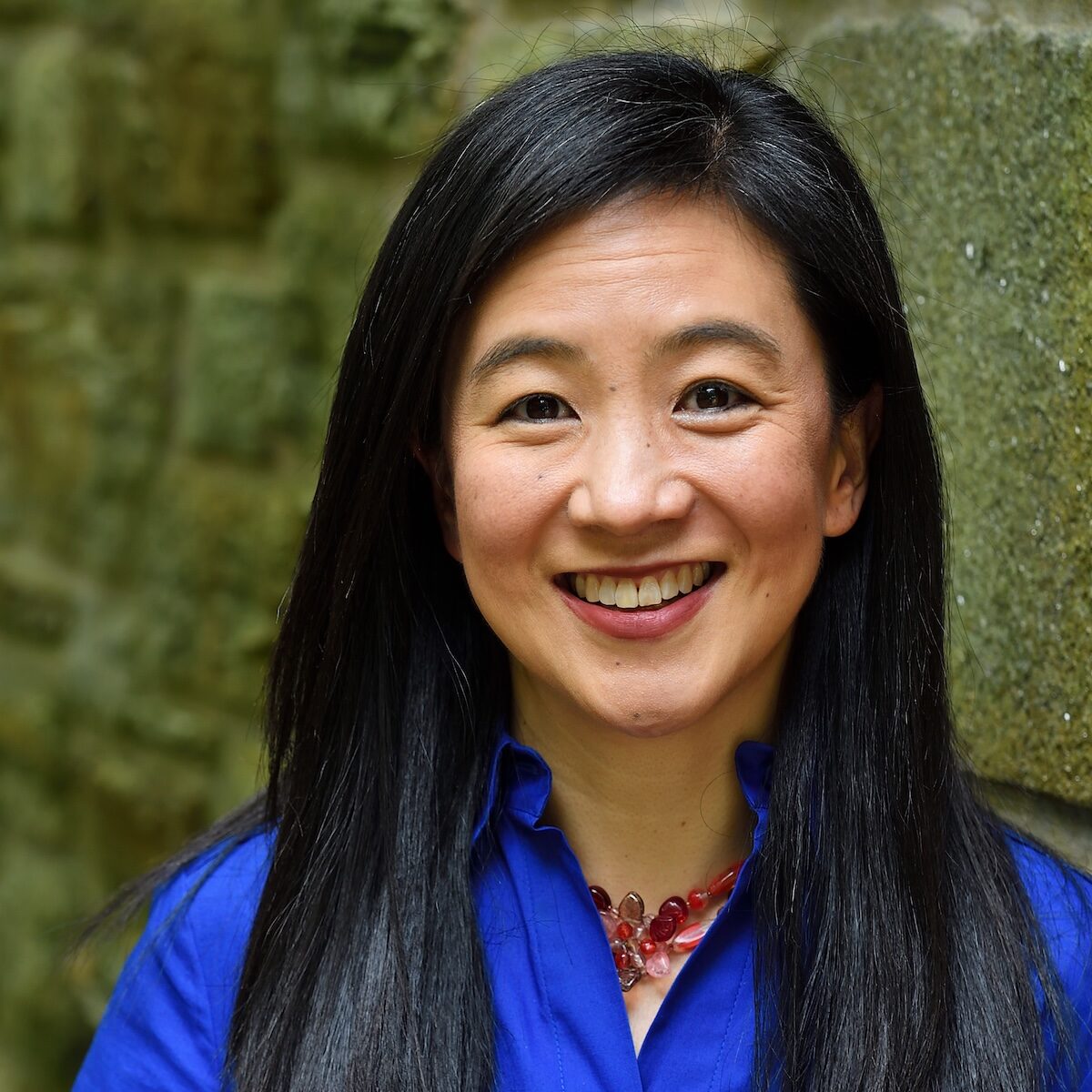
Hahrie Han recieved her Ph.D. in political science from Stanford University. She is currently the Director of the SNF Agora Institute, the Stavros Niarchos Foundation Professor of Political Science, and Faculty Director of the P3 Research Lab at Johns Hopkins University. She was named the Social Innovation Thought Leader of the Year by the World Economic Forum, is a Fellow of the American Academy of Arts and Sciences, and gave the 2024 Tanner Lectures on Human Values at Harvard University, among other awards.
Click to Show Episode Transcript
0:00:03.7 Sean Carroll: Hello everyone, welcome to the Mindscape podcast. I'm your host Sean Carroll. Here at Mindscape, we don't have that many hard and fast rules, but we do have some tendencies, some preferences, some inclinations, let's say. And one of them is we don't do politics that much in the conventional sense. We don't invite political candidates on to debate Republican versus Democratic talking points or whatever. But we are interested in the ideas of politics, right? In political science, in the theory of democracy, things like that. And sometimes the distinction between those two things, the dirty, get-your-hands-messy realization of politics in the actual world and the theory of politics, the grand ideas that lay behind everything, that distinction is not 100% airtight, right? It's a little bit of an artificial distinction, in fact.
0:00:38.0 SC: And so sometimes the best way to get into the ideas behind politics and democracy, which I'm extremely interested in, is to dig into the reality, to look at some actual cases of these kinds of ideas in action to improve how you think about them. This is no different than in physics, doing an experiment and collecting the data. It's not all about theorizing. So that's what we're gonna do today. Today's guest is Hahrie Han, who's a professor here at Johns Hopkins. In fact, she is the director of the SNF Agora Institute here at Hopkins, of which I'm a faculty affiliate, I'm proud to say. The Agora Institute is all about studying democracy and how it works. And Hahrie's work over the years has been about the aspect of democracy, which goes beyond making a decision about your preferences and then voting, right? It's not just about Election Day.
0:00:57.0 SC: It's about all the work that goes into changing people's minds, making people think about politics, getting people active, getting people organized, right? All of that part of democracy that goes above and beyond just waiting for Election Day and then casting your vote. And her latest book is an even more specific example of this. It's called Undivided, The Quest for Racial Solidarity in an American Church. Okay, so that doesn't sound political right away, but of course it is because everything is political. As Hahrie will tell us in the podcast, this book started with a really weird election result in a part of the country in Cincinnati, Ohio, which Cincinnati is a city, if you listened to previous podcasts with people like Will Wilkinson there are no Republican cities in the United States anymore. So it's mostly democratic. But Ohio as a whole in 2016 went for Donald Trump in the presidential election against Hillary Clinton. And Cincinnati went for Clinton, the city of Cincinnati, as opposed to the whole state of Ohio, but not by a huge amount.
0:01:17.7 SC: But there was this particular ballot initiative which was very democratic liberal coded. It was about universal preschool. And it won by a huge amount, by way more than Clinton beat Trump in those districts where the vote was being held. And so political scientists are gonna say, what is going on? And when Hahrie went in to figure out what had gone on in those districts, she kept running into an organization or an idea called Undivided, which was sponsored by a church. Indeed, a Christian evangelical megachurch called Crossroads in Cincinnati. And Christian evangelical megachurch, those words make you think right wing, Republican. But this church has advocated for this very left wing/democratic sounding policy. What's going on there? How did these people come to the conclusion that they should act to do this? Why did they make that policy choice, etcetera. And I think that the... Well, we're gonna talk about the specifics.
0:01:48.1 SC: We're gonna have the background and the specifics of this incident. But hopefully even though we didn't draw out too much of it explicitly, you the listeners will be able to draw some lessons about this for much broader questions. If you think that democracy is about more than just making up your mind about who to vote for and then voting, but it's actually about participating. It's about getting other people to think in ways that you think would make the country you live in or the city you live in a better place. The kind of lessons we learn from this study are very broad applicability. It's not just about churches. It's not just about universal preschool. It's about how do you work and live and function together in a democratic society. So lots of lessons for all of us, I hope. Let's go.
[music]
0:02:09.6 SC: Let's go. Hahrie Han, welcome to the Mindscape Podcast.
0:02:14.4 Hahrie Han: Great to see you. Thanks so much for having me.
0:02:18.8 SC: So let's get a general overview before we go into the specific new book you've written, which is very fascinating. But it is something that grows out of previous work you've done. So as a political scientist, that covers a lot of ground. What do you think of as your specialty within political science?
0:02:28.8 HH: Yeah. I am really interested in this question of what it takes to equip people to act identically and strategically and thoughtfully in the public square. People might traditionally think of this as a question of how do we engage people in politics, questions about political participation, building social movements, collective action, that kind of thing. But I think at the core of a lot of those questions is ultimately this question of what does it mean for someone to be an architect of their own future, which is what democracy should be in a sense, and how do we equip people to be able to do that? It's not a natural set of capacities that people need. And then in the context of a democracy, what is the science of how people come together to behave with each other, right? Because you can't do that alone in our political system.
0:02:57.4 SC: Yeah, no, that's great. So to sort of rephrase, there's this cheap and easy view of democracy that every so often we vote for our favorite candidate and then we get back to our lives. But you're aiming at a need to be a little bit more engaged than that.
0:03:03.1 HH: Yes, exactly. So I think obviously voting is important, so I'm not trying to minimize the value of that in any way. But if that's the only way in which people experience democracy or politics in their life, then I think it's a really impoverished view of what it could be, but also what it should be in our societal system.
0:03:07.3 SC: I mean, maybe talk a little bit about what to me has become much more obvious over the past 10 years, which is what a challenging and counterintuitive idea democracy is. Not just that we let people vote and whoever is the majority has a say, but that the rest of the polity goes along. It turns out that's asking a lot of people.
0:03:18.1 HH: Yeah, there's so many people out there who spend a lot of time defining what is democracy and so on and so forth. And my favorite definition out there comes from a woman named Valerie Bunce, who was actually originally a scholar of Eastern Europe. And she was trying to articulate a definition of democracy that's different from more authoritarian systems and other ways of organizing government and politics. And what she says is that democracy is unique among all other forms of government because it demands that people accept uncertainty over outcome in order to have certainty over process. Which to me is really interesting because what it does is it puts a focus. I mean, it's not different from other definitions in the sense that everyone would agree that democracy is a system in which people lose, right? And you have a peaceful transition of power. But what I like about the way that she defines it is that it puts a focus on two things that I think are really important. One is the question of uncertainty, right?
0:08:13.4 HH: That we're asking people to do something that is really both cognitively and emotionally difficult for humans, right so is counter? It's countercultural to our natural tendencies to accept that kind of uncertainty over outcome. But the second thing is it juxtaposes that with the sense that what we're trading is a commitment to a set of rights and responsibilities. And so we have to understand all aspects of that equation, the rights and responsibilities, the uncertainty, what are the conditions under which humans will accept that or not accept that? You know, these are all, I think, really important questions that sometimes get lost if we just think about democracy as majority rule through elections that happens every four years or whatever.
0:08:58.1 SC: Well, yeah, and putting it that way brings into stark relief the fact that it's kind of an abstract ask, right? I mean, people want results. And you're saying, let's instead buy a process. That sounds difficult to get them to buy into.
0:09:12.7 HH: Yeah, yeah, which I think has a couple different implications that are really important. So first, it's just kind of going back to this idea of uncertainty is that like, what are the conditions under which people are gonna accept uncertainty or outcome, right? They have to be willing to say, look, I don't know if the policy they want is gonna win. I don't know if the candidate I want is gonna win the party, whatever, right? And if people feel like the range of outcomes that they may possibly have to accept becomes too broad, then it's not irrational for them to withdraw consent from the system, right? I mean, that's a totally rational kind of act. And so the question is, how do people come to understand what that range of outcomes is? And so I think there's a lot of interesting questions that come up if you think about that question of uncertainty. But then the second piece to the point about abstraction is also like, how do people come to have an experience of democracy, of all parts of that equation, of both the rights and responsibilities and the possible outcomes that can emerge?
0:10:13.2 HH: And I think that's one thing that is part of the reason why spend so much of my time thinking about what are the spaces in which people come to learn the capacities of citizenship and democracy and so on and so forth, because I think that experiential understanding of what it means to be a member of a small democratic community is foundational to actually making the system work because of all the things that we just talked about.
0:10:40.0 SC: Well, and maybe this is also too simplistic, but what I detect in the modern world is a lot of people yelling at people they disagree with for being wrong, and then wondering why they haven't changed their minds. Like the actual sort of dirty work of building a coalition that might win an election is not even paramount in people's minds a lot of the time, much less something that they effectively move toward.
0:11:06.5 HH: Yeah, I mean, there's this hilarious, I mean, hilarious in a certain kind of way of statistic that I remember learning in grad school, which is that when CNN came online, and people began to be able to see like 24 hour news, or sorry, not CNN, C-SPAN, when C-SPAN came online, and people began to be able to see the way in which Congress works, that support for democracy and politics and people's trust in politics actually went down, right? Because the original idea was that we wanna have sunshine in government, we want transparency, we want people to see how the sausage is made. But it turns out when people see how the sausage is made, and they realize how much compromise and negotiation goes into it, they actually dislike the process itself. They wanna have these kind of heroic stories of victory, which is just not how most politics works, to your point.
0:12:03.5 HH: So that's kind of, I think, one thing about that is really challenging. But then, the other thing is that in a lot of ways, I think there are I think one of the things that we, those of us who spend a lot of time thinking about how we improve our democratic system, I think one of the things that's underestimated in that conversation is the importance of commitment as a first order priority and being able to cultivate the capacities that people need. And what I mean by that is, if you just imagine in a family, or like, I've been married to my husband now for 20 some years. And when we fight, we can fight in a way that fight like we wanna stay divorced, stay married, or fight like we wanna get divorced, right? And of course, because we wanna stay married, we fight in a way that kind of shape the likelihood that we're gonna be able to stay married, right? And so what that intuition, I think, tells me is that people's behaviors flow from the commitments that they have, right?
0:13:00.7 HH: And what we've done is we've created this situation in which we never ask people to really commit to democracy, because it's abstract, it's complicated, because of all these kinds of things. But then we ask them to behave a certain way. And it's like, wait a minute, we haven't solved the first order problem yet. And so I think that's that's a space where I think there's a lot more conversation that could be had about what it means to solve that first order problem.
0:13:21.1 SC: Is it related to the fact that, well, let's put it this way, I predict with very high confidence that a certain tiny fraction of my listeners will complain about this episode because it's about politics. And they think anything about politics is sort of lowered in their estimate, like politics is just bad, politics is not pure it's sort of grungy and whatever. And to me, this this sort of betrays like an unwillingness to do the hard work, right? Like politics is about compromise and working with people you don't like. And that's, I wanna say it's a feature, not a bug. I don't know.
0:14:00.3 HH: I certainly think it's a feature, not a bug. I will say that there's a political philosopher, a guy named Bernard Crick, who has this pithy little definition, which I'm not gonna quote exactly. But it's something like politics are the public actions of free men men, you could say people which the idea that like, we are all free and independent humans, we all have our own interests and desires and motivations and things that we wanna enact in the world, we may or may not think of them as public, right? In the sense that I want my children to have a good life, I want my I wanna have a good job, I wanna be able to feed my family, like there's certain things that that we all want. But at a certain point, when those actions collide with another person, there's a dimension or a way in which they become public, right? So my desire to feed my family if I live off the grid, and I have my own farm, then maybe it doesn't have to collide with other people.
0:14:56.0 HH: But in most cases, there are ways in which in our lives, like different things kind of come to interact with other humans. And when that happens, then there's a public dimension to that. And that inevitably generates politics in my mind and so I think one of the challenges is that politics has come to take on this kind of dirty, have a dirty connotation in our society, but it doesn't have to be so. And actually, one more thing that I'll just say, which might be another way to think about is, one of the things I've been thinking about a lot since working on this book is also related to a set of questions about what are the ways in which the kind of models that we have in our head for how we think about politics might be different than the models that we have, when we think about things like markets it is not an original question, like lots of people have that question, obviously.
0:15:42.5 HH: But one of the things I think is that, that this working on this book really, I think, helped me understand in a different way, is the idea that markets, we build our models from a set of assumptions about like humans, how humans form, generate interest, and then we sort of like reason up to the kind of systems and how those how they come to interact with each other and create the system. And I think in a way with politics, we have to start with the assumption that what we're asking people to do in these public actions in politics, right, is countercultural, because of the uncertainty, because of all the things that, that we've talked about. And so the models should start not with an individual, but with a dyad, right? And sort of think about it from this question of, let's say we were to, because politics only comes into play when you have people interacting with each other. So let's start with an assumption about a dyad and what goes on in that dyad, right?
0:16:39.7 HH: And then you can reason from there about the kind of system that we need. And the reason why I think that's relevant is because when you think about a dyad, then questions about things like the construction of interests, the ways in which we come to understand negotiation all that kind of stuff becomes endogenous to the model in a way that I think it just raises a different set of questions when you start with an individual. So it's not to say that you can't end at the same place, but it's more that the kinds of questions you're led to ask if you start with a dyad are different than the kinds of questions that you start to ask if you start with an individual. And so it's a different way of thinking about this question of what is the system that we need for the humans that we have for the kind of democracy that we're trying to construct.
0:17:23.3 SC: And by dyad, we just mean two individuals relating to each other? Or could it be an individual in a larger structure or what?
0:17:30.3 HH: Yeah. I'm thinking more about the kind of interactive, the question of interaction, right? And so, yeah, so it could be an individual in a larger structure, it could be an individual in a network or something like that. Yeah. But the idea is, is that you don't have politics when you have individuals acting as individuals, right? Like if we just were to reduce politics down to a model of individual choice, which is essentially what how markets operate, then it takes out the politics that are in politics in a way.
0:18:04.2 SC: Well, that's very interesting. Does it have any implications for how we think about something like voting theory, where usually we're just imagining we have a bunch of individuals with preferences and trying to decide how to aggregate them?
0:18:14.1 HH: Yeah, so voting theory kind of, I think, to me, what I object to in some of the theories of in a lot of way in which the models get applied in voting theory is that it assumes that the whole is nothing more than the additive sum of its parts, right? And so the whole idea behind voting is that like, lots of people make their choices, and then we add them up, and we see who's got a majority, and then we're done, right? And, that I think, actually is a really reduced form of politics in the technical sense that is how the system works. So I'm not denying that by any stretch of the imagination. But it, but it leaves the most interesting questions about politics out, which are sort of like, how do those preferences get formed? I think everything that we know from like neuroscience research and stuff like that is that the preferences are formed in relationship in interaction between these two systems, or two individuals, or whatever the kind of entities that are interacting are.
0:19:12.0 SC: Good. And that makes perfect segue into this idea that we want politics to be about more than just election day and voting, but about other forms of participation. Is there a particular kind of angle that you care about most? Is it organization, protest? I don't know. What are the kinds of organization and participation that we're interested in?
0:19:33.2 HH: Well, I guess I would start by saying, I generally think about this. So to me, the first distinction I always make is the difference between sort of thinking about as a supply side versus a demand side problem. Right? And so the temptation is to think about as a demand side problem. We're looking at individuals and interests and like all that kind of stuff. And so what if we were to sort of say, take seriously Madison's point, like what is government, but the greatest of all reflections of mankind, if men were angels, no government would be necessary. Right? Which to me is the idea that it's the kind of fundamental insight about, in small-d democratic theory, which is that humans aren't equipped for democracy in order to... The audacious promise at the heart of democracy is that if you put people into the right settings that generate the right kind of interactions, then their "better angels" will emerge. Right? And that's what we need to make democracy work to allow for that acceptance of uncertainty that we're talking, that we started off our conversation with and all those kinds of things.
0:20:28.4 HH: And so, when you sort of ask like, what's the kind of favorite thing to me, like, I'm just most interested in like, what are the... What's the supply of the kind of opportunities humans need to be able to develop and cultivate the kind of capabilities and experiences and skills they need to be willing to do the hard work of negotiating difference, to build coalitions, to rethink their assumptions about who other people are, whatever the things are that you might be asking them to do.
0:21:00.8 SC: I mean, it does sound a little bit like work.
0:21:03.0 HH: Yes. It sounds like work insofar as being a family is work, right? And one way to think about it is democracy is the work, is the work of like forging a common life together. Right? And so it is, yes, it is absolutely work to be married to my husband and it's work for us to construct a family unit that functions with our children and all those things are true. But we also derive huge benefits from doing that.
0:21:35.0 SC: It's worth it.
0:21:35.4 HH: And that's what keeps us committed to the task. And so I think this question of democracy is like, the challenge is that you're doing it at scale with people with whom you don't have that same set of interpersonal commitments. And so it presents a different set of challenges, but it's ultimately, I think that same work of forging a common life.
0:21:56.9 SC: So how do you think about the current state of political participation? I mean, here in the United States, people don't even vote most of the time, much less join a committee and try to make some political change happen. Is participation in political activity on the rise, is it falling? Is it a higher low compared to our peer countries?
0:22:18.4 HH: So let me answer that question a little bit differently than how you asked it. Which is that, I think, so the thing that we're best at, as... I'm an empirical political scientist, meaning I spend a lot of my time looking at the data that underlies politics. And as someone who studies political participation, like I look at a lot of that data. And I think one of the things that I've come to over the years is that the data points that we use to assess the state of political participation don't capture the full picture of what it is. And so let me just give you one example, which is that, which is related to the book, which is that if you ask the average person what's the most religiously active group in America, my guess is the average person off the street would probably say that... A fair number of them would sort of point to white evangelicals, conservative white evangelicals. 'Cause there's so much kind of conversation about the role that evangelicals play in American politics right now. If you look at the actual data, the most politically active group is white liberal Christians. I should say this, the most politically active group are atheists. But if you take the atheists out...
0:23:27.1 SC: Yeah, yeah. Atheists.
0:23:27.2 HH: And you put people of, people who have some kind of faith commitment and you compare across them. It's not black Christians. It's not conservative white evangelicals. It's liberal white Christians, tend to do, engage in twice as many political acts as their counterparts, whether they are black Christians or conservative white Christians or something like that. And so the question is, well, why are our perceptions so off relative to the actual number of acts of participation that people engage in? And I think what that tells us is that the kinds of numbers that we use to assess the level of participation is not reflective of the impact that those acts can have in the public square. And when I first looked at that data, I remember I sent an email to this progressive white evangelical pastor who I gotten to know and sort of said like, How do you make sense of this? And he said, well, it's not surprising to me at all because you have lots of people, white Christians, you're talking about Christians, lots of white Christians on the left who are doing lots of activity and engaging in lots of activism, but it's not connected to each other.
0:24:42.1 HH: It's not constructing relationships. It's not nested within organizations that have this ability to sort of project it onto a larger political agenda. And so it doesn't feel like it's adding up to much more, even though people are doing lots of things. Which kind of gives me the sense that, Well, we need, when we sort of do things like assess the state of participation, we need to not just assess like how much our people are participating, but how that participation is connected to these other kind of elements of the political process.
0:25:09.0 SC: And do we overestimate the impact of white conservative evangelicals? Because when they do political activism, they do it qua being white conservative evangelicals rather than just because they have different interests in different things.
0:25:29.1 HH: So, I think, I don't know that I've necessarily... So, the question, and one way to think about your question is like, does it, is it because it's like tied to their political identity as white Christians? And I think, I don't know that I've, the data, here's a little bit unclear because it's lot harder to measure identity. I don't know that I've seen data that like people who are doing it as white evangelicals on the conservative side are necessarily have a stronger identity than people on the white Christian side who are also on the left. But I think it's more that they're nested within structures and those structures kind of channel that political power in a different way.
0:26:08.8 HH: This makes me... Albert Hirschman is a political scientist who wrote this like terrific book in the mid 20th century called Exit, Voice, and Loyalty, where he talks about the idea that, the fundamental logic of market organizations is different from the fundamental logic of what should be political organizations. The idea being that market organizations operate on the logic of exit, which is that if I don't like your product, right? I go and I find another one. So if I don't like Cheerios, I go buy Chex, right? If I don't like Heinz, I go buy Hunt's ketchup, or whatever the thing is, right? Whereas political organizations can't, shouldn't operate on the logic of exit, right? So if I don't like what your candidate is doing, or I don't like what your organization is doing, instead of just going and finding another product or an organization that has a similar but better product, instead, what I should do is exercise voice, right? I should stay and I should try to advocate and change what I think is the right thing to do. But that's a much harder ask of people, right?
0:27:07.3 HH: And in order to have that, people need loyalty, that's hence the title of the book, Exit, Voice, and Loyalty. And I think I would sort of say that the difference between the left and the right is less about identity and more about the fact that a lot of the left-leaning organizations that drive participation on the left tend to be operate more on the logic of exit, whereas the ones on the right have become more effective at operating on that logic of voice. And so they're able to channel activity and sort of sustain disagreement and sustain that kind of deliberation in a different way.
0:27:41.8 SC: It seems, and I don't know, you're the expert here, so you'll tell me, it seems that much of the story you just told is different now than when I was a kid. When Jimmy Carter was president, there was much less...
0:27:53.4 HH: First evangelical president Jimmy Carter, right? Was a Democrat.
0:27:56.6 SC: He was. He was, but yet it wasn't, I didn't even know. I was beginning to follow politics at the time, but I didn't sort of, he was certainly Christian, but it, like that, it didn't have the residents that it has now in terms of being a political identity.
0:28:08.6 HH: Sure.
0:28:10.3 SC: And then the moral majority in Jerry Falwell, came on the scene. So am I right to think that this discourse has changed quite a bit over the past few decades?
0:28:17.8 HH: Absolutely. I mean, there's a terrific group of scholars right now who've done a lot of work kind of looking at what are the roots of this kind of quest for what people call kind of Christian nationalism within evangelicalism and how is that tied to some of these theological fights have been going on for a century or more. So, that is both true, that those roots have been there for sure. But that it became in the United States at least, it became much more pronounced starting around the 1970s, and then it got tied to a partisan agenda.
0:28:56.3 HH: By the end of the 20th, early 21st century. And once it got tied to a partisan agenda then, you began to see this kind of breaking apart that Trump in some ways is the culmination of. But one thing I will say is, in doing research on this book, one of the things that I realized is that, there are... Evangelicalism is... Protestant evangelicalism is a very rich and very tradition, and many of these traditions are. And that the part of it that has become the most prominent is one that asserts that the way to realize their faith in the modern age is to try to exert Christian political power. Right? And so this is the rise of the moral majority. This is the Christian right that we're seeing and that we're talking about that has very fundamentally changed American politics in the past several decades for sure. But there's a whole different trend within Evangelicalism that in some ways the largest churches in America kind of come out of that trend. And that trend is really rooted in much more of a missionary tradition. Where the idea is, is that the way in which you realize your faith or realize the vision of God's kingdom on Earth is not focused necessarily on exerting political power, but instead is on converting as many people as possible to Christianity. Right?
0:30:18.4 HH: And so the goal there is humans, it's souls that they're trying to convert. And that's why some of the biggest megachurches in our country really come out of that missionary tradition because they're so focused on growth as opposed to the ones that get the most political attention, which are often focused more on political power.
0:30:39.0 SC: And how does this, this is a vague question, but how does this tie in with what I perceive to be more polarization now on the political level than we ever had before? I remember reading recent studies saying that there are people who now call themselves evangelical Christians, even though they don't ever go to church, don't even know anything about the Bible, but they know that those are their political fellow travelers. So that's how they start to think of themselves.
0:31:04.2 HH: Yeah. This is an area where I think the data that we have is actually very challenging for a variety of reasons, which is the idea that we definitely have a lot of data that says people who self-identify as evangelical are increasingly more likely to be conservative. And I think, and I will just say like, I just wanna be really clear that I think no matter how you cut the data, like evangelicals tend to be more conservative than not. Like I think that is unequivocally true. Is it as extreme as numbers where it's like 8 in 10 white evangelicals voted for Trump? I think those numbers are overstated. And the reason for that is precisely what you said, which is one of the things that we know is that, there are a lot of people who identify with a political agenda of evangelicalism that will self-identify as evangelical, even if they don't adhere to the faith tenets of evangelicalism. Whereas there are people who may not agree with a political agenda of evangelicalism, even if they adhere to the doctrinal beliefs.
0:32:00.8 HH: That define evangelicalism as theology. And then when a pollster calls them and says, are you evangelical? They say, No. They might say that I'm a Christ follower, they might say, I'm a Jesus follower. They might say, I'm Christian, but they won't say that they're evangelical because they associate that with a political identity that doesn't represent them. And so the data's really murky, and there's this question of who gets to define what an evangelical is? Is it adherence to the political identity? Is it adherence to the faith identity? Is it the people who show up in the Pews on Sundays? It's like there's a lot of murkiness around it.
0:32:33.1 SC: More evidence that political science is very hard and everyone should just do physics instead. It's so much simpler.
0:32:39.0 HH: The real world turns out to be really messy.
0:32:42.1 SC: Very, very messy.
0:32:43.2 HH: I know.
0:32:43.8 SC: But that also, I mean, the question I was gonna ask next, you've already basically told me is unanswerable, which is how many evangelicals are there? Like how big is this block of like-minded people as a percentage of the US?
0:33:00.8 HH: So about 70% of Americans identify as Christian, within that, the largest kind of grouping is probably non-denominational evangelicals. Right? But there's also large groupings of Catholics obviously and other denominations within that. And so the estimates vary. I will say that, there's a sociologist at Carleton College named Wes Markofski who has developed this term that he calls the other evangelicals, which are basically people who are evangelical by faith in the sense that they believe in the core tenets that define evangelicalism, but they reject the political identity of evangelicalism.
0:33:46.3 HH: He estimates that that represents about 30-35% of evangelicals by faith, which is about comparable to the estimates of what percentage of evangelicals are Christian nationalists. So you could imagine that if we have a distribution, about a third on one side are sort of, kind of a more authoritarian Christian nationalists side. And then about a third is what Markofski might call other evangelicals. But again, the data here is really murky. And so these are all estimates based on putting a variety of data points together.
0:34:18.2 SC: But those are fractions within that group. What is the percentage of Americans who are evangelicals in some sense or another?
0:34:26.9 HH: I think most, I think the estimates that I've seen are usually around, like 30-35% of Americans.
0:34:31.7 SC: Okay.
0:34:32.7 HH: Overall. Yeah.
0:34:34.8 SC: That's a big number. That's a powerful group.
0:34:36.7 HH: It's a big number.
0:34:37.5 SC: Yes.
0:34:38.1 HH: Yeah. Yeah. It's a notable... And that number includes, I think black evangel, I mean, not just white evangelicals. I think the data that I've been talking about is primarily within the white evangelical community.
0:34:48.2 SC: Okay. And then, as you've already alluded to, there is this phenomenon called Donald Trump who came on the scene not as an especially obvious paragon of religious virtue, but entered into a strong alliance with that political segment. So there's gotta be a lot of theorizing that I don't know about by professional political scientists trying to understand what makes that alliance work.
0:35:13.0 HH: I mean, I think it's a very... Actually, I will say, I don't know that I've seen a ton of theorizing in the sense that I think the assumption is that it's a very instrumental deal on both sides, that...
0:35:26.8 SC: Transactional.
0:35:27.0 HH: Yeah. It's super transactional that Trump wants, he needs votes, he needs support, he... Whatever it is that drives Donald Trump, right. He's pretty transparent about a set of things. The evangelical community was willing to deliver it to him, or a certain portion of the evangelical community, I should say, is willing to deliver it to him. And on their side, they felt that in return, they saw the realization of a set of political priorities that had been on the agenda for several decades now. And so, there was that transactional relationship that, I think is part of, at least certainly in the book and the research that I did around it, kind of stressed the relationship between people who were evangelical by faith, were maybe a little bit uncomfortable with some things in the political identity, but weren't really sure what to think about it. But then Trump comes into office, he has all the support, and it felt like it called the question for a lot of people in ways that maybe they could ignore in the past.
0:36:27.1 SC: Well, and to be fair, it seems effective, right? Like if I were, I'm not, but if I were an evangelical Christian who was most focused on getting my agenda put into practice, then I could imagine holding my nose and voting for someone who didn't really embody the same values as me, but would get that agenda into practice. I guess the weird thing is that most of the interviews you hear are not people holding their nose. They seem pretty enthusiastic about it.
0:37:01.1 HH: Yeah. I think there's several things that are going on there. So there is, I think there is a portion of people who kind of held their nose and voted because it would help enact like other views around reproductive rights or, sort of other things that they might want. But I think there's also a significant portion of people who are evangelical that feel very maligned by the political system in general, right? It is true that we live in a secular society and they feel that a lot of the kind of like sociocultural institutions in American life are dominated by secular approaches to life. And so that creates a feeling of defensiveness, I think that kind of manifests and was stoked by Trump. And so I think that's where you sort of get that sense of people not necessarily feeling like they have to hold their nose, but this is something that they actively support.
0:37:58.1 SC: Yeah. Well, it goes back to this huge debate that was in 2016, after Trump first won, whether or not we should understand the surprising number of Trump voters, in many people's minds, as a result of economic anxiety or something more resentment-based, racial resentment or resentment against immigrants or just people's powerlessness in society.
0:38:23.1 HH: Right, yeah, I mean, I think there's been more and more data that kind of shows that there are sort of perceptions of status and status threat that sort of shape people's willingness to support a candidate like Trump. I mean, this not to kind of harp on Valerie Bunce's definition, which I do love, but it sort of, to me, is this idea that, well, when are people willing to accept the uncertainty of outcome that we're asking them to accept in order to buy into a political system, if they feel like their people, their tribe, are gonna be squashed should the other side win, or that it poses some kind of existential threat to things that they hold sacred, then I think you see more and more people kind of begin to look for ways to blow the system up or try some completely different alternative or whatever the case may be.
0:39:12.1 SC: Okay, so now, just to drive home the point that political science is very, very complicated and there's always exceptions to everything. There's a ballot initiative in Cincinnati, Issue 44, that caught your attention, so tell the audience about that.
0:39:28.9 HH: Yeah, so most of my day job, most of my work is partnering with organizations that are trying to get people involved in collective action and public life in different ways, and then essentially putting data and learning around their work to try to understand how they can do that more effectively, like, how do we do that better? And I was, my attention was drawn to a 2016 ballot initiative in Cincinnati that was trying to pass universal preschool for, with targeted resources for the poorest children in the city, which, given the demographics of Cincinnati, is primarily a poor black population. It's very high rates of racialized poverty in Cincinnati.
0:40:09.7 HH: And if you remember in 2016 Trump won Ohio by a pretty significant margin, and this ballot initiative passed in Cincinnati by the largest margin of any new education levy in Cincinnati history. And so I thought, okay, what is going on here, right? Because not only did this new tax pass, it passed by this huge margin and even though Cincinnati is a city is, leans left in the politics of Ohio, you still had a significant number of people that had to have supported Trump and also supported this ballot initiative. So I wanted to understand more. And I was initially doing research in Cincinnati because of this ballot initiative, and people kept telling me there's this church that are sending all these volunteers, and that's not infrequent when you study political campaigns to have, say, oh, there's a church that was involved. And usually it's in a situation like this is probably, I sort of assume that it'd be some like lefty unitarians who sent people to make a few phone calls and here and there.
0:41:08.5 HH: And it turned out that it was this evangelical megachurch in Cincinnati that was sending hundreds of volunteers. And that's when I thought, okay, like, this is unusual, like what's going on. And when I dug into it, it turned out that all these volunteers were coming, had been animated to get involved in the campaign through a program called Undivided, which was a program that was started by the highest ranking black pastor in the church in in 2015, he had stood up and said he wants to do something on the racial divide in Cincinnati. And he had such an outpouring of support after he preached about that, that they decided to build a program and the program launched in early 2016, it was a six week program designed to equip people to get involved in the work of building racial solidarity. And then that people were so animated by that program, they then got involved in this ballot initiative in the 2016 election. And so that's how I came upon Undivided to start and I was trying to understand how was it that it was having these really unexpected effects that we just aren't seeing in other kinds of programs like that.
0:42:10.9 SC: So to be clear, this is a what the word megachurch means there's like tens of thousands of parishioners who go there.
0:42:19.1 HH: So the technical definition of a megachurch is a church. I mean, it varies a little bit, but roughly about 2000 people or more. But this church was the third largest megachurch in America. And so now it's a church that gets about 35,000 people per week to show up in person and about 500,000 people online. So they have a scale that is unlike any of our political organizations because there are no political organizations that get 35,000 people once a week to show up, you know.
0:42:47.5 SC: Definitely yeah.
0:42:48.9 HH: And then at the time when I started researching them in 2016, there was about a 20,000 person a week church. So it's grown since then. But here's a couple of other stats that I didn't know until I did this work. The largest 9% of churches in America contain 50% of the church going population. Right. And so church attendance in America is heavily skewed towards large churches. And the average megachurch grew by like something like I don't have exact numbers, right, but I have the magnitude right by something like 34% between 2015 and 2020. You know, so these megachurches are not only drawing a lot of people, they're growing and so these megachurches say there's a big debate about what the value of these churches are from a theological perspective. But say what you will, it's the growth edge of American Christianity right now.
0:43:38.2 SC: Completely different from the church that I went to as a kid was declining Episcopalian parish in Trenton, New Jersey, with a few dozen people, maybe.
0:43:49.2 HH: Right. Which is the model church in America, just to be clear. Right. Like I think the median church has less than 100 people and it's shrinking. Right. And that's why it's like you get these like this crazy distribution.
0:44:00.7 SC: Do we understand what is so attractive or effective about these bigger churches?
0:44:03.8 HH: Well, so I was just to say, give a little bit about my background. So I grew up in Houston, Texas, and I grew up going to a Catholic church and so to me, when you say church, it means a priest wearing vestments with an altar and candles. And there's you sit and you stand and you kneel. I mean, there's like all you know, there's a steeple. Like there's all these kinds of things that we would associate with church. And what a lot of these crossroads included, a lot of these megachurches are like they often exist in strip malls because that's where they can find space big enough to host the numbers of people that they're bringing together. There's often multi, like full bands on stage. So it's not just like an organist plunking out a few songs, you know. On the piano or on the organ. But it's like it's a full sensory experience, right.
0:44:55.5 HH: Where it's the first time I went to Crossroads, I remember I was shocked that it's like when you sit down, they dim the lights in the auditorium, then these like spotlights come on and the band comes on. It's playing really good music. And then the pastor comes on and he's wearing jeans and a T-shirt and is like preaching from notes on his iPad. It's a very kind of modern hip experience that is its own form of entertainment in a way. And that's the theological critique sometimes that people have is that it might be engaging more people, but is it engaging people in authentic relationship with God or not?
0:45:31.7 SC: Okay, good. And this particular church, Crossroads, it's multiracial?
0:45:36.7 HH: It's white dominant in the sense that it was the last time I've seen the data. It's 80% white and 20% non-white, which in Cincinnati is primarily black, but not exclusively so.
0:45:45.7 SC: Right. Okay. And but the person who started this program, Undivided, which is a program within Crossroads church... Was a black pastor.
0:45:58.1 HH: So Chuck Mingo...
0:46:00.3 SC: Chuck Mingo.
0:46:00.4 HH: Is a pastor. He had grown up in Philadelphia in the black church. And so he had grown up having attended black churches his whole life. He moved to Cincinnati originally because he had a job with Procter and Gamble. And so their headquartered in Cincinnati. And so he went there and then eventually felt the calling to go into ministry and found a job as a pastor at Crossroads, which is a white dominant church. And so that was really unfamiliar to him in a way, but he was able to kind of he felt very called by God to be a pastor there. And so he became the head pastor for the kind of flagship campus of Crossroads and was extremely popular. It still is one of the most popular preachers in the church. And what had happened was that in Cincinnati, there had been an unarmed police shooting. There had been a police shooting of an unarmed black man. And that sort of threatened to kind of tear the city apart.
0:46:55.0 HH: And as that was unfolding in the city, then Chuck got up one Sunday and had even though he had grown up in the black church, he had not really spoken a lot about race from the pulpit. But he stands up on the main stage and says that I feel called to be a voice for race, race relations in the city. And he knew that he'd get some pushback. He wasn't really sure how people would react. And he just got he did get some pushback. But he also got an outpouring of support from the community where thousands of people reached out and said, whatever you do, I wanna be a part of it. And he thought, oh, gosh, now I have to do something. And that's where Undivided was born.
0:47:28.3 SC: Yeah. And you should tell us about Undivided. One thing that I wanted to make sure the audience heard was you compare it to DEI programs, right, diversity, equity and inclusion. And I like all those words. I'm in favor of diversity, in favor of equity, favor of inclusion. But you do not hold back to say typically those programs just don't work. And yet somehow this one does.
0:47:53.8 HH: Yeah, there's there's a lot of research that's been done on DEI programs, which really emerged as a result coming out of the civil rights movement. The 1960s, you had a lot of companies that were trying to figure out what their response to this all all this foment around civil rights is gonna be. And essentially these DEI programs emerged and then got linked to legal requirements that that were also emerging in the 1970s to promote equity and employment and and so on and so forth. And if you look at a lot of the research on the effectiveness of these programs and to be really clear, like here I'm talking about at a university like Johns Hopkins, for example we're all required to go through like DEI training that is often a 30 minute series of virtual modules. You know, I have to sit through and then take a quiz about at the end in order to be allowed onto a hiring committee or something like that. And if you look at...
0:48:43.0 SC: The audience, because it's a completely audio podcast, the audience cannot see both Hahrie and I sort of rolling our eyes.
0:48:49.6 HH: Yeah, exactly. Because we've all done them. And so many, many, many, many workplaces of all kinds have these kinds of DEI programs that are often required. And the data on them is that they're often not very effective, you know. And and it's one of these things where even as people knew they were not effective, they continue to become more and more ubiquitous in corporate America. And I think I have a line in the book where I sort of say it's apparently pretending to solve the problem is more important than actually solving it because what it's done is it's taken up a lot of energy that could be devoted to building programs that actually can try to reduce people's prejudice and things like that. Because as you say, like diversity, equity and inclusion are really important values that certainly I stand for and that we all want workplaces that that stand for those. And I think when I first heard about Undivided, they told me, oh, yeah it's like the six week program. You come once a week and you you learn about empathy and implicit racism and things like that.
0:49:56.1 HH: I thought it sounds a lot like a typical DEI program. And I'm not clear why it's being so effective at animating people into action. In a way that we know from the data that most programs are not. And so that's part of what made me so curious about it. And I think a lot of what I learned in the process is like, yes, it is a six week program. It does focus on things like implicit racism and empathy and a lot of the things that are not different from other kinds of programs. But there are core design elements of how they set up the program that I think made a real difference in the impact it was able to have.
0:50:31.2 SC: All right, lay it on us. What are the well, what did they do that was so different and effective? And also, how did they know to do something so different? Was it just a single person figured it out or were they coming at it from a different angle?
0:50:46.1 HH: Yeah. So there's so many stories like from the, so these are stuff I can say. When I was doing research on the book the people in Undivided were just incredibly generous and kind and kind of giving talking to me about the experience and letting me I wasn't there from the very beginning. But letting me learn the history in cases when I hadn't been there. And to me, one of the things that didn't make it into the book was really interesting was some of the early conversations that they had about how to design the program. And essentially what happened is that Chuck, who's this pastor, gives this sermon, hundreds, thousands of people sort of reach out to him and all he's like, Okay, like, I've got to figure out what to do. And so he's a pastor at this huge megachurch in the city. His boss, who's a white woman, says, all right, well, let's assemble a team around you. And so there's you know, her name is Kathy.
0:51:35.5 HH: She's a white woman. She's part of the senior staff at a church. She has a background in US banking. So she was an executive at this bank. And in her retirement, essentially decided she wanted that she was a person of faith that she wanted to go work for her church. And so she became an employee of the church. And her job in banking was to run the branches of all the of this like huge national bank in America. So now she essentially is like running church campuses in the same way. So she so there's like a real kind of like business orientation to some of the work that they're doing. You know, Chuck is a pastor. There's another woman named Lynn Watts, who is a black woman that had been on staff at the church, had experience with DEI that was also pivotal in starting the program. But they decided to kind of build a coalition, a group of people around them from all throughout the city who had experience with that might be valuable.
0:52:27.6 HH: So they brought in a woman who is the head of diversity programs at Children's Hospital in Cincinnati, which is a big entity in Cincinnati. They brought in a guy who was a faith based community organizer so he kind of had background in the community organizing sector. And they brought in a guy who had some experience kind of with the research on neuroscience and kind of understanding like what makes our brains work. And so they had this really diverse group of decision makers around the table. Some people were black, some people were white who all had ties to different institutions in the city. And then for a year, this group met and debated over and over every little design element in the program. And they had really deep debates about things like, should we require people when we're organizing them into small groups to do this work, to have those groups be multiracial? And they brought in someone from Procter & Gamble who ran the DEI work at Procter & Gamble who said it doesn't matter what the racial makeup of the group is, because what you're trying to do is you're trying to teach people about things like implicit racism. It doesn't matter who they're in a group with.
0:53:33.5 HH: You're just kind of teaching them what implicit racism is and the instinct of the people in the group, a lot of whom were black leaders in the city were saying, no, that's just not true. Right. Because people's experience in their small group is gonna be ground zero for them trying new ways of being and acting with each other and trying new ways of being and acting across race. And if we don't give them that experience of doing that, then just pouring information into their head about implicit racism is not gonna work at all. You know, so there are things that they just kind of did instinctively. But the debates themselves were really interesting in helping to, I think, uncover some of these key elements.
0:54:13.0 SC: And Okay, and so when it came down to actually so that's you told us a little bit about process. And so what were the what would it be like to be in that program other than sitting and watching YouTube videos and clicking on yes, I should report it when this person gets harassed?
0:54:28.2 HH: Yeah. So so here's what I think is here. A couple of things I think that come out of it, you know. First is that risk, the ability for people to be comfortable taking risk is underestimated in most DEI programs. Right. And so in a lot of DEI programs, it's like you're telling me the way that I should behave. You're trying to script my behavior. If it's run by lawyers, it's probably an illegalistic way to minimize liability for my employer. Right. But even in the programs that aren't run by lawyers, often they're trying to sort of give people a sense of what the correct answer is in different kinds of situations that we might confront when we when we have to work with people who are different from a different background from us. And Undivided didn't really script answers. Instead, what they were doing is they would do something like explain the neuroscience of empathy. You know that like what empathy is asking you to do is to not just like have your first automatic reaction, but to stop and sort of say, if I was to not just react instinctively to this person, but instead think about how I might wanna be treated in that situation, then what would I do? You know, and so they'll explain that. But then and then they would give people the opportunity to practice it.
0:55:48.2 HH: But because people are having you know, white people are having to practice with black people, black people are having to practice with white people. It sort of forced them to kind of have this experience of trying new ways of being and then seeing what feedback they got, you know. And so the small group experience was a really big part of that. So I think there is a sort of element of risk. And there's another kind of cultural element from Crossroads that fed into Undivided, which is this idea that belonging comes before belief, which is such a pithy way to me of capturing this kind of core truth that is true in the social science research, but we don't normally build our organizations that way, which is that when people feel socially embedded and connected to each other, then the capacity to sort of change their beliefs flows from that in a way. But very often, if you think about it, our political system is built around the idea that belief comes before belonging, right? So if I'm an environmental organization, who do I go out and try to recruit?
0:56:50.2 HH: I try to recruit other people who support environmental issues. Right. And I try to get them involved. And so the idea is that first you have to believe the same thing that I believe, and then we're gonna welcome you into a community of belonging. But one thing that a church is doing is, is if we're in the mission of converting people to God, we have to start with belonging because we're assuming that a lot of people out there have not yet come into this community of belief that we're trying to build. And so that culture of creating settings of radical hospitality came... Was part of Crossroads, but also infused, Undivided, and I think created the kind of social environment that people needed that enabled them to feel comfortable taking risks, even on things like traversing something like the racial divide in America. And then the third thing I'll just sort of say is, oh, excuse me. There was a cultural, sorry, there was a structural element to what they did that, the fact that they, that people were organized into these self-governing small groups that were able to do their work, but each of those small groups was connected to a larger program that was nested within a larger church and so on and so forth, meant that it essentially was creating like a fractal structure where there's a pattern of behavior that's established at this intimate level at the human scale, right? But that frac... That pattern was replicated at ever larger scales within the church.
0:58:15.5 HH: And so it had the effect both of creating a set of habits that could then become scaled in a different way, but also making people feel like they were part of something bigger than themselves. And I think all those things kind of came together to create this, this brew of possibility that was really different than most DEI programs.
0:58:28.8 SC: Well, I know I love that for a lot of reasons going way beyond DEI. I mean, there's an obvious issue with a certain kind of bureaucratic mindset, right? Which is we're gonna consider everything that can possibly happen. And like you say, tell you the right way to respond to that case. And again, and again, and again, there's a failure because the thing that actually happens isn't quite what you anticipated, and the laws, the rules don't apply. Right. So the general philosophy seems to be instead of doing that, I don't know, can we be so grandiose as to say, focus on the underlying values that lead you to make the right decision rather than here's the decision you should make?
0:59:12.3 HH: Yeah, I mean, I might put it slightly differently, which is that in organizing, which is a lot of what I spend my time studying, organizers make a distinction between getting people to do a thing versus getting people to become the kind of people who do what needs to be done. You know, and so to put in the language of kind of like, it's like are we creating kind of adaptive agents who can respond to the kind of uncertain environments of navigating difference that we're all gonna face, right? Or are we creating automatons who can respond formulaically to a set of scripted scenarios that are given to them? And Undivided really focused on this question of how do we get you to become the kind of people who do what needs to be done? And then, and this is why the structural element I think really matters, how do we then create the scaffolding around you that you need to be able to sustain that kind of behavior over the long term, you know?
1:00:14.4 HH: And so the other piece about Undivided that I always think is an important part of the story is that the Undivided program really is a six-week program. That's where it starts. But then they invite people into these things that they call on-ramps, which are sort of vehicles through which the activity can be continued. And different people can choose different kind of on-ramps depending on what they have time for in their life and what they're interested in and all the different kind of things. But the important piece of it was that people had a vehicle through which they could continue to negotiate the complexity of navigating the racial divide, you know? And so it's not like they were like, here, we taught you all this stuff. Now we're gonna drop you off, like go off and become a bridge builder in life, right? It sort of is like, it's really hard.
1:01:04.7 HH: And all of these people face backlash from their family, from their friends, from their church community. And they had to figure out how am I gonna, how do I make meaning of this? What does this mean? You know, what do I believe? How is this consistent with my values or not? Like, these are all really hard things to answer.
1:01:20.5 SC: But it sounds like they are helping people get a sense of agency and responsibility. And that's just a much more positive thing to get than a list of right and wrong things.
1:01:28.9 HH: Oh, completely. Yeah, it's totally, it's a difference between, yeah, it's a difference between kind of saying here, I'm gonna make you a consumer of these scripts that I'm going to write for you, versus I'm gonna make you a problem solver, right, who has the capacity to creatively solve these problems that are inevitably gonna come your way.
1:01:48.5 SC: And one of the things I loved about it that you mentioned in the book is that despite the fact that this was about racial justice, et cetera, they, I don't know whether this was sort of baked in from the start or arose later, but they didn't try to make people less racist. They sort of found people who were not that invested in being racist and gave them a way to do things that would make the world better.
1:02:14.8 HH: Yeah, exactly. I mean, I think the assumption is that, like we are all human, and we are all, we all have certain prejudices and biases that we bring to the world. And because for those of us who grew up in America, very often, that is racialized, right? Like, it's just a fact of life in America, in a way. And so we're not gonna take the humans that we wish we had, instead, we're gonna take the humans that we have, right? And then we're going to sort of say, like, even if that's true, I think there are a lot of people that kind of have this sense that, you know what, but the world that I wanna live in is a world in which diversity and equity and inclusion is valued. But I don't really know what that means. And how do I get there? And, and sometimes when I have questions, I'm not sure where to go. And when I take action, I feel like I'm all alone and so it's, it's if we if I look at some of the survey data that we have in Undivided, it's it's not like they were taking white supremacists and turning them into warriors for anti racism, exactly, but they instead were taking people who felt isolated and putting them into community it felt people taking people who felt confused and helping them make sense of that confusion.
1:03:34.9 HH: And, but to be clear, like one of the core characters in the book is a white woman named Jess, who she grew up in a family where her dad literally had the words like white power tattooed on the back of his triceps. And he taught her a kind of ideology of white supremacy explicitly as he was as they were growing up. And but then she was became addicted to opioids in high school, she eventually was sent to prison. In prison, she's in a multiracial environment. And she thinks, wait a minute, like these women are not at all the way that my dad taught me to believe like, what's going on here. And so that was enough to kind of begin to have her have ask questions that she hadn't really asked before. And then when she came out of prison, she found crossroads, and then she found she had the opportunity to join Undivided.
1:04:15.0 HH: And she's like, wait a minute, like all these questions that I had, like, here's something that might help me answer it. And then she really she didn't she, as she puts it, she's like my dad always told me that the last racist died with Martin Luther King. And you know, when she heard that that wasn't true at all, it just like blew her mind because she's hadn't been exposed to anything before.
1:04:36.9 SC: How important was the religious aspect in all of this? I mean, what would they point to parts of the Bible that were reinforcing the message?
1:04:46.5 HH: Yes, so a couple things. So it is true, like they started this was a program that did take place in a church, and they started every weekly session with biblical groundings that people could understand that this is this vision of racial solidarity is very grounded in their understanding of the Bible. And they are an evangelical church, so they take the Bible literally, and all these different things. Okay, so that's all that's all true. But another way to think about your question is, I think a lot of people kind of say like, oh, but what you're describing is, is not possible outside of the faith context. And I'm more skeptical there, you know. And the reason for that is, I think the ways in which I saw the fact that it was a church make a difference, had less to do with the fact that they all people all shared a faith in God and more to do with the fact that because they were part of the church, they were used to the importance of collective life, they had had experience just by going to church and going to Crossroads every Sunday of like, it's kind of awesome when I have lots of other people around me that I enjoy being around, I get to see them once a week, and we all do this thing together.
1:05:58.1 HH: And we're invited to weekly women, sorry, an annual women's retreat or an annual men's retreat, or these different kinds of things. And so people had a kind of visceral understanding of the value of collective life that I think helped carry Undivided forward. And I think that was more powerful than the fact that what bound them together was faith in a spiritual being and, and the reason why I make that distinction is only because I think their instinctive reaction sometimes is for people to say like, well we're an environmental organization. So we don't have that same kind of spiritual grounding that's gonna be able to make our work possible, which is true. But there's no reason why an environmental organization can't create the same kind of community that a church does and so that is to me a choice as opposed to something that has to be the way it is.
1:06:49.5 SC: And so how much of a direct connection was there between the Undivided program and the results of Issue 44, the preschool lunch program in Cincinnati, or preschool?
1:07:02.9 HH: Yeah, yeah, it's a universal preschool program. So as I'm putting my political science hat on, it's very hard to kind of like causally unpack the extent to which what that sort of precise effect was. But what I will say is that hundreds of volunteers from Undivided got involved in Issue 44 and then basically volunteered at the, at a level of somewhere between kind of two to ten hours a week in the sort of 12 weeks leading up to the election. And that's a level of volunteerism that is just, having looked at a lot of the data on a lot of these kinds of campaigns, that it's just very unusual to see. You don't see that level of commitment. And what they're doing is they're doing things that you normally do on political campaigns. They're knocking on doors, they're calling voters, they're getting people engaged, you know. And the fact that it was neighbors talking to neighbors means we know from the data is that it's much more likely to be effective than having an outside vendor from Washington, DC like calling voters in Cincinnati, telling them to get involved in this ballot initiative or something like that.
1:08:08.9 HH: So we can't estimate the precise effects, but we know from other research that those kinds of locally driven volunteer efforts tend to be more effective than ones that are not.
1:08:20.0 SC: So you already started answering this then, but what are the lessons for other people in other places? Cincinnati, as awesome as it is, is one little city in the United States. Does this kind of program scale more broadly? It seems like individual contact matters a lot.
1:08:38.0 HH: Yeah, so a couple things that I'll say is, first is just so Undivided started as a program within the Crossroads Church. They have spun off, since spun off, to become their own independent nonprofit, and they have brought the program to other churches within the US, but they've also brought it to other, they also developed a secular version that they've taken to other workplaces. And so, for example, some of the people I interviewed was a police force in a suburb of Cincinnati that invited Undivided to come and essentially run the six-week program with a coalition of people from the city that was a group of people officers from the police force, but then also some city council people and other civic leaders, and they all did this program together.
1:09:13.5 HH: And they report it as having been pivotal to kind of opening conversation about race within their city. And so we see it in even like very unusual places like that. You know, that's a small suburb of Cincinnati, so it's not it's not scale in the sense of reaching like tens of thousands of people, but it's a different kind of entity that they've been able to reach. So that's one way to think about it. But the other way to think about it is that I think the principles of Undivided can be scaled in a variety of different ways. And one of them is just that, is thinking about this kind of fractal structure that we talked about, that so many of the political organizations that we have right now go directly from like the national organization to the individual, and it's like a one-to-many set of connections they're trying to make. But in a one-to-many set of connections like that, you can't have the deep impact that you want, the transformative impact that you want on that many people, right? You're necessarily limited by the number of people you can reach. But if you create a structure that kind of operates like this fractal, then you can knit lots of different units together because each of those units is a self-governing unit that can stand on its own.
1:10:44.2 HH: And so I think there are structural elements like that that help us think about scale in ways that are replicable outside of just the context of Undivided. And just to kind of loop it back to the earlier part of our conversation is when we were talking about some of the kind of lessons about democracy and what this means for democracy as a whole is if you accept the Madisonian premise that humans are not naturally born with the skills they need to make democracy, that we need these kind of settings to sort of help us reach our "better angels", that a one-to-many structure is not gonna give us the kind of experiences that we need to help us reach our better angels. We need some kind of fractals set of experiences like that. And that's one of the things that we know through other data has really become less and less common in the structure of American civic life.
1:11:41.5 SC: Sorry, which has become less common?
1:11:41.9 HH: Those kind of fractals experiences.
1:11:42.3 SC: They're less common...
1:11:42.4 HH: That like you tend to have a lot more organizations where you have a centralized staff that are trying to reach lots of people at scale because we have a technology now to do so. But those kinds of experiences aren't creating the kinds of experiences that help us develop the capacities we need to actually make democracy work, right? So those are the kind of things where it's like, we've gotten good at getting people to do a thing. We're not very good at getting people to become the kind of people who do what needs to be done in a democratic context.
1:12:09.2 SC: Yeah. And to wildly generalize here, it sounds like there's a theory in which these structures are more effective if they grow up kind of organically modeled on real-world complex networks rather than some top-down intelligent design system.
1:12:23.0 HH: I mean, so that's actually, to me, that's an open question. Like, I'm actually really curious about that. Like, I mean, my my, like, whatever, personal temperament is probably one that I find organic systems that kind of grow up like that to be more interesting. But I don't actually know if I have seen any qualitative or quantitative data that makes me think, like, if you have a well-designed system that does come from the top down that creates these kind of self-governing fractals of activity, is there some ex-ante reason to expect that they would be less effective? I'm not sure.
1:13:00.9 SC: All right. We'll organize a Santa Fe workshop on this. We have to do it. It'll be great. Okay. I guess let's close up then with bringing the lens out and being grandiose again. There have been claims out there in more pessimistic sectors that democracy is hard to make work unless one group, one ethnic or racial or whatever group, just dominates everybody else and then they're voting within themselves. But a true patchwork of different kinds of cultures and ethnicities is harder to make work. Does this study make you a little bit more optimistic about those questions?
1:13:31.4 HH: Yes. I mean, I, so historically speaking, we haven't had a multiracial pluralistic democracy in the history of human, at scale in human history. So that is factually true. Right. And so it is absolutely, I think, probably the challenge of 21st century democracies to figure out. And that's what's fracturing so many. It's one of the major things, I think, that's fracturing so many democracies around the world right now. And so I think what I found hopeful about this is that the examples I had seen in the past of these kind of pluralistic communities working were all operating at a much smaller scale. And this was operating at a much larger scale just because of the context of the megachurch that it was in. And I should be really clear, I don't mean to imply, and I hope I'm clear about this in the book, like, I'm not saying it's perfect and it's not like they have some secret code that they've unlocked, but the work is persisting and they're continuing to kind of like navigate and negotiate the complexity of it in a way that I think a lot of other programs tend to just give up or walk away from.
1:14:47.0 HH: And so the fact that it's persisting in that way and continuing to engage with complexity is, I think, part of what we need to be able to figure these questions out.
1:14:53.3 SC: I mean, it's easy to start projects. It's fun to start projects. It's sometimes hard to follow them through and finish them. Yeah, that's true in every endeavor of human life. But you've given us a little bit of hope. I hope that people read the book and think about how it can apply to other circumstances. So Hahrie Han, thanks so much for being on the Mindscape Podcast.
1:15:07.6 HH: Thanks so much for having me. Great to talk.
[music]
An interesting comparison was made between the Diversity, Equity, and Inclusion programs (DEI) and the Undivided programs discussed in the interview. Both aim to address issues of inequality and promote inclusion, but they approach these goals differently.
According the Hahrie Han, in the long run Undivided programs appear to be a more effective strategy.
DEI programs are more geared towards a top-down approach often including training and policy changes, and strategic efforts to address systemic inequalities.
On the other hand, Undivided programs are more of a bottom-up approach, focusing on building relationships, collective problem-solving, and teamwork.
As elaborated on during the podcast, the Christian evangelic megachurch called “Crossroads in Cincinati” may be a good blueprint for bringing about these desired results.
I was unclear on her “favorite definition of democracy” which is “Democracy is unique among all forms of government in that it demands that people accept uncertainty in outcome based on certainty of process”
Many bureacracies have had clearly defined processes, increasing debt and succession plans and yet uncertainty in outcome of when default would come, etc.
I suppose an even more obvious example would be choosing government by sortition (where representitives are chosen by random selection). That is a clearly defined process, and that by definition gives an uncertain outcome (even more so than democracy does). Her defintion doesn’t distinguish between democracy and sortition. I think there needs to be something in the definition of democracy about people voting on representatives or voting on issues. It just seemed to be a strikingly inadquate definition to me. I was surprised Sean just let it flow by unchallenged.
If people planning top-down DEI programs in the US took the time to read pedagogy of the opressed by Paulo Freire they would know that this aproach, witch Freire called ”banking education” (a deposit of ideias or concepts), would never work. People will only reflect on their ideias and biases in a dialected way. They need to be a central part on the construction of what Freire refered as the ”Knowable Object”. Only when you build your methods around the dialog with the people or community you are working with, that you see results like the one mentioned in the Podcast.