
"Democracy may not exist, but we'll miss it when it's gone" -- or so suggests the title of Astra Taylor's new book. We all know how democracy falls short, in practice, of its lofty ideals; but we can also appreciate how democratic values are crucial in the fight for a more just society. In this conversation, we dig into the nature of democracy, from its origins to the present day. We talk about who gets to participate, how economic inequality affects political inequality, and how democratic ideals manifest themselves in any number of real-world situations.
Support Mindscape on Patreon or Paypal.
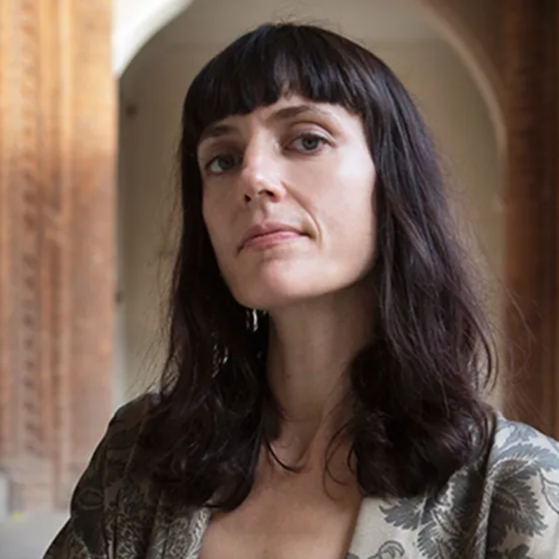
Astra Taylor is a filmmaker, author, and activist. Her documentary films include Zizek!, The Examined Life, and most recently What Is Democracy? Her books include The People's Platform: Taking Back Power and Culture in the Digital age and the new Democracy May Not Exist, But We'll Miss It When It's Gone. She has taught sociology at the university level, and written for publications from n+1 to The London Review of Books. She was active in the Occupy movement, and is a co-founder of the Debt Collective.
Click to Show Episode Transcript
0:00:00 Sean Carroll: Hello, everyone, and welcome to the Mindscape Podcast. I'm your host, Sean Carroll. And several years ago, I watched a documentary about philosophers called Examined Life. There aren't that many documentaries about philosophers, and it was just a very enjoyable, thought-provoking kind of experience. You had these philosophers out there in the world. They weren't just behind their desks, in their offices, or lecturing in a hallway. They were out there in cars, on the streets doing things, and then talking about the relationship between philosophy and practice, and the real world. So, I was interested to find out that the documentarian who made this film, Astra Taylor, has recently been working on the idea of democracy. She has both another documentary that just came out called What Is Democracy? And she has a new book that has just come out called Democracy May Not Exist But We'll Miss It When It's Gone.
0:00:53 SC: I think that's almost exactly right, you know, as soon as you say, "Well, democracy blah, blah, blah." So many people say, "We don't live in a democracy," either "We live in a republic," or they try to say, "Well, we don't really have the voice that we should to truly make it a democracy," and so forth. And so, Astra is saying, "Yes, that's right, but there's still good things about democracy that we should think about. Try to make them better rather than just despairing that it can't be done." So, she goes all the way back to Ancient Greece. Plato and Aristotle, our founding philosophers, were notoriously against democracy. They didn't really like the idea, but Athens was definitely the touchstone for the flowering of democracy subsequently, in the Western world, at least. And Rome, as those of you who listen to Mindscape know from my conversation with Ed Watts, Rome was more of a republic than a democracy, and it's interesting to compare those. And it's interesting to move forward to the present day, where we have technology and we live in these huge societies where the relationship between the individual voters and what their governments do grows increasingly tenuous.
0:01:54 SC: So, democracy is on the one hand very, very important to us. On the other hand, it's taken for granted a little bit, and we should promote democracy, I think. But also, we need to keep it on its toes. We need to make sure that it's really doing what it is there to do. There's good questions to ask about whether democracy is the right thing to do. From a philosophical, intellectual viewpoint, we should always be probing whether we're on the right track. So, I think that democracy is a fantastically important part of our world, yet something we don't actually devote enough brain cells to really thinking about in a deep way. And I think this conversation helps us do that in a way that is also very entertaining.
0:02:33 SC: Reminders, of course, this is a podcast, so you're welcome to go onto iTunes and elsewhere and leave reviews of it. We also have a Patreon account where you can support Mindscape. We have ads coming up, but the Patreon supporters will certainly still get benefits. For example, you get ad-free versions of the podcast, if you support on Patreon. And also, we get the monthly ask me anythings, where you can ask me any question, and I will try to answer it in a special podcast just for Patreon supporters. So, there's still some motivation to go there. With that, I think this is a wonderful conversation that is both philosophically provocative and very, very relevant to how we live in the world today. So, let's go.
[music]
0:03:29 SC: Astra Taylor, thanks so much for coming on the Mindscape Podcast.
0:03:32 Astra Taylor: Well, thanks for having me.
0:03:34 SC: So, I am familiar with some of your films back in the day, Zizek and the Examined Life, and these were about philosophical topics pretty straightforwardly, right? And here you are with a new book out, and also a new documentary about democracy. So, why don't you tell us a little about your journey from slightly more abstract, ivory tower philosophizing to a little bit more down in the political mess kind of thinking and activism.
0:04:04 AT: Yeah. It is... It seems like they might be unrelated, but to me, they really are. I have always been someone who wanted to marry theory and practice. So, I could never quite become a full-time philosopher myself, [chuckle] could only be a scholar, because I always wanted to experiment with my ideas, and especially, if they relate to ethics and politics, and the question, that old Socratic question of how should we live. Well, you can't decide that on your own. You can't really figure that out definitively on your own. And so then, the question for me has been, okay, well, how do I build this kind of life where I get to engage with questions, philosophical questions, theoretical questions, have a kind of life of the mind, and also, the life of a person trying to embody those principles in some ways. So, I do that through organizing, and I do that through writing and I do that through filmmaking. So those films... Zizek came out in 2005, so I was 25. Examined Life came out in 2008, and those were... The tagline of Examined Life was Philosophy Is In The Streets.
0:05:15 SC: Right.
0:05:16 AT: So, what I wanted to do with that was to show the way, these abstract ideas are actually all around us. They're built into our environment. They're in the space we inhabit, and to treat ideas with a bit of a reverence and playfulness. So, I have all these philosophers sort of traveling through different places, and even rowing a boat or [chuckle] walking through a garbage dump. I'm trying to also, you know, in a way express my own enthusiasm for philosophy and to share it with people, and to share it in a way that didn't intimidate them, [chuckle] I hope.
0:05:45 SC: Right. Yeah.
0:05:46 AT: I wanted to make it fun and engaging, but then I sort of felt after Examined Life came out like, well, this isn't... I didn't dream of being a filmmaker. You know, I... Again, I want to bring these ideas... I wanted to kind of go the next step, which for me was actually trying to get more involved in politics and organizing. So, that's... So, when you look at it that way, then What Is Democracy, which is the name of the documentary film and the companion book, Democracy May Not Exist, But We'll Miss It When It's Gone, it's kind of... It's actually a very clear kind of next step and I will say this about it. Democracy in my mind, as I understand it and I say this in the preface, demands philosophy. Democracy is intellectually hard. That's a quote from Danielle Allen, a classicist, and who I interviewed. And it's hard because at the center of democracy is an abstraction, the people, right?
0:06:45 SC: Right.
0:06:45 AT: The people doesn't just exist like a fact out there in the world that we can point to. And so already you have this abstraction. And how do you have an abstraction? Deciding things and making ethical decisions and governing itself. So philosophy is sort of part and parcel of democratic life. And we hint at this in our media when we talk about deliberation or debate, or even this whole conversation happening now about facts, the truth. But I think it's... So democracy is theory in practice always. It's like we have to reflect and act, and reflect and act. And so the film is an attempt and the book are both attempts to just sort of bring that philosophical dimension into focus. And my feeling is, it can help us at this moment of political crisis, but other people might not agree. That's democracy.
0:07:36 SC: Well, I do think... Yeah, exactly. I think that because we're so... Most of us in this country grew up in a democracy, we tend to forget or at least underestimate how philosophically radical this idea is. And the idea that just everybody has a voice or supposedly has a voice in how the society is run, certainly comes along with a whole bunch of presuppositions about who deserves to have power and things like that. So philosophy should be part of that. It makes sense to me.
0:08:08 AT: Yeah, and but what's interesting, so the both of the projects go back to the founding text of the Western philosophical tradition, Plato's Republic. And it's the founding text of Western philosophy and it's interesting 'cause it's anti-democracy. It is written at this moment when Athenian democracy is in decline and Plato is saying... He is issuing a very powerful critique of democracy in a nutshell, and he basically says democracy marginalizes the wise. His definition of a philosopher was someone who loves wisdom and the virtuous. And he had reason to think that because the democracy put his mentor, Socrates, to death. They said, "Hey, you can either be exiled or you can drink the hemlock." And he was too proud and he drank that hemlock.
0:08:51 AT: So there's always been this this concern, it's a concern that's ancient, that, well, the people aren't philosophical, they aren't wise. And so I think, you see this in my work again and again where I'm saying, "Well, we have to create a philosophical public." This is also... It's also about democratizing, not just access to knowledge or information or facts, but of confidence that one can participate in a certain kind of conversation and precisely because that abstract reflection is demanded by the political system that we say we have, we say we aspire to, so we better do it.
0:09:33 AT: There's no other way, there's no way around it. You can't have democracy and not aspire to have a philosophical public because democracy has no... There is no barrier to entry, right? It shouldn't be based on the color of your skin, how much money is in your bank account or what school you went to. It's like, "Sorry, we can all be part of it."
0:09:50 SC: It's for everybody, right. Well, you're preaching to the converted here at Landscape central. This is part of what I'm trying to do with the podcast is talk to people about big ideas in a way that is made possible by this new medium. So I really do want to get mostly into democracy, but I have to ask sort of a strategic question about writing books versus making documentaries, right? How do you visualize those two very separate but related activities? Most people would do one or the other, but you try to get both going.
0:10:23 AT: Yeah, and then I want to ask you a question because that's what I always like to do.
0:10:26 SC: Sure.
0:10:27 AT: So I mean to me, I think I'm medium agnostic and medium curious. We have all these different mediums and I'm not a Marshall McLuhan, the medium is the message. And so, each medium is... But there is some truth to that. Different mediums have different affordances, different capacities, they conjure different affects.
0:10:53 SC: Well, and different audiences, right?
0:10:55 AT: And different audiences, right? So for me, it depends... And I see organizing as a medium. So when you are building an institution, that's a medium through which human beings interact and perceive the world. And so it just sort of depends on what has captured my attention. Film is more akin to a podcast in the sense that it's direct, it has an emotional quality, because my films are mostly made up of interviews with people, and so there's the words that they're literally speaking, but then there's all of their expressive aspects. And whether you empathize with them, whether you like them, whether they're charismatic or not.
0:11:40 SC: I get a lot of comments on the podcast about the fact that it's audio only, and I'm sympathetic to this, 'cause it really does matter to see people talk. But so far, I don't have the technological capabilities of that but maybe sometime in the future that will happen.
0:11:54 AT: Well, it's funny, 'cause I often think podcasts are great because you don't have to see someone. So it's like what if the background's ugly or what if it's raining outside.
0:12:01 SC: Right, yes.
0:12:02 AT: Or they're brushing their nose in an awkward way. Then it's all that matters is what's said. But even at film. My film is an hour and 45 minutes or so, but if you transcribed it, it wouldn't make rational sense because there are these leaps that film allows. And also it wouldn't be very long, it would be like an academic book chapter or something like that. So the film allows for me to give space to other people, to honor them, to be interested in them, to actually kind of express to the audience my own curiosity about other people, which I think is important, which is kind of what you're doing on this podcast. You're saying, "Hey, I might be this amazing physicist but I'm still curious about people. I still want to ask questions."
0:12:44 SC: Very much, right.
0:12:44 AT: And I think asking questions and having that curiosity, I'm almost as interested in having that be part of my propaganda. We should be curious about others as the more traditional political takeaways of the film. And in a book, you get to write at length. You get to have footnotes, all of these things, all of these details that would just weigh a movie down.
0:13:07 SC: Sure.
0:13:08 AT: You can't stop and say, "Hey, check this page of this obscure text, Machiavelli or Madison or Marx or whoever." So that's where I get to be more didactic. I also get to say more... I get to express my point of view more. So the mediums have different... They're different depending on what it is I'm trying to communicate. When I go speak at colleges and young people come up to me and say, "I really want to be a filmmaker," I'm always slightly befuddled because to me it's like, "Well, that's just a shell or a vessel. What is it you want to communicate?"
0:13:42 SC: Yeah, that's a good point, right.
0:13:45 AT: 'Cause there's lots of terrible books in the world, there's lots of terrible movies. It's like... To me, it's the message, the story, the thing that you want to share with other humans.
0:13:55 SC: Yeah, because I think that at heart your essence is not a filmmaker, you're an intellectual/activist, right?
0:14:01 AT: Yes.
0:14:01 SC: I remember when... 'Cause I'm a science consultant sometimes for movies, and so I got to meet Ridley Scott, who was thinking of making a movie of The Forever War. And I don't think it has happened, maybe it will never happen, but... So it's based on a novel already, so there's some plot, but there was no screenplay at the time when we met with him. But he clearly in his mind had certain scenes already perfectly mapped out visually. And it was very clear from talking to him that that's what he was about, making these wonderful visual moments and then the plot, "Whatever. Okay, we'll figure that out, what happens in the movie comes second." I think it's perfectly okay, but it's a very different thing than someone who is just about the message or the substance and then finds different media in which to express it.
0:14:46 AT: Yeah, I think it's really different. And I'm very charmed and interested in people who are visual first or say, "I had this image of a girl walking through a field of sunflowers." A filmmaker friend literally said that and I was like, "That was enough." It's beautiful.
0:15:00 SC: Yeah. It can work.
0:15:02 AT: It's a beautiful thing to make other... To have other art forms. But again, it's not me. I was interested in you because I think... And I write about this a little bit in the chapter on education in the book, but there are kinds of expertise that you're almost a cliche of a person with knowledge, being this theoretical physicist.
0:15:21 SC: Credentialed and so forth. Yes.
0:15:24 AT: Right. And yet... And so what... But yet you're still open to this idea of democracy as an intellectual pursuit that needs to include everybody. I'm just curious if that just feels... Is that just something that is almost like an instinctual sense of trust of other people or...
0:15:41 SC: Well, yeah. This is definitely something that I want to talk about. So let's talk about it.
0:15:44 AT: Yeah.
0:15:45 SC: Democracy, one of the radical parts of it, is the idea that everyone not only has a voice, but is in some sense ideally equal, right, one person, one vote. Of course, there are distortions to that, from power and money and so forth, but that's the ideal. And there's clearly a worry that some people don't really deserve as much of a voice. If you're sort of... These days, we would call it technocratic. If you think there's a right answer to what government should do at all times, isn't it the case that the smart people are more likely to find the right answer?
0:16:21 SC: But I always thought... It was never very hard to me, I just thought it that was the wrong way of thinking about how a government works and the purpose of democracy. The purpose is to make sure everyone's interests are represented, right?
0:16:34 SC: I feel bad because I'm very middle-of-the-road about these things. I like the idea of a representative democracy in which people vote and they express their interest by doing that and then their representatives gain expertise in various ways and implement the policies the best way possible. It seems very bourgeois and so forth. I think that when that system works very well, it's the right thing to do. And so I think that the right place for expertise is at the level where we've already recommended. Sorry, we've already elected our representatives and those people ideally will go to the experts to find out what's going on.
0:17:08 AT: Yeah. I'm not unsympathetic. I think I say something in the book that's like, "I don't want to be involved in every decision," right?
[chuckle]
0:17:14 AT: That expertise is an essential... I think when that becomes abstracted to the level of like, "Okay, well, let's just let technocrats govern or the experts govern," then it becomes more of a problem.
0:17:31 SC: Yeah. Oh, no, absolutely.
0:17:33 AT: Because they become a self-serving group and maybe there's no accountability. So, it's funny, I wouldn't describe myself as middle of the road, but I'm always trying to find the complexities or find the balance in things or where... And I think expertise is really interesting, 'cause there's something undemocratic about it because...
0:17:55 SC: Absolutely.
0:17:55 AT: Not everybody can be an expert at everything, and yet we desperately need it in a society that's complicated as ours.
0:18:00 SC: Well, I think it's a huge worry. I think that one of the sets of people who reject democracy implicitly or explicitly are people or the masters of the universe who think that they know what's best and think that basically they should have the voice. And in some sense, I had a podcast interview with Yascha Mounk about liberal democracy and how it's failing. And his point was, the word liberal is not just there to make it a longer phrase. It really means something, it means a certain set of protections for people. And populist movements can be very democratic as long as they define democratic in the right way. And his theory is, that a lot of the attraction to populist movements is that democracy is seen to not be working in places like Europe where the European Union has put so much power into technocratic elites, so that the person on the street thinks nothing that I do has any impact on what the government does. And I think that... I'm not an expert in it, I don't whether that's true or not, but I do agree it would be bad if that were the right case.
0:19:00 AT: Well, to bring it back to the United States, there does seem to be quite a bit of evidence that regular people don't actually have any say over the policies. So there was the famous study that became known as the Oligarchy Study, but I don't recall the actual name.
0:19:13 SC: What is that? I'm not familiar with the Oligarchy Study.
0:19:15 AT: So the political scientists were Gilens and Page. It was... I think this was maybe 2014. I feel like time is speeding up. I can't remember when things came up.
0:19:24 SC: I can explain that using physics.
0:19:24 AT: But essentially, they crunched the numbers and they said, "Regular citizens have virtually no impact over policy." It's big donors. And again, these are things people know in their guts even if they haven't read the social science research. And I think that's part of the frustration. Yascha Mounk is an interesting example 'cause I read his book and I was very surprised to see my name mentioned as a populist.
0:19:50 SC: What?
0:19:51 AT: And I had written, yeah. I had written a book. I mean, sorry, I had written an article where I said, "Well, hey, part of the problem... " And it was for the New Republic, which is a bastion of liberalism, actually, But I said, the point of it was basically that they're in the wake of the election dawn. So there's a big anti-democratic urge coming from elites actually, right? The sense that the people had made a terrible mistake, there was actually this resurgence of interest in Plato's Republic. Maybe democracy does always devolve into tyranny. And I understand why that was happening, but my sense was, my point was that the problem is, in my view, that we haven't democratized enough, that there's still work to be done. Let's not name democracy as the problem. Let's fight over what we mean by democracy and democratization. Let's look at the concentration of wealth and power. Let's try to look at the sources of people's frustrations and address those.
0:20:48 AT: And so I think I come at it from a different angle because I still... I'm... Whereas some people are very worried right now about a sort of populist threat and sort of the question almost of the tyranny of the majority, right? The people and their unruly passions. So again, the Plato thing. I'm more concerned about the points of minority veto power in our political system right now, in the way that progressive desires are actually being thwarted. Because if you look, for example, there is rising xenophobia. There's horrible things happening right now at the border, and there are very scary, scary trends, not just in the US but in Europe and beyond.
0:21:40 AT: And yet, polls show that actually Americans have more positive views of immigration than they've had since 1965. Americans want gun control. Americans want all sorts of progressive forward-looking things, and they're blocked because of, again, these veto points, structures of minority power, the Supreme Court's going to be worse on this moving forward. The Senate is also a minoritarian sort of institution in the sense that less populous states have disproportionate power. The Electoral College obviously is what really gave us Donald Trump as the president. So that's where I'm always trying to temper this condemnation of the people and say, "Well, hold on. What are the structures that are actually blocking the more progressive will?"
0:22:24 SC: Well, it's interesting, so I think that the... What I got from talking to Yascha was the idea that populism, its self-conception is very democratic, but it's always at the cost of shrinking the circle of the people who actually count as the ones who get to vote, right? So excluding foreigners and so forth, or minorities.
0:22:40 AT: Yeah, it's interesting. All definitions are unsettled. And so for me, I also see... Again, to go back to the question of democracy. So what we can... I always joke because people bring up issues of populism and liberalism in the Q and As for my film especially, and I'm always like, "Okay, yes, I can. My next even more unmarketable film will be what is populism."
[chuckle]
0:23:07 AT: To begin with, the titular question of my film, what is democracy? And I like to go back to the Ancient Greek roots of the word. And I think it's very important to be clear that the Greeks didn't give us the practice of democracy or of people engaging and trying to have power over their own lives. But they gave us this word and I think it's a really great word. And it's the demos, the people, have kratos, power or rule. Hold power, grasp power. Meant to sort of hold on to something. And so, this question of who the people are is constitutive of democracy itself. It's not a populist aberration to be fighting over how we define this. It's something that we have to kind of face head on.
0:23:49 SC: It's a question that is begged by the idea of democracy, right? Who are the people who have this will?
0:23:55 AT: It's just part of our struggle. And so it is true that there's this, you can call it, small p, populist tendency to say, to do a kind of us or them and exclude immigrants and foreigners. But then as I said, it's also just the problem of democracy itself. How do we define the demos? How do we define the polity? How do we define the 'we' and make that 'we' accountable? So I think this is a problem that we have to face and it gets really, it's a really thorny, not just philosophical issue because people's lives are at stake. But we've shown that demos can radically expand and it can radically contract. And I think the point is to recognize actually how things are today are not set in stone and that's what we have to always remember to have to keep an imaginative flame alive.
0:24:55 SC: Yeah, you can't do democracy without... Well, this question of who counts, right? Who is in the demos? Who's a person? You can't just say everybody, right? Because there's no democracy ever that has given people the right to vote the moment they're born. For example, we exclude children. Historically we've excluded women and various groups. I had an interesting podcast interview with Ed Watts, the historian, about the decline of the Roman republic. It was actually replaced by an empire, but it succeeded very well for 500 years and part of its success was whenever Rome would conquer another country, they would very quickly give them the right to vote in Roman elections. And that seems a little weird to us today but it worked really well for them at the time. It just is a reminder there's no clearly right and wrong way to draw these lines.
0:25:42 AT: Well, it's interesting because the empires have often done that, right? The method, the Roman empire's a great example, was just like, "Okay, fine. Now, you're a citizen, right? Now, you are being assimilated essentially by us." And democracies do have an unappealing tendency towards the opposite, which is to exclude. And so, to contrast Rome with Greece. Greece was... Athens was extremely exclusive, because you had to have two citizen parents at a certain point. They said, oh, actually... No, you used to only have to have the one citizen parent, then they made it, that the mother also had to be a citizen, so made that bloodline even more constrained. And if you look at... I talk about this in the book in the chapter on inclusion and exclusion that for example, Canada. So, I'm Canadian, but I grew up in the American South, but when Canada was part of the British Empire or that constellation, it was more open to immigrants and then when it separated itself and had control of its citizenship laws, it started to become more exclusive. So there's some really troubling...
0:27:03 SC: More Canadian-ness.
0:27:04 AT: Yeah, there's some really... And then they were like, but hold on, what is Canadian-ness? And so in this process of even inventing what it meant to be Canadian, they started to close the door to people from other parts of the world. So this is, it's definitely one of democracy's least appealing features. My point, I think what makes it really hard is that right now it's difficult just given the state of the world to imagine forms of constructing a demos or a people that aren't really negative. Because we're living in a moment where the exclusions are founded on really troubling histories. So histories of racism, histories of colonization. Immigration law is designed to exploit labor forces, right? So then we're not really in a position where we can ask, well, hold on, when is setting the boundary of a community actually ethical, when do people need to be involved in a decision or a...
0:28:07 SC: You mean because when we... On the one hand, we have to do that. But on the other hand, it's hard to separate the fact that we've been really nasty about these things going in the past.
0:28:14 AT: So yeah, right now exclusions are predicated on terrible things like your race, the arbitrary fact of where you were born and they were based on gender and sexuality. Exclusion does not have a pretty history and yet...
0:28:30 SC: You remind us that Switzerland only gave women the vote in 1971 or something like that.
0:28:35 AT: Yeah, right, and this is all really, really recent. So I think the thing is under what... And yet I agree we can't imagine democracy including 8, 9, 10 billion people, because that would be incoherent. So I think we... But there has to... We have to wrestle with this fact that at a certain point, yeah, you do have to have, you do have to have boundaries. And I think for me the solution is that we have to create a more equal world, where in a world that is so terribly unequal, where the thing that determines the quality of your life, your life expectancy, is not what a hard worker you are, or how smart you are, but just basically where you were born.
0:29:15 SC: Where you were born. Yeah.
0:29:16 AT: Right, and your passport. And so, in a world like that, exclusion is a matter of life or death. In a more equal world it would be a very, very different calculus and the fact is in a more equal world, a lot less people would want to move from where they are.
0:29:34 SC: One likes to think.
0:29:34 AT: And abandon their community.
0:29:36 SC: Anyway, so one of the issues I wanted to ask about was the relationship of democracy, which we... Let's put aside the idea that democracy is not a good idea. Okay, there are people who think that, but let's agree that democracy is good, but there's lots of things that are good, equality and liberty and justice and economic freedom, healthcare, whatever. How do we... Do you include all those good things in a definition of democracy or do we try to slice it, so that we can consider all these virtues separately?
0:30:07 AT: I don't have a hard and fast answer to that. I think that that's something that every generation will have to reassess because we have, I think we have shifting expectations and shifting baselines. So I think democracy does demand by its definition, by its minimal definition of the people ruling, a baseline of equality. Of political equality.
0:30:30 SC: Political equality, right.
0:30:31 AT: Yeah, and I think that you cannot have political equality under conditions of intense economic inequality.
0:30:37 SC: Yeah, I think that's a reasonable claim, but it's one that you have to, it's work to establish it and really convince people. Yeah.
0:30:42 AT: And it's still controversial to a lot of very powerful people and maybe some less powerful people who aspire to having that kind of idea. What is the phrase? It's like everybody... We all think we're going to be millionaires one day, so we hold political ideals for those incredibly fabulously wealth future selves. So I think there is this, I think there are some minimum requirements. Should we separate out these other values from democracy? I think we have to decide is, we have to decide what are the values that we are oriented towards as a people. So, yeah, maybe they're separate, but then they become part of the democratic project. Like it becomes sort of implicit that, well, democracy, well, in the phrase of the Constitution it's the pursuit of happiness. I'd rather have it be just well-being or something like that.
0:31:46 SC: Flourishing, yeah.
0:31:46 AT: But we... Collective flourishing or something like that. So it's very hard to just separate the ends from the means, the goal from the process, and yet, I do think that that again, they always, those values always have to be assessed and reassessed.
0:32:05 SC: Yeah, this is something...
0:32:05 AT: And we might aspire to things, we aspire to things obviously that 100 years ago, people would have just been like, "What the hell are you people aiming at or who are you people? A lot of you people are not supposed to be in the people." [chuckle]
0:32:18 SC: And a hundred years from now, what will that discussion look like about us?
0:32:21 AT: It's exactly the kind of thing I like to think. And you spend your life in science, physics, universe time. But sometimes I want to say, even in our more mundane conception of time, but hopefully, a hundred years from now, there will be new assumptions and new aspirations that make us look backwards, and that's part of why...
0:32:43 SC: I hope so. We like to think progress, right?
0:32:46 AT: Yeah, and that's part of why I like the word democracy in its vagueness, because who the people are is open for debate and how they rule is also open to contestation and transformation. So, I like that this concept that we have this word we can hold on to, but we can also really radically reinvent it.
0:33:05 SC: Yeah. This was impressed on me, actually, believe it not, when I took a class in grad school with John Rawls, the political philosopher, and he...
0:33:12 AT: Oh, wow, I've never met... He's a titan.
0:33:16 SC: He was, yeah. He was an amazing guy, and actually, I always find it funny because he loved cosmology and physics, so I really never got to talk to him about philosophy 'cause he always wanted to talk about cosmology whenever we chatted. But he had this... His motto was "Justice as Fairness" and ordering a society on the basis of fairness to everyone. And happily, because this isn't always true for our great thinkers, but he lived by what he preached, and he was the fairest guy I ever ever met. And one of his things was, he had an ongoing challenge. If you can find a logical flaw in his principles of justice, then he gives you $100 or something like that. And no one ever did it, right?
0:34:00 SC: He listened if you had a proposal, but one of the things was, of course, these principles are having to do with don't allow inequality unless it benefits even the least off in society. You would come up with something. "Well, what if there was an epidemic and everyone was dying, and you had to do something like that?" But he was very clear that he meant his principles to apply to a well-ordered functioning healthy society, right? And that was all a pre-condition for making any of this happen. And I think that even if you're not a Rawlsian, there's an under-appreciated aspect of democracy that if not requires, then at least suggests that everyone should have some minimal both economic and political resources.
0:34:45 AT: I think it does, because you can't be... Again, if democracy is people engaging in ruling themselves, if you are... Well, if you don't have the minimum subsistence, not just to survive, but also so that you can't be terribly coerced, right? Then you can't engage in the processes democracy requires. But this is also... We take this as common sense, but at different moments in history, people looked at this in different ways. So, for the Ancient Greeks, there was a contempt of labor. They associated leisure with democracy, with that freedom, that space to govern. In fact, I just learned that the roots of the word school was actually also had to do with free time. They needed that time to engage in the learning, to engage in the more elevated modes of life, which included being able to go to the assembly and stuff like that.
0:35:50 AT: And so, there was a whole enslaved laboring class. And the United States was also... Is a democracy that was founded on unfreedom, on slavery. And there was also a sense that working people just were subject to coercion, not necessarily like freehold farmers who had their own land. That's why the yeoman farmer was this ideal, but people in the factories or slaves. So, there was this sense that laboring people didn't have what it takes to cover themselves.
0:36:31 SC: Yeah, you couldn't stand up. And you had this wonderful scene in the film where you're interviewing these school kids in Miami, I think it was. And you ask them... You bring up the possibility or the prospect that they could have a voice in how the school was run. And they point out that when they try to ask for things, their privileges can be taken away, right? Their vending machines can be taken away and this actually happens. And part of that, of course, there's a surface of saying like, "Yeah, this is why kids don't get to participate in democracy." But then you think about it and go like, "Oh, wait a minute, maybe I'm the kid in this parable, right?" Like, maybe all of us are subject to having our privileges taken away in some way.
0:37:12 AT: I really like that, and I'm happy that's how you interpret it 'cause that's how I see it, too. I think the scene... And it's interesting 'cause the film and the book are companions, but it's not like the book is a transcript of the film, and yet the kids live in both mediums. They got to be in the movie and the book. And they're important because when we're thinking about the problem facing our society right now, one solution we tend to hold on to and we tend to focus, education, like, "Okay, democracy needs education." And it's true, it does, but then the question is, well, education to what end? What are people... What are the lessons people are being taught about democracy? And so, by going to this public school in inner city Miami, and so I spoke with kids who are... They're like middle school age, so maybe they're 11 through 13 or 14.
0:38:04 AT: And what you see is that they are being taught lessons about democracy, but they're very dispiriting ones. They're essentially... There's a kind of hidden curriculum, right? That's not hidden to them, I guess, because they're gleaning its messages, but basically, they're being taught to grin and bear it.
0:38:21 SC: Their place in the world, yeah.
0:38:23 AT: They're being taught their place in the world. So, what I... The thing about the vending machine comes up 'cause I ask them what they would change about their school. And they say well what they'd really like is for their food to be hot. It doesn't taste good, but at least it could be warmed up. And then the administrators come down on them.
0:38:41 SC: Just asking you so much. It's just unbelievable they would be so greedy.
[chuckle]
0:38:45 AT: It's just such a reasonable demand that they have, right? They just want their lunch to be hot. And then the vending machine thing comes up, because this one girl... And at first you think, "Oh, God, right, should kids be eating junk food at their school?" But then what you realize is, she's saying the kids don't have breakfast at home, that's their only chance to eat. And so these kids are very astute, they're so young, they're very astute. And what I was struck by is that they don't blame their teachers for their problems. They have an analysis of the power structure, so they understand the teachers are controlled by administrators who are controlled by the state, who also...
0:39:20 AT: So they see the adults as powerless. So this idea that we are the children in the parable, it's because the children are saying, "We know the adults are powerless too." And so I wanted that scene to be in the film so that we would have to ask, "Okay, well, what kind of education?" And in the book, I'm able to go more deeply into the battle for universal public education where that idea even emerged. So breaking with the Ancient Greeks, breaking with the founding fathers and saying, "Well, no, we can't just have workers who don't get time, who don't get time to feed their minds and to be full people." And in the book, I show that working class movements have always been at the cutting edge for the demand for not just skills training, but for education to be a whole thinking participant in public life and sort of giving the people who don't usually get credit, the credit I think they deserve looking back historically.
0:40:21 SC: And there's this wonderful other powerful scene in the film where you're interviewing the barber, who is an ex-con, who explains... I forget what was his name? Do you remember?
0:40:31 AT: His name's Ellie Brett.
0:40:32 SC: Ellie Brett. And he explains when he was in prison, he's still a very young guy, the punishment for them misbehaving was that their library was taken away, and the prisoners actually went on strikes to get their library privileges. And it was an even maybe overly on the nose example of the power structures trying to keep the people from learning things. And yeah, preaching to the converted once again, I certainly think that even though I would love... I don't have a lot of data about this, I would love to see some more social science research, but I have this feeling that the more educated we make people the better off the world is in some large scale way.
0:41:12 AT: Yeah, when Ellie told me that story my jaw literally dropped because it was actually, so it was 2000, it was actually 2016, end of 2015 when I interviewed him. And I thought I knew a lot about criminal justice and what people go through, but just the fact that he had to be part of a struggle for something so basic as the right to read, right?
0:41:39 SC: Yeah.
0:41:40 AT: And then it was very interesting, because when the film was released it premiered at the Toronto International Film Festival, and there was a wave of prison strikes happening around North America, and there was actually a strike in Nova Scotia, Canada.
[chuckle]
0:41:51 AT: And the demands of the prisoners there was, "We want the library, they've taken the library away." And so this only makes sense... If you look back on history, this happened... He says it used to be illegal for people like me, black people to read. And it was a crime to teach a slave how to read. I was just reading a history of the labor movement in the US. Books and reading materials, magazines used to be banned from factories. And it was not because they didn't want people to take it. It was that they didn't want people reading, engaging in the life of the mind.
0:42:27 AT: So I think the thing is that there is something very threatening about an educated public. And I think that that feeds into the attacks on public education and higher education today in this country. And so we're still... History's not behind us, we're still part of the struggle. And so, the film aims to give that sense of urgency, of just how unjust things are when kids and even adults are having to fight just for basic access to materials and to having what they need to learn. But then also saying, "What does that, actually what does that say about the broader structure and what does that say about those of us for whom the education system has basically kind of worked out."
0:43:20 SC: Yeah, well, something I've railed about for a long time to no end whatsoever is just this weird idea we have in the US that we fund a public education through local property taxes. It's sort of the most obvious way that the rich can get richer and the poor can get poorer. I see no justification on the surface for thinking that if you are born into a wealthy family, your public schools could be better. Not only could you afford to go to private schools, but if you just happen to be born into a really poor neighborhood, then you're going to get less resources from the start.
0:43:54 AT: I feel like this definitely fails the John Rawlsian test.
0:43:57 SC: Oh, yeah.
[chuckle]
0:43:58 AT: Right. Like this totally fails a Rawlsian kind of like how... What kind of... You didn't know what zip code you were going to be into born into, would you accept this as a principle for funding K-12 education?
0:44:10 SC: Right.
0:44:11 AT: No way. It makes no...
0:44:12 SC: In the original position you would never accept this, right?
0:44:14 AT: Right, right. From the original position you would never make... This makes a farce out of the idea of education, but as I point out in the book, education is not a right, it's not in the Bill of Rights. It's something... When we think about what our democracy is and these values that might be attached to it, I think education is a good one. Just like we said, political equality requires a baseline of economic equality, also the baseline of education. So I think that in theory should be a right, but it's not a right on paper in this world.
0:44:46 SC: Yeah.
0:44:47 AT: Maybe I think it's in human rights law, but not nationally. And that's something we almost forget because it feels like a shibboleth or something like that.
0:44:57 SC: Well, yeah.
0:44:57 AT: But equalizing funding for K112 education I think would be such a rational first step of it, education reform.
0:45:06 SC: Yeah. Alright, well, when they elected us to be the...
0:45:09 AT: Dictators.
0:45:10 SC: Dictators of the world. The benevolent dictators, let us make it clear.
0:45:16 AT: Yeah. I have a more... But I have a very odd educational background, because I was un-schooled. So I didn't go to school as a kid. And I think that that, to me, I feel like we have to... The horizon, the democratic horizon in terms of education, and creating this philosophical public that I believe could be, is I think involves working with the system as it is and imagining how to expand it and fulfill its promise. But then I also think about what could go beyond that. So when I was a kid, I didn't go to school. The idea was a very sort of Rousseauian romantic idea. My parents thought human beings are naturally curious. And so instead of giving carrots and sticks and grades and tests and stuff, just let your kids do what... To follow their curiosity. And so I don't think that scales. And I really do...
0:46:15 SC: No, it's...
0:46:15 AT: Obviously, as we've discussed, believe in public education, but there's something. For me the next level would be expanding more of that trust. The trust of, okay, letting people get in touch with what their interests are. And I think that, because I think that trust is actually really essential to democracy. Because it's again, it's this idea that we're going to rule ourselves. So that makes no sense if you actually don't have some trust in other people. So I like... It's like what would come next? If we could just make sure every kid had access to a decent school and a hot lunch and the supplies they need, what would come after that?
0:46:54 SC: Yeah, no, I think... Well, there's a really deep question here that I don't think that we ever... That I don't hear much discussion about. On the one hand, I think that among the choices one as a responsible grown-up adult should be allowed to make is, "I don't want to learn anything more." I think some of us are just naturally going to do it all the time. And it's fun, it's part of who we are. I don't want to force it on anybody. If that's... I'm a big believer that we intellectuals need to do a better job of appreciating the simple pleasures of people who are not interested in the kinds of things we're interested. That's okay. But when you're a kid... I would almost be on the flip side of that. It worked out great for you. Previous Mindscape guest Malcom MacIver, also is a Canadian and self-schooled. I don't know, maybe there's some connection there.
0:47:39 AT: Interesting, yeah.
0:47:39 SC: Yeah, and he turned out really, really well. Professor at Northwestern, etcetera. But I can imagine plenty of kids for whom that would not work. So I do believe that there should be some minimal requirements out there where when you're below a certain age, you gotta go to school. You gotta teach us some stuff. I remember my love for philosophy only came about because it was required courses when I was an undergraduate. I had no idea that I would be interested in that. And I was forced into it, and I fell in love.
0:48:06 AT: No, and I've had that experience too. Where I had to take something and then I was like, my mind was blown by it, and it's not something I would have found before. So I think again, it's this thing with like how do you find that balance of sort of giving... I write this in the book. But I think one thing that the unschooling experience gave me... And again, it's sort of this thing, how do you institutionalize it? Was I came to really respect other people's intellectual authority, because they knew things I wanted to learn. And so I didn't engage because I didn't have a teacher. I wasn't sort of afraid of teachers. I wasn't afraid of being punished or afraid of detention, and or afraid of doing badly on... Or getting in trouble, somehow. So I think there is somehow a way to square this circle and to cultivate a space where people... Where learning's just a more positive experience too. And where the person introducing you to an academic discipline, for the first time, isn't also really... They're also just this figure who's disciplining you.
0:49:14 SC: Yeah. No, I think...
0:49:14 AT: In this way. So what you see with these kids in the scene in the film is that they've got these harried teachers who probably have a classroom of 40 students, don't have the resources they need and so there's not... There isn't the space. There just isn't the capacity to have that experience of really learning and having that introduction to a topic that really compels them, and I don't know. So I... But who I am and how I approach the world is so shaped by my very eccentric upbringing, and there's no denying it.
0:49:51 SC: Have you seen... Did you watch The Wire, the TV show?
0:49:54 AT: No, I haven't seen it.
0:49:55 SC: Season four of The Wire is enough to convince you to despair of any possibility of public education as it is currently constituted. But we would like to do better. Yeah, and I think that a big part of... Science in particular, what you just said resonates extremely strongly. The idea that the way that we do teach sciences, here are some facts, you should learn them, and then tell them back to us on the test. The way that we do science is a constant series of failures. Of making proposals, hypotheses, testing them, they were wrong, go back and forth. And that simple paradigm is very helpful even if you're not doing science. It's a way of looking at the world that doesn't come across in education. And that's partly because the teachers are not really scientists, they're not taught that way. Partly 'cause they're harried and they don't have enough resources and they have too many kids. And certainly, for a lot of... I've met substitute teachers who worked in really bad school districts and literally more than one person independently volunteered that the goal is to have no one die when they're there. It's not about the life of the mind.
0:51:00 AT: Yeah.
0:51:00 SC: It's about just the physical integrity of the students in their class and themselves.
0:51:04 AT: Right and it's just like in the richest country in the world we can do better.
0:51:07 SC: Yeah. You would like to think that. Okay, to switch gears a little bit, 'cause you said something very important, very provocative. And that I've written down here, we haven't gotten a chance to get back to. But the existence of structures within the democratic process, within government, that are anti-democratic, or at least contra democratic, the Supreme Court, the Senate, the Electoral College, all of these things that prevent the democracy from being the unfiltered will of the people. And I'm a big believer in not having the unfiltered will of the people do everything. As someone who lives in California and is subject to these weird ballot initiatives, that I think are a terrible idea.
0:51:47 SC: But there's trade-offs. In some sense, the minority that is being protected by the Senate and the Supreme Court right now are not the minorities that deserve protection the most. So do you have... Do you have either feelings about that, or something more programmatic about what we should do about that to be a more healthy democracy?
0:52:07 AT: Yeah, I mean, it's interesting, I think, you just is something that's quite key. Which minorities are being protected by these institutions? And so when we talk about minority rights, we often think, at least, I'm speaking as a liberal person here, protections of women, even though we're not really a minority, we're just a minority in positions of power and influence.
0:52:30 SC: But traditionally discriminated against groups, right?
0:52:32 AT: Traditionally discriminated against groups. The disabled, sexual minorities, but we have to remember is that the minorities that the founders of our political system had in mind it was different. They were thinking about religiously oppressed groups in some cases, but they were also thinking about the opulent, the rich, and they were very direct about this. And so another minimal definition of democracy that I think is great is from Aristotle who also was not a democrat, but he said... So classically, in political philosophy, the different systems are organized, they say, okay, well, there is the rule of the one, which is the monarchy, or the rule of the many is oligarchy, and the rule of the many is democracy. And Plato, sorry, and Aristotle sort of takes, that he sort of says, "Well, yes, so democracy is the rule of the many, but even more significantly than that, it's the rule of the poor, because the poor always numerically outnumber the rich.
0:53:28 AT: And so the people who created our political system were very aware of that. They had studied their ancient, their Ancient Greece and they understood that they wanted to protect minorities. And as someone who in my own personal organizing, I organize something called the Debt Collective, which is a union for debtors, so we focus a lot around issues of student debt and fighting student debt. James Madison was very clear that you need to protect the minority against the wicked projects of the majority and one of the wicked projects would be debt abolition, so I'm like his worst nightmare. So I think we have to... In the book, so each chapter in the book is a tension that I think we have to hold to. This tension of inclusion or exclusion and the tension between expertise and mass opinion and then there's the tension between... One chapter's spontaneity and structure. It's this question of how do we structure our democracy?
0:54:28 AT: And these structures, even if you look at the 200-year history of the US, these institutions, they were designed to protect an affluent minority and yet they played different roles depending on the historical juncture. So, there were periods when the Supreme Court was very reactionary. Look at decisions like Plessy v. Ferguson, when it was standing in the way of racial progress. But then there was the sort of heyday of the 1960s when we... And we still hold up decisions like Brown v. BOE. And now we're... I think we're moving into a very different political alignment with the Supreme Court. So I think this is where your abstract philosophical models just can't be too absolute, because politics is messy. It depends on the power dynamics in the here and now.
0:55:27 AT: I think we do... We need to see these structures... At least this is me putting less my philosopher hat on and more my organizer hat. But we need to see these structures as malleable. They might be really, really hard to change, but they are changeable. They have changed really recently, if you... Things that we take for granted, like direct election of senators, that was a constitutional amendment. We can see examples of... I mean, there have been, the Voting Rights Act was 19... It's like the mid-60s, this is like not long ago...
0:56:04 SC: We were alive, some of us, yes.
0:56:07 AT: We have barely even tried this democracy thing by our current minimal definition. And so I think we need to see these things as changeable. So there's a phrase you used that actually that I want to go back to. So you said, "Well, democracy is one person, one vote." Right? That is a very...
0:56:26 SC: That is something that gets said, yes.
0:56:27 AT: Right, that sounds true. Very new principle. That principle is also from the Supreme Court. It made its way into Supreme Court jurisprudence in, I think, 1963. So, it was said by John Lewis during the famous March on Washington. Said by John Lewis and he said, "One person, one vote." And he actually said, "One person, one vote." He said it because A, America was not doing it, because of segregation and Jim Crow constraints that were basically totally suppressing the vote of black people in the South. But he said, "One person, one vote, is the African cry, and it should be our cry too." Why did he say that? He said it because it was actually a phrase that was being promoted by the ANC in South Africa and Nelson Mandela. And so... So at that point, they were these South African Marxists, right?
0:57:23 SC: Yeah.
0:57:24 AT: And now here we are, this beautiful phrase, this beautiful ideal comes from South Africa through the civil rights movement, and now we take it for granted. Like, "Oh, yeah, one person one vote, that just makes sense." Well, no, it's really new. And the question I think we have to ask ourselves now is, is it even democratic? So, A, we don't have it because people are disenfranchised, felons are disenfranchised and not given the right to vote. But okay, so you can have one vote, you can access the ballot, but what if your vote's not weighted equally. Which it's not in our society...
0:57:57 SC: In the Senate, for example, because of the Electoral College, you mean?
0:58:00 AT: Because of the Electoral College or because of the way districts are apportioned even at the state level, so you can have within the state your vote for a member of Congress can be, weigh more or less than someone a few counties away. So the Senate, if every state gets the same number of senators, but you have a state that has a couple million people versus California where you are, your Senate vote weighs almost nothing. So I would say, why don't we expand the idea of, "One person, one vote" to say "One person, one equally weighted vote." But then I would say that doesn't even go far enough. We could actually push for one person, three votes or four votes through something like ranked choice voting. Where you would no longer have to worry about splitting your vote, let's say, and ending up with a split ticket where you're actually... You cast a ballot, but it actually helps elect the person you like the least.
0:58:55 AT: So there's... Ranked-choice is voting is now happening in Maine, it's happening in a little community in Michigan, I think Massachusetts is adopting it, right? So people actually have three votes and they get to rank first preference, second preference, third preference. In the book, I also point out, well, what about the principle of one person, no vote, because what if we abandoned elections entirely and use sortition? So I think I'm just going through these.
0:59:19 SC: Sorry, what is that? What is sortition? Do I know what that is?
[chuckle]
0:59:21 AT: Sortition is a lottery.
0:59:23 SC: Oh, okay, yes, I remember that. Right.
0:59:26 AT: Yeah, what if we... So to go back to Athens, again, they thought elections were aristocratic because the rich and the well-born would win and...
0:59:38 SC: Crazy idea, who would know? [chuckle]
0:59:41 AT: Right. Or today, we might say the reality TV stars, but that actually it was a contest that just reinforced privilege. So they had very elaborate systems of randomly selecting citizens and engaging the public in the running of the city's affairs, and so, again, to quote Aristotle, he said, you know, "Elections are aristocratic, and selection is democratic," and I think it's quite an interesting... You know, it's a thought experiment, effectively, in the United States today, but to say, "Okay, well, our elections, especially as they are currently run, are they really democratic?" And so yeah, maybe one person, one vote is holding us back. Maybe one person, no vote will be progress.
1:00:26 SC: Now you have me thinking about doing it using quantum measurements so that there are different branches of the wave function with completely different rulers in every branch. That would be amazing. [chuckle]
1:00:37 AT: Okay, so, that is the next level galaxy brain, but to bring it back, to bring it to Earth brain, I'm sure you saw the news that Ireland, by referendum, actually, decided that they would amend their constitution and open the way to allow abortion, right?
1:00:53 SC: Yeah.
1:00:54 AT: So this seems like a very intractable... Like just one of those political issues. I mean, we're talking about this Catholic country, how would that ever get resolved? Why the vote went the way it did and had so much democratic legitimacy was in part because the country was at this breaking point, so they used sortition. They used lottery. So what they did was they created this citizens assembly and selected 99 citizens at random, who sort of were representative, in quotes, of the nation, and they deliberated for five months.
1:01:25 SC: I did not know that detail. Wow.
1:01:26 AT: And they came up... Yeah, and then they came up with recommendations and they said, "Hey, we've really thought about this, and we've talked to all these experts, and we really think, actually, the constitution is antiquated and should reassessed," and that gave the sense of democratic legitimacy that would have been missing. Otherwise, it would have just been this very destructive vote, kind of like these other referendums we've seen, but instead, they used lottery in a way that kind of allowed there to be a sense that the people of Ireland had sought together and been heard, and the citizens assembly didn't have power. They didn't then make a determination, they made a recommendation that was listened to.
1:02:11 SC: I think... Yeah.
1:02:12 AT: I just think... The point is, we have to remember that these are malleable structures, human beings made them, and they can be changed, and, you know, history shows they can often only be changed with real struggle.
1:02:26 SC: Sure.
1:02:26 AT: So that's a tactical issue, that's a strategic issue. [chuckle] But, you know, we should not buy into the myth that what we have is democracy and this is the be all and end all.
1:02:37 SC: No, not at all, and I think that the lottery idea would probably be laughed out of court in a lot of parts of the United States, but I get it. I get the sense that it's much more democratic because there's not all of these layers of filters of political advertising and, you know, you need to be a millionaire to run for office, and stuff like that. You know, I'd be... I just had this thought over the course of this conversation, but I'm completely onboard with having a third chamber of Congress, which is just randomly selected people from the United States.
1:03:08 AT: Exactly, and I think that... So I think you've honed in on exactly how one has to approach it. It's, you know, how do you put it into the mix with other methods and other approaches of doing democracy? [chuckle] This isn't about finding the new religion and being like, "I'm for lottery to solve all of our problems all the time."
[chuckle]
1:03:29 AT: But, you know, actually, given the problems with the system that we have right now, which is, you know, who has the capacity to run for office, what are the incentives, and how much money do they have to raise, and then, well, what are they thinking about when they're serving, when they're serving as public officials. They're thinking about re-election, right? So, you know, if there was another house that was the people's house [chuckle] that was where citizens were called up at random, yeah, they'd have a whole different set of concerns, and all sorts of political scientists have done research about how to reduce corruption of this hypothetical body and how one would educate these citizen leaders about issues. So there's actually all sorts of really interesting work and, again, we can point to the example of Ireland, but, you know, I think it's... You know, one trick isn't going to save us.
1:04:26 SC: No, no, no, sure, but I like it because it...
1:04:28 AT: It's interesting.
1:04:29 SC: Makes us think in a different way. It is an outside the box thing, and there are issues with the current system, and thinking outside the box...
1:04:37 AT: There are.
[chuckle]
1:04:37 SC: Is a good thing. There's so many things I want to talk about, but one that is major and we need to get to is the idea that a democracy, on the one hand, it's the people's will is legitimizing the government. On the other hand, there is this agreement on the part of the people to abide by what happens, right? Whether you want to call it norms or a commitment to pluralism or value diversity, or whatever. Number one, is this good? And number two, is it tenable? Like, are we seeing that people these days are less willing to put up with what other people are deciding for them? The coercion part of your check review book.
1:05:22 AT: Yeah, it's interesting. I mean, I think... I was talking to this woman who is a civil rights lawyer in North Carolina, and she said something that really resonated with me and she said, "I don't know why it is that it's so hard to build things. It's so hard to create constructive institutions and fair rules and yet it's so easy to destroy. It's so easy for things to fall apart."
1:05:48 SC: It's the second law thermodynamics. We know why that's true.
1:05:51 AT: It's entropy?
1:05:52 SC: It's entropy, yeah, it increases. [chuckle]
1:05:55 AT: Yeah. It's funny. So I was thinking about that as I read your great book on time, and I was like, "Entropy. There needs to be political theory of entropy." Because... And so I think because of this, and let's just say it's a law of the universe, 'cause that gives us authority, because of this, we have to, we have to try to value the norms. We have to fight for them, and we have to fight to make norms more just. And so as a woman, but I think as a citizen, we should all be able to say, "Hey, norms have actually been really terrible." Norms can be. They can be really regressive. They can be dehumanizing, all sorts of terrible things have been legal, and are legal. Slavery was legal. And right now they're fighting... We're living a world where they're fighting to make destroying the environment and poisoning the population legal.
1:06:51 AT: So we don't want to fetishize rules for their own sake, but I just, I do think we want to be attuned to the fact that, yeah, it's very difficult, it's very difficult to build things and entropy will get us. And I think you do see, I don't think we're at a point where the American people are just like total nihilists.
1:07:11 SC: No. No, no, not at all. But maybe that's the...
1:07:13 AT: I don't think we're there.
1:07:15 SC: Maybe that's the momentum, I don't know. Maybe that's a little...
1:07:17 AT: But I think... Okay, so this is again, I'm going to put on my organizer hat. When the rules of the game are so corrupt, people are frustrated, and I think cynicism is really toxic for a democracy. I think this is the legacy of even the Watergate era. It was not good for the project of people coming together and wanting to build a better government, actually, it did, it helped lay this groundwork of people just being really cynical about the power structures. But that cynicism is merited. And so for me, when I try to engage people, my instinct isn't... You can't tell people like, "Oh, no, it's actually really great, we're the greatest country on earth and everything works." I think you have to say, yeah, this right now... We do have a system where the members of Congress are mostly millionaires and indeed there is a system of legalized bribery that we call a campaign donations in law being at work.
1:08:17 AT: But we have to speak to people's cynicism and their despair and try to build a coalition that... And give them credible alternatives. And build a social block that will push for real change. So I think when we see this volatility, it's tempting to be afraid of it or... And I don't know, I guess for me, I'm like, "Well, now we have to throw ourselves into it and speak to it and create solidarity and create strategies that can be a path, a path forward." And that's the hard work of organizing. That's not really the work of philosophizing. And you have to speak to people's, this is the cliche of community organizing 101, but you have to speak to people's real direct needs and try to find a sort of win-win solution out of the mess.
1:09:12 SC: Right, and it's a balancing act, right? We don't want to overthrow everything every 20 years, as Jefferson somewhat playfully suggested, but the norms do matter because there's a protective aspect to them, but there's also an anti-progress aspect to them. I do think, by the way, parenthetically, that there probably is a very good analogy to be drawn between the body politic and real biological bodies when it comes to entropy and organization and homeostasis. Our bodies would, left to their own devices, just decay and we would die, but instead we take in fuel and we use that to upkeep and maintain ourselves. And there is some work that is necessary to make that happen. And I'm sure the same thing is true for society or a government.
1:10:02 AT: It was interesting. I was talking to a political theorist the other today about the metaphor of the social body, 'cause it comes into my film. So the film begins with, I'm sitting with Silvia Federici in a museum and we're looking at a painting and we talk about the image in front of us. It's an image of a vice but of a, it's Envy and she's sighing. And we talk about how the social body is being sawed apart right now. And the social body is this metaphor that is constant in political philosophy and body politic. And it has, it can often have almost fascist undertones or even overtones, because people start to go like, okay, they start to have this kind of ethno-nationalist body to keep the foreigners at bay. And so our point in our conversation was like, well, hold on. But let's actually be more biological about it. Nobody is an island in isolation. All bodies are impermeable. We have our microbiomes and we have to eat, as you just said. And so where is this myth of this body that is autonomous and independent and cut off from the world, like...
1:11:05 SC: And we can...
1:11:05 AT: Or that doesn't generate other bodies and other human beings. So it's like let's actually embrace that permeability.
1:11:14 SC: Well, the quintessential open system said we can eat well or eat badly. We can exercise or sit around. And I think the analogy is actually pretty good and there's physics underlying all of it, as you will not be surprised to learn.
1:11:26 AT: This is science. We're now science. [laughter]
1:11:29 SC: And one of the aspects there is that with bodies, either literal or political, the environment that we're embedded in is changing. Darwinian evolution never stops working, but the pressures that push us one way or the other are different depending on our environments. When it comes to politics, where technology is changing things very rapidly. We have different media that teach us things. Is that something... Again, I'll just ask this open-ended question, are you, given social media and cable news and talk radio and whatever, how do you balance whether this is good or bad, and how can we use it as a force for better?
1:12:09 AT: Yeah. Well, on the social media question, I would say everyone should just read my book, The People's Platform, which came out in 2014. And The People's Platform is my analysis of social media, it was, it came out at a time where people were a bit more techno-utopian than they are today, But I think my basic argument still holds, which is we can't separate the technology from the business models underlying it, and specifically from the business model of advertising and data collection. And so the internet, not intrinsically, but just because this is sort of I think, just the way our media landscape worked. It was just, it was television also ran on ads, so did newspapers, and now the sort of gloves are off for data collection and personalized behavioral targeting and all of this stuff, and so what...
1:13:04 SC: My podcast will be taking ads but they're not targeted in any way, they're just... It's just like which companies I'm happiest shilling for, basically. I get to veto places that I'm not interested, I've already gotten, well, I can't go into any details, but people asked me to advertise on the podcast and I look at what they're selling and I'm like, "No, I can't do that."
1:13:23 AT: Well, the thing is we're all embroiled in the system. And part of the point I'm trying to make too is that this isn't... If I had a podcast, I would also veto ads and maybe consider taking others. But the point is that we're all in an advertising economy, whether we want to or not, because we're being offered ostensibly free services, but actually, we're paying with our personal data. So I think they have to be attuned to the way that this business model is creating the kind of click bait economy that we are seeing. And that is very detrimental for deliberation and debate because ultimately if what the platform is more interested in serving you a bunch of headlines that you're just going to look at and then get to the next one, as opposed to being incentivized to give you a long read... And the fact that we even have the word long read now. That's sort of a sign of the times.
1:14:18 AT: But they'd rather have me click a lot than have me read something that takes an hour. And so that's, it's interesting, 'cause we kind of say like it's so hard to read something long online. Well, is it necessarily? Or is it because actually all of the research has been geared towards pushing us in the opposite direction? There's a quote in The People's Platform, it's like, "The greatest minds of my generation are all just figuring out how to make people click on ads." [laughter] So on the one hand obviously there's a human temperament to be distracted and to believe falsehoods. This is why in the Republic, Plato is basically talking about the fake news of his day. Again, democracy doesn't elevate the wise, people believe lies, they gossip, they're mis-guided, but unfortunately we have this whole technological apparatus that because its priorities are accumulating profits through data collection, are really antithetical to our needs as citizens and human beings. And it is basically the... It's a continuation of the television model. There's a reason that the former head of CBS said, "Yeah, Trump's not good for America, but he sure is good for business."
1:15:35 SC: So the implication seems to be that we have to be vigilant and take active steps to make sure that this doesn't trample us under foot in some sense.
1:15:43 AT: Yeah, I think, though, this is where it's the economy is stupid. It's like we have to, I think, it's a really daunting task, but what are the... How do we transform the underlying incentives that are shaping our media sphere. I mean, this is... We see this... So I work in the education space and I see the difference between people who go to a traditional four-year public college or people who go to a predatory for-profit college. There's a difference. And right now there's almost no public media in the United States of America, it's just not something that exists. And there is no sort of intrinsic reason why we can't experiment with other modes of subsidy online. In fact, the internet was a non-commercial, was a non-commercial academic invention. Big business didn't give us the internet or the World-Wide Web. And so, and this is why there are lots of people who are kind of nostalgic for the early days of the internet, before it was fully commercialized. But I think we have to... It's very heartening to me that people are finally having conversations about breaking up big tech. But I think we need to go a step further, and go, "Okay, what other ways could we fund things that aren't just the sort of advertising or Patreon donation models?
1:17:10 SC: Yeah.
1:17:11 AT: But I'm a Canadian. [laughter] And go, public media. And in fact, What Is Democracy was funded by the National Film Board of Canada. And so this is an anecdote I often give, but in 2014, I went to my New York city literary agent, and I have a very good literary agent in a fancy agency and I said, "I want to write a book on democracy." And she said, "No way, that is career suicide, it will never sell." Then I went to the National Film Board of Canada and I said, "I want to make a movie about democracy." Which I think it should be harder to get...
1:17:43 SC: That sounds like a harder sell, yeah.
1:17:44 AT: To get a green light for. And they were like, "That's great. That's exactly what we're here for, to spur public debate about interesting things." And so I couldn't get a democracy project off the ground until after Donald Trump was elected, and then everybody was like...
1:18:03 SC: Now we care.
1:18:03 AT: "Well, maybe we should think about this word." But I think it said something about why we're in the mess we're in and also about funding structures that can hold different kinds of work and different kinds of thinking.
1:18:16 SC: So that suggests... So the final question that you're suggesting an answer to it already, but what makes you optimistic? What are the things we can do to... I take it that we're both on the side that democracy is a good thing but it can be a flawed thing, and it is like the body, it's an open system that needs constant care and maintenance and improvement. So where do you see that coming from?
1:18:39 AT: I see hope in the attitudes of young people right now. And I'm someone who's so against fetishizing young people in this sort of... Because I think we need public engagement from people of all ages and backgrounds. In fact, when I was in my 20s I used to joke that opposition to the baby boomers, I was like, "It's not don't trust anyone... It's not that you shouldn't trust people over... Under... " Sorry. The baby boomers were basically like, "Don't trust anyone over 30," right?
1:19:14 SC: Yeah.
1:19:14 AT: Only the youth get it.
1:19:15 SC: Hope I die before I get old.
[chuckle]
1:19:17 AT: Yeah, my attitude was like, "No, you shouldn't trust people 'til they're over 30 so they show they actually are committed to these ideas." But I think you see... We see people... This is a generation that has every reason on someone to be just be totally disgusted, totally cynical. Look at the person who occupies the White House. Look at what's happening with climate change. People have known about climate change... Scientists have known about climate change, the leaders of the most powerful corporations on earth, leaders and government have known since long before these kids were born and they chose to suppress it and deny it and actively subsidize these industries.
1:20:02 SC: Yeah.
1:20:02 AT: And yet... So they should have every reason to just be completely disgusted, and yet here they are striking for the climate, going out week after week, they are pushing for gun control. We see this wave of really idealistic people in their late 20s and early 30s, running for office. And this is a market shift, because... So I was part of Occupy Wall Street. That was only 2011 and the attitude there was no way, no engaging with the system on that level. We refuse to even make demands of this corrupted government.
1:20:42 SC: It was a weird time.
1:20:42 AT: Right. And we can debate the pros and cons of that and we can debate the purpose Occupy served, because I think it was... I think it was important, even if it was ineffectual in many ways. But I'm happy to see people going beyond that and saying, "No, we're willing to get our hands dirty and step into the fray, because we have 11 years and who's going to... And if we don't do it, nobody will." So I never have trouble finding hope. I almost find hopelessness to be kind of trite, because I think if you have a historical gaze, it's impossible to deny the fact that people have had it so much harder than us.
1:21:18 SC: Yeah.
1:21:20 AT: So then it's like, well, here we are talking on Skype.
[chuckle]
1:21:23 SC: Technically not on Skype, by the way, but yes. On the internet, right.
1:21:27 AT: Oh, no, not Skype, SquadCast, sorry.
1:21:28 SC: There you go.
1:21:30 AT: And yeah, just have some perspective. It's been worse, it's been worse. And in the book I say something like, let's try to be good ancestors. Let's try to be the people we would respect if we were looking back. It doesn't mean that we have to win, but we have to try.
1:21:53 SC: Yeah, the click baity media landscape notwithstanding, I get some optimism from the fact that a remarkable number of people are interested in listening to hour-long conversations about the nature of democracy. So...
[chuckle]
1:22:04 AT: I hope so. Or else I'm going to be like...
[chuckle]
1:22:08 SC: I think they are.
1:22:08 AT: No easy answers, but I think... The book ends with this image of let's not aspire to be founding fathers, but perennial midwives. This is something we just have to do over and over and over again. And what it means to get involved in enlarging democracy, deepening democracy, it really does depend on where you are in your community and what the people around you care about. There is... Sure, we can say easy things like, "Go vote," or something like that, but that should take an hour of your time.
1:22:38 SC: Yeah.
1:22:39 SC: The other questions, they have a lot of specificity and we have to... And they're not questions we can answer by ourselves.
1:22:48 SC: And that's sort of the right way to think of this Jeffersonian impulse, not to overthrow the government every 20 years, but to continually renew it by actually engaging with it. I think there is... I agree with you, the historical view gives us actually, believe it or not, some source of optimism.
1:23:02 AT: Oh, yeah, no, things have been bad.
[chuckle]
1:23:06 AT: Things are bad.
1:23:07 SC: Things are bad, but they were worse and they could be better. But only if we do it, it doesn't happen automatically, right?
1:23:12 AT: Yeah, and things could be better. So I think this is... I always recommend studying social movements and thinking about all the work that has done to get us where we are today. So let's keep going.
1:23:26 SC: Alright, let's keep going. Astra Taylor, thanks so much for being on the podcast.
1:23:29 AT: Hey, thanks for having me. It was really fun.
Enjoyable podcast. Should one want to consider some thoughts on revising our approach to democracy, please consider Larry Sabato’s book, “A More Consitution” or see his quick summary at, http://www.amoreperfectconstitution.com
Sabato is a tenured professor at the University of Virginia and founder of the Center for Politics.
You mentioned your feeling about education and a lack of social science data.
I picked up that the only 100% effective way of preventing recidivism is education in prison (caveat – it has to be to degree level, if I remember rightly). I heard this on this podcast back in April, 2011. https://www.abc.net.au/radionational/programs/allinthemind/murder-in-mind/2998424
Guests
Professor James Gilligan
Clinical Professor of Psychiatry, Adjunct Professor in the School of Law, Collegiate Professor in the School of Arts and Science
New York University
http://www.med.nyu.edu/biosketch/jfg7
Professor Pieter Spierenburg
Professor of Historical Criminology
Erasumus University
The Netherlands
http://www.eshcc.eur.nl/spierenburg/
Professor Bandy Lee
Assistant Clinical Professor of Psychiatry
Yale University
USA
http://psychiatry.yale.edu/people/bandy_lee-2.profile
These folks might be able to help you with your pursuit of further social science knowledge on the importance of education..
Great to hear a mention of Sortition!
Référence Sortition
Astra mentioned Ireland, the abortion issue and the citizens’ assembly. We don’t get to hear much in the mainstream media about sortition (I wonder why, I was surprised that Sean had not heard of it) or about Iceland; the Icelanders recently (after the GFC) jettisoned the 7 or 8 families who have run that country for the last X00 years and are implementing elements of sortition into their new democracy.
In France some people are working towards something called sociocracy – sortition is a part of this.
Interesting that in this and the last excellent podcasts you talk about predictions of the future. Like 100 years from now or more. With the permafrost melting, Greenland melting and the arctic ablaze I don’t think the future is going to involve more democracy or fancy new artificial life. The Road maybe ?
The evil white men who wrote the United States Constitution understood that human beings are prone to failure, governments are prone to injustice, and that Revolution is inevitable in systems that lack sufficient elasticity. Therefore, they wrote a constitution that can be changed without revolution so long as the people do not forget their rights and responsibilities with respect to governance.
The most troubling aspect of modernity is the increasing tendency for citizens to hold their hand out to the government, with a sense of entitlement. All good things must to be free, the government must provide all good things. But once the mob loots the treasury, the government is paralyzed.
The election of Donald Trump did nothing to change the fundamentals of governance in the United States. However, the reaction to his election includes an assault on political institutions designed to ensure effective government at the federal level. We do not elect A president of the people of the United States (a tribune), nor should we. We elect the president of the United States. There is a vital difference between these two concepts. Efforts to turn the office into something it was not intended, will result in undermining the political structure of the United States. Such a change would invite tyranny.
Great podcast Sean, and great guest! My 2 cents…..I think a more important question in regards to the values American’s hold dearly is……What is freedom? To me, the answer to that question is wrapped up in the property rights and access to resources that governments afford to their people. The Democratic concepts that Elinor Ostrum lays out in Governing the Commons needs to be reviewed and considered by every politician and economist.