
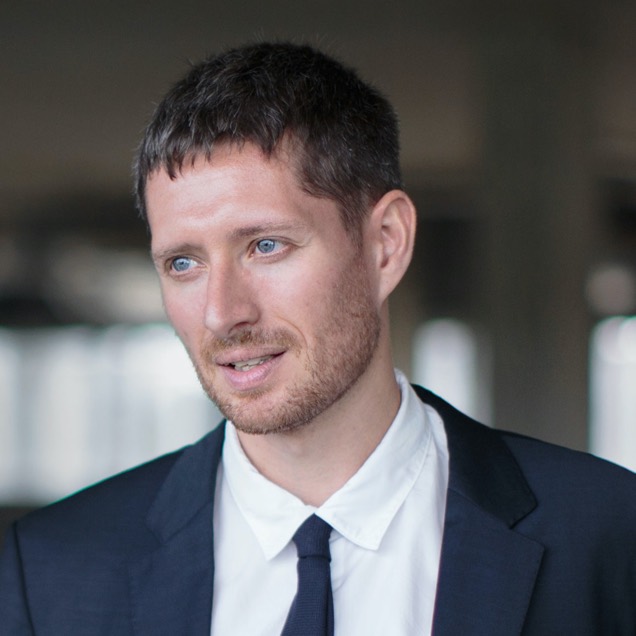
The Convention on Psychotropic Substances was a 1971 United Nations treaty that placed strong restrictions on the use of psychedelic drugs -- not only on personal use, but medical and scientific research as well. Along with restrictions placed by individual nations, it has been very difficult for scientists to study the effects of psychedelics on the brain, despite indications that they might have significant therapeutic potential. But this has gradually been changing, and researchers like Robin Carhart-Harris have begun to perform controlled experiments to see how psychedelics affect the brain, and what positive uses they might have. Robin and I talk about how psychedelics work, how they can help with conditions from addiction to depression, and how they can help people discover things about themselves.
Support Mindscape on Patreon.
Robin Carhart-Harris received his Ph.D. in psychopharmacology from the University of Bristol. He is currently the Director of the Centre for Psychedelic Research in the Department of Brain Sciences at Imperial College London, and holds an honorary position at the University of Oxford. His research involves functional brain imaging studies with psilocybin (magic mushrooms), LSD, MDMA (ecstasy) and DMT (ayahuasca), plus a clinical trial of psilocybin for treatment-resistant depression.
Click to Show Episode Transcript
0:00:00 Sean Carroll: Hello everyone and welcome The Mindscape Podcast. I'm your host, Sean Carroll. Back in 1747, Julien Offray de La Mettrie wrote an influential book called Man A Machine. This is, I think, in the Enlightenment period, in Europe, one of the first works to come out strongly in favor of being an atheist. There were hints by various people that maybe God wasn't all he was cracked up to be, but still this was absolutely clear, Man A Machine, that God didn't exist. We human beings are more like machines than embodied spirits. The 18th century was a big time for machines in France and the rest of Europe, so this is a vivid metaphor at the time. And de La Mettrie was not one of the world's great philosophers, but he was... He was more like a pundit, I guess we would say in these days, he had very vivid metaphors and language and examples, he put his case in a very clear way for people to understand.
0:00:54 SC: I remember one of the points that he made, I'm paraphrasing now, it's been years since I read it. But basically he was arguing against Rene Descartes' idea of mind-body dualism. That a human being is a body, but then there's also a mind that is disembodied and somehow they talk to each other and that makes the person. So de La Mettrie didn't buy this. He basically would say that the human being is a physical object, and the mind is emergent, in our modern language. But the example he used was he says, "Look, when I have had my cup of coffee or not had my cup of coffee, I'm a different person depending on whether that's happened or not. How can you possibly believe that the mind is completely separate from the body when it's perfectly clear that my mind is deeply affected by what happens to my body?"
0:01:40 SC: It's a very good point, really. And of course, the people who don't believe him have answers to it, etcetera. But nevertheless, the example lingers in your mind. These days when we know even more about how the brain works, how the body works, how the mind works, but still don't know nearly enough. We're advancing in the direction of understanding not just how the mind works, but how to change how the mind works by messing with it, by giving it coffee or giving it other sorts of substances. So today I'm talking to Robin Carhart-Harris, who is Head of the Centre for Psychedelic Research in the Division of Brain Sciences at Imperial College, London. Robin is one of the first people, maybe the first people, to study the effects of LSD and other psychedelic drugs on patients in controlled clinical trials. I should say he and his collaborators, right, it's medicine, there's a lot of people working on this. But for years now, following the dictates of the United Nations, of all people, most countries have just held all research into psychedelics off limits, and those rules are finally beginning to soften a little bit, so we can do things like give a patient some LSD or some psilocybin, put them in an MRI machine and see what's happening to their brain.
0:02:56 SC: We're learning a lot. We're learning about both how the brain works for its own purposes, we're curious about that, but we're also learning about how there might be therapeutic advantages to using drugs like this. There was a certain reputation that psychedelics got in the '60s, in the '70s, and that gave them a bad image as far as public relations is concerned. But there's enormous potential here for using these for treating depression, for treating addiction, for end-of-life care, for pain management or just for helping people sort of become at peace with themselves in different ways. It's very early days, I think, for the research here, and we really don't know. That's why it's so fascinating to start thinking about it.
0:03:38 SC: So remember, the podcast Mindscape has a web page preposterousuniverse.com/mindscape where you can get not just the show notes for this, links to people's web pages and their research publications or what have you, but also full transcripts of all the episodes. There are links you can click on if you want to donate, or things like that. People who donate and become Patreon members don't get ads on their podcasts and they also get monthly Ask Me Anything episodes. And with that, let's go.
[music]
0:04:08 SC: Robin Carhart-Harris, welcome to the Mindscape podcast.
0:04:25 Robin Carhart-Harris: Thank you, nice to be here.
0:04:26 SC: So there's a lot to discover here about psychedelics and therapies and the brain and things like that. But this is a topic unlike some that I do where I'm presuming that many of the listeners either have experience or opinions, at least they know what LSD and magic mushrooms and things like that are. But there's a history that I think is fascinating. Why don't you say a few words about the history, about how these things came to be and also the legal choices that made it difficult to study them over the years?
0:04:56 RC: Yeah, sure. I guess the history comes in a few phases. People have talked about waves. You have the first wave of psychedelic plant medicine use, which is ancient, in major geographical areas in Central America and South America, where psychedelic plant medicines have been used for countless generations.
0:05:20 SC: Do we know a lot about how deep that goes back and the history of those things in South America?
0:05:29 RC: Some people do. [chuckle] It's not my particular expertise, but it goes back to... With mushrooms, I think it's fair to say, thousands of years in Central America, in terms of mushroom-related artifacts. They could be something else but they look pretty mushroom-like.
0:05:49 SC: Right, right.
0:05:53 RC: Pictures as well that go back a long way that depict mushroom ingestion. Ayahuasca, it's difficult to know because of perhaps the lack of artifacts, but at least several hundred years back and very much ingrained in certain cultures, in Peru and Brazil. Yeah, and then...
0:06:19 SC: With... And LSD, for example, we discovered in the 20th century. It was made.
0:06:24 RC: We did, yeah. Yeah. So Albert Hoffman, who was kind of commissioned by a drugs company, Sandoz, to play around with some ergot derivatives, that was his expertise. So ergot's a fungus that grows on certain grasses, rye grass, and was associated with some interesting vascular effects and also some intoxication as well, poisoning. And so he was looking at the potential vascular effects of the drugs, potentially related to stemming bleeding in birth.
0:07:06 SC: Okay, so he wasn't looking for mental effects?
0:07:10 RC: No, he wasn't, so it was a classic medical serendipity that led him to...
0:07:15 SC: Yeah, and when was this?
0:07:17 RC: This is 1938, he was playing around with the drugs. The war happened, things got shelved and it was '43 when he, now famously, took... Was it 200 or 250 micrograms? Which he thought was a tiny amount of LSD. Turns out that's a pretty big trip. And then the now celebrated Bicycle Day, the first Bicycle Day happened then in April, I think, the 19th, 1943. He took that dose of LSD and was shocked at the effects, thought he was dying. Actually, before he got there he jumped on his bike and rapidly cycled home 'cause he wanted somewhere comfortable, perhaps, if he was, felt he was on his way out. But he describes what sounds like quite a nightmarish experience. His neighbor comes around and she turns into a malevolent witch who he thinks poisoned him. And yeah, he thinks he's dying. Yeah. So that's the Second Wave, and now we're in this Renaissance period, the so-called Third Wave. And in between, we have the 1960s...
0:08:37 SC: A good time, in some sense, for...
0:08:38 RC: A good time in some sense, but I guess a sad time in another sense, in terms of the pushback against psychedelic drugs, which had very significant implications for psychedelic drug research and medical use, leading to essentially an outright ban on any kind of work with psychedelics from the late '60s onwards. And it's been decades, really, of a hiatus in research until, I guess, in the '90s, most significantly, you have characters like Rick Strassman and Franz Vollenweider doing pioneering work to bring psychedelic compounds back into the scientific space. And then the noughties, with significant things happening at Johns Hopkins. I guess we come onto the scene in the UK in the late noughties, around 2009. I started brain-imaging research with psilocybin, and we find ourselves here today where this is starting, really, to become quite mainstream.
0:09:53 SC: And it was banned internationally in the '60s, right? The United Nations, they don't have much legal authority, but they did at least recommend that countries not let you use psychedelics for therapeutic purposes, is that the idea?
0:10:07 RC: Yeah, it was a UN-wide initiative, so any countries that fell firmly under that were implicated, and that's most Western countries. In the Eastern Bloc, actually, they carried on for a little bit longer doing work in the Czech Republic, and a certain Stanislav Grof, who's such a key figure in psychedelic work, he carried on doing research with LSD into the early '70s, but then that dried up as well.
0:10:36 SC: And is it true that part of that was actually a backlash literally against hippies using LSD and protesting Vietnam and stuff like that?
0:10:45 RC: Yeah, there's a few conspiracy theories, but I don't think you have to be too inventive in your imagination to see how these things fit together. And it was a time of particular social and political conflicts in the US, very polarized, and it seems there was a fear that perhaps psychedelics were fueling some of the counter-cultural sentiments. Yeah, and probably just to... A few things were going on in terms of certain politicians seeing that it can be a potent vote-winner to be seen as being hard on drugs or to...
0:11:37 SC: Tough on crime, tough on drugs.
0:11:37 RC: Yeah, exactly, and I guess Nixon sort of embodied that with his war on drugs. And before that, I don't know. With LBJ, it was him, really, who started to curtail things. And maybe it was Vietnam and a fear of people not being so loyal and obedient and, perhaps, having a bit of an anti-authoritarian spirit and that being tied up with the whole psychedelic and drug use thing.
0:12:07 SC: Okay, but now we're sitting here in your office at Imperial College in London where you do research on these substances. Presumably, it's legal. Did they change the law or did you get an exception, or what happened?
0:12:16 RC: Yeah, it's an exception. You get a license from the Home Office, and it's not trivial to get one and they're quite expensive, and that's a shame because it hampers science, hampers collaboration. It's not easy just to send some drug off to another team or take it over to them, they need to be recognized and listed with the Home Office and if they're setting up, they have to set aside a few thousand pounds to... And a bit of building work. You need a fridge that's lock bolted to the wall, and there are inspections and such like. These things might seem kind of trivial, but you have to be really motivated to make them happen. And it's quite easy with all the relevant pressures that you have in any domain, but in academia, to just not bother. And so...
0:12:16 SC: It's hard enough for me to get a grant to do theoretical cosmology, much less get a drug, visiting... Sent to the lab, must be a whole another thing, yeah.
0:13:23 RC: Yeah, well, grant winning has been so difficult, I think. There's only been one or the Medical Research Council in the UK supported our depression work and that's kind of an exception. NIHR, in the UK have supported a colleague of mine. I'd say, that was a year ago. So things might be changing, but I know not much has happened in the US with NIMH, and you have some obvious absentees there in terms of major funding bodies that haven't supported this and that's got to change soon.
0:14:04 SC: So let's explain to people what actually happens when a person takes some of these psychedelics. For one thing, is it fair just to use the catch-all phrase psychedelics, or do we need to really distinguish between different ones we could take?
0:14:18 RC: Yeah, I think we need to distinguish. It's a very sort of broad brush term. There's this extended definition of psychedelic, which, I guess in a sense, exploits the word itself, the etymology there, psychedelic means mind manifesting or mind revealing, and so people might say, "Oh, when you smoke cannabis, you can have these major psychological insights, when you take MDMA, you can have insights and some self-realization." So under that definition we'll extend the definition of psychedelics to include these compounds. Another way of...
0:15:01 SC: But sorry, but technically most people who do psychedelic research would not include marijuana, for example?
0:15:06 RC: I wouldn't, 'cause I guess it's the science thing where you know you need to be crisp in your definitions. And so for me, the best scientific definition is one that comes from the pharmacology, which is classic psychedelics, and some examples there would be LSD, arguably the prototypical psychedelic, because it was only after its discovery that the term came along. Mescaline as well, given that Humphry Osmond came up with the word in... He was a Canadian... Well, he was a British psychiatrist working in Canada, he became friends with Aldous Huxley, of Brave New World and The Doors Of Perception, which was his essay on his mescaline experience.
0:15:58 SC: Okay.
0:16:00 RC: And the mescaline was provided by Humphry Osmond. And so, from that, there was a realization, a shared realization, that we needed a new term for this category of drugs. Osmond came up with psychedelic. And... But yeah, so mescaline played a role in the birth of that term as well, a key role. So, LSD as a tryptamine and tryptamines are compounds that's molecularly are very similar to serotonin, 5-hydroxytryptamine, and another one is dimethyltryptamine, DMT, which is found endogenously in some very small amounts in humans and many other animals, we think, and lots of plant species. DMT is the major psychedelic ingredient in ayahuasca, this Amazonian brew.
0:17:00 SC: Okay, yeah.
0:17:00 RC: So there's some examples, but the crisp definition is that all of these classic psychedelics share a certain pharmacological property, which is that they stimulate a certain serotonin receptor, the serotonin 2A receptor. And then I could say a lot of, I think, interesting things about the 2A receptor, where it is in the brain, what it's associated with.
0:17:23 SC: I think you should say those interesting things. Yeah, where is it in the brain? So what is it? This is a neuroreceptor in individual neurons?
0:17:29 RC: Yeah, yeah, it sits in the membrane of individual neurons. And the first thing to say is that the receptor is heavily expressed in the cortex, that aspect of brain that humans have so much of, all the wrinkly stuff, and massively expanded in our species, and that's where you find these key receptors that psychedelics work on.
0:17:56 SC: So we're going to be more susceptible to psychedelics than cat and dogs, or... Yeah.
0:18:00 RC: Probably, they seem sensitive too, but they don't... Their behavioral repertoire is...
0:18:06 SC: Who would know, really?
0:18:07 RC: They can't talk, so they just twitch and that kind of thing, that's our behavioral index of whether dogs and rodents are tripping or not. Yeah, in humans, we have lots of cortex, we have lots of 2A, serotonin 2A is the receptor, and it's not entirely evenly distributed in the cortex. The cortex, like so much of the brain and so much of the body and nature, is hierarchical, it has a hierarchical organization. And at the top of the hierarchy, you have the association cortex, which in a sense is the most mysterious because it doesn't have an obvious modular function like the visual system, for example, which most of the visual system is in the back of the brain.
0:18:55 SC: Right, it's clear what that does.
0:18:56 RC: Yeah. And the motor systems for movement, motor action. But the association cortex is sort of like a lot of things and associated with association and high level psychological functions like imagination...
0:19:17 SC: So, stitching things together, and coming up with scenarios, yeah.
0:19:17 SC: Yeah, yeah, yeah, stitching things together, imagining things that aren't there immediately in the environment. So, that's referred to as counterfactual thinking, something that people say might be unique to our species. Another thing that people say is probably unique to our species, at least in the magnitude that we have, is self-consciousness.
0:19:43 SC: Right.
0:19:43 RC: Probably what sets us apart, and that's where... That's a function associated with the association cortex, where you see so much of these 2A receptors, so that's a good starting point. The receptor is an aspect of the brain that evolutionarily is quite recent, and massively expanded in our species, and associated with these high-level functions. Then we could look at what happens when you stimulate that receptor-to-brain function. And there, I've introduced a notion which I hope is useful of this entropic brain idea.
0:20:19 SC: Oh, okay.
0:20:19 RC: Where entropy...
0:20:21 SC: We're big fans of the word entropy here in the Mindscape Podcast. So...
0:20:23 RC: I'm sure you are. And this is where, in a sense, I'm stretching my expertise because it's not in physics or in information theory, but I know that in information theory entropy is quite a fundamental metric related to our uncertainty about a system, where if entropy is high, uncertainty is high, we don't know what that system is going to do next, it's unpredictable.
0:20:54 SC: Right.
0:20:56 RC: And there the principle with psychedelics is quite simple, this entropic brain principle, which is that psychedelics increase the unpredictability of spontaneous brain activity.
0:21:09 SC: Okay.
0:21:09 RC: So rather than... Spontaneous just means ongoing rather than invoked by a stimulus of some sort. And...
0:21:16 SC: Right, so that even when we're trying to be quiet and still in our minds, there's a lot going on in our brains? Yeah.
0:21:22 RC: Yeah, yeah, that's spontaneous brain activity. You can think of a stream of consciousness and the imagination, daydreaming, those kind of things going on. Yeah, and...
0:21:35 SC: The stuff that you're trying to get a control over in a mindfulness exercise or at least get knowledge of, right?
0:21:40 RC: Yeah, you try and still... With focus, there's a few kind of interesting paradoxes there, of course. But ordinarily, that quality of consciousness is pretty rich, but under psychedelics, we've found it's richer still, and we've found that there's this interesting, really quite reliable, relationship between the richness of ongoing consciousness, if you want, and ongoing brain activity, where...
0:22:10 SC: Maybe before we get there, is there... What is the role of serotonin in the cortex, other than psychedelics? So it naturally appears and do you know what it's there for?
0:22:20 RC: Yeah, well, serotonin is a really complex neuro modulator, so it tunes neural function rather than it being a simple excitation or inhibition thing. It's more about a complex tuning, and the complexity of serotonin is reflected in its number of sub-receptors. There are at least 14 that have been identified and they all do quite different things. Some of them actually oppose each other's function, another thing that you see in nature. And the 2A receptor is excitatory, and it seems to... Increases an irregular form of excitation and there might be a clue as to what we see at the population level. So groups of neurons, where we see this entropic effect, where the activity becomes harder to predict, more complex.
0:23:19 SC: Right, in the presence of the serotonin or in the presence of psychedelics?
0:23:22 RC: So, well, there's... In terms of the basal functioning of the serotonin 2A receptor, the suggestion is that it doesn't do that much, because if you give a blocker of the 2A receptor, it doesn't really do much to consciousness. It might make you a little bit sedated, it might make your thinking a little bit narrowed and stereotyped, but it's a subtle effect, cognitive rigidity, but it's quite subtle.
0:23:57 SC: So that's the low entropy, high predictability, kind of phase, yeah.
0:24:00 RC: Yeah, yeah, and it might be associated, I guess, by implication, with a narrowing of the range of conscious content, let's say. 2A blockers... In medicine, antipsychotics often have a 2A blocking component and some sleep drugs as well. 2A blockade seems to promote deep sleep. So it's kind of the opposite of what you see with psychedelics, but then there is this rule of it doesn't... The blockers don't seem to do that much, so they don't... They certainly don't. It's not the dramatic impact on consciousness that you see when you stimulate that receptor.
0:24:39 SC: Which is what the psychedelics do, yeah.
0:24:40 RC: Yeah, and so part of my thinking, and I think others, around the 2A receptor, is that maybe it becomes engaged naturally during exceptional conditions. If it's not really doing much basally, so in a kind of ongoing background kind of way, then maybe it's there for some kind of emergency situations, perhaps crises. And I've got a paper in development at the moment, which proposes that hypothesis, and I've written other things that have sort of led up to that hypothesis, that it's a kind of crisis button, in a way, activating the 2A system, the serotonin 2A system. So, in conditions of, as somebody else has said, existential distress crises, maybe you need to induce these very plastic brain and mind states, because...
0:25:30 SC: With the brain being more flexible.
0:25:30 RC: Yeah, because your life literally depends on it, or your well-being very much depends on it, something has to give, something needs to change. You're having some kind of psychological breakdown for whatever complex reasons, you enter this state of hyper-plasticity and then beyond that maybe life is never the same again.
0:26:10 SC: Okay.
0:26:11 RC: You can think of examples like epiphanies, religious epiphanies, hitting rock bottom and major transformative experiences. They happen outside of the context of psychedelics. So it's natural to ask why do they happen? How do they happen? Maybe they happen in a related way to how psychedelics work.
0:26:32 SC: Okay. And so when we take the psychedelics... And so we are grouping all the psychedelics together in this conversation, should we be more careful about distinguishing which one does what?
0:26:43 RC: Well, yeah, when I talk about psychedelics I'm really talking about the classic psychedelics. And I think it's probably most useful for listeners to think of the examples, LSD, psilocybin, which is found in magic mushrooms, DMT, which is found in lots of plants and in ayahuasca. Mescaline is a phenethylamine, it's a slightly different class, but it's still a classic psychedelic.
0:27:05 SC: Okay, so all these stimulate this particular serotonin receptor?
0:27:09 RC: Yeah.
0:27:09 SC: And so... I didn't quite get clear how I should think about what this is doing to the brain. So there's a lot of things going on in our brain, even when we're trying to be quiet or our eyes are closed or whatever. And my impression is that the psychedelics, rather than excite the brain, they sort of let the brain have some access to what's going on anyway in some sense, is that fair?
0:27:35 RC: Yeah, it is fair. It is an excitation but it's an irregular form of excitation. So perhaps rather than think of it in a quantitative way, where people have historically, they talk about regions in the brain lighting up or metabolism increasing or decreasing a little bit like a thermostat or something, going hotter or colder. That's a little bit of... These days a bit too crude a way to depict the brain where it might be better to think of the quality of brain activity changing. And there the thing to say is that the regularity of brain activity changes, activity becomes disregulated.
0:28:20 SC: That's right. I do remember reading about the network effects in the brain become a little bit less predictable, I guess.
0:28:26 RC: Yeah.
0:28:27 SC: Yeah. And does that have an easy relationship to the classic things that we think of as happening when we're on an LSD trip in terms of hallucinations, visual and auditory or even... Sometimes people see things that are just not there, many times people just see things that are there moving in weird ways, right?
0:28:47 RC: Yeah. So that notion that psychedelics are hallucinogens, a little bit misleading, with eyes open, things distort. And sure, things can sort of emerge if you're looking at something like the clouds or whatever, or you're on DMT and then things are really wild visually. But it's more when you close your eyes that the experience becomes very rich in imagery and very, very vivid, as if one is seeing with their eyes closed. A bit like dreaming.
0:29:21 SC: Is it a bit like dreaming or is it really the same thing as dreaming in some sense?
0:29:26 RC: It's probably a hybrid, it's not quite the same thing, but I've speculated and others have, and there's bits of indirect evidence to back this up, that the tripping state, if you want, is a hybrid waking dream state. So part of the mechanics and physiology of dreaming is actually happening while you're awake under a psychedelic. And there in a sense... And this actually is probably the reason that drew me into this whole area in the first place, in the same way that Sigmund Freud famously said of dreams that they were a royal road to a knowledge of the unconscious mind. Others have said the same, Stan Grof and others, about psychedelics. And then you put two and two together, and you think, "Ah, by a matter of converging evidence, there's something to this unconscious mind business."
0:30:27 SC: Yeah, yeah. Probably a lot of people who are not professional neuroscientists or psychologists have a pretty overly simplistic direct view of how the brain works. There's a visual field that comes in, and we have a camera in our brains and there it is, and we hear things and that's also going on at the same time. But my impression from my rather amateurish readings in these things is it's way more complicated and there's a lot of processing going on in the brain just to give us this image of the world that we see around us. What we think we're seeing is highly processed compared to what our eyes and visual cortex actually picks up.
0:31:04 RC: Absolutely. You could say it's highly constructed in a kinda top down way, as in there's a lot that we're experiencing that comes from the brain itself rather than from the outside world. And this is what Karl Friston will say when you have him on. Hopefully in a a very elegant and thoughtful and precise way. But perhaps in a way that's difficult to understand. But no, there's this notion of Bayesian brain based on principles of probability that we house in our brains internal models, through which we experience the world, and so much of experience is the product, in a sense, of these models that we house, rather than some kind of receptivity of information coming in.
0:32:00 RC: And the action of psychedelics is a bit of a clue to that being true, in the sense that we can almost see these models that we've constructed, even the really high level ones, like our sense of self, and that's probably the most profound realization that people have on psychedelics is, "Oh, my goodness, my sense of personality isn't absolute." And all the spiritual related sort of follows on... Things that follow on from that experience come into play.
0:32:45 SC: Yeah, so we should think of what is happening to our brains on psychedelics not as seeing new things but as you're... You seem to be implying that we're revealing things that are going on inside our brain already.
0:32:57 RC: Yeah, it's almost like an outside observer. You can look at in a sense how the brain and mind work and it's probably achieved through the fact that these internal models break down. Recently I've written with Karl on this topic a review paper that we've entitled REBUS, for Relaxed Beliefs Under Psychedelics.
0:33:22 SC: Oh, okay, nice.
0:33:22 RC: A bit of a fudge but...
0:33:25 SC: All psychedelics are not [0:33:25] ____, that's what it is.
0:33:25 RC: Yeah, sounds that way. But it's... Hopefully, it's memorable. And yeah, the idea is that the... What's called precision weighting or confidence that we have in our internal models, so like our confidence in who we are dissolves, breaks down, relaxes under psychedelics. And when that happens, there is this curious possibility to step outside of the model, and then almost sort of view it or view its, realize its absence and...
0:34:08 SC: Almost have a third person perspective on our first person consciousness.
0:34:11 RC: Yeah. For example, t throws up lots of interesting philosophical questions like, "Then who is the observer?" But...
0:34:20 SC: Well, I talked to Daniel Dennett recently on the podcast. And so, he's one of the originators of this multiple drafts version image of consciousness where there's a lot going on that are sort of suggested ways of viewing the world in your brain. And then this, I guess, this associative part of your cortex knits them together to make some final draft. But yeah, so no one of them is the final story, I guess. And if you get to look at them individually, you realize how non-unitary our selves really are.
0:34:50 RC: Yeah, yeah, how the narrative's been stitched together. Yeah, multiple drafts, yeah.
0:34:57 SC: And does this... A lot of people have advocated the use of psychedelics for unleashing creativity in some way. Does this speak to that? Do you agree that this is a good kind of thing to do?
0:35:09 RC: Yeah. Probably the biggest block to creativity is being too sure, being too confident.
0:35:16 SC: Too low entropy.
[laughter]
0:35:17 RC: Yeah, yeah. Which is, it's a curious one and you can think of other drugs that work perhaps even in a polar opposite way to psychedelics that give confidence, the stimulants, maybe a drug like cocaine. We've actually published some work that, based on a scale of ego dissolution and ego inflation, these two drugs go in different directions.
0:35:49 SC: Oh, really, yeah?
0:35:50 RC: It's kind of an obvious thing.
0:35:53 SC: Yeah, so it makes you a little bit more sure of yourself.
0:35:55 RC: Yes, it inflates the ego.
0:35:58 SC: It makes you maybe less creative?
0:36:01 RC: Possibly. Yeah, you might be very productive.
0:36:05 SC: Yeah, is there some potential... Right, exactly.
0:36:06 RC: But you might come up with a lot of stereotypes, manic kind of ramblings that aren't particularly rangy and expansive, whereas with psychedelics you really get that expansion. Whether you can get the focus is another matter.
0:36:25 SC: I mean, it's the classic example of being on psychedelics and thinking that you've had a wonderful insight and then you try to write something down and the next day it's just nonsense, right?
0:36:32 RC: Yeah, yeah. Then the quality control comes in, the BS detector, the editor comes in, perhaps afterwards, but perhaps not always so fiercely. And there's a lot to be said, and people are increasingly aware of this, that the integration process, the landing process, after a big psychedelic experience is so important. And there if there isn't too much haste to try and stitch things back up, but rather just let them slowly kind of settle and crystallize in a way that's most natural without forcing any kind of, I don't know, psychoanalytic interpretations necessarily, and it's probably in that way of treating it as a sort of organic process that things settle most healthily.
0:37:33 RC: And sometimes there's... There needs to be a principle of just sitting still with some uncertainty. Perhaps, things aren't so crystal clear now and perhaps things aren't so crystal clear full stop. And so that often comes up actually in our therapeutic work with psychedelics where a patient might want closure on something. Something as literal as, "Was I abused?" and there's a responsibility I think on our part not to force such a closure. And there are historic examples of where that's gone wrong in traditional psychotherapy.
0:38:16 SC: Right. You want an answer.
0:38:17 RC: Yeah.
0:38:18 SC: Yeah. And sometimes it's just hard to get or not there or not enough evidence to decide one way or the other. Yeah.
0:38:23 RC: Yeah, yeah.
0:38:24 SC: So there is this, also this feeling that informally forgetting about scientific research, but people feel that they are getting some deep insight into themselves or into the nature of existence or something like that when they're on psychedelics. I've always wondered how much of that is... You actually have gotten an insight or you have gotten the impression that you've gotten an insight somehow. Are there things that really stay with people afterward once they're no longer on the drugs that count as profound insights about themselves?
0:38:27 RC: There are, but that's... You're really hitting on the million dollar question there. And again, the answer isn't too black and white. Sometimes people do have profound insights that stick with them that change their lives, that they can communicate to other people who hear them and the message lands and resonates, and they say, "Wow." And when that happens often it's... It feels like a deep spiritual wisdom, and so the resonance really is with things that one could read about in, say, Buddhism or spiritual texts. And there it's... These are insights that of course aren't specific to psychedelics at all, they're just more... They're more fundamental and basic than anything to do with psychedelics.
0:39:56 RC: It's just it so happened that for some people psychedelics have been the tool that have really led to whatever breakthroughs that people have had. And for some spiritual teachers, I guess, gurus, if you want, some quite well-known ones, psychedelics have actually been... Especially Western ones, psychedelics have been the door that's opened for them, that later on what they've done with that drug-induced insight is to put it into spiritual practice.
0:40:42 SC: Right.
0:40:43 RC: And there I think that the key term is practice. Rather than just keep going back to the drug where after a certain period of time, maybe there's more noise to be experienced than signal. They've thought instead there's something to do, there's some action to follow that's a healthier way of being rather than going back to the drug teacher and all the projections that can go with that. There's... There's something inherent to the drug that holds this intelligence. So, I think that can be quite a dangerous and problematic view.
0:41:23 SC: Well, it was very interesting what you said about the sort of loosening versus tightening of your thought processes. When you're on a psychedelic versus a stimulant, there's this long-standing informal belief that madness and creativity are somehow connected to each other, right? Being creative involves looking outside the box, thinking of new things, but in some sense you can... The box is also important, right? Like you know, the ordinary rules also matter, and it's all about finding a balance between them and, are psychedelics a way of moving the balance in one direction or another, and going back and forth, and is that useful?
0:42:01 RC: Yeah. It can be useful, but equally it can be potentially problematic. It can be useful when the constraints of the box are too firm and it's holding up progress and perhaps even leading to pathology, whether personal or on a systemic level like on a social level.
0:42:30 SC: People do have bad trips, right? And does that depend on the person more or the drug or the situation?
0:42:34 RC: Yeah. Well, they did have bad trips and sometimes they are really bad. There is this fashion, I suppose, in the psychedelic science community to say there's no such thing as a bad trip. There's challenging experiences. We call them challenging, they're things to work through and overcome. And there's a lot of truth in that, but equally, for the sake of plain talking, some trips are really, really awful, so we can call them bad. They're not fundamentally bad intrinsically in and of themselves. But...
0:43:03 SC: But they're unpleasant...
0:43:05 RC: Very unpleasant. Yeah. Hellish. And... And so, I guess as a scientist there's some deep fascination in those experiences, and to try and understand them I would lean towards notions of the collective unconscious, Carl Jung and archetypes around demons and devils and monsters, very ingrained human images and ideas that are... Yeah.
0:43:37 SC: So you're saying that when people have a bad trip, we can try to understand what they're going through by reference to those ideas?
0:43:46 RC: Absolutely. I think it's the best way to understand, a problematic way to try and understand them would be to say that they're literally real, to invoke notions of magic that perhaps some bad demons or bad spirits are in the space or whatever. That kind of projecting things into some metaphysical space I think is part... One of the kind of subtle, sometimes perhaps not so subtle pitfalls of psychedelic drug use.
0:44:19 SC: Well, that's... Sometimes I get the impression that people who are advocates for this, really think that they're not just discovering something new about their brains or their selves, but about the nature of reality, and I'm very skeptical about that. I'm not quite sure that the nature of reality is being revealed here.
0:44:35 RC: No, although they might... They might have some insights about the nature of nature, possibly. But then you also have these... There's a lot of pseudoscience that comes into this space, a lot of magical notions, and a lot of contradiction that you hear as well. People will talk about, oh, the Western approach, and the scientific analytical approach, and how it's so reductionist. And then they'll bring up some loose idea around the vagus nerve that's responsible for kundalini, and it's just all really vague and horribly reductionist as well.
0:45:16 SC: Yeah.
0:45:16 RC: So there's... There is some annoying contradictions.
0:45:16 SC: But... Okay, speaking of the Western scientific method, here you're doing experiments, why don't you describe us an actual experiment you would do on a patient by giving them some psychedelic and looking at looking their brain somehow.
0:45:16 RC: Yeah. Okay. We have been doing some interesting work with DMT injecting it into people and then recording...
0:45:49 SC: To volunteers, I presume, yeah.
0:45:52 RC: To healthy volunteers, and then recording their brain activity with EEG, these caps that record the oscillatory activity in the brain, look a little bit like swimming caps with sensors on. And then fMRI as well. And recently, we've completed a simultaneous EEG-fMRI study. One of my PhD students, Chris Timmermann, has been leading that work. And so that's quite pioneering. And it allows us to bring together the high temporal resolution of EEG with the high special resolution of fMRI. Look at things like complex patterns in the temporal activity. Look actually, literally, at its complexity, at its entropy but also look at brain networks and their dynamics.
0:46:49 RC: And there are some principles are emerging out of that, and then it's really, as good science, perhaps, or just science does, it throws up interesting new questions and future studies to think about. So we're some way through; in fact, the plan is to begin this in the next month in February to begin a protocol of... Well, actually, begin the experiments themselves following a continuous infusion protocol with DMT. So typically, we give a bolus of DMT and it rockets people into this DMT space where they feel so profoundly immersed in this other world that feels as real as this one, but is alive...
0:47:49 SC: Zero to 60 very very quickly.
0:47:50 RC: Yeah, yeah, and is content rich, visually, incredibly rich, that kind of Avatar-type scene is probably inspired...
0:48:02 SC: Floating cities, yeah.
0:48:03 RC: Yeah, from ayahuasca and DMT visions. But it's that kind of thing and people often report encountering entities, seemingly sentient other beings in this DMT world.
0:48:18 SC: Which is not what you would see from LSD?
0:48:21 RC: No, not really. No, it doesn't quite reach that intensity.
0:48:25 SC: LSD, I think you mentioned, is more like the things that you do see are altered instead of seeing new things.
0:48:31 RC: Yeah, more of a distortion. And there can be sort of, perhaps richer, deeper notions and memories, personal material and transpersonal material can emerge under LSD over a longer time frame, and so therapeutically, those longer-lasting psychedelics, like LSD and psilocybin, oral psilocybin. Yeah, they're different in that sense, there's more therapeutic gain to be had, whereas DMT IV or smoked DMT is more like this short, sharp blast into this other very weird, hyper-real space.
0:49:12 SC: So how short is short, what's a typical trip last?
0:49:14 RC: Oh, less than 20 minutes.
0:49:15 SC: Less than 20 minutes, okay. But you're meeting other sentient beings?
0:49:19 RC: Yes, and people come back and their whole...
0:49:22 SC: Which you and I like to think are made up in people's brains, not actual... They're not angels coming down in this thing.
0:49:29 RC: What an exciting opportunity for studying the archetypes, I think, and the dynamic fabric, I suppose, of the unconscious mind. That was what lured me into this space, it was that very thing, really, when I first got into this area. And yeah, that's obviously a huge challenge, but that's the opportunity.
0:49:57 SC: Just so... Some people are not going to be experts here. These are not thought to be addictive drugs that you're giving to people.
0:50:01 RC: No.
0:50:02 SC: So when you get volunteers, we're pretty sure that they're safe doing these kind of experiments?
0:50:08 RC: Yeah, so we can go through some of the obvious things, toxicity profile seems to be very good, especially with a compound like psilocybin, magic mushrooms, massive therapeutic index, which is the dose that you would typically take or you might take therapeutically relative to a dose that's going to cause you harm or kill you, massive window there.
0:50:26 SC: Right. So it's not like a little bit extra is going to really cause you harm?
0:50:29 RC: No, whereas there are many medicines where it's a much tighter therapeutic, licensed medicine's a much tighter therapeutic index, and legal drugs like alcohol, very small therapeutic... Well, there's no therapeutic...
0:50:42 SC: Maybe a little bit. [chuckle]
0:50:42 RC: Yeah, and then we can look at, yeah, mortality risk. There's no risk to your physiology where this drug's going to kill you, at least with a compound like psilocybin, then we can look at addiction potential, negligible. Addiction potential, animals don't self-administer psychedelics, they seem, if anything, to be fundamentally aversive, and humans only really go there where they can make mistakes and try and take them for recreation, for fun, but then they get a rude awakening and they realize that it's true these aren't party drugs and they shouldn't have taken LSD at the party.
0:51:27 SC: Yeah.
0:51:27 RC: Yeah, so they're more drugs that are sort of self-exploration when taken in the right way. And then people often do those explorations quite sparingly, they might do it a couple of times a year if they consider themselves a psychedelic user.
0:51:39 SC: My impression is that there's really no standard across which alcohol should be readily available but LSD should be banned. There's really no danger that you get from LSD that you wouldn't also get in much worse, more...
0:51:39 RC: There's a behavioral danger, I think that's it.
0:51:39 SC: Okay.
0:51:39 RC: Yeah.
0:51:39 SC: What kind of behavioural danger?
0:51:39 RC: Well, if you're... If you're on a high dose of LSD or psilocybin and confused and things are distorted and all this powerful emotional material is coming up, you probably shouldn't be wandering around in an urban center where there's traffic and such like.
0:52:22 SC: Or maybe in a position of responsibility for other people, something like that.
0:52:24 RC: Yeah, with your children or something. Yeah.
0:52:26 SC: That's not good.
0:52:27 RC: There are some risks there, and there's also the psychological vulnerability which should be considered a risk. And for that reason, it's so strongly emphasized and it's so important that it is, that the psychedelic be taken in the right kind of context. And that involves not just the context for the immediate experience, but also ahead of time that you come into the experience with some intention and preparation and forethought and also some planning for the after-care as well, the landing. And so, if those things are covered, then all of a sudden, one could make quite a rational case for, I think, opening up access to safe use of psychedelics within certain centers, for example.
0:53:24 SC: When you bring patients in, do you give them some sort of psychological test to make sure they're in a good place to do this kind of experiment?
0:53:31 RC: Yeah, we do. We do careful screening. Of course, if they're patients, they're often not in a good place.
0:53:38 SC: I shouldn't say patients, but volunteers for the experiment or something? Yeah?
0:53:40 RC: Yeah, yeah, if they are in a period of psychological distress, then if it's a healthy volunteer study, they would be excluded because it starts to blur the...
0:53:51 SC: Causality, I suppose.
0:53:53 RC: Yeah, and the lines between what's a healthy volunteer study and a patient study. Sure, one could question that distinction anyway. But if your question is, "How does a certain psychedelic work in the brain?" you probably don't want to blur that with some kind of therapeutic study.
0:54:12 SC: Yeah. Okay. And you mentioned Aldous Huxley before, he famously took, was it LSD? As he was dying, he was dying of cancer, it was very, very painful. He asked to be administered LSD and apparently, it made his passing much gentler and more pleasant. Is that one of the future therapeutic uses, end-of-life care that we might imagine?
0:54:34 RC: Yeah, it is. Yeah, and so NYU and Johns Hopkins have done some really important work there, Charlie Grob at UCLA, and Peter Gasser in Switzerland. So there's quite a few studies and probably most of the recent clinical trials, and actually, the best designed clinical trials, have been these studies in end-of-life distress, with double-blind randomized control trials, the gold standard for clinical trials in terms of scientific rigor, those designs. And yeah, there the results have been very compelling, so rapid and enduring improvements in the main mental health outcomes, which have been depressive and anxiety symptoms. So, very quick and lasting reductions in those and so, to put a more of a human spin on it, people report feeling much more at ease with the inevitable, their inevitable passing and they view death, their death, perhaps even death more generally, as something not to be so frightened of.
0:55:53 SC: I presume there are some... There's a sort of moralistic attitude in some people, that that would be bad, that you should be resisting death, no matter what, and therefore you should face it as naturally as possible. But I'm very much in the camp that it is something that you should try to come to terms with, right? Come to peace with.
0:56:11 RC: Yeah, well, it's inevitable and perhaps there's some...
0:56:14 SC: It happens to all of us.
0:56:14 RC: Yeah, there's some grace to dying well and some humility, but sure, rage, rage against the dying light, and all that kind of thing, but yeah, who's saying that often? Is it the loved one who doesn't want you to pass but maybe there's true compassion in saying, "I want you to pass peacefully." And yeah, very, very human work in that space and universally relevant as well.
0:56:50 SC: Well, you mentioned this idea of taking psychedelics in a controlled environment a few times a year or whatever. What do you foresee as the long-term good balance about how this stuff is used? So you shouldn't take LSD before you go to a party, that seems to be something that you were saying, but what do you think is the correct social role for these kinds of things? If you were the boss of the world and could set all the rules?
0:57:19 RC: Well, there are some red flags. Yeah, don't take them at a party. Be mindful about the dosage that you take. Don't take them for escape, that's a really important one.
0:57:33 SC: I think it is an important one. It's worth emphasizing it, it's still you, right?
0:57:37 RC: Yeah.
0:57:38 SC: You're still facing yourself.
0:57:39 RC: You are, and everything underneath the sort of ego-self.
0:57:45 SC: Right. Maybe you're facing yourself more clearly.
0:57:47 RC: Yeah, yeah, and that can be really where the terror comes.
0:57:51 SC: Eye-opening, yes.
0:57:52 RC: Yeah. And so for me, I think the roll-out would be the centers where there is regulation. I wouldn't advocate for... So the decriminalization initiatives that are going on at the moment are interesting, and you can make the argument that people shouldn't be punished or even incarcerated for exploring their own consciousness and such like, and perhaps even doing therapeutic work that could turn their lives around in a healthy way. Perhaps make them better citizens. You know, so sure, you could argue that, but is decriminalization really the right way for this to roll out? I think initiatives that are thinking more carefully about the roll-out of psychedelic therapy, whether that be the plant medicines themselves or the product following the classic regulatory route, obviously... Well, obviously, in my view, they are much more thoughtful and a much healthier way that this can roll out.
0:59:06 RC: And there, the vision, the shared vision is of centers that are carefully managed, professionally managed, where you have key ingredients like careful screening of people coming in for vulnerabilities, to identify those red flags, you know, if someone's on the cusp of a psychotic break, perhaps they shouldn't be taking a big dose of psilocybin which could tip the balance in a negative way. And yeah, to have mental health professionals there and to take care of the preparation and the supervision during the experience that people are in a very safe container with ingredients, environmental ingredients in that space that we think are important, like music and carefully crafted music, and then the after-care as well.
1:00:03 RC: And if those things are in place, it's actually my view, and I don't mind saying this these days, that the access to that model could be very broad, not just people who have, you know, fit into whatever diagnostic category, but maybe people who are well, as well that could be benefit from, still the effect on their psychological well-being, how it might help keep them well, and have other subtle advantages in terms of living well and feeling connected to other people.
1:00:47 SC: I think, I mean, that's an interesting angle to go down to imagine that intelligent use of psychedelics could just be part of living mentally well. Like keeping up your own mental health, is that something that makes sense?
1:01:00 RC: Yes, it does, it does, and there's a huge case to be made there, where the burden of mental illness is so massive that you can make a case around prophylaxis or preventative measures that can improve things like resilience, the ability to have some flex when times get really tough, help put things in perspective...
1:01:28 SC: And again, these are hopefully effects that are not just while you're on the trip, but can linger on afterward.
1:01:33 RC: No, these are about... Yeah, afterwards, really, and there again, tying the psychedelic experience in with other things that are healthy, like healthy living, healthy diet, cultivating a healthy attitude, healthy literature, in a sense, and practices, maybe things like meditation, yoga, that's where the roll-out could work best, I think.
1:02:05 SC: It does sound like something that would be hard to establish scientifically, and how much do we know, even if you can do an fMRI study to see which parts of the brain are lighting up, how much do we know about the long-term mental health benefits of being, or having these experiences?
1:02:20 RC: Well, we can look at other studies, we can look at population studies, we can do cohort studies where we track people over an extended period, and we started doing those, so we set up what I believe will be a incredibly valuable resource. It's already valuable, but I think the future is going to be really exciting for it, it's called psychedelicsurvey.com, and through that we try and collect naturalistic data in a prospective way, so that means that we collect data before the psychedelic trip and afterwards as well, rather than just doing the classic survey thing, which is to collect everything in retrospect.
1:03:03 RC: And there, you can't make any inferences about causality and such like. 'Cause this is about tracking people and ideally tracking big numbers so we can get big data and then the great merit of big data is that you can see trends that are otherwise quite difficult to see, you know, it's very much a popular topic in medicine and science, more generally, at the moment, big data. So yeah, and there, we're picking up some obvious red flags at the moment and different variables that predict responses, but that's the kind of thing that's needed, that high throughput if we're going to be able to best mitigate risks and learn how to optimize delivery of psychedelic experiences.
1:03:58 SC: And what are the... If it's one thing that... So ordinary healthy people, we all have neuroses, we all have things we can be better at, so maybe this is part of our mental healthcare regime or regimen. What are the more obvious mental health problems that people have for which psychedelics might be the part of the cure?
1:04:15 RC: Well, again, you know, this is a space where psychedelics, where the buzz that's surrounding psychedelics now is warranted, I feel, because for so long, people, probably motivated by the drugs industry, have been looking for magic bullets that can come in and target specific diagnoses with specific chemical actions.
1:04:47 SC: And then you'll be cured.
1:04:48 RC: Yeah, and the reality is that hasn't worked.
1:04:50 SC: It's not like that, yeah.
1:04:51 RC: No, it's not like that. And so, with psychedelic therapy, sure, it's early phase data, these are just small pilot studies, really, but that's improving and it's... You know, soon there's going to be some really compelling data out there. But part of the picture is that there's a lot of different indications, a lot of different disorders that psychedelics are showing signal for, depression, treatment-resistant depression, anxiety, end-of-life distress, addictions in different varieties, drinking alcohol, tobacco, now eating disorders...
1:05:34 SC: Okay.
1:05:34 RC: So we're starting a trial this year, Hopkins have already started, we think chronic pain, others think chronic pain too, the psychological aspects of pain we think could be quite effectively treated with psychedelic therapy. Obsessive Compulsive Disorder, there's some preliminary data on that, and so, short of wanting to sound like I'm selling a panacea, it's necessary to try and explain why this might be the case, that psychedelic therapy has what we call a trans-diagnostic action.
1:06:13 SC: Right, it's not a single thing for which it's good.
1:06:15 RC: Yeah, not a single indication that it works for, there seems to be a lot.
1:06:20 SC: I do want to... I forgot to emphasize this possibility of treating addiction because, of course, I think in the popular imagination, drugs are addicting, but in fact, psychedelics seem to be useful in curing people that on... From being addicted to other drugs, is that right?
1:06:36 RC: Yeah, that's right. Yeah. So an interesting paradox, there's quite a few things that should really challenge people's pre...
1:06:41 SC: And maybe this is part of the jumping out of a rut cognitively.
1:06:44 RC: Yes, this is it. And this brings us to the explanation of why psychedelic therapy could be trans-diagnostic in action in that a lot of these disorders involve ruts, you know, whether they're behavioral ruts.
1:07:00 SC: Depression, especially.
1:07:00 RC: Yeah, behavioral ruts, addiction, is very true in that sense in that you're... There's a gravitational pull to the object of relief, whatever it is. And the withdrawal and all the uncertainty and turmoil when it's not there, you know? And then with depression, Matt Johnson said psychedelic therapy could be useful for addiction broadly defined. And I quite like that. Because in a sense, in addiction... In depression, the addiction, if you want, is the pessimism becomes so practiced, so habitual, so heavily weighted, the gravitational pull is so strong, that it's like a literal depression, it pulls you in into that rut and then it's hard to get out and if you're out, you're vulnerable to falling back in again. And so with psychedelic therapy, the therapeutic mechanism, we think, is that, it's almost if the landscape, if you have a literal depression, like a hole, that starts to flatten... Yeah, the rut flattens, and now the landscape's flatter. You can explore, you can move more freely, you can see more, 'cause the [1:08:22] ____ lifted up, you can see outside of the hole and all the possibilities there.
1:08:33 SC: Sometimes increasing entropy is useful, yeah.
1:08:35 RC: Absolutely, yeah. Controlled increase in entropy.
1:08:39 SC: I mean, that's the lesson that I'm learning from all of this, is that a well-functioning brain or mind is kind of all about the balance, right, between a little bit of organization, a little bit of freedom, a little bit of randomness and sometimes, that balance gets out of whack, and maybe psychedelics can push us in one direction when that's appropriate.
1:08:58 RC: Yeah. And it's probably a universal principle that goes beyond mental health and the brain of destruction, breeding new organization that in some way is better, in inverted commas.
1:09:15 SC: So, what is... Just to wrap things up, I mean, what is the scientific frontier, what is it what you want to see being done at labs like yours, if you're a pioneer here, what do you want to see being done around the world? What do we need to understand about the relationship between psychedelics and the brain, for example?
1:09:33 RC: Yeah. There's a couple of things to say, I think a demystification process, where there is this pitfall around magical thinking and pseudo-science coming into this space, I think it'd be so healthy... Actually, it'll sound paradoxical, but on a spiritual level, to understand what's going on in this aspect of nature, the human brain, when people have these very profound spiritual experiences under psychedelics. And that will be hugely pioneering and progressive for understanding the brain and the mind and spiritual experiences and I think that'll have a lot of healthy implications. There'll be some resistance to it, I think that's a shame, but I don't... I'm confident that the naturalistic approach will win out. I mean, it has, historically.
1:10:29 SC: Right.
1:10:29 RC: And so, there will be this healthy demystification, which is good, paradoxically, for spiritual practice, I would say. So I hope that plays out. And another thing is that I hope that the mainstream doesn't push back too hard, but embraces this. But there's a lot of areas in which psychedelic therapy and psychedelic science pushes against convention. So many. Whether it's depth psychology, oh, well, that's... Hasn't been a dominant force in psychology and neuroscience for a long time, so that's challenging. And then drugs, they're not everyone's cup of tea, so we have to work around the fact that these are drug-assisted psychotherapies. And we put aside our biases, whether they're towards biomedical models or psychotherapy models and try and talk to each other and get on with this hybrid biopsychosocial model. And what else do we have?
1:11:45 RC: Well, as I say, [1:11:45] ____ mental health itself and the stigma there. And then I think there's a lot of conventions in mainstream science and psychiatry and medicine that could be challenged with psychedelic therapy. Like the way that you do a traditional clinical trial, where you pick out a specific indication, you constrain everything around these inclusion and exclusion criteria, and then because usually of financial reasons, you run a very small trial that throws up a limited data set in terms of its richness.
1:12:24 RC: Whereas if you could set up a trial that perhaps looks at a range of different indications or a very broad population, let's say, healthies all the way up to depressed with all the neuroticism in between. And yeah, it's the same intervention, but maybe you can allow some adaptability in the parameters, maybe the dose, the dosage, and the dosing sessions. And maybe also, the integration care and the therapeutic models could be tweaked and played with. So that's consistent with what's called an adaptive trial. And also the idea of a broad population is consistent with what's called a basket or basket trial, where you're putting a lot of different things in the same basket with the same intervention.
1:13:18 SC: Oh, yeah. Okay.
1:13:18 RC: So that kind of thing's done in oncology where you would have a number of different cancers with the same intervention. Why not psychiatry? One of the reasons why not probably is it slightly flies in the face, or it seems to, of this fashion around precision medicine. People will say, "Where's the precision there?" But I think there's a lot to be said for the exploration and the benefits that can come from that liberal explorative approach to the science at this stage, particularly as it's quite young science.
1:13:53 SC: It's somehow 50 years of missed opportunity because it's been difficult to do this research.
1:14:00 RC: Yeah. Yeah, it is. And so there's a huge amount to be done and I think the progress will benefit if we don't constrain things too heavily.
1:14:11 SC: But it sounds like you're optimistic that things are changing and we're going to start using this stuff more intelligently?
1:14:15 RC: Yeah, very optimistic. Of course, you can be jackknifed when you're looking in one direction with optimism and then something comes along and really pushes back. And that's yet to happen, and we haven't seen what it's going to look like, it probably will happen. But what gives me confidence is the conviction in the model and the value of the tool.
1:14:44 SC: Alright, Robin Carhart-Harris, thanks so much for being on the podcast.
1:14:46 RC: Thank you.
[music]
Pingback: Vavilov – Efrens' Blog
Psicodelicos… como um observador externo. Apenas uma observação-sei que a morte, inevitável. Refere que as pessoas relatam, que se sentem muito mais despreocupadas (Casos terminais), aquando uso drogas psicodelicas. Vêem a morte. Isso não aumenta a angústia do paciente?!??!
Sou a favor da eutanásia. Não morte assistida.
Obrigada, Sean Carroll
Obrigada, Robin Harris
Minha questao/observação, não foi bem colocada (não entendo o porquê). 🤔🤔
Relatos que as pessoas se sentiam muito mais despreocupadas com o inevitavel….
Eles estimulam um certo receptor de consciência (serotonina), e, paciente “vê” a morte. Não é mais angustiante para o paciente?
Obrigada
Sean, I enjoy all your guests but I’ve deeply engaged with the ongoing Quantum Mechanics discourse, especially David Albert. I’d love to hear you talk with Antony Valentini, and here’s why: I’m trying to get to grips with your exposition in Something Deeply Hidden of interpretations other than Many Worlds, in particular De Broglie-Bohm. You suggest, with a quote from David Deutsch, that it’s formally equivalent to Many Worlds, differing only in some attached metaphysics. But Valentini talks about a non equilibrium QM hypothesis that it seems would argue initial distributions to be a real physical thing, rather than a purely mathematical selector of wave function branches.
I’d also love to hear you talking with Tim Maudlin or David Wallace.