
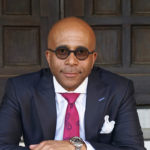
 According to atheism, God does not exist. But religions have traditionally done much more than simply proclaim God's existence: they have provided communities, promoted the arts, handed down moral guidance, and so on. Can atheism, or perhaps humanism, replicate these roles? Anthony Pinn grew up as a devout Methodist, but became a humanist when he felt that religion wasn't really helping the communities that he cared about. Today he is a professor of religion who works to bring together atheism and the black community. We talk about humanism, identity politics, and the way forward.
Anthony Pinn received his Ph.D. in the Study of Religion from Harvard University, and is currently the Agnes Cullen Arnold Professor of Humanities and Professor of Religious Studies at Rice University, where he was the first African-American to hold an endowed chair at the university. He is the Founding Director of The Center for Engaged Research and Collaborative Learning at Rice University, and Director of Research,The Institute for Humanist Studies. Among his many books are Writing God's Obituary: How a Good Methodist Became a Better Atheist and When Colorblindness Isn't the Answer: Humanism and the Challenge of Race
- Home page
- Faculty page at Rice
- Wikipedia page
- Amazon.com page
- Online course at edX: Religion and Hip Hop Culture
- Talk on How a Good Methodist Became a Better Atheist
Click to Show Episode Transcript
0:00:00 Sean Carroll: Hello everybody, and welcome to The Mindscape Podcast. I'm your host, Sean Carroll. Today's guest is Dr. Anthony Pinn, who's a professor in the religion department at Rice University. Now do not be alarmed, despite being a professor in the religion department and in fact, despite describing himself as a theologian, Dr. Pinn is an atheist, a humanist. That's not to say that we will not occasionally have actual religious people, actual theologians on the podcast, but that day is not today. Anthony Pinn has a very interesting trajectory. He grew up in upstate New York where he was a child preacher. So at age 12, he was standing up there in the pulpit preaching sermons, bringing people to Jesus and he was really good at it. It actually was quite the calling that he had. He went on to college, in fact to Divinity School, but then along the way he lost his faith. He got the idea that he was trying to help people in underprivileged communities. He didn't really think that God was helping them. He didn't really think that his Christianity was helping the cause of bringing these people's lives to a better state. So he ultimately lost his faith, but he didn't lose interest in the idea of helping people. So he stayed a self-described theologian, but now he tries to bring humanism to people rather than Christianity. And in particular, he tries to bring humanism to the African American community where atheism, agnosticism, humanism are not very popular.
0:01:30 SC: If you look at different demographic groups in the United States, I just looked it up, only 2% of blacks in the United States describe themselves as completely atheist. That's compared to something like 6% of Latinos, 11% of whites, 19% of Asians. So somehow, if you're an atheist, you're saying, "What are we doing wrong? Why aren't we reaching these people?" If you're a Christian, you might say, "What are the African Americans doing right? Why are they so much better at maintaining their faith than the rest of Americans are?" Well, I can't imagine a better person to talk to about these issues than Anthony Pinn. He's the author of many books. I'm not gonna list them all here. You can look them up on his web page. But a few of the more recent ones are, When Colorblindness Isn't the Answer: Humanism and the Challenge of Race, The End of God-Talk: An African American Humanist Theology, and a very interesting semi-autobiographical book, called Writing God's Obituary: How a Good Methodist Became a Better Atheist.
0:02:29 SC: So we're gonna talk about all these things. We're gonna talk about the time that Dr. Pinn taught a course at Rice on religion and hip hop, two other parts of human culture that you don't often hear put together, but it makes for a great little stew of intellectual topics. So we're gonna have a lot of fun, let's go.
[music]
0:03:03 SC: Alright, Anthony Pinn, welcome to the podcast.
0:03:06 Anthony Pinn: Great to be with you.
0:03:07 SC: So, the point that I'm trying to get across for many of these podcasts, the conceit, if you will, is that I'm after the ideas, the big ideas. I wanna figure out how we can think about the world, how we can learn about it, less about people's individual autobiographies or anecdotes and so forth. But I'm thinking that maybe we should make an exception a little bit. Sometimes you get to some big ideas by personal autobiography, right?
0:03:36 AP: Sure, Sure.
0:03:37 SC: So why don't we tell our listeners a little bit about where you started and how you got where you are?
0:03:42 AP: Well, I grew up in Buffalo, New York, very much involved in the church, started on the path to ministry as a preteen, and moved through ordination, so by the time I was finishing my first year of college I could marry, bury, and baptize people. I was the youth pastor at a rather substantial church in Brooklyn, New York, but I was struggling a bit. I'd come from a rather conservative Southern Baptist High School, a feeder program for institutions like Bob Jones University.
0:04:14 SC: Okay, yeah, which we know well.
0:04:15 AP: Let that sink in, yeah. And so I get to New York and I'm taking classes, and of course, I thought I needed to major in religion, because I loved religion but I'm encountering students and faculty who thought of the Bible as simply a piece of literature and not necessarily very good literature. And so this was throwing me, and I'm encountering people who adhere to a variety of traditions, all of them, from my vantage point, led to hell, and they were unapologetic about their involvement. It was throwing me for a loop and I'm encountering young people, this is the early '80s. I'm encountering young people in Brooklyn who are having an easier time thinking about their death than thinking about a bright and productive future, and what I could offer them through my tradition amounted to nothing. And so over the course of those four years, I started rethinking faith, still committed to ministry, but rethinking faith.
0:05:12 SC: So you you're working as a minister and also as a student at the same time, right?
0:05:15 AP: And as a student, right, right. And rethinking faith but knowing I needed to get out of New York City to think through these issues without the pressure of ministry at my church. People wanted me to have answers, not good questions, just answers. They had enough question.
0:05:31 SC: The correct answers, please, yes.
0:05:32 AP: Yes, yes, yes. And so I decided to go to an institution that really didn't care very much about ministry, it was about ideas, and during the course of the Master of Divinity program, the professional degree for ministry, my thinking began to shift and by the time I was a PhD student, I realized I needed to make a decision. I could be a custodian of the tradition and forget about the misery and the pain that people encountered, or I could move beyond theism and concern myself with what people encountered on a daily basis. So I contacted the minister of the local church I was involved with, and the Bishop of my denomination, the African Methodist Episcopal Church, and gave my resignation and never looked back.
0:06:17 SC: Well, and so this was at Harvard Divinity School?
0:06:19 AP: Yes, yes.
0:06:20 SC: And when were you there exactly?
0:06:21 AP: I was at Harvard '86 through '94.
0:06:24 SC: Okay, so we overlapped. I graduated with my PhD from Harvard '93.
0:06:28 AP: Right, right.
0:06:29 SC: So I would have had... I had almost no connection with people in other schools except for the Graduate Student Council Intramural Basketball Leagues. Was there any chance that we played basketball against each other?
0:06:40 AP: I played at the law school every Saturday, but just pick up.
0:06:44 SC: Oh, okay, just pick up not... You weren't formally there.
0:06:47 AP: No, no.
0:06:48 SC: Did you play against Barack Obama, you overlapped with him, too.
0:06:49 AP: A couple of times.
0:06:50 SC: Yeah, okay.
0:06:53 AP: A couple of times.
0:06:53 SC: Did you know... Did you play with him and go like, "This guy is gonna be President some day?"
0:06:54 AP: Well, all of the buzz about him suggested he was really special.
0:07:00 SC: Right 'cause you...
0:07:00 AP: I'm at the Divinity School and then the graduate school, School of Arts and Sciences, and everyone knew about him.
0:07:05 SC: Yeah, okay, good. That's what... I didn't know about him but I was in a different... Moving in different circles.
0:07:10 AP: Yeah.
0:07:11 SC: Okay, so it sounds like you had a journey from being a child preacher to atheism that was mostly driven by what we could call practical concerns about your ability to successfully minister, and that was... Is it safe to say that sort of what nudged you into a change of world view?
0:07:30 AP: Oh sure, sure. What I believed theologically and what I practiced religiously did not line up with what people were actually encountering in the world. It did not give me a way of addressing misery.
0:07:43 SC: Right, right. I always wonder because in philosophical or theological circles, we debate whether God exists. We prove that god exists or doesn't exist. And I've always thought that these debates had essentially zero impact on people's belief structures. Like the reasons why we actually believe one thing or another, usually at least biographically come from these more practical concerns. I remember a friend of mine, I taught a course at the University of Chicago for undergraduates on the history of atheism, and we were both atheists. We were a little worried. We weren't trying to proselytize. We wanted to make the religious students in the class comfortable. And so we worried talking about all these proofs or arguments for and against the existence of God whether people would get disturbed... No one cares, didn't make any impact on them. But when we talked about how the Bible had been written, the history, as you say, of the Bible as a work of literature, some people got a little upset like that was hitting them at a place that they hadn't really thought about before.
0:08:42 AP: Oh, sure, yeah, and I think you're absolutely right. Those debates only accomplish so much because theological commitments and religious practice are faith-driven. There's nothing reasonable about this, it's faith-driven and so even much of this evidence will be used by theists to prove their point. For many of them who grew up like I grew up, even this rigorous debate this effort to tackle the faith, proves that they're on the right path because the devil is out to get them.
0:09:18 SC: Yeah, it's a non falsifiable theory, right?
0:09:21 AP: Right.
0:09:21 SC: There's nothing that can happen in the world where you'd say, "Well, that's how God and the devil would have arranged things", right?
0:09:24 AP: Exactly, right, right, right.
0:09:26 SC: But you felt mostly that it wasn't helping, your faith was not actually giving you answers that would improve people's lives in an interesting, important way.
0:09:35 AP: It most certainly was not, because some of this struggle for these young folks at first in Brooklyn and then in Roxbury where I ministered before I left the church, they are literally dying, crack cocaine is taking them out.
0:09:50 SC: Yeah, late '80s, early '90s.
0:09:53 AP: Yes, and nothing about church practice kept them safe.
0:09:57 SC: But they wouldn't have agreed, they would have said that that was an important part of their lives at the time.
0:10:02 AP: I think for some of them, it was cultural commitment. This is what their family did, this was what black people do on a Sunday. But I think life for them raised questions that they tried to push to the side because of these other obligations.
0:10:17 SC: And in retrospect, would you say that if you... As a PhD now, as a professor, if someone asked you to explain and defend your views of the world, your ontological views about the nature of reality, is it the same answer, or would you say... Did you come to atheism for the right reasons or do you have better reasons now?
0:10:37 AP: I came to atheism for reasons that made a tremendous amount of sense, and based upon the condition of the world, the environment of which we are a part and human life, those reasons are still sound.
0:10:52 SC: Right. And you are someone who is happy to characterize yourself as religious although you are an atheist, is that accurate?
0:11:01 AP: Yeah, and I've done that for a variety of reasons. As I initially moved into atheist and humanist circles there was a failure to recognize what humanism and atheism mean for some folks. There are ways in which we were reluctant to talk about the nature of community and interactions, so there was no real interest in talking about ritual, there was limited conversation concerning the wonder of life. And so I posed that initially to break that stranglehold, but it also, for me, was a matter of this that I think for humanists and atheists, the real target is theism not religion, those two overlap but they are not synonymous.
0:11:48 SC: Exactly, right. Religion is a much more broad expanse of category than theism.
0:11:53 AP: Oh, most certainly.
0:11:54 SC: And by opposing atheism to theism that makes sense. But then if you say that your atheism undermines religion, there's a lot of stuff left, a lot of questions.
0:12:04 AP: Most certainly, most certainly 'cause on one level it's based upon a false assumption that all religious people are theists.
0:12:12 SC: Right. Nietzsche got this right. He pointed out that God is dead. Okay, what are you gonna do about it now? I think a lot of atheists have this view that realizing that our best scientific philosophical explanations of the world don't include room for God, that was the hard part, and once we get that done, then now we can just be good people and that's the easy thing. I see it exactly the opposite way around. That was the easy part, figuring out the God doesn't exist. Now it's easy, 2000 years ago, maybe not, but what are we gonna do about it leaves us lot of discussion yet to have, right?
0:12:48 AP: Oh, most certainly. And he was right on target. Nietzsche was right on target. It's not simply enough to take God off the throne. The challenge is can we leave that throne empty? And we tend to put in place of God other categories that strangle us in very similar ways.
0:13:07 SC: If you talk about ontology, what the world is made of at a fundamental level, you are fundamentally... You're not theist obviously. A naturalist, is that fair to say?
0:13:18 AP: It's fair to say, but that question doesn't occupy a lot of my time.
0:13:24 SC: Okay.
0:13:25 AP: And so I tend to do this in reverse. The question for me is what's necessary in order to make life productive? What is the best vocabulary, the best grammar of life that allows us to flourish? And then from there move to these issues of ontology.
0:13:43 SC: And so you're happy to call yourself religious in the sense that you think that there should be some set of ways. I don't know, I shouldn't put words in your mouth. Tell me what does it mean, how do we rephrase the other roles of religion other than saying that God exists?
0:13:56 AP: Well, religion for me is this: I think of religion as a strategy and a way of interrogating human experience. So if we think about human experience, for example, as cookie dough laid out, religion would be that Christmas tree-shaped cookie cutter. It's a way in which we isolate certain moments of human experience for interrogation, but it isn't substantive. So I've tried to move away from a sense of religion as sui generis, that is to say I've moved away from a sense of religion as something in and of itself, a kind of special experience. No, it's just a way of interrogating human experience. And I think whether we're theists or atheists, we isolate and interrogate moments of human experience.
0:14:47 SC: And you're a professor of theology and so you're sort of happy to use words like theology and religion. Now other people, maybe even myself would say, "Look, if you're using words like theology and religion, like it or not, people associate these words with various connotations." Is it a little bit dangerous to put ourselves in that basket, or is there more to be gained by saying, "You can be a religious atheist or religious humanist?"
0:15:15 AP: My attitude has always been this, that there are elements of this religious theological language that are still productive, elements that aren't like God. Right, that language needs to go away. But there are elements of that language that are still useful, and I'm unwilling to let theists just have this, right?
0:15:36 SC: Right.
0:15:38 AP: Being loud and persistent isn't sufficient claim to this. And so it seems to me there's still something about this language that allows us to remain open to the wonder of life.
0:15:50 SC: Right, and something struck me, I was just in Japan a few weeks ago, and I've always been struck by churches, by cathedrals, especially in Europe, the grand structures and there's something about them, some human beings hit on a way to design a space where when you walk in, you feel something. And in Japan, going to Buddhist temples, it's the same thing, like some people across the world. And would you say that we have somehow seeded that to theists and maybe we should recapture that to try to have a humanist way of constructing these spaces? Should we even call them sacred or transcendent? What is the vocabulary we should use there?
0:16:33 AP: I don't like the vocabulary of sacred and secular because I don't think there is an easy split, and so I don't find those two terms particularly useful. From my vantage point, I think humanists and atheists have simply forgotten that we construct these spaces. It's not Riverside Church, it's MoMA.
0:16:55 SC: Yeah, Guggenheim, etc.
0:16:57 AP: Exactly, but we have these spaces that open us to a different range of questions, the big questions of life, who are we, what are we, when are we, why are we? We have those spaces, but we've forgotten to name them.
0:17:12 SC: I love that the University of Pittsburgh, they have the tall building called the Cathedral of Learning. And I get that. I'm like, "Yes, this is my space." How much should humanists try to more or less directly mimic the practice of religion? Should we have... I know that some people have secular weekly meetings. I've been to talks by atheists, small gatherings where not only was there a sermon, but they passed around a collection plate. Are we just making excuses for not having all the wonderful practices of religion or are these things that we can hope to really replace?
0:17:50 AP: I think it's a mistake to try to mimic these theistic ritual moments. It does not work well. I think Ethical Culture and the UUA, Unitarian Universalist Association are prime examples of how poorly that works.
0:18:05 SC: Okay.
0:18:08 AP: In part because it doesn't really... Those sorts of services don't allow us to fully recognize, appreciate, and act on what is uniquely us, what is unique about our philosophy of life. And so, I think the hard work is in front of us and that involves developing ways of celebrating community and ritualizing life that speak directly to what it means to be a humanist or an atheist as opposed to taking something and rendering it no longer Christian, but Christian-lite.
0:18:42 SC: Right, that's right. You don't wanna just water down the existing things. But this is a... You're a asking lot, right? I mean, how to build up a form of life after we've removed a lot of the excuses or justifications that we had for all these practices we used to have. Is it something... Is it working? Are people actively pursuing this? Is it gonna happen?
0:19:05 AP: I don't think it's really happening. I think in too many circles, people confuse asking the questions with doing the work.
0:19:12 SC: Right. That's right.
0:19:15 AP: And so, we fail to recognize this. So even the occasion that brought us to Las Vegas, the American Humanist Association, this is a ritualized activity. If we think about ritual simply as a repeated activity in founded space. Right? There's nothing magical about that or theistic about it, it's just people getting together for a particular purpose, and doing this over and over again. This is what this gathering is but we've kind of wiped out our ability to understand this as our ritualizing of life, a getting together that celebrates community.
0:19:52 SC: But how does it happen? So is it purely organic or should we be a little bit more top-down about it? Should we try explicitly consciously to invent rituals or will they just appear?
0:20:03 AP: I think it requires some intentional work.
0:20:07 SC: Yeah.
0:20:09 AP: And the question is how to do that exactly and I don't know the answer...
0:20:14 SC: Yeah, okay.
0:20:14 AP: But I know it can't happen if we aren't intentional about it.
0:20:18 SC: I mean universities are pretty good at it, right? Pomp and Circumstance, just had several students get their PhDs and...
0:20:25 AP: The hooding ceremony.
0:20:26 SC: Yeah, exactly. Those kinds of ceremonies. So you're suggesting that will be part of how we recover these forms of life that used to belong to religion or to theistic religion. We can still have that.
0:20:38 AP: Oh sure, but we first have to recognize that theists don't own those moments. They've utilized them, they've had really good PR around them, but they don't own them. And it seems to me this is also vital if we are to grow. This is one of the questions I hear over and over again. Why aren't we getting bigger? And why don't folks from this community participate with us? And why aren't there more African-Americans? Well, we don't give them a soft place to land. They already know theism doesn't work, that's why they're looking for something different.
0:21:10 SC: So a lot of atheists wanna give you an argument for God's not existing and what you're saying is you need a lot more than that.
0:21:17 AP: Yes, replace what they're losing.
0:21:19 SC: Right. And so how do we do it? Is it the American Humanist Association or is it talking on blogs? Where do you find these communities?
0:21:28 AP: I think for a lot of folks, they've gone online. But again, I don't have the answer, but I think I have a really good question we ought to wrestle with, and I think how this happens at its best involves local organizations, local communities that are able to address particular needs and desires in real-time as opposed to the national organization saying, "Well this is what you need to do in Cleveland, and this is what you need to do in San Francisco. Let local folks figure this out."
0:22:00 SC: There's no atheist Pope right? There's no atheist hierarchy.
0:22:02 AP: No. There shouldn't be. [laughter]
0:22:06 SC: There isn't, right. But what about... So someone might say, "Look, the rituals are great, but some people need the promise of salvation. They need to believe that there's something bigger that comes after this life." What do we tell them?
0:22:17 AP: Here is my thinking, that we are already involved in something that is bigger than the individual. We are individuals within the context of communities, and it seems to me it's this recognition of this larger thing we call life that serves as the humbling moment for us. It's not God or gods, it's the fact that we are involved in this process of life that is bigger than we are.
0:22:43 SC: Yeah, I would love to ask you tough questions about this, but I agree with you so much that I find it difficult. I've had people say to me, without God without something bigger than our lives here on Earth, how can you find meaning? How can you find... Why does it matter? You're just gonna die, it's just chemical reactions. How can you possibly associate that with something meaningful? And I wanna say how else... What else matters? This is the life we're leading.
0:23:12 AP: Exactly, exactly. And so I turn to people like Richard Wright or WEB Du Bois, or Albert Camus who provide strategies, provide insights on how you move through life without those sorts of assurances, or what Albert Camus calls this grand unity, and it involves the deep desire and the effort to make life more comfortable, to provide healthy life options for all and recognize that this involves a much softer relationship with the world.
0:23:49 SC: And I know that you've also emphasized music quite a bit. I love it in one of your books when you talk about the blues and its relationship to secularism. I never really thought about it this way, but I think you make the point a lot of the earliest blues songs were, if not openly secular then at least skeptical of the religious traditions in which the artists were singing. Is that right?
0:24:11 AP: Yeah. Or there's an important fact to keep in mind that for centuries, it was illegal for people of African descent to learn to read and write. And so for us to probe this community and assume that their humanism or their atheism is written in books is just ridiculous. They weren't allowed to learn to read and write, but it doesn't mean they didn't think and express themselves. And so, one of the easier ways, one of the vehicles available to them was music. And so we can't accurately date the spirituals, we don't know when spirituals begin. In the same way we can't accurately date the blues. It's a mistake to think in terms of the early 20th century and race records. Blues is older than that. And whereas the spirituals are all about theism, divine forces breaking into human history, the blues hold all of that suspect and the blues demonstrate a comfort with and an ease with the nature of life, the kind of messy nature of life.
0:25:12 SC: And that goes all the way up to hip-hop, is it accurate to say?
0:25:15 AP: Oh most certainly, most certainly.
0:25:17 SC: I know you taught a course on hip-hop and religion...
0:25:19 AP: Yes, yes.
0:25:20 SC: Not on hip-hop and humanism. What is the difference there?
0:25:23 AP: Well, with this course, there are several things I wanted to accomplish; one, I wanted my university to think differently about hip-hop as a culture, and stop simply assuming that this is bad stuff. Right? On one level, that's mistaken because, while hip-hop artists need to be held accountable for their misogynistic viewpoints and etcetera, etcetera, it's a mistake to assume that they created these problems.
0:25:54 SC: Yeah, they're in a context. They came from a culture. Look, I'll admit, when it comes to hip-hop, I'm a very old man. I think that everything after Eric B and Rakim has just been downhill since then, Paid in Full. But I understand that the kids today have their own artists that they like very much and it is a way of... It's one way of finding meaning right?
0:26:15 AP: Certainly. And so what we try to do is give a sense of the interactions between hip-hop and traditional forms of religiosity, Christianity, Islam, for example, but we also look at the ways in which hip-hop culture constitutes an alternate religious orientation, but then we also look at the ways in which hip-hop critiques theism and embraces something that's more humanistic in nature.
0:26:37 SC: So how does that happen? Do you have examples? 'Cause I'm really not familiar with that.
0:26:40 AP: Well, so if you look at someone like Jay-Z, let's think in terms of Jay-Z and Kanye West's "No Church in the Wild". That song dismantles all of the major sources of authority in human civilization, and they also, as part of that process, bring into question the utility of the God idea, and it's even more fully expressed by Jay-Z in the track "Crown" and the solo album that comes around the time of "No Church in the Wild". And in that he dismantles the idea of God and you get something along these lines in it: If fear is the only god, then getting people out of fear is his only job, right? He's kind of dismantling all of this and it's a much more materialistic viewpoint. Or you get a Kanye West who has a song, "I am a God" that just kind of dismantles so much of what we've typically thought about theism. Or even if we move in the direction of the Five Percenters, and think about hip-hop and the Five Percenters. Well...
0:27:49 SC: Why don't you explain more about what the Five Percenters...
0:27:54 AP: Well, during the early '60s, there's a figure, Clarence 13X in Manhattan who has questions concerning the Nation of Islam, and his argument is the Nation of Islam is not teaching the truth, it knows the truth but it's not teaching the truth, that he argues the Nation of Islam argues that black people are made in the image of God. They have a direct relationship to Allah, but Clarence 13X argues "No, no, no, no. The black man is God, not made in the image of God, is God."
0:28:31 SC: Is that secretly an atheist move there?
0:28:32 AP: Well, I think I think it certainly opens up. It removes... If it doesn't remove metaphysics, it radically alters what we can even mean by metaphysics.
0:28:45 SC: Maybe it's a humanist move is a fair way to say it, right?
0:28:50 AP: I, would think so.
0:28:50 AP: Yeah. And so Five Percent Nation, it's named this because they argue that 10% of the population, let's think in terms of Nation of Islam, has truth, but they don't teach it right? 85% of the population, just ignorant and they will follow anyone who sounds good. Only 5% of the population has proper knowledge and these are the poor righteous teachers, the Five Percenters. And Five Percenters, as you know, as a fan of Rakim, you know that the Five Percenters are big within hip-hop culture, but they provide a very different way of thinking about how theism functions. At the very least, what you get with the Five Percenters is a sense of religiosity that is grounded in human history and within the material world.
0:29:35 SC: And a suspicion of authority in some sense.
0:29:38 AP: Oh, most definitely. If they are correct and the black man is God, who gets to tell God what to do?
0:29:46 SC: I mean, is it accurate to say... I think I've read things by you that call into question the common belief that back in the day, around the time of the 19th century, let's say, that African-Americans were so deeply embedded in the Christian tradition that that's sort of the only way they thought. You wanna recover a little bit of a humanist tradition even way back then.
0:30:09 AP: That assumption, yeah, you're absolutely right, that assumption just demonstrates that the black church has had very good PR. The assumption that black people are part of the black church, or they're really not black.
0:30:21 SC: Right.
0:30:22 AP: But if you really give attention to African-American thought and life, you get a sense that there've always been a variety of vantage points, a variety of systems of thought, of philosophies of life, that have competed and some of those strands are humanistic, if not atheistic, in nature. And so, part of my responsibility, part of my work has involved trying to surface those for greater attention and investigation.
0:30:51 SC: To countervail some of the PR that the black church has been so good at.
0:30:55 AP: And to reclaim some of these figures that they have falsely argued are part of their camp. So WEB Du Bois, for example, major figure, you cannot really think about race relations in the 20th century without thinking about his Souls of Black Folk published in 1903. A major, major figure, but in his autobiographical work, he makes it clear that he was not a believer.
0:31:23 SC: Interesting, I did not know that. Yeah.
0:31:24 AP: Oh no, no, he's not... But it's nothing he's really interested in arguing about. But he isn't a believer.
0:31:32 SC: Yeah, you can easily imagine that people would say like, "Look, I have other battles to fight right now." And maybe even up through the Civil Rights Movement, that kind of thing. "We need to come together, believers and non-believers, 'cause there's a big crisis that we're facing that is a little bit more immediate."
0:31:45 AP: And it's a false assumption. What he argues in some of his writings, that on a mundane practical level, the black church can be useful. It has resource, it has space, but he's not buying the theological claims. And the same with other figures like James Weldon Johnson.
0:32:06 SC: Mm-hmm. I'm not familiar with him.
0:32:07 AP: He's a fantastic, fantastic figure. He did this a book called "God's Trombone" and it's an analysis of the black sermonic style, the black style of preaching. And so black Christians have assumed, "Ah, he wrote this. He's one of us." No. He understands the utility of this sort of conversation, understanding how ideas get communicated in a rather effective way. But he wasn't a believer. In his autobiography, he makes it clear that as a college student he gave up on God. A. Philip Randolph, major figure in the Civil Rights Movement, he's a non-believer, he's an atheist, but he maintained membership in a church for the same reason he maintained membership in a union, right, that this is an organization and it can be helpful in terms of getting us organized, but he didn't buy the theology.
0:33:00 SC: Right, right.
0:33:01 AP: And the list goes on. Zora Neale Hurston argued that prayer was for the weak-minded.
0:33:06 SC: Well, it's a complicated history as far as I know, between atheism and humanism and race relations generally. Some of our favorite Enlightenment thinkers at the dawn of the scientific age, said things about Africans and blacks which make our skin crawl a little bit now, and they have descendants today who are a little bit less popular or mainstream, but this use of secular reasoning science, and so forth, as a tool for putting down black people and Africans, that goes way back. So we can't really say, we humanists can't really say we were right from the start about that.
0:33:45 AP: And we get the question wrong. I get this question over and over again, "Why are black people still Christians when Christianity was used to enslave them?" When the better question for us is, "Why isn't humanism or atheism more attractive to this population?"
0:34:00 SC: And part of that will be moving away from debating arguments for fine-tuning in cosmology and the existence of God to living our lives better. Right?
0:34:09 AP: Exactly, exactly. And so science, extremely important. There's no reason to debate that. But I think it's also important when we fail... And we fail to recognize this on occasion that even scientists live within the context of cultural worlds, and these cultural worlds impinge. And so, it's insufficient to say that there's nothing real about race, so let's not even bother with it. Because it has real consequences. It's a social category that has real consequences. It's life and death.
0:34:39 SC: That's right. And so this is getting to something I definitely wanted to talk about because I know that a lot of people in the atheist, secular communities would like to say that our goal should be to be colorblind, right? Our goal should just be to be pure reasoning, rational creatures, universalists, humanists, and to just not even notice when someone is white or Asian, or African-American. So again, I don't wanna put words in your mouth. I suspect you're gonna say that's not at least a good medium term strategy.
0:35:10 AP: I'd say it's ridiculous. And I say that for a couple of reasons. One, it paints difference a problem to solve, when difference is an opportunity. And our strategy ought to be seeing difference but not allowing that prospective on difference to taint populations. But also, it seems to me that it is problematic, not only because it's poor thinking with respect to difference, but it allows whiteness to remain normative. Because what we end up with are more shades of the same, right? And so what people are actually saying, it seems to me, is, "You're okay as long as I can see you through the values, the sensibilities, the move through the world that is mine.
0:35:58 SC: Yeah, there's people and there's people of color. And yet, it has to do with psychology and how we view the world, the lens. Again, another theme that I wanna emphasize over these podcasts is the lens through which we view the world, and our choice of focus. You can say many, many things that are true statements, but you're emphasizing some things and not emphasizing others and that's a hugely important choice that affects what you think is important.
0:36:25 AP: Or even the phrase "people of color" allows whiteness to remain normative, because the assumption is, "This is everyone else". It seems to me a better phrase is "people of a despised color".
0:36:40 SC: It's a little more normative there and people might worry about it, but yeah, it gets at the point that is going on here. And this gets us into a broader category that goes beyond atheism and humanism. There are phrases that are very powerful that have been used in this discussion, like identity politics, white privilege, and I think that I can sense it in a lot of atheists, that phrases like this make them uncomfortable. Somehow this is something that is being worried about that I don't kind of wanna deal with. So do you find these concepts important, crucial? Should we rehabilitate them? Should we make sure that atheists are cognizant of what is going on in those levels?
0:37:29 AP: Oh, most certainly, and rethink discomfort. That we really can't make progress on these sorts of issues with people remaining comfortable, that everything about these conversations concerning race, gender, sexuality, class, et cetera, ought to make us uncomfortable. And we ought to see that discomfort as an opportunity to rethink, re-engage and put in place better strategies.
0:37:53 SC: Right. Discomfort is something that makes people run away, but I like it. You're saying that discomfort can be, is always... I'm not quite sure, a sign that something questionable is being questioned?
0:38:07 AP: Yes.
0:38:09 SC: Sometimes I'm uncomfortable just because I think people are wrong, but other times it's because I'm worried that my presuppositions that I've gone through with life may be colored things in a way I wasn't conscious of.
0:38:22 AP: And it seems to me, in both of those instances, the question is, what does that discomfort open you to do?
0:38:29 SC: Right, so what should it?
0:38:33 AP: To rethink assumptions. That perhaps, what I've been thinking about my engagement with issues of race or my engagement with issues of gender, maybe my assumptions here are wrong. Maybe I need to rethink, maybe I need to listen to what they're saying. Do a little homework.
0:38:46 SC: So how would you define white privilege?
0:38:49 AP: Well, first thing I would say is we need to move away from the assumption that it's only economic.
0:38:55 SC: It's not just the amount of money in your bank account.
0:38:56 AP: No, nobody who is critiquing white privilege is simply looking at bank accounts.
0:39:04 SC: Although there is that, I read just very recently the statistic in the Boston area, the median wealth of a white household is about $240,000. The median wealth of an African American household is $8.
0:39:18 AP: Sure. And there's something to this economic issue but that's not all there is with respect to white privilege. So, even poor whites, there's an assumption that what is available within our society, all the best that's available in our society is rightfully mine. I am entitled to this. And it gets played out in a variety of ways. I'll give some easy examples, right? So it may be a matter of privilege if you go into the restaurant and you're seated near the restroom and your first thought isn't, "Is it because of who I am?" or you go to the car lot and your thought is, "Can I afford this car?" as opposed to, "How much attention from the police will this car get me?" So there are ways in which this operates that has nothing to do with the bank account, but the assumption that this society is for me.
0:40:13 SC: And certainly in the news recently obviously, the last couple of years, we've heard, we've heard more stories of African Americans being shot and killed and at least in the last couple of weeks we've heard all of these stories about people calling the cops on an African American 'cause they were walking down the street or sitting in Starbucks or something like that. Presumably these stories have been happening all along and we're just now beginning to notice them. This is a feature of the attention to which we pay to different things?
0:40:44 AP: I think that's certainly part of it, and I think there are ways that we're seeing over the past decade, for example, different types of challenges to life, liberty, and the pursuit of happiness. A black male with his child in a stroller in a park is a threat, two black men waiting for a buddy in Starbucks are a threat. So even the pursuit of happiness, this occupation of space becomes problematic. And so it seems to me that if you think in terms of the most drastic instances, death, or these other instances of disregard, you are not entitled to this public space, all of this really speaks to a sensibility on the part of some in the United States that black life does not constitute anything that needs to be respected and there is no rightful occupation of time and space for black bodies.
0:41:38 SC: And it can be hard for a white person who thinks of themselves as well-meaning, well-intentioned. They would say, "Look I'm not a racist." And it can be hard for them to appreciate, right, like what the differences are that might be very, very subtle, just from living your life on an everyday... In an everyday way because of the color of your skin.
0:42:00 AP: Right. The unspoken elements of privilege.
0:42:01 SC: And I think that as a scientist, I'm a theoretical physicist, there are not a lot of African Americans in my field. There's a question, so what can we do about that? It's a very analogous question to the misrepresentation of gender in the field also, and there are also definitely people out there arguing, well, it's just a clear reflection of underlying distribution of innate abilities. But there's other people who might say, we can't worry about the representation of African Americans in science, because we need to just worry about getting them out of poverty, right? So worrying about getting physicists, as African Americans is premature right now. Do you have feelings about this?
0:42:44 AP: It seems to me that because the issue is so layered and complex, we need a variety of strategies, so we do need better representation of African Americans and others in higher education, but we also need to start much earlier. So we can't think about the benefit of higher education as a way of breaking, for example, the cycle of poverty with high school juniors. It's much too late, right? We need to start with kindergarten, first grade and put in place... And put in place a different way of educating, a different way of understanding these populations and encouraging them to explore. There's something about life in the context of the United States that wipes out curiosity for African Americans and Latinos. Because curiosity can be dangerous.
0:43:38 SC: Interesting. So even more so I think that there's something that wipes out curiosity for everyone who is in elementary school, but you're saying that it's especially felt by people in these people of despised color communities. So, I haven't heard before you think that this idea that just being curious is dangerous. I might have heard before, we don't have time for that, like we need to work on earning a living, right? But you're saying there's sort of an active force working against asking questions in the way that would lead you to these more intellectual academic pursuits.
0:44:16 AP: Sure, definitely. And it's harder for us to recognize this now. When a certain type of lynching was more prominent, the idea that curiosity, kind of moving outside of the accepted boundaries could be death-dealing, that was easier for us to get. But there's still something about racial dynamics within the context of the United States that can make curiosity moving outside of accepted boundaries really dangerous.
0:44:43 SC: And do we combat that with better role models, with more explicit programs at the secondary and elementary and university education levels? Like, what should the strategy be?
0:44:58 AP: Yes and more, right? Because the problem is so complex and layered, we need a variety of strategies and some of these strategies have to involve reinvesting in public education, for example, and kind of highlighting opportunities that really encourage and reward curiosity. But that's only part of it.
0:45:22 SC: It's only part of it. Right. Yeah, and there's something we can ask about what individuals should do and something we can ask about what organizations should do. And it goes back to your soft landing question. How do we as humanists and secularists create a way... Is it safe to say, replace what the church has offered them?
0:45:43 AP: I would argue we need to do better than these churches.
0:45:46 SC: Better than the church, yes.
0:45:48 AP: On one level, we should not be holding people hostage. So at their worst, churches have given, but with a stranglehold, we're giving you this but you better be a part of what we're doing. We're giving you this but only after you listen to the sermon and you walk down that aisle. We need to do better than that. And so on some level, we need to give people a soft place to land, but we need to invest in communities. And so in part, this is why I say, this is the kind of work that needs to take place on the local level, so local humanist and atheist organizations need to look and ask the question. These communities were concerned with, what do they say they need and then work to provide that.
0:46:31 SC: And could you imagine working with churches in doing that?
0:46:34 AP: I think that is absolutely necessary for us to partner with progressive theists. We're not going to make substantial changes alone.
0:46:44 SC: I know there were slight controversies back in the early days of blogs, I remember about whether or not atheists should partner with churches on climate change because there are people who said, "Look, climate change is important. If you find someone who's on your side, who cares what their beliefs about God are?" and others who said, "Well yes, but beliefs about God are also important and we're sending mixed messages if we team up with them." So you're on the teaming up side?
0:47:08 AP: Yes, my argument is this: We can maintain the awareness that on the philosophical level, we disagree, but in terms of... And so, we might disagree with what motivates our ethics, but if we can agree that we have to do something and we can commit to sharing our resource to get that done, why not?
0:47:30 SC: Yeah, very good. What do you think about sort of the tenor of conversation in the country these days? I don't wanna get too much into our current president and so forth, but resentment of minorities, of people of color, of immigrants, and so forth, does seem to be a feature of certain parts of our political discourse. Number one, what can we do about that? Number two, what can humanists in particular have to say about that?
0:47:57 AP: First thing I'd say is we have to recognize that this isn't new. This sort of disregard is extremely old, it's manifest in different ways now, but the underlying animosity has been in place. Has been in place. Difference has troubled us. And so, I think on one level, humanist and atheist organizations need to commit resource to making a difference and this means kind of recognizing, from my vantage point, recognizing that if we are not concerning ourselves with issues of justice, a broad range of issues of justice, then we are actually part of the problem.
0:48:39 SC: It's interesting that the phrase "social justice warrior" has taken on pejorative connotations. Would you be happy to call yourself a social justice warrior?
0:48:49 AP: Sure, sure. My humanism doesn't make sense to me if it doesn't continuously remind me that the world and people are suffering.
0:49:02 SC: And what do you say to people who would say, "Well I shouldn't worry about other people's personal problems in fitting in this society, people should help themselves up. What we should do for African Americans is let them succeed on their own rather than trying to help them up.
0:49:24 AP: After I stop laughing, I'd say this isn't...
0:49:26 SC: I'm not very good at asking these questions from the point of view of something I don't really agree with.
0:49:29 AP: No, no, that's... I know I get it, but it's not a level playing field. And the fact that we had a black president for eight years doesn't change that. It is not a level playing field. And so we need to put in place strategies, programs, opportunities that reflect the fact that it isn't an even playing field.
0:49:49 SC: Do you have a point of view on what is... There's the standard question of what is motivating these midwestern voters who flipped from Democrat to Republican over the last few years. Some people wanna say that it's inequality, it's economic anxiety. Others will just point right to racism or fear of immigrants or resentment. What's your point of view on that?
0:50:16 AP: My initial response was, why are people voting against their own interest? But then it hit me that, on some level, they might be voting against their economic interests, but what they are doing is safeguarding their social stand, their social standing, right? So they're willing to forego political... Political advantage, economic prosperity, for the sake of being able to say, whiteness still matters.
0:50:50 SC: Do you think that's explicit or sort of behind the scenes in their minds? Little bit of both?
0:50:53 AP: I think there are instances when it is extremely explicit, but I would argue, for the vast majority, it undergirds their thinking, there are ways in which they may not be aware of it, but that's the power of this social construct called race. We don't have to talk about it anymore. It's just assumed. That's its power.
0:51:20 SC: Yeah, and it's a... The thing that to a leftist, a liberal that's always surprising is that people in disadvantaged circumstances somehow see that they're disadvantaged or that they're low down on the economic ladder and they choose to blame other poor people rather than blaming rich people. And it seems, I'm not an expert on this in any way, but it seems that race, and nationality, and ethnicity work as proxies to make this happen in a way that is kind of a fundamental issue for democracy to deal with. It's not just the United States, it's around the world, different democracies are sort of being threatened by the fact that a lot of people are resentful and wanna become more tribal in response.
0:52:08 AP: And I think there's this element of what those who hold the vast majority of the wealth are saying about themselves and others, right? And those who look at them and say, "That's what it means to be successful. If these successful people are saying it's these other folks that we're keeping you from getting, their success kind of wins the day." And it seems to me there's something akin to this in the prosperity gospel movement. So take someone like Creflo Dollar who is extremely wealthy, and his argument is, "Well, the problem is you're not following the strategy, it's all laid out in Scripture. There's opportunity that you're not maximizing." And people buy it against the physical evidence because this person who has everything they want is saying this is the case. And it seems to me that this has happened on a larger scale in the United States. Those who have are pointing the finger and those who want, buy it.
0:53:12 SC: In some sense, yeah, I mean Donald Trump is rich, he must be on the right track, right?
0:53:21 AP: It worked for him.
0:53:23 SC: I've tried to understand how someone can read the New Testament and come away thinking that somehow it is glorifying material success.
0:53:29 AP: Ah see, but here's your mistake. You're assuming that Christians are actually reading the Bible.
0:53:34 SC: Well, that's possible, but there are always, for every line, as far as I can tell, for every line in the Gospels, where Jesus says something like being poor is better than being rich, there's an interpretation, there's a hermeneutics that says what he actually means is being rich is better. It's a wonderful testament to the cleverness of theological thought.
0:53:56 AP: Most definitely.
0:53:56 SC: Are we allowed to critique hip-hop in the same standards? There is a glorification of material success.
0:54:06 AP: Yeah. In that way, hip-hop is extremely American in outlook. And again, my argument would be that we need to hold these artists accountable for the ways in which they contribute to problems. And so I have no issue with that. My concern is when we assume that they are the source of the problem, that there was no sexism until hip-hop, right? No misogyny until hip-hop.
0:54:34 SC: Do you see it changing? Do you think that hip-hop is evolving in that way?
0:54:36 AP: I think hip-hop has always been complex, right? And so it seems to me that it's always been layered. You've had a more aggressive dimension of hip-hop that understood that that drugs, for example, are the way to success; that this is the way to achieve the American dream and they celebrate that and you get elements of hip-hop that are about social critique, Public Enemy, about social critique and rethinking the system. So I think these elements have always been present. And now you have in the mix, Pulitzer Prize winner Kendrick Lamar who has a really complex depiction of life in the US.
0:55:22 SC: So just to close as the last topic, let's be a little bit more philosophical, I know that you said and I get it that you're less concerned about metaphysics and ontology and more about the lives that we lead. But, okay, there's a connection. So back in the day, if you wanted to lead a good life, you could ask yourself, "What does God want me to do? And it might be very complicated to figure that out, but you at least knew that was the strategy. If God doesn't exist, how do I decide to lead a good life? It's great to say, "That's what I should try to do", but do we have... Is there some immediately following meta-ethical strategy for figuring out what makes a person good or bad?
0:56:00 AP: First thing I would suggest is that humanists and atheists need to move away from outcome-driven strategies. Let's leave that to theists who have divine assistance that kind of keeps things level. For humanists and atheists, it's just us trying to do what we can. We need to move away from strategies that assume outcomes, that hard work and proper thought will win the day. And privilege, struggle, that in our very effort to say no to injustice in its various forms, we might find something of our own humanity. It's not the outcome, it's just the process of saying no. The process of struggling against. And so my answer to that question would be, we need to give attention to strategies that have the potential to create the greatest good, aware that they might fail and we might have to start this over again, right? So it's not the same sense of loss. What happens if this strategy isn't right? That's an outcome-driven perspective. What we need to say is, well it may not be right, we move on to another one.
0:57:13 SC: Here in Las Vegas, if you're a poker player, there's an insult that people throw at you, if you're too results-oriented. 'Cause if you do the wrong thing but then you get lucky, you can get a good result, but you shouldn't be too happy with yourself. You made the wrong play. There is randomness, right? This is kind of what you're saying, it's not about the reward, it's about the process getting there. But I saw you sneak in there, the greatest good. This is a utilitarian vocabulary. There are others who wanna be virtuous or deontological. Would you call yourself utilitarian in that way?
0:57:51 AP: No, not really. And I thought that might get popped by you. And so for me, I see inadequacies in that, but at this point, thinking in terms of the greater good is a strategy that's available to me, I see shortcomings with it but it's available to me and again, not being outcome-driven just seeing process, our ability to say no to what we do recognize as injustice. And so, so much of what we need to be doing and thinking with respect to issues of social justice involves negation. I have a sense of what a just world can't look like.
0:58:36 SC: Yes, okay. You know that's wrong but, yeah.
0:58:37 AP: I know that is wrong. I know sexism can't get us there, I know racism can't get us there. Right? It's by negation.
0:58:47 SC: Right. But okay, I think that's right. Our present society is so far away from utopia, right, that maybe the details of which moral system is perfect are less important than the fact that we're nowhere near any of the potential perfections. But even in the journey, we're motivated by thinking that, well, should we be trying to just start everyone with a level playing field and let them go? Like almost a more libertarian kind of strategy. Or should we provide some basic safety net for everyone? I think even these more philosophical questions do come down to practical issues a little bit.
0:59:25 AP: Sure, and my argument would be, we have to provide a safety net, we have to provide some resource, so that... If we don't provide some resource, if we don't take away the anxiety over basic needs, we really can't progress.
0:59:46 SC: Alright, do you have any closing thoughts, words of wisdom for the young humanists, secularists out there who want to be more opening, welcoming to other communities?
0:59:58 AP: I continuously have in the back of my mind, the line from The Myth of Sisyphus by Camus. And he ends that short essay with this: One must imagine Sisyphus happy. So, all we can do is make the effort to improve circumstances for life.
1:00:16 SC: I couldn't agree more. In fact, I quoted that line from the The Myth of Sisyphus in my last book, The Big Picture. So good, we're on the right track. So, Anthony Pinn, thank you so much for joining me today.
1:00:25 AP: Thank you.
[music]
Loving the podcast Sean. Really interesting topics and guests, but I have to say that the highlight is the funky intro music (a compliment about the music and definitely not a criticism of the discussions).
Looking forward to more.
I loved this discussion! Still hoping you get Noam Chomsky on sometime…
Fascinating discussion of atheism in the Black community. Pinn’s discussion of the Blues as challenging the hegemony of theism reminded me of Billie Holiday. I think of Billie Holiday not as having ‘faith’, but as having Soul. I’m a huge fan of Soul music, and Soul has so many of the elements that Pinn was talking about. Soul is the ‘religion’ that is not about ‘god’ or arcane doctrines, but about the vitality of Black embodiment, of passionate emotions and deep wisdom born of struggle. My recollection is that Billie Holiday was not interested in formal religion, but her singing was about pouring out the fire of her Soul. Soul does not have to mean an eternal spirit that seeks god; Soul is the life energy of the human body/mind. Tracy Fessenden wrote a book about Billie Holiday’s art as a kind of ‘religion’, that is also reminiscent of Pinn’s thesis: “Fessenden looks at the vernacular devotions scholars call ‘lived religion’—the Catholicism of the streets, the Jewishness of the stage, the Pentecostalism of the roadhouse or the concert arena…” (Tracy Fessenden, Religion Around Billie Holiday, PSU Press)
The key, as both Sean and Pinn note, is that religion is unfalsifiable–it is based not on reasoned arguments and evidence but primarily on emotion and intuition (which is not to denigrate the latter; as Antonio Damasio argues, these latter are key elements of the human experience). And yes, in their zeal to debunk religious arguments the nonreligious have neglected the emotional elements of spirituality (sacred spaces, art, ritual, myth/stories, etc.), which basically cedes the ground. It’s not that the nonreligious need to mimic said rituals, but rather recognize the importance of intuition and emotion. Would be great if you had James C. Wathey on to discuss his work on the biological and physiological roots of religious belief.
frankly I find it astonishing how people study the New Testament and come to these positions, but evidently they frequently do. But they do so by essentially rejecting it. It is undeniable that the Gospel has become a lifestyle preference thing in the West and the US in particular, but reading all the NT and not just palatable sections for Americans demolishes the idea. I watched to about half-way. If you want primarily to improve your own and peoples’ physical and emotional lots in this world, and not to bring in sin, personal responsibility and self-sacrifice and indeed ridicule and persecution, Christianity just isn’t the thing you’ll readily accept on its merits for you. It’s not primarily about you anyway. Reasonable prosperity rather than greed may be justifiable form the NT, but most Americans have little idea how fortunate they are in absolute terms, African Americans included.
Christianity is based both on faith in the real world fact of the death and resurrection of Christ, as God incarnate, and crucially on the hope of the resurrection of the dead for believers. it is aimed at preparing for another realm, one without the disingenuity deeply embedded in this present life, even in those who imagine they are honest and rational. Paul answers the point of worldly pragmatism by saying his and my faith is pitiful if aimed at success in this world (see 1 Corinthians 15v19). If that is what you want, acceptance by Harvard academia is a better bet than living for Christ, certainly. In the end, God cannot be mocked, and His Word will be found to have judged your heart with unerring accuracy.
I am friendly many indigenous Africans, and in particular I think of a young black Zimbabwean Christian. Oddly enough, he seems to be quite happy with what seem to me to be excesses of some US preachers and enjoys their prosperity! IME Africans do not need coercion into Spiritual worldviews, they gravitate to them anyway.