
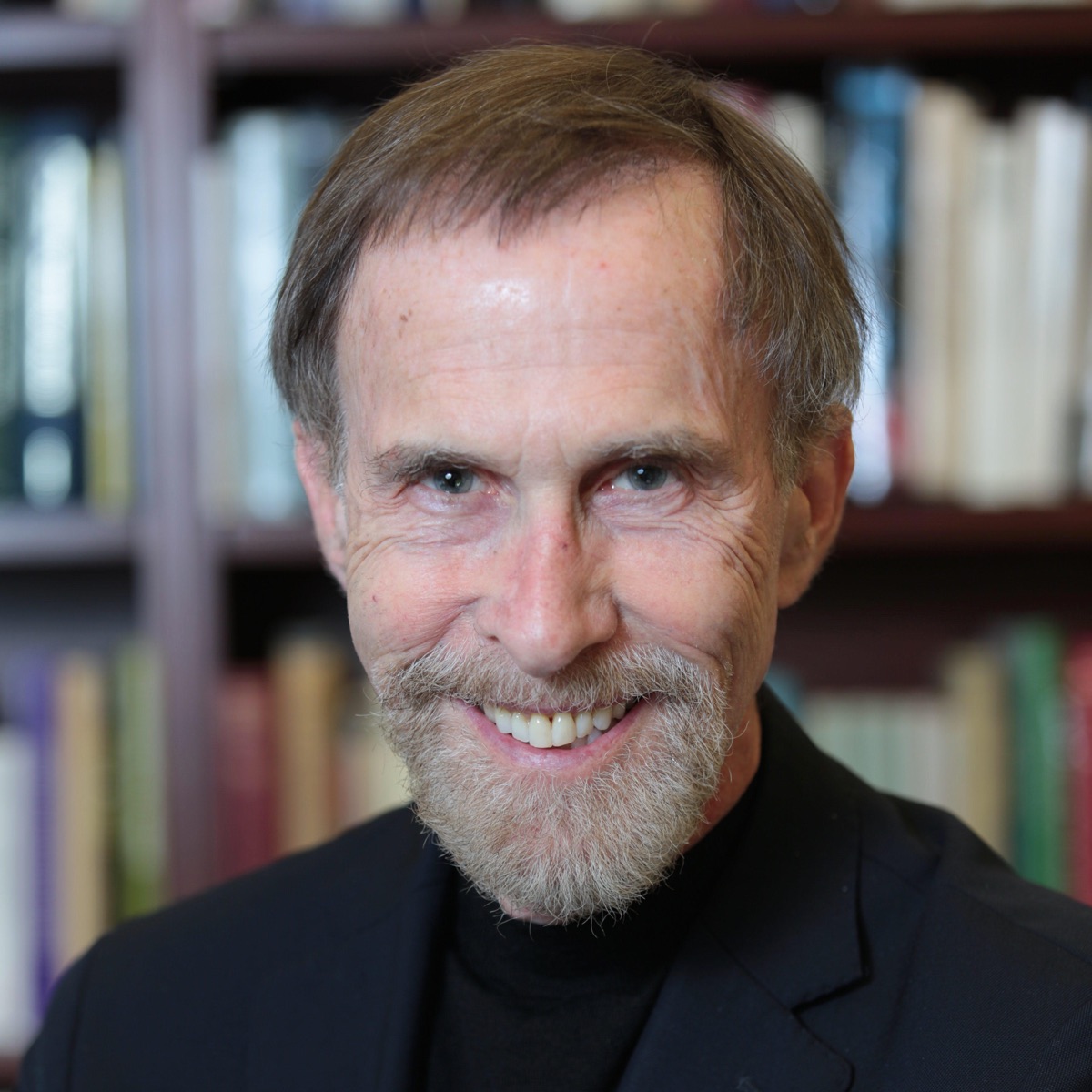
 We humans love to tell ourselves stories about why things happened the way they did; if the stories are sufficiently serious, we label this activity "history." Part of getting history right is simply an accurate recounting of the facts, but part of it is generally taken to be some kind of explanation about why. How much should we trust these explanations? This is a question with philosophical implications as well as historical ones, and philosopher Alex Rosenberg's new book How History Gets Things Wrong claims that we should basically not trust them at all. It's not that we get the facts wrong, it's that we have wrong ideas about causality and how the human mind works, and we can't help but import these wrong ideas to our beliefs about history. Alex and I dig into how this claim arises naturally from a certain way that naturalists should think about the world.
Alex Rosenberg is the R. Taylor Cole Professor of Philosophy at Duke University, with secondary appointments in biology and political science. He has been a Guggenheim Fellow and winner of the Lakatos Award for the best book in the philosophy of science. Rosenberg is the author of numerous books and articles on philosophical aspects of various subjects, including biology, cognitive science, economics, history, causation, and atheism. He has also written two novels, The Girl from Krakow and Autumn in Oxford.
Click to Show Episode Transcript
0:00:01 Sean Carroll: Hello, everyone, and welcome to The Mindscape Podcast. I'm your host, Sean Carroll. And if you've read my book, The Big Picture, you know that one of the things I'm extremely interested in is the project of reconciling what's called the "manifest image" of the world with the "scientific image" of the world. These are terms that go back to the philosopher Wilfrid Sellars; I learned them from Daniel Dennett. But it's pretty obvious what's going on. You have a manifest image of the world, which is the world we see and talk about in our everyday lives, a world of people and tables and chairs, but also a world of purposes and meanings and other terms that we use to describe how human beings navigate this world around us. And then we have the scientific image, which, if you're a biologist, is a story of organisms and cells, and if you're a physicist, it's a story of wave functions and particles and things like that. These ways of talking about the world speak very different vocabularies. How do we match them up with each other? Some of this project is just a matter of doing science, but there's also deep philosophical issues that need to be resolved.
0:01:07 SC: So today, I'm happy to welcome Alex Rosenberg from Duke University, a leading philosopher who's also very interested in this project of reconciling the manifest and scientific images. And Alex has highlighted a specific example of this problem that most of us never even think about: How we talk about history by telling stories about it. When we try to illuminate the events of history, we often tell stories about what the individual people there were thinking, what their beliefs were, what their intentions were, what their goals were, and how that explains, purportedly, why they acted in certain ways. And Alex goes through examples from Talleyrand to Henry Kissinger. He has a book that just came out called "How History Gets Things Wrong," where he argues that all of these stories that we tell about history are essentially useless. They are fundamentally mistaken from the start because they rely on a certain conception of a theory of mind, how we conceptualize what's going on in the minds of other human beings, ascribing beliefs and intentions to these other people.
[smart_track_player url="http://traffic.libsyn.com/seancarroll/alex-rosenberg.mp3" social_gplus="false" social_linkedin="true" social_email="true" hashtag="mindscapepodcast" ]
0:02:13 SC: If only, the idea goes, we could figure out what Hitler was really thinking, what he wanted to achieve, then we would understand why he invaded Russia. And Alex has a couple of arguments against this sort of "so obvious that we don't even think about it" kind of view. First, that it's been an empirical failure. He gives examples where you can say, "Well, I'm sure this person was thinking that, and therefore, the next time, this is going to happen," a failure to learn from history by misonceptualizing how we should think about history in the first place. And secondly, and maybe more importantly, he argues that it's inconsistent with what neuroscience tells us about the brain. We look at neurons, the neurons of which our brains are composed, and we don't find direct analogues of beliefs and intentions. That doesn't seem to be how brains work, according to the most modern neuroscience.
0:03:05 SC: So this is an interesting, provocative claim. I'm not sure that I'm fully on board with it. In fact, I tend not to be on board with it, but this is something I'm open-minded about, I don't claim to be an expert, so I learned a lot from this conversation. And I certainly agree that this issue is front and center for naturalists trying to understand human beings. If you don't believe there's an immaterial soul or an unembodied mind that tells our bodies how to behave, how do we conceptualize ideas like beliefs and intentions? If the world is... Brains are just electrochemical signals between neurons and we're all just particles obeying laws of physics, with no mind pushing anything around. Heavy stuff, but that's why we're here on The Mindscape Podcast, so, let's go.
[music]
0:04:09 SC: Alex Rosenberg, welcome to The Mindscape Podcast.
0:04:12 Alex Rosenberg: Hi, Sean, you gotta get off the phone. I'm expecting a call from Terry Gross.
0:04:16 SC: Oh, that's good, you're obviously a big cheese now with all of these books you've been writing.
0:04:22 AR: I wish...
0:04:23 SC: Which actually...
0:04:24 AR: Interview from Terry Gross.
0:04:27 SC: That will be great. I'd be very tickled to hear that, but it actually brings up exactly the issue that I thought I would start. I would start with something a little bit from left field, we'll get into history and stories and things like that, but I've started this podcast, I've done a bunch of interviews, and when I started, clearly, one of my favorite areas to include in the podcast would be philosophy, it's one of my own favorite areas. And yet you're the first philosopher I have coaxed on to the podcast, and not for failure to ask other people. I'm wondering, is there some reluctance among professional philosophers to get out there and chat about their work in the public sphere and is this an issue, or is it just me?
0:05:09 AR: Well, I just read a interview with a very fine metaphysician at MIT, Stephen Yablo, in which he owned up to the feeling that at least some of what we do in philosophy sounds so out of touch with reality from what most people are interested in and the stage-setting required to make them part of the conversation is so arduous that they may be reluctant to do it. You know, people in subcultures like to talk to one another. I've already noticed that, in fact, it's been about four or five days since my new book has started to hit the media and there are a couple of websites out there, Solon has done something and Verge has done something, and the Twitter feed is beginning to activate among historians who are really offended and in high dudgeon and talking to one another about this. And the same cultural phenomenon may occur in all of our academic areas. You know, if you write a wonderful book or Brian Greene writes a wonderful book expounding physics in a way that everybody can understand, it produces a lot of envy and jealousy among the physicists, and because it's difficult to do what you do, they don't want to try and perhaps even want to avoid it. And it's probably the same in philosophy.
0:06:51 SC: Yeah, but I think that there is this special thing in philosophy where even though in physics, in some sense, the subject matter is just as recondite and hard to access as philosophy, we also, in physics, have this direct, tangible, experimental stuff to point to. Whereas in philosophy, it's all recondite analyses and ideas that are not completely intuitive at first glance, and therefore, maybe there's a feeling that there's more of a barrier there to that kinda communication.
0:07:23 AR: Well, I also think that what you do is so much more exciting and interesting and significant than what a lot of philosophy consists in that I think that we're more self-conscious about going public than other disciplines, especially some of what philosophers do. Not everything. Moral philosophy, political philosophy, these are things where people ought to listen to what philosophers say more than they do. Metaphysics, maybe not so much.
0:08:01 SC: Yeah, I'm gonna be at a little personal campaign to get more metaphysics in the public sphere, even if I am sad that they call themselves "metaphysicians" rather than "metaphysicists." I can't do anything about that.
0:08:13 AR: [laughter] That's very good, because we are certainly not healing either ourselves...
0:08:18 SC: No. Speaking of healing, I wanna get... Mostly want to concentrate on the ideas in your most recent book, which is about history and how it fools us and how we fool ourselves by telling stories. But I got to know you through the previous book, one of your many previous books, The Atheist's Guide To Reality, and I think that talking about that and the ideas in that book will help set the stage a little bit. So tell us about The Atheist's Guide, what your goal was there. And personally, I think that it was not the right title for the book. I mean, it's not really that much about atheism; it presumes atheism and then it goes on from there.
0:08:57 AR: Well, that's right, and of course, the book is about a doctrine that I call "scientism," and I glory in the term, usually used as a disparaging term of abuse, the way "queer" used to be. Another label for the view that I defend in that book is "disenchanted naturalism," that is, taking empirical science seriously as our best guide to reality and concluding that it jars so badly with what Daniel Dennett called, following Wilfrid Sellars, the "manifest image." The picture of reality that common sense gives us jars so badly with that picture of common sense that we have to get rid of the commonsensical picture of the world. So I wrote that book, and at the time, it was almost 10 years ago now, the new atheists were riding high, Dawkins and Christopher Hitchens and Sam Harris and Dan Dennett, that my agent and my editor both insisted that I had to put the word "atheism" in the title even though the title that I wanted to use was "Reality: The Rough Guide." And they told me I couldn't even use "The Rough Guide" because that was trademarked by the people who do the travel books.
0:10:24 SC: Yeah.
0:10:26 AR: So I...
0:10:26 SC: That, I believe.
0:10:27 AR: I succumbed to their suggestions, and of course, in one respect, they were right, it made for very healthy sales in the first several years. And it didn't get the word "scientism" out there as a term either of abuse or a badge of pride for the doctrine I wanted to defend. And that was the claim that most of the great, persistent questions of philosophy, especially the ones that keep non-philosophers up at night, those questions could all be addressed, could all be answered, by the resources of natural science and biological science and psychological science, and that most of the answers were disobliging, disenchanting.
0:11:13 SC: Well, in the sense that things like consciousness, free will, morality, you're going to say that our everyday folk understanding of these issues has been dramatically undermined by progress in natural science.
0:11:27 AR: Correct.
0:11:29 SC: And that's your view called "scientism."
0:11:31 AR: Yes. Scientism is generally viewed as the exaggerated respect for the findings of science and the claims that only science... The mistaken claim that only science can tell us about the nature of reality. And I accept that definition, provided you remove the words "exaggerated" and "mistaken."
0:11:53 SC: Right. So you're a happy scientist... Not scientist, what would be the noun form of that?
0:12:00 AR: That's the trouble. The substantive turns out to be "scientistic," we scientistics, because of course, we're not scientists. That's the wrong substantive for the adjective "scientistic." So you use it without a noun.
0:12:14 SC: Okay. So scientistics would... So for example, let's just pick one to take these ideas and make them clear in the listeners' minds. Let's pick consciousness for example. We could do free will just as well, but I like consciousness, it's a little bit... A little bit more substantive discussion we have about consciousness. So do you think that consciousness exists?
0:12:35 AR: Sure. It's pretty hard to deny.
0:12:38 SC: Well, people do, right? I mean, some have, right?
0:12:42 AR: About the only person who is identified and disparaged as denying its existence is Dennett, his famous and wonderful book Consciousness Explained often described by its opponents as "Consciousness Denied." But nobody can deny the subjective qualitative aspect of experience of which we have some kind of apparently introspective access. And where the denials start is in how much of it we should take seriously, what we can be confident its function is, and whether it's a basis for any kind of privileged knowledge of the nature of reality, even about the reality of our own minds.
0:13:35 SC: Okay, this is good. So, I think that everyone knows, everyone who is slightly informed about it, knows that even Dennett does not deny the existence of consciousness. In fact, I can tell you a story, when I wrote my book The Big Picture, I included that joke in there, that people made fun of Dennett's book Consciousness Explained by calling it "Consciousness Explained Away" or "Consciousness Denied." And Dan asked me to remove the joke from the text, he didn't want it repeated. Even though I wasn't agreeing with the joke, he wants it to be very clear that he was not denying the existence of consciousness.
0:14:10 AR: I'm not surprised. And he's right to argue persistently against that misrepresentation, and I still think that that book is probably the best thing written on the subject. I'm inclined to add to it Jesse Prinz' book about consciousness as attention, a wonderful further contribution. But it's very hard to loosen the grip of our first-person introspective awareness, and that, of course, is in large measure what my second book is. The book that we wanna talk about eventually [0:14:51] ____.
0:14:53 SC: But so can we say exactly the same thing we've just said about consciousness, about something like free will? Do you think that free will exists?
0:15:00 AR: I think that free will does not exist, I'm very confident there's no such thing. The arguments against it have been with us at least since Holbach in the 18th century, and there are plenty of solid 20th-century arguments for what's called "hard determinism," the claim that determinism is true or true enough to deprive us of free will, and there's no way to reconcile determinism with some kind of watered-down conception of free will in the way that Hume and so many other [0:15:31] ____ have tried to do. But of course, our conscious subjective experience of free will is what deceives us into being unable to take that view seriously.
0:15:50 SC: Okay, so but... I think... Good. This is where the... What's the phrase? I wanna say "the hammer hits the road," but that's not right.
0:15:58 AR: "The rubber hits the road."
0:16:00 SC: The rubber hits the road. Yes. So, unlike consciousness... So this is where Dennett and I, I think, would come down on the other side, and I think that we're actually in the majority, that doesn't mean anything, but don't most working philosophers, even those who are naturalists and hard determinants, come down in still saying that free will is a useful concept we should keep around?
0:16:24 AR: So I agree with you, I am certainly in the minority, although somewhat increasing numbers, I can identify some other philosophers who agree with me. But of course, this is the one area where Hume's writings, though profoundly influential, are mistaken, and yet they continue to be endorsed by most people, including Dennett. However, you did a profound service to those of us who dispute Dennett on this matter in the wonderful Stockbridge Massachusetts Conference that you organized and which we can all find online to this day, I hope, in which, discussing this matter, I finally got Dan to admit that the institution of free will is a concept that is extremely useful for maintaining social control in such avenues and areas of everyday life as are crucial to civilization and cooperation and our own personal safety. He admitted as much. And that, to me, was a sufficient concession that he didn't really hold with the [0:17:45] ____ contra-causal free will, which is the only thing that real free will could consist in.
0:17:56 SC: Well, so this is... I do wanna talk about this a little bit more just so that everyone is clear on what the options are. So, on the one hand, yes... So this was the Moving Naturalism Forward Workshop, and not only is it still available online, but we finally cleaned it up and it's available at much more user-friendly form now, that people can find it if they're interested in it. And Dan did admit that, I think that for him personally, a big part of accepting the reality of free will is that it makes society more worth living in. People need to believe in free will in order to be good people and things like that.
0:18:35 AR: It'd be hard to keep people in jail if we didn't believe in free will.
0:18:38 SC: Yeah. And that's not all why I believe in free will. So, I wanna at least lay out the options here, because you don't believe in it and it's just... It's a particular example of a bigger issue, which is, we can be reductionist. We can be... Let's put it in exactly free will terms, we can be hard determinists. I'm happy to be a hard determinist. There's issues about quantum mechanics, but we can put those aside. And I don't believe in contra-causal free will. I think that it's perfectly okay to talk about a person as a collection of particles and atoms obeying the laws of physics, and in that language of talking about them, it would be silly to talk about free will. There's no free will there. But I also believe that there are a higher-level emergent ways of talking about people. We don't know where all the atoms and molecules in a person are, we're not Laplace's demon, we can't make those hard deterministic predictions about them. And our best vocabulary and theory for talking about people is one that treats them as agents able to make choices. And so, to me, therefore, the idea of... Whether you wanna call it "free will" or not, the idea that people make choices and they can be held responsible for their actions is not just useful for social control, but it's actually true. It's the best way we have of talking about people.
0:19:53 AR: Well, I was going to interrupt your very eloquent statement at the point where you first introduced the word "best," because I'm inclined to agree that free will is part of a constellation of concepts that we need and that are best for ensuring the civilized character of social life. But you went on to use the word "best" twice in that eloquent play, in particular, best for telling the truth about the nature of us as human beings, our situation, and the nature of... What makes us tick, as they say. And before that, you introduced the concepts of hard reduction and emergentism, or at any rate, emergent levels of the description of reality. And that's, I think, where I need to get off the train. I agree that these concepts are best for matters largely normative and for the preservation of important social institutions, but that doesn't make them true. And if we follow at the dictates... Follow at I think what we learned from the physics which you have so ably expounded for the non-physicist, we can't keep free will within that description of reality.
0:21:32 SC: Right. So I think that I'm very happy to completely ignore all these issues about normativity and social control and all that. What I mean by "best" is really a purely descriptive judgment of what is best. So, my view of free will is that it is exactly as real as tables and chairs and baseball and chess. It is something that is not found in the fundamental laws of physics, that if you describe the world at the most reductionistic level, it wouldn't be there, but we have other levels that we describe it on. I can say that my chair is made of atoms, but that doesn't mean that the chair stops existing. It's something that exists at the human level, at this level of description that is useful in the sense that it accurately describes reality in a world of vastly incomplete information. We don't know where all the atoms are; I can still usefully talk about what the chair is and what the chair does. I can still use fully talk about what a person is and why they're making choices. And this is... I'm not gonna belabor it too much; I just want to say it one last time, and you're gonna disagree, right?
0:22:35 AR: So you used the word "true at a level of description."
0:22:39 SC: Yeah.
0:22:40 AR: And I think that that's... I don't know whether "misleading" is the right word or "tendentious." There's true, and there's false. There's not "true at a level of description." Now, you and I both agree, I think. And here's the crutch of the matter, that, as I wrote in The Atheist's Guide To Reality and I wasn't making an original claim, that the physical facts fix all the facts.
0:23:07 SC: Right.
0:23:08 AR: And insofar as we all agree to that, there's got to be an account of the nature of all the facts that there are, including the higher-level facts, if there are any, in terms of the physical facts. And my belief is that when we know enough about physics and we've got the computational power and the cognitive capacities to see exactly how physics fixes all the facts, it's gonna turn out that there won't be any room in that fact-fixing for the fixing of facts of free will.
0:23:46 SC: Okay, so, just to be perfectly clear, you think that chairs exist, you think that consciousness exists, but you don't think that free will exists.
0:23:55 AR: Yes, I think that is a fair gloss on what I have to say.
0:24:00 SC: Okay. And I...
0:24:02 AR: [0:24:02] ____ get back to something that you said way back at the beginning about the reticence of philosophers and their reluctance to participate in these kinds of debates, I think there's a powerful argument for saying that tables and chairs don't exist.
0:24:19 SC: Well...
0:24:19 AR: An argument given by a very famous, very smart American philosopher, Peter van Inwagen, which people have been trying to refute for 25 years without success, but I don't wanna get into that. That's the kind of recherché metaphysics that gives philosophy a bad name.
0:24:40 SC: Yeah, but I think... Yes, we should not get into it. Maybe I'll have Peter on at some point or something like that, but my point would be I don't see a principled reason to accept the existence of chairs but not the existence of free will. I could... I have more respect for an attitude that says, "Neither one of them exist," I get that...
0:25:01 AR: Alright, so chairs and tables are nouns, and we see their referents, okay, and we can stipulate that there are clear examples of them and what those examples consist in. But if you and I sought to identify a clear case of free will, right, we wouldn't be able to do that. We would identify an action that somebody undertook, and you would say that action was an example of acting freely and I would say it is not. And we would agree on all the facts of the matter about what happened on that occasion, and yet still disagree about the free will question.
0:25:42 SC: Got it, okay, so, we can talk more offline about this, but I think that has actually been very clarifying and I hope that people get what the stakes are about this. And it's important because it leads us right into one of the things you harp on in The Atheist's Guide, which is aboutness, which is something I think that non-philosophers or non-philosophy fans don't even take to be something under debate. Everyone knows free will or consciousness are controversial topics, but aboutness, can one thing be about something else? You call this into question in The Atheist's Guide.
0:26:19 AR: That's right. And of course, nobody understood it outside of the philosophical community, and within the philosophical community, everybody thought they understood it perfectly well and could refute it in the way Dr. Johnson refuted Bishop Berkeley. Famously, Berkeley said that there was no matter; there was only ideas, and Dr. Johnson kicked a stone and said, "Thus I refute Bishop Berkeley," and everybody understands that that was a puerile misunderstanding of Berkeley that simply showed Dr. Johnson's ignorance. And that's roughly the attitude I have towards those who want to refute my denials about... And there, I used the word.
0:27:07 SC: Yep. Yeah. See? There you go.
0:27:08 AR: And that, of course, is the problem. There is the obvious fact that when we make noises, as I'm making noises now, the acoustical disturbances that move through the air and eventually hit eardrums, or get translated into a high/low voltage and then eventually acoustical disturbances that hit eardrums, that those have meaning, and their meaning consists in their being about the world and about truths and falsities that are made true or false by the world. One of the words that I use much more lately to describe this is that our language, our words, our written and our spoken speech "represents"... Is directed at the way the world is arranged and "represents" is a picture of, is a very bad word, but "representation" is most simply illustrated in picturing, about the way the world is arranged, and in the case of desires and wants, about how we want the world to be arranged.
0:28:26 AR: And the question that philosophy has been addressing within philosophical circles for a couple hundred years now is exactly what this kind of representation or aboutness or meaning or content could consist in, because we know that marks on a page, acoustical disturbances in the air, and neural circuitry arranged in our brains, they all have meaning. They are all about stuff. They all represent the way the world is or the way the world could be. And the great challenge in the philosophy of language, and Wittgenstein, of course, was one of the earliest to make apparent this challenge, is to explain what that aboutness, content, representation, consists in.
0:29:21 SC: Right.
0:29:23 AR: And just as I think there's no room for free will in a purely physical world where physics fixes all the facts, I argue, and I argue briefly in The Atheist's Guide to Reality, that there's no room for content in a world in which physics fixes all the facts. And that leads to a doctrine in philosophy known as "eliminative materialism," the doctrine that I espouse along with a very few other people, but which we firmly believe is the take-home lesson from the revolution in neuroscience over the last 50 years.
0:30:03 SC: Good, so I think that... And we're sort of segueing into the history book now, but still in The Atheist's Guide, you talked about this issue and you bring up the example of a stop sign, right? The notion of this red octagon that is along the side of the road is supposed to be about the fact that when you see it, you're supposed to stop in your car. And it doesn't show things stopping, it doesn't naïvely represent the idea of stopping, yet everyone knows what to do. I was like... I guess I was a little bit unclear in re-reading that chapter, whether or not you actually were denying that stop signs are about stopping. You say they are, but I think that maybe you were just sort of speaking in the indirect speech of someone...
0:30:49 AR: That's that wonderful phrase of Hume's, "thinking with the learned and speaking with the vulgar." And for almost everything in The Atheist's Guide To Reality, there's a takeaway about being allowed to continue to speak with the vulgar even though we think with the learned. So free will, for example, we all attribute moral responsibility to people and that seems to presuppose free will. It's impossible for us to stop doing, so even those of us who are hard determinants, we're speaking with the vulgar. But now getting back to stop signs. I used the stop sign as an example to introduce the more fundamental problem. The stop sign is a red octagon and everybody knows what it represents: It represents a sentence variously expressed in English and any other public spoken natural language, a one-word sentence, it's the imperative conjugation of "to stop." "Stop!" That's a one-word sentence.
0:31:57 AR: And the sign represents the action of stopping at that particular place and time within 10 feet of the red octagon in just the way that the English one word-sentence, "Stop!" has content and represents. And it's very clear that in ordinary circumstances, in speaking with the vulgar, that we know what stop signs mean and we know how they work and we know what they represent. And now the question that we want to address when we're doing cognitive science, when we're doing neuroscience, when we're trying to figure out the physical details of how the brain works, is how there could be states in the brain that represent, that have content that are about the world, in the way that the stop sign is about the world, or in any other way.
0:33:02 AR: The example of the stop sign is very convenient for making it very clear what would be required by any account of how our brain states can represent the world, as indeed they must if they are to have content and meaning and be about the world.
0:33:23 SC: Right. And so... But maybe I'm just being too lax in my philosophical discipline here, but I would have said that Wittgenstein and others have given us a pretty good account of what that could mean. The sense in which a stop sign is about stopping is that when these things that we identify as cars go down roads and they come to intersections, when these signs are there, they tend to stop; and when these signs are not there, they tend to not stop. And that relationship between the existence of the sign and the act of stopping is what we mean when we say that the stop sign is about stopping. But you think that account is insufficient.
0:34:08 AR: Well, if you think that Wittgenstein's invocation of the concept of language-game conferred any illumination on the fundamental question of the nature of intentional content, that's the sort of technical philosophical term, then you'd be happy with the answer you just gave. But I never thought that Wittgenstein told us anything that really helped us understand or explain meaning, or aboutness, representation, or intentionality. He just described the symptomatology. What we need is to understand how the brain works when it conveys, carries, employs, deploys meaning, aboutness, representation. And to wave your hand about the way in which the word is used in everyday life is not gonna help us understand how it's possible, still less, how it's actual, for the brain to have states in it, like beliefs and desires that have representational content. And that problem has been overwhelmingly serious and not one to which Wittgenstein or the ordinary language philosophers have contributed anything since physicalism about the mind and the brain became the orthodox of view in philosophy 50 years ago.
0:35:35 SC: Good, so if we... Let's assume that we all are among friends here and we're physicalists about the mind and the brain, so we believe that... We're physicalists about the universe, let's say, right, there's nothing else out there. The physical facts fix all the facts, we're on the same side about that. Is the problem that there is nothing that aboutness could possibly be in such a world, or is it that there is something that aboutness could be, but that something is lacking in the relationship between stop signs and people stopping?
0:36:08 AR: So we could do it two ways. We could talk about the different proposals that have been made for how a chunk of matter in our brains or a chunk of matter at the intersection of two streets could be about, or represent, facts in the world. Okay? And then we could show that none of the reasonable stories about how a chunk of matter in the world, like the red octagon at the intersection of two streets, is about stopping, that nothing like that could be true about what goes on in the brain. We could rule out all the reasonable alternatives that people have so far offered for how one chunk of matter can be about another chunk of matter, that is to say, how red octagons can be about stopping at the intersection of streets in a town, cars doing so or people doing so, we're chunks of matter. Or you could cut to the chase and consider the fundamental profound question of how it's even physically possible for one single chunk of matter in the universe, some configuration of leptons and bosons, to be organized in such a way that it is, just in virtue of its physical organization, about, pointing at, representing, picturing, some other chunk of matter, some other configuration of leptons and bosons. Now I think that the latter is already impossible, but I'm willing to walk through the various alternative attempts to show how it is possible and to try to poke enough holes in them to make you see that it's just an illusion.
0:38:09 SC: Well, but the latter seems stronger than I would want or need. I mean, "just in the virtue of its arrangement," et cetera, et cetera, doesn't seem to be necessary. That... I would deny... Yeah, I would agree that that's not there for us to help ourselves to, but this relationship between the systems, there's one sort of symbolic system of signs and what's going on in people's intentions, and another system of cars stopping in certain places. And that, for me, is more than enough to count it as aboutness.
0:38:40 AR: So philosophers have tried to pursue that program ever since Dan wrote Content and Consciousness in 1969, and the name of the philosophical program of trying to show... Trying to naturalize content, representation, aboutness, is teleosemantics, "teleo" meaning having to do with purposes and goals, and we all understand that meaning is ultimately to be cached in "for," "purpose," "goal," "end," or something like that. And semantics, obviously, from the attempt to identify the truth conditions of sentences, whether they're inscribed in print, spoken in speech, or somehow represented in the human brain. So teleosemantics is the research program of trying to give a completely natural biological account of how content is possible in the brain and in speech consistent with physicalism, with the doctrine that physical fact fix all the facts. And there had been sufficiently many, in principle, knock-down objections to this program so far as I can see that it's not gonna work. And it's the only game in town. If it's not gonna work, then either naturalism is wrong and some kind of spooky dualism is right, or there's ultimately, at basement level, no intentionality, no content or meaning or representation; it's just a useful tool like free will.
0:40:21 SC: Right. So, just to put a bow on this and make it absolutely clear to the listeners, what's going on, I would say that you have recently written a book about how history gets things wrong. You would deny that you have written a book about that subject, right?
0:40:40 AR: [laughter] This is the classic, of course, refutation of my view. The opponent says, "You believe that there are no beliefs."
0:40:48 SC: I'm not too proud.
0:40:49 AR: "You desire to convince us that there are no desires. You are refuting yourself out of your own mouth." Well, that's a very, on the one hand, easy cheap shot; on the other hand, a serious issue for all of us eliminative materialists. How are we gonna deal with it? Well, probably there's not enough time in our conversation to begin to explore the difficulties and how they might be circumvented. And one of the reasons I wrote this new book, How History Gets Things Wrong, was to try to compartmentalize at least part of our position so that it could... Its value, its payoff, its importance, for our understanding of the nature of reality could be made clear without our having to address this self-refutation problem.
0:41:45 SC: Right. Yeah, so I'll confess. I find the cheap, vulgar, self-refutation problem a pretty good one, so then I think that I easily get out of it myself by admitting the truthfulness of higher-level descriptions in which aboutness and intentions are all true and real and there. But okay, I get it. So, I just wanted to make people understand, they can choose for themselves what's...
0:42:10 AR: Not long ago, Gödel showed us that there was a fundamental incoherence about mathematics, about any axiomatic system strong enough to contain all the truths of arithmetic. I am not in a position to make the same kind of claim about our appeals to intentionality and how they work, but I sort of hope that at some point or other, we, us eliminative materialists, could show that there's an essentially... That there's a fundamental incoherence here.
0:42:49 SC: Right. Yeah, that would be wonderful to show. I would put what Gödel showed in slightly less grandiose terms. I think that he showed that there are true statements within formal systems that can't be proven, and it doesn't really bother me that much. It's a profound fact, but I wouldn't say that the systems themselves are incoherent. They can be completely consistent, but they don't have purchase on every true statement.
0:43:14 AR: Yeah.
0:43:15 SC: Okay. So, in the new book, to the extent that it's about anything, it seems as if...
0:43:21 AR: [laughter] [0:43:21] ____.
0:43:22 SC: I'm not gonna let you get off this hook so easily. So, it seems as if you're taking this philosophical point about aboutness and intentionality and combining it with some facts about neuroscience and the theory of mind to explain to people why the usual way we have of doing narrative history, of telling stories about what happened in history, is misleading us. Is that basically the idea and... How would you put it?
0:43:50 AR: Yes, I think that is the idea. I'm not going to say this... Having given up trying to convince anybody, including my philosophical confers on good arguments from philosophy for my eliminativist views, I realized that a much stronger and more convincing case for many of these conclusions, in fact, for as much of them as I need, can be made from neuroscience, from the achievements of Nobel prize-winning neuroscientists who have enabled us finally to understand exactly how the brain lays down information, stores it, and deploys it, and have shown that the way it does these three things is entirely free from and has nothing to do with the theory of mind that communicates this basic intentionality that we've been talking about. And insofar as we use the theory of mind, simply, the idea that it's beliefs and desires that work together to deliver choices and decisions, insofar as we use this theory of mind to construct stories and narratives both in history and of course in fiction and other cultural objects, insofar as we use this theory of mind, we're engaged in something that has a great evolutionary pedigree and that was a quick and dirty solution to a problem we faced on the African savanna a million years ago, but which doesn't constitute knowledge, which cannot actually identify the causal forces that determine human behavior, and therefore, all the history that exploits this theory to deliver its explanations is wrong.
0:45:43 SC: Right. And so, before we get to the details there, 'cause I do wanna get to them, I wanna give you the opportunity to dig in a little bit to the neuroscience side of things, but you do a great job in the book of providing us with some colorful, real-world examples of how we tell ourselves stories in narrative history, Talleyrand and Kissinger and so forth. So, remind us of what the sort of ordinary folk understanding might be of what we learn by studying the stories of history.
0:46:12 AR: Alright, so my favorite example is in the first two chapters, my two favorite examples... Or actually, the second and the third chapter. The second chapter I think is entitled, "How many times can the German army play the same trick?" So, the German army invaded France four times in exactly the same place in the space of 75 years. Now how did it do that? Well, the military historians are paid big bucks to try to figure out, to explain the past, and to explain the past in ways that will enable us to prepare for the future. And in each of these cases, having very carefully explained what it is that the Germans wanted and why it is that they believe that the way to get it was to invade France through the Ardennes, a dense, forested area between Belgium and the Swiss border, having explained that four times, nobody on the Allied side, French, British, or American, when it came to the Battle of the Bulge, was in a position to make use of those explanations because they were always wrong. They were always wrong because the conclusions drawn from them was, "The Germans will never do that again."
0:47:36 AR: And they did, and that should have led at least to humility, if not to the claim that historical explanation, even at its best, has no predictive or very limited predictive power. And then the next example, the one I use in particular to illustrate how the theory of mind works is you may have asked yourself, as many World War II history buffs do: Why did Hitler do something so stupid as to declare war on the United States three days after the Japanese attack on Pearl Harbor when he didn't have to, and when he knew that by attacking the United States at Pearl Harbor, the Japanese were guaranteeing that the Americans would focus on them and not enter the European war for years, if at all? And instead by declaring war on the United States, he forced the United States to enter the war and to fight them first before they finished off the Japanese.
0:48:34 AR: And that is a mystery which World War II buffs seek to answer, and the obvious explanation is in terms of Hitler's mistaken desires... Or excuse me, Hitler's mistaken beliefs and his unattainable desires. And the way which we understand why he did that is by deploying this theory of mind. And it's a theory which we don't even have to learn because we... It was bred in the bone, or absorbed with our mother's milk, which we learned as infants. And that theory, which is so invisible because it's either innate or nearly innate, that theory is, on the one hand, the device we employ to tell one one another stories both in history and about our own actions and in fiction, and the source of the failures of history to provide us with any kind of predictively useful knowledge that would confirm its explanations as even in the right ballpark.
0:49:43 SC: So when you use the phrase "theory of mind," you're not talking... It's not a theory of mind. Different people have different theories, you're saying there is something we call "the theory of mind," and it's roughly speaking, the idea that people act because in their minds, there are beliefs and desires and we can try to figure out, we can try to identify, what those beliefs and desires are. And it's that very, very basic claim that you want to call into question when it gets applied to history in this way. You wanna call it to question generally, but history provides an excellent testing ground for why it's not a very good theory at all.
0:50:17 AR: Right. So it used to be called "folk psychology" and the British called "mentalising," and in evolutionary anthropology, in cognitive social psychology, and neurology, especially in the diagnosis and treatment of autism, this constellation of hypotheses that we all carry around with us and use to explain our own behavior and predict the behavior of others is called "the theory of mind." And it's kinda hard to state because it's a bunch of platitudes and obvious propositions that everybody already believes from infancy onward, and therefore is difficult to sort of extract and express. But cognitive social psychologists have drawn their boxology diagrams of the way this theory works and used it as kind of the marching orders of a research program to develop an account of human cognition.
0:51:18 SC: And... Yeah, so... Good. This is the right place, I think, to get into the neuroscience of it all. So, if I were to be slightly crude about it, what we've discovered is that if you were to open up someone's skull and to look into their brains, nowhere would we see any beliefs or desires; all we would see are some neurons bouncing electrochemical signals back and forth. And it's a lot more intricate than that, so maybe you can fill in some of the gaps for us.
0:51:42 AR: So, we think... If the theory of mind is right, then we look into the brain, there ought be some kind of structure there, not necessarily at the level of a single neuron or a thousand neurons or a million neurons. After all, in a single voxel, as the FMRI guys talk about it, there are 250,000 neurons, and that's less than a millimeter by a millimeter by a millimeter. When we look into the brain, according to this theory, there ought to be divisions, portions, subunits that deliver, that's consistent, that's observed, that operate to store beliefs and store desires and then pair them together appropriately, the right beliefs and the right desires, to drive the actions, the choices, the decisions, which people make and which we explain to one another by speculating about, by hypothesizing about, what they must have wanted and what they must believed that led them to do that. Okay? And there, there's this implicit, unexpressed, probably largely unconscious, set of hypotheses that we deploy to make sense of one another.
0:53:06 SC: And you make the...
0:53:06 AR: That's the theory of mind.
0:53:07 SC: Yeah, sorry, you make the statement, "neuron, electrical signals, don't differ in content," that seems to be crucial to the argument. What... I mean, sure. In some sense, neurons are just bouncing electrical signals and the electrical signals are all created equal; it's just the timing and the number of them, et cetera, changes from situation to situation, but what do you take from that fact? What do you gather? What is the lesson that you learned from saying neuroelectrical signals are all the same?
0:53:42 AR: The theory of mind tells us that somewhere in the brain, at some level of organization presumably high above the individual neuron, the neurons are interconnected to one another and vast assemblages of them are so organized as to consist in beliefs and desires. And nobody among the physicalists who actually try to understand the nature of research in cognitive science and cognitive neuroscience, none of these people think that you're gonna find content or aboutness or representation at the level of the individual neuron; they think it's going to be found at some higher level of organization of the brain, just as the software that runs the computers that you and I are using right now operate at higher levels of organization than the individual microprocessors. And the argument of my book is that try as hard as you might, you will not find... You will find higher levels of organization, but those higher levels of organization lack the intentionality, the representational content, the aboutness, that they have to have in order for them to actually implement, realize, consist in, the examples of these states of belief and states of desire that the theory mind tells us actually cause our behavior. So, the issue in the research program of the science and cognitive neuroscience is to show how the brain implements a theory for mind and the results already achieved in neuroscience suggest that that program will not succeed.
0:55:34 SC: Yeah, so the part that seems pretty clear to me is this idea that whatever we might have hoped to find in the mind representing things outside, it's not a very literal representation. You used the example in the book of grid cells in the mind of a rat, trying to find its way around its environment, are not arranged in a grid. The neurons that encode in some sense to the extent that that's what's happening, where the mouse is, it's not a picture in any direct sense. So...
0:56:06 AR: And it's not used as a picture by the rat, either.
0:56:09 SC: Right, so yeah, so what does that mean? "It's not used as a picture by the rat"?
0:56:13 AR: So, for... The information about the spatial environment of the rat is recorded in these grid cells which then send signals to another close-by part of the brain called the "place cells," and the discovery of these grid cells and place cells is what got the Nobel prize for the [0:56:38] ____ and for John O'Keefe. And the way they work, I suggest, is a paradigm for the way in which the brain downloads, secures, receives information from the environment, the way it records it... The way it deploy... The way it then stores it and deploys it, and there's no stage in this process in which the data, the information, the discharge of neurons and assemblages of neurons, no matter how large these assemblages are, constitute symbols, representations, pictures, which some other part of the rat or the whole rat uses in the way that we use the red octagon stop sign to get us to know that this is the place where we should put on the brakes. Okay? And it turns out that what's true of the rat, that it doesn't use this information as a symbol that represents anything about the world, that what goes for the rat also goes for us.
0:57:54 SC: Right. I mean, I guess it's not completely... I think I get what you're saying, I get the point. There's not quite a piece-by-piece way of representing beliefs and desires in what's going on in the brain; it's more holistic to the extent that it exists at all, and therefore, you wanna say it doesn't really exist at all. Those concepts of beliefs and desires are just not the right way of thinking about what's in the brain. I personally think, and you don't need to get into this in detail, but going along with my belief in consciousness and free will and things like that, I think that there is a higher-level description of what goes on in the brain that does not map on to individual neurons, which nevertheless makes sense, nevertheless has predictive power, and is accurate to some extent, and says, "Well, this person has this belief, and that is the reason why they did this." And just to make it as explicit as possible, you just want to deny that sentences like that should basically ever be said.
0:58:58 AR: Uh, probably not exactly. So you used to word "holistic," and what I wanna say is of course, philosophers have long advocated and neuroscientists and cognitive neuroscientists have long hoped to find some kind of a holistic level of description of the brain that will realize the features that beliefs and desires have to be for the theory of mind to be even in the right ballpark. And none of the holistic approaches, on the one hand, have either worked nor been compatible with physicalism, with our commitment to the claim that the mind is the brain, that it's physical facts about the neurons that fix the cognitive facts about thought; and on the other hand, you are quite right to say that this theory of mind has been very handy and very useful to us, and it's probably difficult or impossible to give up, just like free will is difficult and impossible to give up.
1:00:09 SC: We know from a lot of really wonderful evolutionary anthropology and experimental game theory and cognitive social psychology of infants and primates, we know from all three of those things that the theory of mind was an indispensable device that we hit on early in our evolution when we were still in the Pleistocene at the bottom of the food chain on the African savanna, with a device that we hit on, a quick and dirty solution to this huge design problem of surviving in the face of those megafauna by ganging up on them, by finding ways to collaborate and to coordinate our behavior with one another, and that this device, the theory of mind, worked super well in those circumstances, and those were circumstances in which we were dealing with a relatively small number of other people in our immediate visual vicinity over a relatively short period of time that didn't stretch out longer than an hour or so. And within those three parameters, the theory of mind worked pretty damn well. It got us from the bottom of the food chain to the top in less than a million years. But the way in which we use it now for predicting and explaining behavior of large numbers of people vastly outside of our immediate environment over long periods of time into the future is a disaster. And it explains the poverty and the uselessness, for any other purpose except sheer entertainment, of narrative history.
1:01:58 SC: And this goes along very well with other psychological, neuroscientific results. I'm thinking of Daniel Kahneman and System 1 and System 2, and...
1:02:08 AR: Yes, perfect.
1:02:09 SC: Basically, what we evolved back in the savanna was not a sophisticated form of rational, higher-level cognition so much as a long list of heuristics that got us through the day that were way oversimplified, but in those particular circumstances worked very well. And you're making the point that we're trying to apply them now in very different circumstances, and probably, one could make other points related to climate change or democratic governance or something like that, where they're also failing.
1:02:42 AR: I couldn't have said it better myself. The idea of thinking about the theory of mind as heuristic is an obvious one, and I wish I had written that into the book. Although there's a bit about [1:02:52] ____ and behavioral economics, but of course, the theory of mind was a great heuristic in the Pleistocene. It's not so good anymore.
1:03:03 SC: So what we do think about, when we bring it back to history, going from neuroscience back to these large-scale problems, so the Germans kept invading, we kept getting wrong why they did it, what they would have done. Someone could agree with that conclusion while suggesting a much less dramatic explanation for it just by saying that we've got the explanations wrong, we were telling the wrong stories about why people did things for different reasons. But you think that the idea of telling a story of motivations and beliefs is off on the wrong foot from the start. So how would we compare, if we pretend we're being scientists now, not philosophers? You have two hypotheses here: We're telling the wrong stories, we shouldn't be telling stories. How do we figure out, what are the data we should collect to choose between these alternatives?
1:03:55 AR: I think the answer to that is really obvious to any scientist. We started out with this hypothesis, with this research program of vindicating the hypothesis, the way in which we attempt to advance the research program and vindicate the hypothesis and sharpen it up and enhance its accuracy and reduce its degree of approximation is by making predictions, seeing whether they're borne out, and then revising our hypotheses in the light of the failed predictions so that they will improve. And this is of course the recipe that has succeeded in all of physical science, all of chemistry, important parts of biology, and relatively no part of the psychological science still driven by the theory of mind, and zero in history. We are no better at explaining and predicting the behavior of other people than Homer was when he wrote The Iliad. And the theory that we use is the same one that Homer used when he wrote The Iliad. And if that isn't the description of what Imre Lakatos called "the degenerating research program," I don't know what is.
1:05:10 SC: So, we shouldn't even try to figure out what Hitler was thinking when he invaded Russia or what the Japanese leadership was thinking when they invaded Pearl Harbor, that's the wrong question to ask.
1:05:25 AR: We certainly should not try to figure out exactly what proposition was before their minds, what would the content of their beliefs were, and there was no fact of the matter if my claim is right about what they believed and what they desired 'cause they didn't have any beliefs and any desires in their heads, in their brains. But the strategic situation in which nations find themselves, those are crucial matters about which we need to inform ourselves in order to attain national aims and goals. And many of the great disasters, especially of 20th-century hubris in planning and in strategizing... Strategery? Is that the word that my second favorite president in the 21st century...
1:06:21 SC: "Strategery," yeah.
1:06:25 AR: Used? That's indispensable, but it shouldn't go by the theory of mind. My chapter about Henry Kissinger is one in which I try to show how the disasters of 20th century... Of Henry Kissinger's foreign policy are in some ways the result of his employment of the theory of mind to try to get inside the heads of Metternich and Castlereagh and Talleyrand and Czar Alexander at Vienna in 1815. Kissinger made his career out of using the theory of mind to figure out what those guys were thinking about and then telling Richard Nixon and other gullible people that it gave him the recipe for figuring out the right foreign policy to attain their policy objectives.
1:07:20 SC: Well, he did win the Nobel Peace Prize, so in some sense, he must have been correct, right?
1:07:26 AR: [laughter] I will not grace that joke with a response.
1:07:32 SC: But you do believe that history is worth doing, you are... Seem to be in favor of just a more... You glanced at it just there, in what you said, but there are definitely... I don't wanna call them "stories," but there are things to be said about reasons why things happen in history, you would just... You think of the useful reasons why are more structural, materialist, the state of the nation, rather than the state of someone's beliefs.
1:08:03 AR: Now I wouldn't use the word "reason"; I'd use the word "cause." There are factors and forces whose physical concrete existence is undeniable and which result in vast and less vast changes in human affairs over time. That's history. I think there are lots of great examples of how to do history completely free from the theory of mind, and those examples provide us with real understanding of the past.
1:08:38 SC: Right. So we can learn lessons from history. You're not against that.
1:08:41 AR: Oh, of course not. That's no more in doubt than it was when Darwin spent five years going around the world on The Beagle to learn lessons from history that he was able to leverage the theory of natural selection from.
1:09:03 SC: And in fact, you're not even against telling stories per se, you've done it yourself. I wanna make sure the audience knows that you have a side hustle as a successful novelist.
1:09:14 AR: A side hustle, indeed. Not only am I not against telling stories, I think, as I argue in the new book, we can't stop it, telling stories, it's bred in the bone, it's as good as innate, we'll never be able to stop. We love stories. It's the only way... The best way we can really understand things. I mean, if only I were like you, someone who can really understand physics without stories, unfortunately, like most people, I am... My physical insights are overborne by story-telling, much as I try to prevent them from doing so. So we tell stories, we love stories, we are entertained by stories, and I like entertaining people by stories, and not only do I like it, but they sell a lot more than my philosophy books.
1:10:12 AR: And I also think that great works of history have become classics because of the stories they tell and because we are so enthralled by them, whether it's Gibbon's Decline And Fall Of The Roman Empire, or Winston Churchill's The World Crisis, his history of the First World War, which, a friend of his once said Winston has written his biography cleverly disguised as it is beautiful [1:10:43] ____.
1:10:44 AR: This is something they said about him in 1921 long before he won the Nobel Prize for Literature for having written the history of the Second World War. But we can't stop doing history and we can't stop consuming it. History moves the world, The Gulag Archipelago and Mein Kampf are two examples of stories that have had profound effects on the history of the world. The trouble is that they are mostly these stories baleful and nefarious in their impact on humanity, and that's why we need to stop taking them seriously.
1:11:23 SC: Right...
1:11:24 AR: [1:11:24] ____ stories, right? I hope people enjoy my stories, but don't take them as knowledge, just as entertainment.
1:11:31 SC: Well, let me... Let's wrap up by... I wanna give you an opportunity to just be a little bit more explicit about the novels you've written. It's very, very interesting not only the content of your stories, as it were, but the fact that as a professional philosopher, you chose to write novels, after having been on a little bit of a jeremiad against stories being misleading. And I don't think it's inconsistent, it's not a "gotcha"; I think that you've explained just now very well that there's different purposes being served, but tell us about what your novels are about.
1:12:04 AR: That's very interesting. So, I wrote The Atheist's Guide to Reality, and there were two theses in The Atheist's Guide, one, that history answers most of the persistent questions of philosophy, and people didn't much believe that; and the second was that narrative explanations are worthless, and nobody even understood that, let alone believed it. So I decided I had to communicate this idea a different way, and the way I was gonna do it was by fighting a narrative. So I wrote The Girl From Krakow, a cleverly disguised bit of philosophical argumentation, and I got an agent, and my agent got a publisher, and between them, they cut three-quarters of the philosophy out of the novel including most of the jeremiads against narrative and most of the arguments in favor of mimetics, although I couldn't use the word "meme" in a book set between 1935 and 1947, it would have been a total anachronism. And to my great surprise, this novel, shorn of two-thirds of its Darwinism, atheism, nihilism, shorn of two-thirds of those features, sold 400,000 copies.
1:13:18 SC: My god.
1:13:20 AR: [1:13:20] ____ objection that people had to it was the lesbianism. A hundred or 200 of the 3,400 reviews on amazon.com have complained, largely Christians complaining about the lesbianism and hoping for moral uplift and they couldn't find any. [1:13:39] ____.
1:13:39 SC: More eliminativism; less lesbianism, yeah.
1:13:41 AR: Yeah. So, I wrote this book and it was this phenomenal success, and there are some personal aspects to the book. It's a fictionalized account of my mother's experiences in World War II, experiences so deeply disturbing that I had to actually dumb... "Dumb"'s the wrong word. Had to...
1:14:04 SC: Soften them a bit?
1:14:05 AR: Soften them up from her own memoir, which I worked on, edited, and which was published about 25 years ago. And then I wrote another novel, and this one had a different kind of agenda. There, I was trying to show how the American right wing and the Southern racists used communism as a stick with which to beat the Civil Rights Movement all through the '30s and '40s and '50s. And I wrote that out in terms of a story, an FDR story, set in Oxford in the '50s. And it's full of real people, along with my protagonist, protagonist who are of course not real. And since then, I have been writing other novels. I've written a third novel about a young Scottish parliamentary... A member of parliament, a 24-year-old woman too young even to vote for herself when she was actually, really, real history, elected to the British parliament in 1929. And now I'm writing a fourth one, but I'm still doing philosophy at the same time because these two genres address very different audiences and very different agendas.
1:15:22 AR: Narrative is for pleasure. And if you want knowledge, you have to either do science or help others understand science. And that's what my nonfiction books, including this one, How History Gets Things Wrong, is about. And I suspect that I was wise to pick history as my stalking horse instead of a lot of other interpretive disciplines that also employ the theory of mind, because everybody who reads history thinks they acquire knowledge in history and will be affronted and offended by the claim that they don't, and so will maybe take on this book and try to refute it.
1:16:07 SC: And what do the... What do your philosophical colleagues think about the fact that you write novels?
1:16:15 AR: Many of them, or at least my department colleagues, are extremely encouraging. Some of them read the novels in draft and make wonderful suggestions for improvements. Others... How can I put it? The one really wonderful philosopher and writer at the same time who has encouraged me to do this is Rebecca Goldstein.
1:16:43 SC: Sure.
1:16:44 AR: And by and large, the other philosophers I know, they... What's the word? They pretend to not notice my indiscretions.
1:16:55 SC: Good. Good for them, they're very discreet about those things. And alright, one last closing thing, I would love it if you share with the audience the wonderful anecdote about the cover photograph on The Girl From Krakow.
1:17:08 AR: The Girl From Krakow? Oh, [laughter] I thought you were gonna ask about the cover photograph on How History Gets Things Wrong, which is by far the best and most entertaining, funniest cover I've ever seen on an academic book.
1:17:24 AR: If you're a stamp collector, you'll know about the Inverted Jenny, the postage stamp in which in the middle, a biplane is printed upside down and which soon became the most valuable American postage stamp ever made by accident. And similarly, this new book has David's famous Napoleon Crossing The Saint-Bernard Pass Into Italy upside down to show that history got things wrong, and I the word "wrong" is printed upside down on the spine. But that's an obvious and not-inside joke. The inside joke for The Girl From Krakow is that we started out with a young woman sitting in a German second-class railway carriage with the German... With a swastika and "Deutsche reich" clearly in the window. And the words "Rauchen verboten" meaning "No smoking" on the window, and there she sits in the carriage smoking a cigarette. And it was a perfect cover for my book, because of course everybody smokes in a book set in World War II. And so we... The design went through all of its stages, and finally, it was sent to Amazon for the amazon.com page, and immediately, we were informed that though they were perfectly happy to print a book about the Holocaust in which millions of people were killed under the most atrocious circumstances possible by murderous, genocidal maniacs, even though they were perfectly happy to publish such a book, it was absolutely verboten to have a cigarette shown on the cover of any work that was gonna be advertised on their website.
1:19:19 SC: There you go, Rauchen verboten.
1:19:21 AR: That's the story.
1:19:23 AR: Rauchen verboten.
1:19:23 SC: This is a real photograph, right, you didn't stage it, it was a historical photograph? Is that right?
1:19:28 AR: Yes, and it came from Getty Images, and if you now go to the website and look at the cover, you'll see there's no cigarette there because the cigarette was effaced by PhotoShop, and she was given a fur collar and a silly hat as well.
1:19:51 AR: So, I'm very happy with the book; I'm not nearly as happy with the photograph as with the original one.
1:19:57 SC: This is what we authors have to put up with some time.
1:20:00 AR: That's right, exactly.
1:20:01 SC: Alright, Alex Rosenberg, thanks so much for being on the podcast.
1:20:04 AR: Sean, it's a pleasure to be asked questions by you, and I would love someday to return the favor. You are as good as Terry Gross.
1:20:14 SC: Alright, we'll make sure Terry knows that. Okay. Thanks so much, Alex.
1:20:18 AR: Bye-bye.
[music]
What an excellent conversation! I’m glad Sean had the patience and wherewithal to clarify both his own and Alex’s thoughts on Free Will. Personally, I’m with Alex, and I would say to Sean, the difference between tables and chairs on the one hand and free will on the other is: tables and chairs will never be anything more to us than tables and chairs, whereas free will (or rather determinism) – as a facet of consciousness – needs to be spoken of always in terms of base reality, and in this way with each generation we will come to know more about consciousness, much like how it was necessary for Einstein to do away with Newtonian conceptualizations of gravity. It is only by insisting on hard determinism in everyday language that we will come to know more about ourselves. Thank you Sean and Alex for an edifying discussion!
Enjoyed the podcast (its transcript actually). First, I’m on your side when it comes to free will. You started to hash it out with Alex but then cut it off by suggesting that it continue “offline”. Cutting it off made sense with the limitations of the format but the question is one I would really like to see worked out. I like your table and chairs analogy but for it to work we also have to accept multiple, simultaneous definitions of truth, as Alex points out. While I expect that’s right, there are multiple kinds of truth, it is painfully close to the postmodernists’ relativism which most of us would like to avoid. My guess is that the kind of relativism that allows tables and chairs to coexist with fundamental physics has some rational basis that, if we worked it out, would not be fuzzy at all, whereas the postmodernist truths will always be fuzzy (though not entirely wrong). It is a bit like how Godel’s Incompleteness says something very definite (not fuzzy) in limited domain but is routinely (and wrongly) applied to systems that are quite far from its domain.
I think the point Sean misses about free will is that there is a folk psychology (and a folk morality that follows pretty closely) that is incorrect. “We” do make decisions. But ultimately there is no coherent decision maker inside our heads. Ultimately the self has no separate existence independent of the various factors that give rise to it moment to moment. As one Buddhist teacher (I forget who) put it: “it’s not that you’re not real, it’s just that your not really real- you exaggerate.”
Interesting to listen to/read this yesterday and then the article below this morning, 11/6/2018.
Artificial Intelligence Hits the Barrier of Meaning
Machine learning algorithms don’t yet understand things the way humans do — with sometimes disastrous consequences.
By Melanie Mitchell
Ms. Mitchell is Professor of Computer Science at Portland State University.
Nov. 5, 2018 New York Times opinions
Rosenberg’s thesis here parallels Searle’s Chinese Room. Both can’t imagine how the brain might work. They look inside and fail to see anything resembling the external world and, from this, they surmise that it doesn’t model the external world. I think we have to resist thinkers like these. They give up too easily. We don’t know how a billion neurons collectively implement the mind but we still know that it does. Considering our lack of knowledge about all the processes inside neurons and other brain cells, it shouldn’t be surprising we don’t know how the brain works.
As for what Rosenberg is saying about history, I really don’t get it. He seems to be saying that if we don’t know how brains work, then doing history by imagining what people like Hitler were thinking is a waste of time. I think we won’t ever know what Hitler really thought so historians should use whatever works. And, yes, we should be skeptical about guesses as to what Hitler was thinking.
Thank you SO much, Sean, for this podcast…alerting me to a philosopher and novelist I had never even heard of!
Because no stop sign module has been found in the brain … we don’t actually know what a stop sign means? But we do.
Theory of mind is useless for understanding history but not for understanding simpler things? Or is it useless for understanding anything? (Is it wrong to think that a child avoids dogs because she was once bitten by one?)
Maybe philosophers are hesitant to agree to interviews because they tend to get negative feedback on their ideas.
I think Alex probably cares a great deal about what actually goes on inside a brain (just not in a way we are used to thinking about it). The thing is, he says that the most important aspects to understand Hitler’s decision (or any decision for that matter) are the strategic realities of a nation in a given moment, i.e, external things.
From this, it could follow that only external stuff are necessary to predict behaviour. This sounds rather like Behaviourism and that the mind is a black box. Is there a way to reconcile an interest with what goes on in the brain and this claim?
Let’s say that we all accept the concept of free will as a societal agreement. Based on the arguments used for this concept on, could it not be equally asserted that by the same rights that god (an omniscient being) exists?
Excellent and thought-provoking episode (as always). I am not trained in philosophy at all, just very interested in these ideas. What I’d love to ask is – if I take everything that Alex says and agree with it, which logically and scientifically I find possible, then what is my motivation in living my life? If I accept that free will is merely a useful social construct and nothing exists except for sub-atomic particles, can I simply cruise through the rest of my days and drift as those particles seem to take me? Does he do that? I’m guessing not. I realise these are probably old questions, but would be interested to hear any useful answers.
Also – it does occur to me that as a species we have learned to actually manipulate these sub-atomic particles: to smash them into each other and to bounce them off mirrors with lasers. I’m not sure that actually says anything meaningful, but those particles would not by themselves have behaved in that way…
We have to wonder what a world would look like where children are taught the evolutionary basis of the brain, how it makes decisions, how to develop metacognitive awareness of one’s mind, how to forge behavior based on this understanding, and to have this awareness within a culture of ethical expectation that people should be responsible for developing their “self”-understanding life-long. (There is no self as naively conceived – hence the quotes, but that’s another matter.)
If we expect people to be responsible in driving a car, surely we must expect with greater insistence that people learn to drive their own minds. This expectation could easily be manifest in culture, even at the level of children’s cartoons.
There will always be people like me who come to understand there is no free will. In doing so, that gives us greater cognitive possibility because we can pay attention to, manipulate, and mitigate the effects of cognitive mechanisms – resulting in decisions that otherwise wouldn’t manifest had we just let the brain just “do what it’s going to do” while justifying this limited state of affairs as making a choice manifesting free will.
There are many problems with free will that I never hear discussed. For example, those who believe in myths about their brain functioning can be manipulated by those with technological means. Imagine how advanced AI could manipulate a population that believes in free will. “There’s no way a machine could manipulate me,” they might believe. More power to those controlling the machines in that case. Belief in free will prevents particular neurological immunities.
Belief in free will also undermines motivation to understand how the brain actually works, thus denying people toolkits that would allow them more possibilities for cognitive change.
There are many such problems. I claim that free will is one of the most dangerous delusions this species harbors, but there is no space here for that argument.
I think researchers like the late great dr. MA Persinger add a new dimension to this argument with its implications of shared consciousness through EMFs and those implications should provide the content for philosophers like Alex to make claims like he does. I think someone from Dr. Persinger’s camp (no one public or well spoken readily comes to mind…) would make an EXCELLENT guest, Sean. Great discussion, keep up the excellent content! This is quickly becoming my favorite podcast.
Enjoyed the show, but Rosenberg’s thesis was articulate absurdity; this pure, dogmatic materialism is admirable, but useless; he’s living “proof” (sic) why philosophers are reluctant to explain themselves to the “vulgar”.
And the “hard problem” of consciousness is at the heart of all discussions of free will, external signals = thoughts, etc.–and to look for a physiological location in the brain for a signifier (Stop sign, etc) is the wrong approach and an act of futility. Consciousness/Mind is a PROCESS, not a thing. Example: Consciousness is equivalent to “Autumn”; we can point to dying leaves, cooler temps, bird migrations, and so, but we can’t “locate” Fall. Everything is a metaphor. It’s a ::culmination:: of individual things, processes, causes and effects.
And I still have no idea what he has to say regarding the veracity of history.
Hi, it would help if you had a bibliography of the books and papers discussed in the podcast. Or at least things that the would be interesting for the listener if they chose to look into the topic further.
Great conversation. And to be taken into account for the impacts of what is said, I have to read the book. But due to our still short knowledge of brain´s working structure to generate decisions, (let call it that way) conclusions he extracts need more studies. True, philosophy of knowledge which have been a subject of big attention by philosophers, shall take into account the present situation of science in neurology, psychology, etc. etc. , but anyway what the mind´s dynamics creates, as heuristics solution or other, have real impact in society and in the external world, so these outputs require to be studied as such a reality, independently of their causes or origins or the name given to them, either desires , wishes, beliefs, it is no so important, some how we need words for communication and according to second Wittgenstein language does its work and although partial incoherence, lack of logic and other problems it allows communications and interchanging reactions to external world . The key matter is that somehow, not yet known, the evolution of the brain let survive the humans in front of an external world , so the outside reality is getting the reaction in the brain. Calling it representation, or assuming the aboutness in the language is another matter, musical or poetic languages are able to open new visions of reality able to be communicated and able to produce real effects in the external world. Might we deny reality to something that cause effects, or ,not using the word cause, that change the outside reality either social, or material or in other minds?.
Absolutely loved this. Thank you.
I have a question.
About what I can call the “discursive rationality” ( I mean the rationality of the written/spoken language), is this language rationality different from the rationality in the brain which originate the language? or may I say that both rationals are identical, and there are not two different matters, I mean language is just the internal logic, and not a translation from thoughts to language, as the semiotic triangle theory says.I hope the neurology science will clarify it. Perhaps a psychoanalysis approach may clarify this as well.
Can anybody express his discursive thoughts without words?. Yes you can have a diffuse thinking of many types, but in order to develop and get a define idea or defined thought you must use words in your mind, before or as same time of speaking or writing.
If science is able to put light into this it will be a great help for philosophy.
Can any body can give me studies or references about this ?.
Thanks
As I listened to the podcast, I was struck with how closely Alex Rosenberg’s view of history parallels Tolstoy’s criticism of how history was practiced in his own time. He wrote extensive “asides” on the subject in “War and Peace.”
I’m very eager to read “How History Gets Things Wrong.”
Great, I have been wrestling with these concepts myself and just not getting anywhere, so thanks to Alex for elucidating so eloquently!
I fail to see how anyone who has ever played or listened to jazz can say that there is no such thing as free will. Or any music for that matter. The notes on the page are barely 1/4th or 1/10th of the interpretation that a talented musician brings to the performance. I also don’t think there is anything deterministic in a performance where there is only one possible way for a musician to play a piece regardless of their freely expressed choices in the moment.