
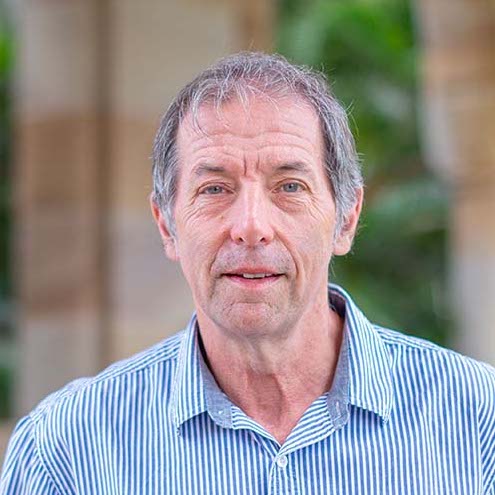
The idea of an "interest rate" might seem mundane and practical, in comparison to our usual topics around here, but there is a profound philosophical idea lurking in the background: if you lend me money now against the promise of me paying you back more in the future, I am relating the different values that a certain sum has to me at different moments in time. Traditionally, the interest rates set by the government have been a major tool for influencing the economy, but in recent decades they have increasingly fallen near zero. John Quiggin relates this change to the shift from manufacturing to an information economy, and we talk about what that means for the public interest in having information be reliable and widely available. And yes, there is a bit about crypto.
Support Mindscape on Patreon.
John Quiggin received his Ph.D. in economics from the University of New England. He is currently a VC Senior Fellow in Economics at the University of Queensland. He is a Fellow of the Econometric Society and the Academy of the Social Sciences in Australia. Among his books are Zombie Economics: How Dead Ideas Still Walk Among Us and Economics in Two Lessons: Why Markets Work So Well, and Why They Can Fail So Badly.
Click to Show Episode Transcript
0:00:00.0 Sean Carroll: Hello everyone and welcome to the Mindscape podcast. I'm your host, Sean Carroll, and as this episode is being released in late July 2022, there's a lot of news stories going on around interest rates going up and the desire to curb inflation, there's a whole bunch of reasons why dealing with global supply chains, wars, a whole bunch of things going on. This podcast will be about none of those things. [laughter] I'm sure these things are very, very important, but they are of the moment and they might go away. We here at Mindscape are about of eternity. We want to know the truths underlying what is going on. This podcast is however about interest rates, and in fact, it's kind of something I was reluctant to get into.
0:00:36.9 SC: Today's guest, John Quiggin is a very respected economist at the University of Queensland in Australia, the accent will be a dead giveaway right away. And he's written a very interesting book about markets and how they both succeed and how they fail, so I invited him on the podcast and he says, "Love to talk about markets, but what I really wanna talk about are interest rates." I was skeptical since I know nothing about interest rates, and they do seem a little bit down in the mess of policy and so forth, but it's interesting because number one, that there's a phenomenon going on where interest rates globally are way low. There are many countries that accounting for inflation are going with zero interest rates in the government's lending to certain preferred lenders and so forth.
0:01:36.6 SC: Why is that? This is something very different than has been going on before, but also it actually does kind of resonate with the intellectual themes that we talk about here on Mindscape, because what do you mean by an interest rate? I have a dollar, I'm gonna give you a dollar if you promise to give me back a dollar and five cents a year from now, a 5% interest rate. Okay? Basically you're trading money for time in some sense. To me, I would rather have the $1.05 a year from now, and you would rather have the $1 right now, that is the basis of the idea of interest rates. It's involving a prediction of what the future is and a sort of evaluation of where you are right now, which is actually quite interesting, and you wanna know why would anyone do that?
0:02:30.2 SC: Maybe because you just need something right now, maybe you need a house and you don't have enough money for it, or a car, so you get a loan and you'll pay back more later because you have accumulated a lot more money. But if you're a business, maybe you want that money now because you wanna keep up your factory or you wanna do some expansion of your manufacturing capabilities, that was a very traditional reason why there were government loans and therefore interest rates. But John's point is that the world is changing, and the kinds of companies, the kinds of large corporations that dominate the global marketplace right now are increasingly information-based. Google and Apple and Facebook and what have you. And these are companies that don't need major overhauls of their manufacturing capabilities, their manufacturing [chuckle] capabilities are kind of tiny compared to their value.
0:03:25.3 SC: And this is a big reason he claims why interest rates are much lower because the demand is just not there for these kinds of loans. The modern world is running on a different kind of model than we ran on just a few decades ago. And that's not only intrinsically interesting by itself, but it relates to the fact that information, which is what Google and Facebook, etcetera are selling as their stock and trade, is in some sense or could be thought of as a public good. It's not like "I have this piece of information and therefore nobody else can have it." We have a common vested interest in information being spread and being spread accurately.
0:04:00.2 SC: We wanna fight misinformation and disinformation and so forth. So I'm not sure that we have the solutions here today, but it [chuckle] relates to interest rates in a very interesting way. This is the kind of problem that sneaks up on us, a kind of spin-off that we didn't necessarily anticipate when the internet and global information economy became such an important thing. So if nothing else, food for thought in terms of how we should be thinking about structuring our economy going forward, which is an important thing to do. So let's go.
[music]
0:04:48.5 SC: John Quiggin, welcome to The Mindscape podcast.
0:04:49.9 John Quiggin: Glad to be here.
0:04:52.3 SC: This is gonna be one of those episodes where unlike when I'm talking to a physicist and I can sometimes play dumb, [chuckle] I can ask questions about like, What is a black hole? And I really know the answer. Here, I'm gonna be asking questions I just don't know the answer to at all. Economics is well beyond my expertise, but that's why I started the podcast so I can ask questions like this. Let me start with some of the most basic ones that have been lurking in my mind for decades. Markets, we're gonna be talking about markets a lot. But sometimes I get the impression that people talk about markets as if they're an invention, an innovation of modernity. Like weren't there markets in the ancient world? Weren't there free markets in Mesopotamia or China or whatever?
0:05:33.7 JQ: Well certainly, I think markets in one form or another have been around for a very long time. As soon as you get money, you really have markets in the modern sense and that's thousands and thousands of years ago. And even before that you certainly had trade, barter and so forth. There's an interesting question which David Graver, an anthropologist looked at of, there's a standard creation story where we invented money to make markets work better. He argues money was all about debt, about paying your taxes to the king or chief or whatever it was, and then came to be used in transactions as well. But whatever the story, markets are not new. They're a sort of, and haven't been designed, they've sort of emerged but they're also not free.
0:06:23.0 SC: Yeah. It seems like...
0:06:23.7 JQ: They rely on a whole bunch of rules and conventions which vary from place to place which depend on what you can trade. And of course what you own.
0:06:32.4 SC: Well in your book that you have, that I have right here next to me, 'Economics in Two Lessons: Why Markets Work So Well and Why They Can Fail So Badly', you take kind of what I take to be not the most common way of defining what a market is in terms of opportunity costs. Could you explain how you explained that? Why you chose that, why you had that way of talking about it?
0:06:54.7 JQ: Yeah, so the opportunity cost of something is what you have to give up to get it, and that applies both for individuals and society. So and that applies to all kinds of choices. The time I'm spending talking to you, I could be spending...
[laughter]
0:07:10.8 JQ: Improving my score on a video game or something like that.
0:07:13.7 SC: Right.
0:07:15.5 JQ: So time in particular, Benjamin Franklin says time is money. And while that is a very money specific metaphor, the point is point everything you spend, you could be doing something else. The best available alternative is the opportunity cost and markets make that very clear to us that when we buy something, we forego something else we could buy, or we forgo saving. Or we forgo leisure that we could have taken more time off and not made the money we needed to buy the good in question. All those things at the margin are opportunity costs. And the reason I focus on this is I think when, A, that we shouldn't be talking about money, which is a standard point that economists always get upset about that. They think we're all about money and we're not.
[chuckle]
0:08:03.3 JQ: But also in terms of our undergraduate training, we do a lot of stuff doing little supply and demand diagrams and calculating areas. Actually since you're a physicist, I got the idea of this, partly from Feynman who sort of in his I think QED book says, "Look, if you wanna actually do the calculations, you need to learn all this complicated physical maths.
[laughter]
0:08:26.1 JQ: If you wanna understand what's going on, here's the story and here's the waves and the particles, and why if you just add up the probabilities right, you can get the right answer. So, it's always been my view that if people understood opportunity costs properly and they understand most of the issues in policy that all the time people are saying, why can't we have everything? And the answer is, you can't, you're always making choices.
0:08:49.3 SC: And the reason why economists don't like to be accused of only talking about money is because they think of themselves... You'll correct me if I'm wrong. As having sort of a much more general conception of making choices under conditions of scarcity or something like that.
0:09:02.7 JQ: Absolutely. That's the core of it. And indeed, in the ideal view of at least a large group economists, not all, money is just this unfortunate thing that complicates everything. That, I mean, it is necessary to make the transactions work but it's... As they say, it's a veil and the object is to pierce that veil and see the real transactions going underneath. Now, that's not every economist, some economists have a much more... They think money's much more important than that. But certainly the, the classical view it's the real transactions that are going on that matter. The money is just a way of keeping score.
0:09:41.9 SC: Okay. So if we have internalised the idea of an opportunity cost, well actually let me back up. Maybe we haven't internalised that idea. Like how do I know what all of the other things I could be doing are, or the value of all those other things? I mean, this is clearly giving me a lot more credit than I deserve.
0:10:00.5 JQ: And indeed, in the second part of the book I make a whole bunch of points of this kind, that markets present us with these things but unless we know everything that in picture of the market choices, unless we know everything that's available in the market, what its price is, we can all get the same price. Then they don't work in the ideal way that of ensuring that everything that we're always making the best choice available to us. If we don't know what the price of other things are, for example we might have to bargain and things. We face uncertainty about what we'll have in the future and our own capacity to understand these things is bounded. And I suppose that's something I'm keen on. I suppose to sermonise a little bit here when economists talk about bounded rationality, they mostly talk in a kind of way of people doing silly things.
[laughter]
0:10:49.7 JQ: It's easy to point to mistakes people make. And yeah, that they do this when they shouldn't. But what really matters is everybody is bounded rational. The smartest person in the world can't understand of the things that are relevant, their choices. And so we're always being surprised by things we're unaware of in the past. And so in that sense, there's always limits to how well markets do in saying, "here's this choice you make, but you're giving up that. If they work perfectly, there would be no free lunches left on the table. Everything would be smooth."
0:11:27.4 SC: Good. So, yeah, I do wanna get to... I kind of wanna roughly follow the organisational principles of the book where we first give the pro market happy lesson. And then we'll talk about the failures later, but okay. If we imagine that people are pretty darn good reasoners and have all the information et cetera, the idea is that the market is a way of finding an equilibrium. Is that fair, between what the sellers have and what the buyers want?
0:11:53.4 JQ: Yes. So, we all want things. We all want to consume things and we all want to... We all have something we can offer in return for those things. And the prices both determine and reflect the opportunity costs that we face. So, when we face these prices, we... That's the opportunity cost we face, the wage we can get for doing more work, the things we can buy without the choice we make. At the same time, collectively all our choices determine what those prices are. And working smoothly. We get this outcome where there are no free lunches left on the table. There's no way of making me better off without somebody else worse off. The converse of that is there's an infinite range of those situations. Any of them with the right initial allocation of property rights could be a competitive equilibrium.
0:12:48.5 SC: Okay. And again, to sort of give the pro market point of view, I did have Henry Farrell on the podcast, your co blogger at Crooked Timber, which I'll give a plug for. One of the few old school blogs that is still just going strong, like people are still posting on.
0:13:03.4 JQ: Well. We're carrying on for sure.
0:13:04.6 SC: Very, very impressive.
0:13:05.5 JQ: I had my own personal blog, which is even rarer, I think a 20 year old individual blog.
0:13:11.4 SC: Very good. But one of the things that Henry talked about is democracy as a problem-solving measure, a problem-solving mechanism. And he compared it, contrasted it with markets. So talk a little bit about this conception of how we can think of a market as a way of solving a puzzle or, "Doing a calculation", as a physicist might say it.
0:13:33.5 JQ: So the market really says, let's take as given a bunch of rules, including who owns what and who can trade and sell what, and then asks the question, "What should we produce and who should consume it?". And so that's what the market solves. And the important thing is, if you compare it to Central Planning, that's an incredibly difficult problem, that if you try and work out how many pencils we should have... There's a famous book I talk... Famous article I talk about, about the pencil. The vast majority of people engaged in the process of producing a pencil have no idea about it, certainly have no thought of who will ultimately consume the pencil. If they see a demand for more lumber, they have no idea where that demand is coming from. They just know that there are more orders coming in and they should produce more trees. The other side then, I suppose, skipping slightly in the order is we can come to... Huge amounts of this process depend on choices that are made democratically, or perhaps, undemocratically, prior to the market transactions taking place.
0:14:46.4 SC: Right. But still, if we're still giving the pro-market point of view here, it is a remarkably effective way of answering this particular kind of question. It's an emergence phenomenon, right? It's, "No one person knows the right thing to do, but the collective wisdom of everybody figures it out."
0:15:04.8 JQ: Yes. Exactly. Yes. And that's something which... It took a long while for them to work out. For a long time, people thought in terms of the "Just Price" and so forth that... And of course, although markets always existed, society is much more marketized now than it was in the past. If you were a person at most points in the past, you worked in agriculture, because everybody did. You probably had a Lord, you paid them stuff. You had little bits of money and bartered. You went to the blacksmith to get your horse shod and things like that, but things didn't change much. So if the price of something changed a lot, the answer was, "Well, something must be bad here." And similarly, if you dealt with a merchant, it wasn't... It seemed as if the merchant was taking something for nothing. Somebody obviously produced the... What, the cloth, or whatever it is the merchant brought to your place, you paid for it. Somehow, you pay a lot more than the person producing the cloth got, the merchant took it. That seemed very problematic.
0:16:10.1 SC: Yeah, and at the risk of just being repetitive, I think this is sort of intellectually for me a profound fact. I guess it was discussed on Crooked Timber on the blog, in that book event you had talking about Red Plenty, which was a sort of science fiction novel imagining if they really tried to plan the economy all the way, using all of the science and et cetera we could. Cosma Shalizi, I guess, made the point that it is literally beyond our calculational capacity to correctly figure out ahead of time how to price things in a society better than the market could do.
0:16:46.0 JQ: Well, certainly, comprehensively, that's true. As we'll see, of course there are plenty of cases where the market gets it wrong, we can see it gets it wrong, and we know why it gets it wrong, and we can fix it. If we try... I think the dream of Central Planning was the last gasp of that idea of the "Just Price", that we can work out what everybody wanted, maybe they tell us. We just produce the stuff without the need for a market to... People just do what they should. And that's, I think, a problem in a bunch of contexts that... Even if you're trying... Even if you supposed people were perfectly... Everybody perfectly wanted the right thing. You say, "Should I study to be a doctor or an engineer?" How can I possibly tell?
0:17:31.8 SC: Right. And the phrase, "Just Price", brings me to another question I wanted to have. The, "Just Price" phrase makes me think that... Or makes us think that there is some correct price for things and you don't need the market to set it. And it's almost a normative thing, it's almost a value judgment.
0:17:51.7 JQ: Yes.
0:17:53.0 SC: But in many contexts now it's the other way around. People go for the market or argue for market economies, not just on the basis of being more efficient, but on values, like it's the right thing to do, like any deviation from that is somehow morally wrong. There are... I don't want to put words in your mouth, it's not your point of view, but there are people who at least give that impression.
0:18:14.1 JQ: Yeah, I would say... Yeah. Neo-liberalism is a much misused phrase, but it does have a core meaning. And a part of that is the notion of valorizing market processes and taking a very strong presumption in favour of them even when there seemed to be good reasons in the past for opposing them. And particularly in relation to financial markets, which is the most abstract, complex, distrusted of markets, and I think as it turns out, distrusted for good reasons.
[laughter]
0:18:47.4 JQ: So particularly, if you go back to the 1990s, the idea that financial markets will get things right when others couldn't possibly do so, had a great deal of popularity. And certainly, it's still not crazy. But on the other hand, when you look at something like cryptocurrency or the global financial crisis, you can conclude that the bounds on rationale... The kind of rationale that's required to make Central Planning work also is needed if you were to avoid fairly catastrophic outcomes in financial markets.
0:19:26.0 SC: Yeah. I mean, I just wanted to get on the table, the pro market argument, because it is kind of an interesting collective problem solving mechanism, but then it's very clear that there's a whole bunch of issues. And then the complicated part seems to me, which issues are more important and how do you solve them? Right. I have one very basic philosophical question right from the start, which is, does it even make sense to compare different kinds of goods in the way that your definition of the market working in terms of price equaling opportunity cost makes sense. It seems like it's a presupposition that we can always place a monetary value on things. Is that a presupposition we should worry about? Or is that necessary?
0:20:11.6 JQ: Well, I think let's, again, leave the money out of it.
0:20:14.4 SC: Okay.
0:20:15.4 JQ: There's a presupposition, I guess that at least in a large sphere of action, we can judge, which are two things we want and our choice is gonna be better than any other choice. And if we express that choice in the market by offering to trade, that we'll get the right outcome. So I think that's, yeah. Now of course, that presumption isn't always... Isn't accepted in any society globally. If I decide that, you know, I mean, looking at a rational theory, I could decide that, well, I'm advanced in years, cocaine won't kill me very quickly. [laughter] Sounds pretty cool. I would like some cocaine. In my society, that's not a choice that people think I should make.
0:21:00.3 SC: No, that's absolutely true, but I guess, here's what I have in mind. I'm currently house hunting and there's this famous issue where, if you have a house that you want to buy and that has a certain price, but you get into a bidding war and it gets to the point where it's just more expensive than you're willing to pay, right? So you make the rational choice of not buying that house. And in some sense, you shouldn't feel bad about that. [laughter] You're not spending too much money. You're doing the rational thing, but real human beings always do feel bad in that situation. So is there some mismatch between our intuitive psychology and how we are being modeled in this situation?
0:21:41.2 JQ: Well, A, there certainly is that people aren't calculating machines, that some of these things and all transactions involve a social element. Perhaps you have a spouse and you have to... I have to explain to spouse, "Yeah, sorry, we didn't get that house."
0:21:57.5 SC: Right. [laughter]
0:21:58.0 JQ: We agreed that we weren't gonna be near more than this. And as your agent, I stuck to that. And maybe. Yeah. So there's that collective aspect to it. There's also different transactions are different. I mean, every house is different. Every buyer is different. It isn't a market... It isn't a market of the same kind as the supermarket where you go down and say, here's six brands of yogurt, which one will I...
0:22:23.3 SC: Right.
0:22:24.3 JQ: Which one will I buy? Or will I not buy it at all and have ice cream instead? There's this one house and it's of course impossible to tell the path not taken. If you had bought this house instead of the other one, you know, what would the counter factual have been? So yeah, I think it's... People understand that kind of thing, but certainly this model, what most people do, I think... There's a famous economist who talks about The Dead-weight Loss of Christmas and, [laughter] and it says, you know, well, cash will be better and doesn't go the whole hog because if you thought of this correctly, you'd just say, look, let's all work out in the family what we're gonna give and get, and just hand out... The people, the net payers put money in the people who are net gainers take it out. [laughter] We don't have any of this pairwise, me giving you some, and you giving me some, etcetera. So, but yeah, there's obviously elements, elements that are not rational. And of course, most advertising large sections of what works that way. It tries to associate good feelings with the product you're consuming or possibly discontent with what you currently have in a complicated way.
0:23:39.5 SC: And I guess the other quasi philosophical issue I wanted to bring up before we get to the failures of the market is this idea of equilibrium because the discussion really reminds me of a discussion going on right now in physics where, you know, we invented thermodynamics over 150 years ago. And it was for a long time based on the idea of equilibrium between different physical systems and everything else was sort of an annoyance. And within the last 15, 20 years, we've had a revolution, focusing on non-equilibrium phenomena in thermodynamics and statistical mechanics, because most of the world is outside of equilibrium. So is economics also undergoing that revolution or do they always have that idea or is it yet to happen?
0:24:25.5 JQ: So good question. I mean, of course we're always accused of physics envy and it's this equilibrium notion that we took from physics that's at the core of that. Yeah. Plus a general taste for math-y style stuff. So there's I think two kinds of issues. One is the equilibrium I've been talking about of a market equilibrium, and we've always, you know, it's a long running sore, so we've always wanted a theory of equilibrium or adjustment to equilibrium. Never had a really good one, but the other issue, which is more modern, going back to 1950 is Nash equilibrium in games.
0:25:02.3 SC: Yeah.
0:25:02.8 JQ: So we have, there's been huge development of game theory, which generally undermines the certainties of economics because essentially the dirty secret of game theory is anything can happen.
0:25:16.6 SC: Yeah. [laughter]
0:25:17.7 JQ: In economics, in game theory that's called the folk theorem, and a lot... And so we have this thing where we, if we play a game many times, essentially, anything can happen unless it's so bad for a player that they can walk away from the game and say, I'm just not gonna play. And in trying to narrow down, refine the set of equilibrium, a huge question is what do people think about what will happen outside of the equilibrium? So in that sense, we've actually made that this question of what happens outside equilibrium is crucial in game theory, which is now a really big part of economics. In terms of competitive general equilibrium we haven't made the same progress, but I suppose the other thing is, in principle a link between the two is we should have an equilibrium theory which includes oligopoly and monopoly, that man's game theory and that kind of equilibrium depends what the equilibrium outcome we get depends critically on what people think about what will happen outside the equilibrium.
0:26:18.0 SC: Yeah. I'm just talking out loud now, and this might be all nonsense, but my informal impression is that economics has taken on very seriously the idea that people are not always rational, right? That's an important thing to think of, but there's another way to deviate from equilibrium, which is just random fluctuations, right? There's some unpredictability in the system and that's where...
0:26:39.5 JQ: Yes.
0:26:39.5 SC: The physics progress has been made. Is there a lot of work being done on characterising?
0:26:46.3 JQ: We might be ahead of you there because...
0:26:48.0 SC: Yeah, probably. [chuckle]
0:26:48.6 JQ: Shaking hand equilibrium was sort of a big thing back in the '50s and '60s. That's part of the question of equilibrium is, what happens if you... And indeed stability of equilibrium of course, which I suppose was then physics as well was a big issue in general equilibrium theory. But this question of what do... If I'm in an equilibrium where I'm making the best response to you, what do I think will happen if you change a little bit? If you make a little mistake, for example. And do we just go back to the original path, do we do something very like the original path, or is it a bit different? So that's always, in the game theory story, that's always been a big thing. I suppose, what I wanted to just jump to quickly...
0:27:27.9 SC: Please.
0:27:27.9 JQ: In terms of the influx of the discipline is that Caine's had this great saying that, ideas influence practical men much more than they think. Perhaps madmen I think he's probably seen Hitler hearing voices in the air as they're still in their frenzy from an academic scribbler of a generation ago. And what you see is that the neoliberal revolution of Thatcher and Ray in the '80s, was reflected in developments of a decade or more, before that the counter revolution coming out of Chicago. Economics has been moving away from that at least for the last 25 years or so with game theory, with bounded rationality and so forth. And so in some sense, the sort of pop view of what economists think is still well behind the way the profession has gone, which is not so much, partly back to the left, that in the '50s... In the post... In the Keynesian period much more support for intervention, but also much less certainty, much less acceptance of, well, this is the story as in the first four chapters of economics in two lessons, but all sorts of things can happen.
0:28:34.6 SC: Well, I'm looking forward to physicists being accused of economics envy, I think that would be a perfectly...
[chuckle]
0:28:39.9 SC: Fair turn of events. But okay. So let's then get onto the ways in which markets fail, and I'm sure that different people are gonna have different top 10 lists for the ways in which markets fail. I have a list in front of me that I can ask you about, or is it... Does it make more sense for you to just suggest your favourite ways?
0:28:58.1 JQ: Well, let me give my favourites.
0:29:00.2 SC: Yeah, please.
0:29:00.7 JQ: So, the first, I guess is climate change. So actionability, I've had a long story about where this word actionability comes from, but too long, I think.
[chuckle]
0:29:13.3 JQ: But so, essentially the core of it is that in the naturally emergent order of markets, you can dump stuff lots of places, carbon dioxide in the atmosphere, sewage into rivers, smoke, and so forth. And you don't pay for it, other people bear the costs. And we've been talking about that and how to think about that for the last 100 years or so.
0:29:36.7 SC: Sure.
0:29:37.0 JQ: Agoo was sort of the number one man. And we sort of got a... We have quite a good understanding of it. As we say in terms of climate change, if you pick 20 random economists to address it, we'd all agree to the same thing and we'd all do it. And the problem would've been solved a long time ago.
0:29:56.0 SC: [chuckle] Good to know. [laughter]
0:29:56.8 JQ: And to have. And it's just marginal variance of roughly speaking, we'd either say, look, we're gonna put a price on this, and every time you burn something you have to pay, or we're gonna limit the number of amounts you can burn and you'll have to buy a right to do it from somebody else. If you want, here's permits, we're gonna auction them off.
0:30:16.3 SC: Right.
0:30:16.7 JQ: And after that, if you wanna do anything like this, you'll have to have a permit. So that's sort of, I suppose, the one... That's the one that in some sense consumes my waking hours most, but I think the next big one and probably the one that will be here when we've either succeeded or failed with climate change is labour market failures and unemployment. That labour markets don't work in the way that they're supposed to, for the kinds of reasons that you said with the house, you only have one job, and you have one job you're tied to the job. You can't tell in advance what it's going to be like, and there's all sorts of difficulties with the notion that, well, look, if there's too many of one kind of workers their wage goes down and so forth, we're seeing that. Yeah. As with the adjustment coming out the pandemic, for example, look everything is shaken up and chaotic, some people are getting substantial wage increases. A lot of people... Lots of people are falling behind inflation, things are just not working, not working well. And that's a periodic failure that we see that in turn is linked to failures in financial markets, historically the worst crashes have come when financial markets have first got overheated and then crashed. We saw that with the great depression, of course.
0:31:32.8 JQ: And then the global financial crisis. In between, we had mostly not so bad recessions that typically occurred when the Central Bank, the Fed was trying to stop this happening and slightly overdid the correction, but the really bad ones happen when financial markets are let run and then collapse in a heap.
0:31:53.7 SC: Yeah I don't wanna stop you from listing ways in which markets can fail, but let me just interrogate a little bit the two that you've mentioned here. For climate change/externalities, I can imagine at least two different things going on. One is just that people are self interested. This is part of the camp that we hear about the market. And if you can sort of offload bad things to society and not pay for it, then that's the market's doing its job, but society is worse off. But then there's also the other fact, which is that people are just short term thinkers, right? If the thing that they're trying to optimise is for the next quarterly report or whatever it is, the fact that the climate might be in trouble 100 years from now is not gonna be very relevant. So are these the same problem or two different problems?
0:32:41.2 JQ: Both of those, but there's a third one in the context of something like climate change, which is, it's very hard to tell what to do. There's a big movement, for example, worrying about food miles. How far did your tomatoes travel to get to you? But then the question is, depending on where you live, possibly they were grown right [laughter] within walking distance of your house, but in a greenhouse. And then the question is, should you go the greenhouse and the greenhouse is heated by gas? Should you go to the greenhouse and buy the locally grown tomatoes as the food miles people would say, or should you have them flown in from Spain where they just grow...
0:33:22.4 SC: Out in the sun.
0:33:23.2 JQ: Out in the sun? So trying to work out that's again, the marvels of the price mechanism as opposed to central planning. So with the early pollution problem smoke, you're pouring smoke out this chimney, stop, or put a scrubber in. With something like sulphur dioxide, things like sulfur dioxide and carbon dioxide, it's almost impossible to get to zero. So you have to say, we then move to these permit type solutions. And if we can... Economists haven't had much success here, but this problem goes beyond this kind of issue of people not doing the right thing for one reason or another, and simply saying without a market, it's very hard to tell what the right thing to do actually is.
0:34:10.1 SC: Well, I guess this was gonna be my next question, because for climate change, I can imagine the government passing laws that say don't pollute, or don't pollute more than this amount. Or I can imagine implementing a policy that just adds extra costs to polluting, right? Like if you pollute this much, we're gonna charge you this much. And in the latter case, it's still the market that is finding the answer. It's just that you're sort of nudging it a little bit.
0:34:37.5 JQ: Well, it's a corrected market and this is where I think you've seen a split, particularly among... I use the term properterians, but you might say libertarians that lots of them hate this idea. And the reason they hate it is, some of them love it, and some of them hate it. The people who love it say here's a market we've created necessary property rights. We don't need government coming in, telling us, buy this tomato or that tomato, the cost of the carbon will be in the tomato, in the price of the tomato. Just do what you want.
0:35:07.2 JQ: I bet there's a bunch of people out there who have this creation story of property rights that somehow or other they emerge without the state. And if you say, if then they say, here's this newly minted property right. Just like your car, you can trade your car for a carbon permit. Where did the carbon permit come from? It came from this piece of legislation right here. Where'd your car come from? Well, something more complicated. But back in the day, all those rights were created because Kings and states said you can have this and you can't have that, and in addition, your right to your car is no different from your right to your social security or somebody on welfare's right to government support. They've all been created by the state. And now it's... Now we've got that out the way let's look at what we should do with markets.
0:36:04.5 SC: Yeah. And this goes back to this values versus efficiency justification for being pro-market. Right? But even if you're purely on the efficiency side or forget the word even. If we're on the purely efficiency side, do economists have a feeling that market based solutions to climate change like charging people money for polluting are usually better than just banning polluting or something like that? Or is it more complex?
0:36:32.4 JQ: I think in the case of climate change uniformly so. So if it's dumping Cyanide in the river, you just say, no, no Cyanide, don't dump it in the river. [laughter] But if you're saying every moment that you're doing something, where you... Here we are using... Talking on air, a relatively low intensity activity, but we've both got computers running. We might have something happening in our house, that... And although it turned out to be wrong, there was a calculation floating about back in the day that claimed that data centers and things were consuming gigantic amounts of electricity. And we can't tell, the only way to tell because there's no way that any central planner can work out at that level of saying in every single thing you do where... It really would be a level of central planning, more comprehensive than then simply saying, this is how many computers you can have and so forth. And so the market solution is the best one. And would've ended up with sort of a series of half market, half... [laughter]
0:37:39.5 JQ: Half baked kinds of things. Australia, for example, we have a system of renewable energy credits, which specifically applies to electricity and create a kind of market for carbon dioxide emissions and we have a bunch of other very half baked sorts of ways of bringing these calculations into play. And then, civil society is kind of doing this also by leaning on banks and saying, if you lend money to a power station, we're gonna turn up at your ATM and give you grief. And so some of them say we won't, and others say, well, we've got this market to ourselves, but we can't diversify. We'll charge you 2% or 3% more and that's enough to put them outta business. So yeah, I think on the issue of climate change, I would say the economist's profession is more unified than almost any other topic.
0:38:33.0 SC: More unified around the idea of just making it prohibitively expensive to pollute in these ways.
0:38:38.3 JQ: Yeah.
0:38:38.5 SC: Through the market and let the market decide how to get around that. Whether it's building electric cars or...
0:38:43.6 JQ: Yeah as we reduce... Yeah, as we reduce it, what are the most...
0:38:47.6 SC: Yeah.
0:38:48.0 JQ: What are the most important uses of putting carbon dioxide in the atmosphere and the ones we need to give up last, exactly.
0:38:53.5 SC: Right. And for the labour market stuff how do... Can I interpret that as the fact that the people who are in the labour market are real people who might have some attachment to their location or their job or, their training or whatever? Like in some sense, does it come down to the fact that people are not infinitely fungible and are able to switch effortlessly?
0:39:18.9 JQ: There's that... So there's the... There are information problems, if a boss comes around and says, if things are really bad in the market, I'm gonna need you all to take a 5% cut in your wages. But the boss has an obvious incentive to say that at any time...
[chuckle]
0:39:41.1 JQ: And so, you're going to resist, there are all kinds of problems, with how labour markets work. And I should say on the contrary of... And then there's macro problems of the economy being out of equilibrium. And so we have, yeah, I should say, having said the general equilibrium theory doesn't have an out of equilibrium approach. The real story, I suppose, as things developed for most of the period after World War II is we have one theory of how markets worked in this abstract price equilibrium way. And another theory Keynesian macro economics, which said except that they might fall in a heap and fail to clear, and the attempts to integrate those two have consistently failed.
0:40:26.5 SC: Right. Okay.
0:40:27.3 JQ: And so this is an issue where the exact opposite to what I said about climate change, economists are utterly disunified.
[chuckle.
0:40:33.8 JQ: So there's one bunch saying, essentially the general equilibrium story is right. If only governments would stop putting their oar in, everything would be right. If you see fluctuations that aren't caused by governments, their optimal response is so-called real business cycles and so forth. And another bunch essentially saying, with very modest qualifications, the story that Keynes told was right and that government policy has a big and systematic effect on things like inflation and unemployment. And the best way to understand that is in terms of notions like aggregates. And for a while, the two camps seem to have reconciled, my previous book, Zombie Economics says a whole lot about this. They seem to have reconciled.
0:41:15.2 SC: Yeah.
0:41:15.5 JQ: On something called New Keynesian economics. But the global financial crisis really blew that up.
[chuckle]
0:41:22.7 JQ: And so now we have... Now we have again a division between, people essentially saying, yes, government systematically affects the rate of unemployment and inflation. And within that an argument of did we simulate too much or too little? And then another bunch of people that's directly saying, it doesn't work, people wake up, and in the end, governments can only really create inflation.
0:41:46.5 SC: Well, there's a whole different angle of critique of the market, which maybe you were gonna get to and I interrupted you, but just that it leaves people behind so readily. Just heartless. Is there more emotional or, welfare state liberal critique that we should put on the table?
0:42:05.0 JQ: Sure. Well, there's two bits to this. One, which is in my book very much is I said the market reaches this equilibrium, which is crazy, in the ideal case has no free lunches. We can't make you better off without making somebody else worse off, but that leaves entirely open the question of, Who should get what in the first place.
[chuckle]
0:42:26.4 JQ: And opportunity cost applies to that also. That something which gives me more rights, gives somebody else less rights. If workers own their jobs in some sense, employers have less ownership of their capital and vice versa. And so that allocation problem is subject to logical opportunity cost and is... And yeah, so, in some sense, the left behind notion is... Part of that is your idea that workers own their jobs to some extent. And we use a possessive, even though, of course, certainly in the US with employment at will workers have no property rights.
[chuckle]
0:43:11.6 SC: Roughly speaking. And that's even not quite sure in the US under a bunch of... Yeah, but that's roughly speaking, the story is, even though you call it your job, it's no more your job than Uncles Tom's cabin was actually his cabin.
[chuckle]
0:43:30.2 SC: Well. And similarly to the climate change question, I could imagine distinguishing between government regulations like for worker safety. The factory has to obey certain things. And that, seems to be fairly characterised as an intervention in the market. Whereas if we just tax people an enormous amount, tax the rich, and then give the money to the poor in some universal income or something like that, that still is within those constraints, the market is still gonna find its equilibrium. Right?
0:44:03.1 JQ: Yeah. So this is a great distinction here. A great distinction that Jacob Hacker makes between pre-distribution, how we set the property rights in the first place, and redistribution, which is doing this afterwards. And so to the extent that they're solidified into the market, in this distinction, our taxes go in with regulations as redistribution. The previous question is what about things like union rights? If workers have presumptive rights to join a union, and the employers are obliged to bargain with them. That creates one set of labour market outcomes. And those are best thought of as property rights occurring before the market opens. As opposed to saying, after the market open, after we've got the market outcomes, we'll tax some of the money and give it to other people. But yeah, underlying that though is certainly [0:44:58.9] ____ hard and fast, that undoubtedly your right to social security is a kind of property right.
0:45:06.6 SC: Mm-hmm.
0:45:07.1 JQ: So the distinction can be made in different ways, but it is an important one. And where the market works, the scope of the market is there. I suppose, the other point, which I want to come back to with markets leading... With disillusion with markets is the question of how much scope the market should have?
0:45:25.5 SC: Okay.
0:45:25.7 JQ: Should you be able to sell your kidney? For example, there's a propiteer, which has a segment saying, "Markets and everything, which more or less implicitly takes the view, the more things are subject to the market the better." And very clearly against that, I suppose, is a left critique of decommodification that says, in the... Goes away from a central planning kind of notion and says, "sure, look, when we go to the supermarket, we want to... We just want to go to the supermarket and pick what we want. But for example, when we decide, well, should we have a supermarket or a corner store, that we shouldn't have the market deciding that kind of outcome.
0:46:11.8 SC: This goes once again, back to a more normative value-based distinction. And the pro-market people would worry about paternalism from the government, trying too hard to protect people from themselves. And they would say just on philosophical grounds, let them sell their kidney if they want to, but that does presume a rationality and responsibility on the part of the individual agents, which might sometimes be true and sometimes not.
0:46:41.8 JQ: Well also of course, I can't imagine that Bill Gates is gonna be selling his kidney anytime soon.
[chuckle]
0:46:48.3 JQ: And so the question... A lot of questions are coming back to this question of distribution, that broadly speaking in a... It's not the only question that arises. And for example, with blood supplies, for example, there's always lots of complications about it. So going in different directions, but... So you get very complicated stories. But a lot of it's a question of what happens to equality and inequality when those things happen.
0:47:20.3 SC: Yeah. And I'm sure we could keep listing failures and ways that markets can fail, but you hinted at the existence of these sort of booms and busts, right?
0:47:30.4 JQ: Yeah.
0:47:31.3 SC: Bubbles and crashes, and there have been various arguments, I haven't followed them, maybe you can fill us in that. "Oh, we figured that out there aren't gonna be any more booms and busts." But they haven't... [chuckle] They clearly, empirically have not gone away.
0:47:43.9 JQ: Yeah.
0:47:44.5 SC: They're as bad as ever. [chuckle]
0:47:46.6 JQ: Yes. And so... Yeah, there's [0:47:55.7] ____ this time is different. Looking at... At every point we've believed this. That included that we have a new economic era. You can see these predictions coming in. And again, the longest and most credible version of this was that the Keynesian boom period of the 50s, 60s, and so forth when again, we thought we had everything solved. Things went wrong and we gave up on that. So I suppose I'm still of the view, we could do a lot better if we went back to broadly speaking that understanding of the world. But certainly I think, I would say we've had a series of demonstrations in the past 30 years. First, the dot com bubble and bust, then the global financial crisis. And then probably the exertion on crypto is... Has to be the ultimate reputation of any notion of market efficiency that at this point... There's a pious hope that somehow, a database technology that's been around for 30 years and has no use.
[chuckle]
0:49:03.0 JQ: No actual applications will magically turn out to be valuable simply because there's a huge amount of money associated with it. If people had bet a trillion dollars on object-oriented programming, I imagine there'd be...
[laughter]
0:49:18.5 JQ: Vastly... Yeah. I don't know much about it other than the observation, apparently all of the exchange of cryptocurrency use relational databases. Anyway, whole thing is worthless. And at this point, the idea that it's gonna be used in ordinary transactions have been given up. It's valuable, 'cause it's valuable. People understand, look, the only thing this reports is, somebody did a complicated calculation, which is of no interest to anybody. But yeah. And no one of significance in the financial markets has held out against it. I mean, Warren Buffett, said it's rubbish, individual people have. But until relatively recently, because I look this stuff is happening because a bunch of silly people get together and do this stuff. We can't stop them, but now CitiBank and all these people, they're all into it.
0:50:17.2 SC: Right.
0:50:17.5 JQ: So you can reasonably be saying, no financial institution has simply said, this stuff is useless. Sooner or later, grief will come. We won't deal with it. By all means go to one of our competitors if you wanna do this stuff. But yeah, when you lose all your money, maybe you'll think...
0:50:37.3 SC: [chuckle] Well.
0:50:39.4 JQ: Differently. No one has done that.
0:50:40.6 SC: Yeah. I'm not an expert either in cryptocurrency. And I know that opinions get very heated. I could have imagined that a use for cryptocurrency, really as currency, like just as a way of keeping track of transactions. But clearly, something that is wildly impossible to predict its value isn't very good as a currency. And so my very simplistic understanding is it just became valuable because people thought it was valuable. And if there's no there there, this is Warren Buffett's criticism. Like if, "If suddenly people change their mind, all of that wealth has disappeared and that's not what we should be about."
0:51:18.8 JQ: Yeah. And there's a false argument to the effect of, "Well, what about gold? And what about paper currency?" And so here gold is easy. The answer is, "Okay. Gold isn't in much use as currency. If it were abolished completely...
[chuckle]
0:51:33.1 JQ: There would still be gold buyers." Yeah. It's pretty...
0:51:36.2 SC: Right.
0:51:36.2 JQ: It can be used for computer connections. It's true that because having established people like this stuff, the fact that we can use this money means there's more demand for it, so the price of gold is higher than it would be if it was just something you used for ornaments, and filling teeth and stuff like that. But without the underlying value, it can't be done. We pay for money, it's very straightforward. There's a government with guns.
[chuckle]
0:52:00.2 JQ: They say, "You will pay us taxes," and they say, "In the US, if you bring us enough pictures of presidents, we'll regard your obligations as discharged." And indeed, in places in Africa where they didn't have money, that was precisely what... They came in, they wanted people to work for wages instead of being hunter-gatherers, so they said, "You've got a hut here, that will cost you a shilling a year. Where do you get a shilling?
[chuckle]
0:52:26.5 JQ: Go and work for the European planter because they have shillings."
0:52:31.9 SC: Right.
0:52:33.2 JQ: And so both, so-called fiat money, and gold, have a real underlying value. If you look at crypto, what you see is the answer is somebody performed a very complicated calculation. You can't... You don't even get the answer to that calculation. You can't sell it. If they... Yeah. It wouldn't matter if people stopped believing in money, as long as when the government came to collect their taxes, they paid up.
0:53:01.3 SC: Yeah. And so this leads us to the crypto example is an example of a relatively new technology here, and the other point that you want to make, which I definitely want to give you time to explain, is this shift economically from properties and goods to information, and how this is affecting things. Maybe the whole financial crisis prefigures this in some way because finances...
0:53:27.8 JQ: I'd say financial crises have been around for a long time, of course.
[chuckle]
0:53:30.4 JQ: I said that, but yeah. So what I want to... So when I was at school, partly Australian economists stuff, but we learned about a three sector model of the economy. And, roughly speaking, there are a bunch of people, primary producers, who were particularly the salt of the earth, and they take stuff up or grew it. And then there were manufacturers who were pretty good, who turned this stuff into cars and loaves of bread and things. Then there were a tertiary sector, which basically was warehouses, shops, all those kinds of things that were... And then, off on the side, there were some bits that didn't really fit in, like university lecturers and...
0:54:12.6 SC: [chuckle] Podcasters, yeah.
0:54:14.0 JQ: There were few enough in number that they could more or less be ignored, and so... And the whole concept of GEP, in fact, the crucial aspect of GEP is to make sure we don't count the wheat multiple times as it goes from being produced on the farm to being a loaf of bread. Now, we make sure that at each stage, we only look at the value added, so that was what the economy was like. And at one time, the manufacture... At one time, the agricultural sector was largest, then the manufacturing sector was largest, then the service sector was largest, but it was still all essentially to do with getting goods in our hands. But now, the majority of the economy, and all the action is in information, what we're doing right now. The... If you look at the economy, we're doing okay. There's some bits of equipment involved.
0:55:00.9 JQ: But the value of the time as judged by the market, the value of my wages compared to the value of my computer is gigantic. The computer hardware part of the industry has been shuffled off, mostly into a relatively small war story, all the action is in information, and coming back to market failures, information is a public good. That history, I give you the... I do this podcast, you put it on the internet, it's not perfect because you can't say... You can paywall it, but the point is, it is... We have this notion of a magic pudding coming in, as many people as want can listen to the podcast, it doesn't degrade, it's infinitely useful. And that in turn, means to an extent, there's a price. It's, "Can you stick a barrier in front of it that doesn't deter lots and lots of people from getting it, but gives you money." That doesn't bear any real relation to opportunity cost.
0:56:00.0 JQ: Some things which are very valuable can't be kept quiet, can't be controlled, and they're gone. Other things of less value, and other points of less value in the system, like search, for example, can be controlled and marketed. And so we have a situation where Google is immensely valuable. Most of the content that Google Search is on is entirely unrewarded. So that's the sort of... And the other feature of this is that there's very little need, so there's no relationship between what you produce and what the value is, and that in turn means that there's no real return to capital anymore. So Google, of course, they've got some... They've got some big bank, large amounts of computers, but the guts of what they have is first-mover position in the search market. Sometime back in the 1990s, they developed a somewhat better search engine than their earlier arrivers. It hasn't really improved... Certainly hasn't improved from the point of view of somebody who just wants to search for non-market related information. It's probably gotten worse.
[chuckle]
0:57:16.0 JQ: But it's very hard to replicate. There's no real need to. And so what you've seen is that the rates of private investment are falling. That's reflected in very low rates of interest. People are confused because of the monetary policy and the Fed doing this in the short run, but the big story is long-run rates of interest have fallen to zero in real terms. So Google can borrow money indefinitely in the future at 2%, which is what we expect inflation to be. The US, governments can do this. We have these really low rates of interest, reflecting the fact that investment... Private returns to investment no longer really have any close link to social utility.
0:57:57.2 SC: Okay. I hear all those words, but I don't quite get the connection. I completely get the fact that these super valuable companies are valuable not because of their stuff, but because of some handle on knowledge and rights and access and whatever. So that's a different kind of valuation. So... But where do the interest rates come in? Why is it that Google can get away with small interest rates?
0:58:21.2 JQ: Well, the answer is... The answer now is if you want to... Yeah. The answer now is if you want to develop growing things in the economy, you don't put a lot of money into capital investment, absolutely not in physical capital. What you do is, find a bit of the information economy that hasn't been fenced off yet.
0:58:45.1 SC: Yeah.
0:58:45.4 JQ: And find a way of fencing it off. That roughly speaking is what Google did 30 years ago, or you find something you can give away and attach advertising to, which is what Facebook and Twitter do. So... So the... Once you have a situation where the... Once you... Once you've established the position, the... You don't really need much in the way, any kind of capital, not even R&D, even when you throw in Google's R&D it really isn't that much.
0:59:17.9 SC: Yeah.
0:59:18.5 JQ: What you need is something in the information sphere that you can sell. And so... So what that means is in the growing parts of the economy, there's very little need for capital investment to deliver it. Meanwhile, the old manufacturing part of the economy has got more and more efficient. We don't need... It's got smaller relative to the economy as a whole. And so the need for large amounts of investment there is less. And finally though, the positive part of the story, is this huge needs in... Of stuff governments historically have invested in like health and education and so forth, which was discouraged because of high rates of government debt. High rates of interest on government debt meant people were very worried about debt. The... The big story in economics now is governments really don't need to worry nearly as much about debt as they used to. They can take on a lot more debt, and they can use it to finance socially productive investments.
1:00:13.3 SC: Okay. There is still one step that I'm missing. And it's probably 'cause I know nothing about economics but, again, I completely understand that Google et cetera doesn't have the same investment in capital. They don't build factories in the way that Ford Motor company would have. But I think of interest rates... Of course there's lots of different kinds of interest rates. There's interest rates on my credit cards, there's interest rates that the Fed charges, that banks charge each other.
1:00:39.0 JQ: Yes.
1:00:39.8 SC: Why does... Why do the interest rates on loans or bonds set by the Federal Reserve, why are they affected? Why are they lower than they used to be? It's almost zero these days, right?
1:00:51.4 JQ: Sure. Yeah. So first thing is... The interest rate is the opportunity cost of time, at least for...
1:00:56.9 SC: Okay.
1:00:57.3 JQ: In the case of credit cards...
1:00:58.9 SC: Good.
1:01:00.3 JQ: In the case of credit cards, a lot of the... A lot of the interest rate is chasing after deadbeat borrowers and writing off some of the loans and ripping people off and stuff like that. But if you go to the actual operations of the capital market, it's... It's, "I've got a dollar now, I'd like to consume something in a year's time, how much can I find somebody who can take my $1, turn it into a $1.05 say, and give me back that $1.05."
1:01:29.1 SC: Right.
1:01:29.4 JQ: And that's investment. And so... So historically we've been short of capital and lots of reasonably high returning investments. And, that sort... There's a story where it's declined over time, over a very long period, but certainly, as information economies developed the need... The number of people that say, "Yes, give me your dollar, I will put it into a server farm. And I'll give you back a $1.05." Now, they say, "Look, I'm spoiled for choice here. I'll give you back a $1.02." US treasury for example has a bond where they say... And they're in competition in the same market where they say, "We'll adjust your money for the rate of inflation. If there's 10% inflation between now and then, we'll give you the 10%. We'll give you back a $1.10 plus the interest." Except that now it's minus the interest. We'll give you back $1.10 but the real part of the interest is negative. You'd only get a $1.09 back because there are so many people that want this, that we can actually give you a negative real rate of interest.
1:02:37.5 JQ: And that's true for 10, 20, 30 years, zero or negative real rates of interest. And, as that's the combination of the information economy doesn't need capital and governments have been shying away from debt for many many years, all of this had been sort of somewhat upset by the pandemic and we'll see how that happens. But even with the pandemic and with the huge amounts of debt they've taken on, the stories about how government debt is gonna be ruinous, that people are putting out until recently have been essentially undermined by the fact that because the real rate of interest is low or negative, if governments get anywhere near balancing their current expenditure income, the debt stays the same, then not the... Because the interest is zero, the economy grows and transforms. So that the kind of panic stories you used to see until very recently when they do these projections now let's also have... Yeah. With a bit of inflation and a bit of GDP growth, even with big deficits, the debt's going to go, going to climb.
1:03:43.4 SC: And so... Okay. I think I do get it. I think that that is actually very helpful. So the companies that are leading our economy, Google or Apple or Amazon or whatever, they don't need to keep building more and more factories.
1:03:54.6 JQ: Yes.
1:03:54.8 SC: They don't need to keep borrowing money to improve themselves, and therefore there's less demand for loans. And therefore the interest rates goes down.
1:04:04.2 JQ: And there's another way of measuring the same thing. It's called Tobin's Q. You don't need to know the name, but roughly speaking it says, "Let's look at everything the company has built, all the factories... If you look... You go to General Motors and say, "Let's look at all their factories... " Ideally as I say, you capitalize their R&D and they say, "Here's the factories, then here's the market value of the company."
1:04:26.0 SC: Right.
1:04:26.7 JQ: And roughly speaking, historically that number was close to one. And the reason was if it was much different, if it was three say, somebody else would look at this and say, "Well, why should they get that? I'll go and build a factory myself, another car factory, and, I'll get it." So historically that number was one. Now it's like 20.
1:04:47.2 SC: Wait. So, remind people what the number is? What is that 20?
1:04:51.1 JQ: It's the ratio of the market value of the company to all the money that's been invested in the assets of the company.
1:04:56.6 SC: So the market values are just way way bigger than what has been put into the companies?
1:05:00.8 JQ: Yeah. And so... So... So... As it's measured that typically means in the case of Google, it's the computers and your office building, that kind of stuff. They don't... They don't include R&D. But I've checked and R&D doesn't make that much difference. So these companies are worth massively more than they were. Another qualification is you really ought to I suppose, look at the... Look at the Seeks and Bing and things like that. The competitors... The competitors that Google has left behind, that value ought to be in there somewhere, but again it's not... Yeah. Again, not much physical capital and the R&D wasn't gigantic. And so... So those numbers are... Yeah, that's the other way of looking at this thing is that the value of the company doesn't bear much relationship to the capital invested in it. And... And that... And, that in a sense, precisely that relationship is why we call the system capitalism [chuckle] because if the return to capital A is near zero and B bears no relationship to the way the economy is working...
1:06:04.7 SC: Right.
1:06:05.4 JQ: In some sense we're already beyond capitalism.
1:06:07.6 SC: Well, we're...
1:06:08.4 JQ: What we're onto is another question.
1:06:11.3 SC: Good, because that's my next question. I'm just gonna say if we're beyond capitalism, is it just intrinsically dangerous or bad, or is it just uncomfortable because we don't know what's going on? If we say that there's the relationship between capital and value for a corporation has just been severed because now all the value is in people's heads, not in brick and mortar.
1:06:32.4 JQ: Good question. It's unsettling I would say, in the sense of, it's certainly not... It's not... It's certainly not immediately the end of capitalism as envisaged by socialists and other critics, it potentially could be. Yeah, I can tell a story about that. But yeah, a situation where most of the value is generated by advertising... Advertising has always been this very problematic concept and... Search advertising... The search itself is useful, but about the... Yeah, so... So this slots, it's a very complicated story. It certainly hasn't proven to be a system conducive to great equality, we've inherited in some sense the booming inequality coming out of the neo liberal form of the '80s. Added to that the sort of a phenomenon of tech billionaires and so forth but there's still of course a heap of non-tech third generation, fourth generation, now billionaires. So, it's very hard to say what will happen other than that a lot of the... We came back to the moral justification, a lot of theoretical justification for capitalism, as it has existed, is no longer there.
1:07:51.9 SC: As we're having this conversation I do recognise that we're making a podcast and I make money off it from advertising and there's no physical product whatsoever. And, I was at one point offered... Someone wanted to buy the intellectual property of the Mindscape Podcast, and I didn't wanna sell it in part because it just made me nervous, "What does that mean? I don't know what you're gonna do with it. I certainly don't want you to tell me what to do with it." So I just said, "No." [chuckle]
1:08:19.1 JQ: Well, there was a fad way back when, when blogs were bigger and they went around and valued all the bloggers, like Crooked Timber was worth something.
1:08:27.7 SC: Yeah, right. It's millions of dollars.
1:08:29.7 JQ: Not enough to... Not a value to retire but worth an awful lot of money. We should have sold probably if the...
1:08:37.1 SC: Exactly, and that's another aspect of the whole information economy is that not only can valuations go way up, but they can go way down, right? That, it's... It's somehow... Because it's not anchored to physical stuff it sounds like it's intrinsically more susceptible to booms and busts.
1:08:55.3 JQ: Oh well certainly... Yeah, certainly once... Yeah. Because, ultimately, information wants to be free, the bust is always waiting for you. That... And, the question... Yeah, the question of how do you get people to generate information becomes... For example... Yeah, this has been a hot topic, it was a hot topic with COVID. And the correct answer, reached by the Trump Administration in fact was prices. That what you say is, "You give us a product and we'll give you... We'll give you money." I think in fact that it was... Some of them there were unconditional but the ideal version is, "Yeah, we won't say, as we typically have said, you invent the product and we'll give you the monopoly rights over it to do it." And we also didn't... We also needed, not only what people at universities have... Of universities, we'll give you a salary, you put this stuff in the public domain, is that version. But the third version which goes back to [1:10:00.1] ____ is, "You answer this problem and we'll give you money."
1:10:04.9 SC: We'll reward you.
1:10:05.6 JQ: And so that was... That's what a mini... It's unclear which is the best solution but certainly... Certainly I think this comes back to the patent solution saying, "We will... You register this and we'll give you monopoly rights for a set number of years," certainly is a way of dealing with the information economy, which looks kind of out of date.
1:10:27.7 SC: And, it almost seems too obvious to say out loud but if our economy becomes information-based then the information in maybe a slightly different sense that you possess becomes super valuable and subject to manipulation. We're in the middle, as we're having this conversation of Elon Musk may be trying to buy Twitter or may be not.
1:10:48.2 JQ: Yeah.
1:10:48.6 SC: And getting in trouble because not letting the SEC know what's gonna happen. Maybe saying things on Twitter that didn't match what he was doing behind the scenes, and that just sounds like it's gonna become more and more important to how the economy gets run.
1:11:02.6 JQ: Yeah, and we have yet to see that really... Delivering the goods would be my judgment in most contexts, that I came on scraping out your information and they sell it at mostly without any obvious smarts. I get all sorts of recommendations from Amazon, and the most convincing is, "There's this book called Zombie Economics and we think you'd really like it." [laughter]
1:11:28.4 SC: They love to recommend your own book, that's very accurate.
1:11:32.7 JQ: But yeah... But... Yeah. So no, I think those kinds of issues of... Given that information can't be owned but can be useful in the short run, who owns it, who gets to control it is a big deal and I don't have a good answer.
1:11:48.9 SC: Right. And maybe in that context I'll give you a chance to return to something you said at the beginning about bounded rationality. Part of the problem is that we don't have all the information, or we're actually subject to misinformation. But another problem is that we're just finite [chuckle] and we can't know everything, even if we had access to it.
1:12:07.7 JQ: No, no. And so... And the internet has made that a reality in a way that just wasn't true in the past. When I was a kid I read every book in the library [laughter] roughly speaking. At least in the sort of vaguely kids' section of the library, I read them all. You could turn on the TV and get some very low quality information. Information in the sense of Barney Rubble and Fred Flintstone but yeah, low quality data. But, when that was done, yeah, once they went home to the stuff if you weren't interested in that was that. It was back to rereading your library books. And there you can't possibly go to look at the internet, so yeah, you run through it looks interesting, [1:12:51.9] ____." Maybe I can just read the headline on this one." So that boundedness has become an absolute reality for everybody in a way that just wasn't true in the past. And, I think some people are handling it better than others. The question of what fields you apply is just a... A skill that we have yet to learn. And maybe we'll get through the current mess and learn. Well, maybe not.
1:13:22.0 SC: Well, I guess maybe as a final topic to touch on, I do want to give you the opportunity to sort of give your proactive recommendations for what we need to take seriously in this situation that you've outlined with the need for public investments in things that the market is not going to naturally do, especially in this information economy.
1:13:44.7 JQ: Yeah. As of the classic human capital services, what's in people's heads and making sure their bodies support them, health and education is a big deal that all this stuff ultimately comes out of people's heads and... And... Yeah. I could give... Yeah. Education everywhere is this huge problem, but of course, in the US just financing the whole structure of this gigantic problem, yeah, there are ways to fix it, but they kind of involve a fairly substantial outlay of public money and then it has to be done right. So you have that sort of... But things like free community college for example, would be one yeah. An easy one. Where the... But... So that's... There's that aspect of it, but then I think, what we ideally want, which is gonna be very difficult, is for governments to take responsibility for providing lots of free and reliable information in a way that...
1:14:39.9 JQ: And that requires solving a bunch of social problems. Yeah, in some countries that wouldn't be that difficult a question. In the US obviously the most basic facts are in dispute so the idea of even... Well, obviously for example, publishing the results of the 2020 presidential election [laughter] is the kind of thing governments have historically done. When you can't do that then the question of trying to solve the more general problem of dealing with this information, providing good access to it, is more problematic. But, I suppose that nonetheless, if that responsibility were taken more generally and more seriously and seen as a central part of what governments were doing, we could get a lot more useful stuff than we have with I think.
1:15:30.0 SC: Well, okay. Let me... This sounds good, but maybe a bit utopian. So let me just push back on it for purposes of fretting and worrying. Putting aside the political polarisation weirdness and reality-based community and so forth, are you recommending that the government just offer more information to people or somehow help people decide which information is true and which information is false?
1:15:58.2 JQ: Ultimately... Ultimately... I ain't on the assumption that the government remains more or less on the side of sanity, offer the information and then... And then in some sense, there has to be a social consensus which may or may not survive, that... Yeah. If I see something... Yeah, well clearly is not a consensus, a majority viewpoint that if I see something only in a way... Something from the national ocean air things about climate change, that that information is not reliable and that I can make that information easily available.
1:16:32.5 JQ: But also, I'm thinking of a more general program for example, systematically putting all the stuff that's in the public domain on the internet in the way that [1:16:45.4] ____ project try to do. There's lots of stuff like that that governments could do if they saw that as part of their role, just saying, "Yeah, here's all this information out there which could be made available and we're going to put actual resources into making it available."
1:16:58.9 SC: Yeah. Every time... Everything you're saying sounds wonderful and recent experiences in the country where I live make me skeptical that it will be easy to pull off if... 'Cause, we don't even... We're not even happy letting people study the climate or climate change or the effects of guns and things like that, but that's okay, let's put that aside. Is the motto... Is it too simplistic to say that the final motto is in the information economy, one of the most important public services is spreading information widely and accurately?
1:17:33.4 JQ: Yeah. And also, of course paying for the generation of information which is...
1:17:37.5 SC: Good that's what we do.
1:17:38.2 JQ: Paying for research and stuff like that. Unsurprisingly, more research is needed is the... A few more researchers, but... But yeah. But all sorts of stuff like that, recognising the value of it that... Even when it can't easily be captured and try to make it easily accessible and available, that I think is... Yeah. Yeah. Yeah. Google does that, in a very half-baked kind of way, finding a really good... Yeah. The task of finding a search engine given the problem of bias is an insuperable one perhaps but... But certainly there's a lot more room for the public sector to put into making information available, educating people so they have the skills to interpret and use it, is the future of the economy.
1:18:28.4 SC: So I guess the motto really is "Information is a public good and we should take it seriously as one."
1:18:32.8 JQ: Yeah. Yeah, I think that's...
1:18:33.6 SC: Alright. I like that message and I've understood something about interest rates that I never did before, so John Quiggin, thanks very much for being on the Mindscape Podcast.
1:18:41.8 JQ: Thank you.
Um episodio super interessante e bastante elucidativo.
Tomei conhecimento que o PIB da maior economia mundial decresceu nos três trimestres consecutivos. “Recessao tenuca” de acordo com opinião de alguns especialistas.
O Banco Central já aumentou, ou aumentará os juros a fim de controlar a inflação.
Assim é a economia!
Obrigada.
Pingback: Sean Carroll's Mindscape Podcast: John Quiggin on Interest Rates and the Information Economy - 3 Quarks Daily
So you have a leftie economist on giving a leftie view of the world and economics. How about getting someone with a Hayekian or even an Austrian viewpoint?
I’d like to second Stephen Williams request. Gregory Mankiw from Harvard who, I believe, has the #1 college textbook in economics, may be a good choice. He may be the most well qualified economist to talk about all of the different viewpoints. If only Walter Williams was still with us…. Don Boudreaux would also be excellent.
Market forces don’t penalize polluters so the government has to step in, in some way. But why? I think the answer is that markets in 2022 are still overwhelmingly dominated by pairwise interactions in which two parties trade in a mutually advantageous way (both increase their individualized utilities via the transaction). There’s no way to efficiently transact the kind of one-to-many transactions that would put a price on carbon emissions, etc. In a stat-mechy parlance, our economy is a system with only pairwise interactions that lacks the higher-order interactions we’d need to achieve a good global equilibrium. Until the technologies that allow us to transact with each other evolve to facilitate one-to-many trades we will continue to need the government to perform the function a more developed market would. And, by the way, one could say that taxes are the flip side of this: If communities could easily form blocs and trade then they’d be able to put a price on and buy (or do without) the social services currently paid for by fiat taxes.
Vj agree, Don Boudreaux, Mike Munger maybe, Greg Mankiw and there’s plenty more, even Russ Roberts would be very good.
If you want another Aussie economist and one who knows real stuff, look at Steve Kates.
https://www.connorcourtpublishing.com.au/Steven-Kates_bymfg_38-0-1.html#:~:text=Dr%20Steven%20Kates%20is%20Associate,Chamber%20of%20Commerce%20and%20Industry.