
Scientists and philosophers sometimes advocate pretty outrageous-sounding ideas about the fundamental nature of reality. (Arguably I have been guilty of this.) It shouldn't be surprising that reality, in regimes far away from our everyday experience, fails to conform to common sense. But it's also okay to maintain a bit of skepticism in the face of bizarre claims. Philosopher Eric Schwitzgebel wants us to face up to the weirdness of the world. He claims that there are no non-weird ways to explain some of the most important features of reality, from quantum mechanics to consciousness.
Support Mindscape on Patreon.
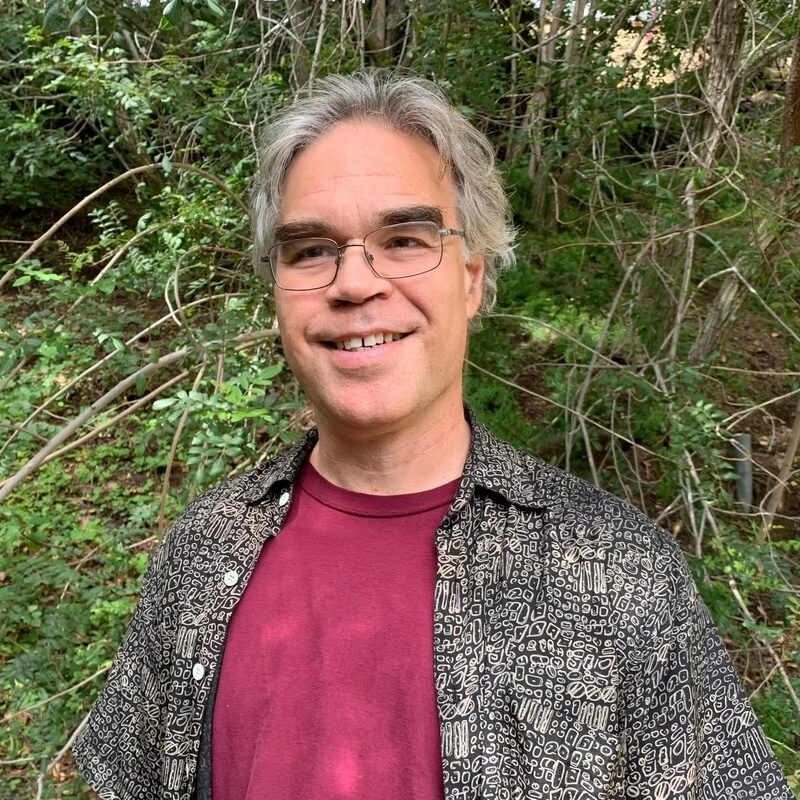
Eric Schwitzgebel received his Ph.D. in philosophy from the University of California, Berkeley. He is currently a professor of philosophy at the University of California, Riverside. He is the author of several books, including the new The Weirdness of the World.
Click to Show Episode Transcript
0:00:00.0 Sean Carroll: Hello everyone and welcome to the Mindscape Podcast. I'm your host, Sean Carroll. If any of you out there own a copy of my book Something Deeply Hidden, you can go to the copyright page, the page right after the title page where there's the copyright information, et cetera printed in the United States of America or whatever. There is a little notation on that page that gives the version number. And the version number is not your copy of the book, personally. All of you and your friends and I and everyone else that we know has the same version number. And the version number is 756,132,390,815,553. If you know the story about what that version number is, when I wrote the book I generated a quantum random number between one and a quadrillion, an integer.
0:01:02.8 SC: And that's what this version number is. If you believe or if you, for the moment, imagine that the world is described by the many worlds interpretation of quantum mechanics, which I explain and defend in the book, then there are different branches of the wave function with almost exactly the same book written in them, but different version numbers. Every different integer of that size is represented somewhere on the branches of the wave function of the universe. Somewhere it's all zeros or all threes or whatever, and there's got to be some comment in that version of the book, well, wow, I guess we got really unlucky about that. But this idea, this little joke that we sneaked into the book was supposed to be a way of really making you face up to the claims involved in the many worlds formulation of quantum mechanics. And those claims, I am very quick to admit, are weird. They are bizarre. The implications of the many worlds interpretation of quantum mechanics are very, very far away from our intuitive, everyday experience of the world.
0:02:17.9 SC: And some people will say, "You know what, they're too far away. I'm just not going to go there. I do not believe there are a quadrillion different versions of something deeply hidden out there in some quantum multiverse with different version numbers in them." So what are we to do about that objection that this idea, the many worlds interpretation of quantum mechanics, is just too weird? Because quantum mechanics is not the only place where this issue arises. There are other attempts to make sense of the world, in other words, understand it even better than we do, that like it or not lead us to some place that seems bizarre and weird to us.
0:03:02.5 SC: That is the theme of Eric Schwitzgebel's new book. Eric is a philosopher at University of California, Riverside, and he has a new book that is going to come out tomorrow, by the day that this podcast gets released, and it is literally called The Weirdness of the World. And in this book he basically faces up to the fact that some of our best attempts to make sense of the world end up looking pretty weird. In fact, he argues that in some cases they're going to have to look pretty weird. There is no version of the correct theory that doesn't look weird to us. Now, weird is an interesting thing. Weird, in his definition of it, is a little bit different from bizarre. He defines bizarre to mean contrary to our common sense, and weird is a little bit stronger than that. It's contrary to our common sense in kind of an irrevocable way. It's not going to go away just because we understand it better. We're going to have to buy into it.
0:04:03.4 SC: So he talks about not only quantum mechanics, but consciousness is a big theme. All the different versions of consciousness theory, just like all the different versions of the foundations of quantum mechanics, Eric will argue involve a certain degree of weirdness. And there's other weird things that may just be false, like maybe we live in a simulation, or maybe we're a brain in a vat, or whatever. Maybe those you can dismiss, but what about when you can't dismiss it? What do you do when you need to balance different levels of weirdness of different kinds of theories? Should we just ignore the weird possibilities? Should we give substantial credence to them? Should we be more cautious when all the options on the table are pretty weird? So I like it as a work of philosophy that faces up to the real challenges that come along with taking seriously our best ways of understanding the world. So over the course of all of our different podcasts here, we've gone to some pretty weird places. We might as well celebrate it. Let's go.
[music]
0:05:19.8 SC: Eric Schwitzgebel, welcome to the Mindscape Podcast.
0:05:22.0 Eric Schwitzgebel: Thanks for having me.
0:05:23.2 SC: So you've written a book about the weirdness of the world, which is just a great provocative title that I'm sure will give us a lot to talk about. But before we do that I have to bring up a couple things that you've also been involved with that are really interesting, but not on that topic. But I have to get them out of the way a little bit. One is virtual Dan Dennett.
0:05:43.0 ES: Yes.
0:05:44.8 SC: We had Dan Dennett as a previous Mindscape guest. I think that's his claim to fame these days. But those are before the days when we had large language models and could just program up a Dan Dennett to interview. So you did that and did a little experiment. So tell us about that.
0:06:00.6 ES: Yeah, we sure did. So we did this, I should say, this is collaborative with Anna Strasser and my son, David Schwitzgebel. And Matthew Crosby was a collaborator earlier on, but he had to leave to work for DeepMind.
0:06:15.5 SC: That happens, yeah.
0:06:17.1 ES: So he couldn't publish something using open AI technology.
0:06:18.9 SC: I'm sure he's handsomely compensated for his problems.
0:06:23.9 ES: Yeah. He was involved early on and actually did some of the fine tuning. So people know ChatGPT. Probably most of your listeners know, right, this is a large language model. It can produce text that's very human-like. A precursor to that that came out, I think, in 2020 was GPT-3.
0:06:48.3 SC: Yeah.
0:06:48.6 ES: And one of the things that you could do with GPT-3 was you could fine tune it on a corpus of text. So basically, it consumes large portions of the internet. And from this, it can predict the next word when you input likely text. So when you fine tune it, what you do is you add some more corpus, and then it readjusts its weights so that its outputs look like a compromise between what it is in its original state and the corpus that you've input you fine-tuned it on. So what we did was we took GPT-3 and we fine-tuned it on the corpus of Dan Dennett, about 2 million words. Most of his, I don't know how many books he has, in the teens, and articles, we just pumped them into GPT. And then what we did was we asked the actual Dan Dennett 10 philosophical questions, and we asked our fine-tuned model we call DigiDan the same 10 questions. We did it four times. We got four answers from each of the DigiDans. We didn't do any cherry-picking of those answers to see for quality. We did make sure that they were sufficient length.
0:08:00.7 SC: Yeah.
0:08:00.7 ES: So we excluded short answers. We wanted length similar to Dennett's own answers. And then what we did was we took experts in Dennett's work and we said, "Hey, could you guess which is Dennett's real answer and which has come from the model?" So chance would have been 20%. The experts got it about 50% right. So they did better than chance, but still half the time they chose the model's answer over Dennett's answers. And on two of the questions, the plurality of experts actually chose one of the model's answers over Dennett's answer. And in one of the questions, Dennett said, "You know what? I kind of see why the experts chose that answer over my own answer. If I'd thought about it more, I should have said something different." So arguably on one question the model actually outperformed Dan himself. So anyway, that was our experiment. We wrote it up, we published it, and it was a lot of fun.
0:08:55.0 SC: And when you did it, it was only a short while ago, but probably it was much more surprising at the time. It wasn't quite as public, the whole excitement these days about large language models.
0:09:08.4 ES: That's right. We did it. We actually ran the experiment before ChatGPT was released. And so people were getting the wind about the power of GPT-3, but it wasn't quite the phenomenon that it has since become.
0:09:19.6 SC: And when you, just as a technical matter, when you download this corpus, does that mean that you had to have electronic copies of all of Dan's writings? Did he help you with that? Or did you just pirate a book or get a Kindle edition?
0:09:34.1 ES: He helped us with this, and he collaborated with us on the project throughout. And Anna Strasser did a huge amount of work converting these old PDFs and junky files into clean text that could be uploaded into the model.
0:09:51.8 SC: But you've written things. You have a blog. Have you been tempted to do this for yourself, too? Does that save you time?
0:10:00.8 ES: Yes. Actually, the first thing we did was we uploaded my blog into this. So this didn't become a publication, but we uploaded my blog into GPT-3, a kind of lower power version of it, actually, not the DaVinci model, but the Curie model, which is a slightly lower powered version. And then we had it produce blog posts in the style. And so readers can go if they want, look on my blog, The Splintered Mind, and they can see the GPT-generated blog posts, which were actually pretty interesting. I think I write blog posts better, but it was kind of cool. And at the time that we did this it was not generally well known that GPT could create well-structured answers over long strings of text. If you're thinking, it essentially does next word prediction. So you would kind of think it would lose the thread of ideas over time and wouldn't be able to create a well-structured argument that runs for paragraphs. Anyway, that's kind of what we thought, but it was surprising. One of the blog posts was, I think, not a convincing argument, but at least it had a kind of philosophical argumentative structure over the course of several paragraphs, which we found really interesting and surprising given the basic structure of these models.
0:11:17.2 SC: Clearly, GPT does have some memory of what it's recently said, right? It's not literally going from one word to another.
0:11:24.3 ES: Right. It's got a window of, I forget how, something like a thousand tokens, and a token's like three quarters of a word.
0:11:30.9 SC: Okay, yeah.
0:11:32.0 ES: Something in that ballpark. So yes.
0:11:35.5 SC: So did you give it topics for those blog posts, or did you just say, "Write another blog post that would fit in here?"
0:11:42.5 ES: We gave it titles.
0:11:44.8 SC: Okay.
0:11:46.5 ES: And then it wrote the post given the title, yeah.
0:11:49.4 SC: This is very scary. Do you think that the world is going to change dramatically because of this technology?
0:11:53.4 ES: Yes.
0:11:57.9 SC: Yeah. Okay.
0:11:58.0 ES: It's hard to know exactly how it's going to change.
0:12:01.0 SC: Hard to know how, right. Yeah. Okay.
0:12:03.3 ES: But for sure it's going to change.
0:12:04.3 SC: So that was one thing I wanted to get out of the way. The other one, which I only found when I saw your Wikipedia page, is that you were one of the people involved in asking the questions, "Are ethicists especially ethical? Or does studying moral philosophy make you a more moral person?" Is that right?
0:12:23.1 ES: Yeah. Arguably, I'm the world's foremost expert on the moral behavior of ethics professors.
0:12:26.8 SC: And what are your conclusions about this?
0:12:31.7 ES: Well, I've done a fair number of empirical studies on this, and what I found over and over again, almost without exception, is that they behave about the same as comparison groups of other professors. So sometimes we do the comparison group would be other philosophers who don't specialize in ethics. Sometimes the comparison group is other professors at the same university in different departments. And there've been a couple studies where we found a little bit worse or a little bit better behavior in some respects for ethicists. But generally speaking it's a big [0:13:13.8] ____ null result.
0:13:15.0 SC: Well, okay.
0:13:16.7 ES: We just find they behave the same as other people, which I think is kind of interesting because you might have thought that ethicists would reflect on ethics and then behave differently as a result of their reflections. And mostly that seems not to be the case. One particularly interesting example of this is with respect to vegetarianism, because ethicists on some issues will embrace more demanding moral standards. For example, ethicists are much more likely than professors in departments other than philosophy, where they were in 2009 when we collected these data.
0:13:54.3 SC: Yeah.
0:13:55.1 ES: To say that it's bad to eat meat, bad to eat the meat of mammals in particular is what we asked about. And yet in our research we found them just as likely to report having eaten meat at their previous evening meal.
0:14:06.9 SC: Now, is that correlated? Are the people who say it is bad to eat meat also eating the meat?
0:14:16.5 ES: Right. It had the correlation that you would think. So the people who... We gave them a nine-point scale from very morally bad to very morally good. And the people who ticked one or two very morally bad or one tick toward good from that, few of them reported having eaten meat at their previous evening meal. But the ones who ticked three or four on our nine-point scale, which was a lot of ethicists, seemed basically just as likely to have reported eating meat. So there was a kind of correlation between the strength of the opinion and the self-reported eating, but there wasn't the group difference that we expected. So ethicists as a group said, the majority, 60%, said it was morally bad. But I don't know, 30-some percent of them reported having done it at their previous evening meal nonetheless compared to... I think it was 38% of ethicists and 37... No, 37% of ethicists and 38% of respondents overall.
0:15:20.3 SC: So if this is a surprising result, which I'll entertain the possibility that it is, what's your theoretical understanding of what's going on? Is it just that ethicists are better at arguing about ethics but not actually better at being ethical? Is there a different kind of study that would make you better at ethics? Is it like coaching versus playing a sport?
0:15:41.9 ES: Yeah, I think coaching versus playing is an interesting comparison. We don't hire ethicists to be saints, just like we don't hire coaches to be football stars.
0:15:55.2 SC: Yeah.
0:15:56.1 ES: And yet, you would expect if you took a coach and a random member of the population of the same age and gender and put them on a football field together, you would expect the coach would still outperform even if the coach is not a superstar. So I think that's an interesting comparison that reveals partly why you might think it's still a little surprising even if we don't hold ethicists to saint-like standards. In the vegetarianism results, again I think that strikes people as somewhat surprising. So one of the things that I draw from this is it fits with a view I have about moral psychology. I suspect that real answer is complex and multi-causal. But one of the things I think it fits pretty well with is the idea that people in general aim to be morally mediocre.
0:16:55.4 SC: Okay.
0:16:56.8 ES: So my inclination is to think, and this is grounded both in personal experience and in reading social and moral psychology, are that people don't generally aim to be good or bad by absolute standards. Instead, they aim to be about as morally good as their peers. They don't want to make the sacrifices that would be involved in being very morally better. But they also don't want to be the worst in the bunch.
0:17:29.4 SC: Interesting.
0:17:29.5 ES: Right?
0:17:30.4 SC: Yeah.
0:17:30.8 ES: So people aim for peer-relative moral standards. So if you think about that from the point of view of thinking philosophically about ethics, maybe what you do when you think about ethics is you discover moral truths, like maybe you discover it's bad to eat the meat of mammals. But if you're aiming just for peer-relative goodness, your peers are still eating meat. So what happens is your opinion about your peers' moral behavior and your own moral behavior goes down, but your behavior doesn't change.
0:18:02.3 SC: That's actually very nicely consonant with other podcasts I've done recently about other aspects of things like psychology or even epistemology having much more of a social slant than we would expect. Brian Lowry explained to us how our sense of selves serves mostly a social function. Hugo Mercier explained how our use of reasons serves largely a social function. And you're saying that there's a very big social function that is served by our ethical practice at any rate.
0:18:39.0 ES: Yeah, right. Absolutely.
0:18:39.7 SC: Social animals, there we are. But I guess this does segue even more smoothly than I thought it would into the weirdness of the world, because there's the... When you say the world is weird, and now we're going to get into the topic of your book, immediately part of me wants to say, "Come on, the world can't be weird. It's the world." What we're seeing is a mismatch between our expectations and the world, and maybe those can be colored somehow. So what does the title of your book mean?
0:19:15.0 ES: Right. So yeah, you're right, it's not that the world is intrinsically weird, I'm not sure what that would mean. The idea of weirdness or bizarre-ness, which is a closely related idea in my book, involves violating our expectations or standards or a sense of what's normal or violating common sense. So when I say that the world is weird, I mean something like our common sense understandings of how the world is are gonna be sharply violated by how the world actually is. That's the bizarre-ness element, and then there's also an element which I call dubiety, which is that... And all of our answers to this are dubious. It's not like, Oh, well, it violates common sense, but we perfectly well understand it. It's also in dimension of weirdness is that it kind of exceeds our ability to fully comprehend.
0:20:22.3 SC: So I think the example you gave in the book is special relativity, which tells us various things that happen at the speed of light might seem bizarre to us, it's anti-commonsensical, but it's not weird in the same sense. We can fully understand it once we learn what's going on.
0:20:38.8 ES: Correct, so special relativity is a nice example of something that's highly bizarre, it violates common sense, but it's not dubious. The full weirdness thesis also involves this dubiety claim. Yeah.
0:20:53.8 SC: Yeah, you use the word dubiety in your book much more often than I've ever seen it used before, so just to let people know, it's the existence of, or I guess, the claim that you should be dubious about something.
0:21:06.8 ES: Right.
0:21:08.4 SC: Dubiety, okay.
0:21:09.7 ES: That doubt is justified.
0:21:13.9 SC: Doubt is justified. Good. The name, the URL of my personal website is preposterousuniverse.com. For exactly the same reason, it came out of thinking about naturalness and cosmology and the cosmeceutical constant and the fact that the universe is surprising to us. And it's funny because I get critics, the usual crack pot on the street with opinions about cosmology saying, Oh, Sean Caroll thinks universe is preposterous. He doesn't realize that it's just our ideas that are wrong, but I'm trying to say, No, that's the point. I don't think the universe is making a mistake, it's definitely, we are making a mistake. That's the whole message that it is trying to get across.
0:21:54.6 ES: Exactly, and I like the word preposterous too. I was flirting with just borrowing that word from you, but I decided I liked weirdness a little bit better, but.
0:22:04.3 SC: Weirdness works, especially weirdness of the world. The alliteration, et cetera. Okay, let's take the universe's point of view here. Why is it our fault that the universe looks weird to us? Is there something about us that is despite the fact that we're part of the world that kind of doesn't quite match on to what we see out there in principle?
0:22:28.4 ES: Right. Well, I'm inclined to think that our theories and our common sense... Well, especially our common sense. Let's start with that. Our common sense is trained upon, built upon a very limited range of experiences. So with respect to big picture cosmology, it's relatively low energy, middle-sized slow-moving stuff on earth. And that's what we're good at, that's what we evolved to be good at, that's what the social pressure is, the learning environment makes us good at. You take something at a very different scale, much larger, much smaller, much more energetic, and those aren't the kinds of things that there's any particularly good evolutionary or developmental or social reason to think we would have well-tuned common sense judgments about.
0:23:23.8 SC: So in other words, the way that I've said similar things, in some cases, we only experience a tiny fraction of what the world is, but we make efforts to experience more and more of it, and guess what? It looks different and surprising to us.
0:23:39.7 ES: Yes. I completely agree with that. And I think the same is true for our understanding of consciousness, although less obviously so. The thesis of the weirdness of the world is partly about large big picture cosmological issues, but it's also equally or even more about consciousness. Again, with respect to issues of consciousness we're familiar with the human case and with certain familiar vertebrates we like, and that's about what we know about consciousness, and we have not had experience, for example, with sophisticated AI systems. So we shouldn't expect particularly to have well-tuned common-sensical intuitions about such things.
0:24:36.8 SC: Good. And so in some sense, I don't wanna put words in your mouth, but it seems to me that the motto of your book should be that you're asking us to be courageous to say, we should expect that as we learn more and more about the world we'll find that what we're learning seems weird to us, and we need to develop tools and techniques to deal with that and handle it.
0:25:02.8 ES: Yeah, absolutely. And yeah, I guess that's in a sense, courageous, although I'm not sure that's the word I would use. I like the word wonderful instead, 'cause it's got this... The idea of wonderful, it's got two dimensions to it. So it's got the root stance of wonder that we live in a world that promotes wonder in us, and wonderful, of course, is also something like a synonym for good. And I think that's a good thing about the world, that it defies our understanding.
0:25:45.8 SC: So you have lessons and nostrums that we should get from contemplating the weirdness of the world, but I thought that maybe we could just go through some examples, really think about them in depth and then that will help us extract what these lessons are, and as you said, consciousness is a big one, but I first wanted to just talk about the existence of the external world, these radically skeptical scenarios. You talk a lot about, Are we sure that we're awake? For example, so give us the general lay of the land here, How do you think about these skeptical possibilities? And what are your favorite ones.
0:26:26.5 ES: Right. So I have a few different chapters where I tangle with these skeptical possibilities in different ways. The dream argument, of course, is a famous one, that's the one you started with, but I'm also interested in the simulation hypothesis, the idea that we might be living in a simulation, the Boltzmann brain idea, which you of course talked about in your work very wonderfully, and just the idea that even the idea that the universe might consist wholly of my own mind and nothing else. So I talk about all of those possibilities in the book, but we could start with the dream one, which is maybe the most familiar one.
0:27:05.8 SC: Sure.
0:27:12.5 ES: So this goes back in philosophy all the way at least to the ancient Chinese philosopher, Zhuangzi, of course, Descartes makes a famous use of it. The idea is, How do you know if you do know that you're not currently dreaming right now? And normally we think we feel pretty confident that we're awake. At least if you ask a waking person if they're confident they are awake, they'll tend to say, Yes. But what justifies that? And I think there are a few ways it could be justified. I think there are some empirical features of dreams that make them different from waking life, so for example, I think of waking sensory experience as pretty richly detailed and pretty stable, whereas the experiences we have in dreams arguably are less detailed, kind of sketchier, more image-like less stable.
0:28:18.1 SC: Do you know this claim that in dream...
0:28:20.7 ES: Go ahead...
0:28:21.4 SC: There's a claim that I think actually has some backing, but I'm not sure how right it is, that you can't read text in dreams. The text does not look like text, it looks like that sort of bad AI text. It is sort of like letter-like without actually having any meaning.
0:28:41.1 ES: Yes, that is sometimes called a dream sign. These are hypothesized tests for whether you're dreaming or not, so look at text and see if it's stable and if you can read it. And some people think of that as for themselves a good dream sign. But of course, there are also dream reports in which people report reading stable texts, so it's not universally accepted.
0:29:02.3 SC: Okay, that's why I was checking.
0:29:02.4 ES: I think that if we accept this fact about the stability of text is, maybe at least in the majority of dreams you can't have a stable text; That creates some evidence that I'm not dreaming right now. But a lot of dream researchers, including for example, Jennifer Windt, who I think is really amazingly knowledgeable about this kind of stuff, think that we do often in dreams have stable experiences that are a lot like waking life, maybe even experientially indistinguishable from waking life, even boring mundane experiences like that of listening to a podcast.
[laughter]
0:30:00.5 SC: That's a very exciting experience, Eric.
[laughter]
0:30:03.8 ES: And so if we think that there are some dreams like this, or if we invest some credence in a theory of dreaming according to which there are either often, or at least sometimes experiences like I'm having right now, or like your listeners, or you are having right now in dreams, then it becomes less experientially obvious. Okay, I can't now be sure that I'm not dreaming based on what seems to be this stable experience that I'm having right now of seeming to be awake. And of course, lots of people including me and probably most of your listeners have had false awakening experiences where you kind of seem to wake up and think, Oh, I just had a dream. Now I am awake. And then you wake up again. So there are reasons, I think, not to be perfectly certain that you are not dreaming right now.
0:31:13.0 SC: Is it also worth contemplating a kind of inception scenario where we are all dreaming, there's a more awake version of us that dreams like our existence. Pretty detailed, we can read text, et cetera, and then we dream that we are dreaming in this fuzzier way, right?
0:31:38.7 ES: I think that's possible, but I wanted to draw distinction between what I think of as grounded and ungrounded skepticism. So ungrounded skepticism says, Well, I could be a brain in a vat, and then I wouldn't be able to tell the difference. So can I really rule that out? And ungrounded dream skepticism could be like, Oh, well, maybe we're in an inception scenario. Grounded skepticism starts with our ordinary background assumptions and says, looking at these assumptions, there's some positive reason to give some credence to skeptical doubt. So there's no real positive reason to think that you're a brain in a vat to assign that any more than the most trivial likelihood. There's no positive reason to think we're in an exception scenario, but there is positive reason to think that this experience might be a dream experience once we start thinking about the nature of dream experiences and weather experiences like this at least maybe sometimes occur in dreams, at least according to some theories that might be true.
0:32:51.9 ES: So I prefer to focus on these grounded kind of sources of skepticism, so I think it's not just... One of the critiques that philosophers sometimes give as skepticism is you can cook up anything, there's no reason for us to take it seriously, whereas I think with dream skepticism, given the fact that we dream every night, given the theories of dreams, at least some mainstream theories of dreams postulate that we have experiences like this in our sleep that creates grounds for doubt. It's not completely just cooked up out of nothing.
0:33:27.1 SC: Maybe you can add to that, the idea that at least most of the time while we're dreaming we don't think of ourselves as dreaming.
0:33:35.7 ES: Right. Most of the time. Of course, there are some so-called lucid dreams, and it is the case that if you can get yourself in the habit of thinking, Am I awake? So much that that thought starts to come to you while you're actually dreaming, then that's one way to discover that you're dreaming and start to have lucid dreams.
0:34:01.4 SC: I am very bad at remebering dreams.
0:34:02.5 ES: But even in a dream sometimes people will say, Am I dreaming? And then decide, No, I'm not dreaming, even though they really are.
0:34:07.0 SC: That's just what I was gonna ask because I was just gonna say I don't remember my own dreams very well at all, but I don't have any memory of ever being in a dream saying, I wonder if I'm in a dream and then going, No, I don't think I am, but you're saying other people have reported that experience.
0:34:23.7 ES: Yes. That's definitely not an uncommon experience.
0:34:26.6 SC: All right, all right, now you see you're increasing my credence.
0:34:29.6 ES: It could be the case that the majority of times when people are dreaming and think to themselves explicitly, Am I dreaming? They come to realize they are, but it's not clear that that's the majority, and even if it is, it's not an overwhelming majority.
0:34:42.5 SC: Yeah. Okay, okay, good. Let's just go through some of the other famous ones, 'cause you've drawn a very interesting distinction between grounded and ungrounded skeptical scenarios. What are some of the other skeptical scenarios you would classify as grounded in other words, worthy of our attention?
0:35:00.3 ES: So I find the simulation hypothesis pretty interesting, so this is the idea that we might be artificial intelligences living inside a simulated reality, kind of like The Matrix, except in the matrix they're really biological bodies, but you could have a matrix type scenario where the confused entities are AI systems, or you could imagine the video game, The Sims with these artificial simulated people going around these environments, except The Sims are really conscious. Those are a couple of ways of thinking about the simulation hypothesis. So Nick Bostrom has a famous argument that gives us some grounds. We're thinking it's at least possible that we are Sims. The idea here would be that it's not ridiculous to think that consciousness arrives in artificially intelligent computational systems. Philosophers have disputed that. John Searle, who was actually one of my dissertation advisors, is one of the most famous skeptics about that, but it's certainly no consensus that it's impossible. So if we accept to give at least some credence to the possibility that artificially intelligent beings could arise on computers, then it seems possible that such beings could exist in simulated artificial environments that they take to be the base level of reality as Bostrom puts it.
0:36:42.9 ES: Some of them might even think they're living in earth in the 21st century, and then the question arises, okay, How many such beings are there? One possibility would be, Look, they're not ever gonna be beings like this out there. Civilization will not get that far enough, it is really expensive to make such things, and no one would bother, or maybe there'd be some ethical regulations you don't wanna create really conscious entities inside your computer who think they're living in reality. But on the other hand it also seems like it's possible that there would be many such beings, just like we run computer games like The Sims right now, and we run scientific simulations, it could be the case that there are lots of games or scientific projects that involve real conscious beings inside them, who think they're living in the base level of reality. If the universe contains many such beings, then it seems not totally implausible to think we might be among them. So there are various reasons to think we're probably not them. Every step of this argument emits of doubt, and you kinda stack those doubts on top of each other and it seems like, Okay. Probably not. But again, it's like with a dream case, it doesn't seem like we should be absolutely certain that we're not Sims.
0:38:17.3 SC: Right.
0:38:18.8 ES: So, yeah. I guess it could be. So I find that possibility interesting. And then, I guess to turn this into a skeptical scenario. So one of the things that David Chalmers has particularly emphasized in talking about this is he says, "Well, look. If you're living in a simulation, but it's large and stable, then that's not really a skeptical scenario at all." He says, "Because you have a long past. You're going to have a long future. All the people you know really exist. And there might be, say a coffee mug and it might be fundamentally made out of computational bits, but that's enough. It's still going to be there. It's going to react the way that you want. So it really is kind of a coffee mug." So, basically, most of your ordinary beliefs would end up being true.
0:39:07.6 ES: So to turn this into a skeptical simulation scenario, what we have to do is think about what's the possibility that if we're living in a sim it's a small or unstable one. And there, I guess I'm inclined to disagree with Chalmers. And I'm inclined to think that if we are in a sim there's a decent chance that it's a small or unstable one. So if we think about the simulations we run, they tend to be small and unstable. If we think about the question of resources, right? And it probably would take a lot of resources to run a whole galaxy from the Big Bang through now and on into the future. So what scientist is really going to want to do that if maybe all they're interested in is human cognition. So just run a short... A few people having a discussion on a podcast. Right?
0:40:00.2 ES: Or something like that. So I think conditional upon thinking we're living in a sim, we should assign a substantial portion of that credence, maybe 50%, maybe 90%, maybe 10%, to it's being a small or unstable simulation. And in that case, then that in my mind, counts as a radically skeptical scenario because you might be radically wrong and maybe this whole simulation was created only 10 minutes ago or maybe there's no one outside of your room. It's just you listening to a podcast or just the two of us having a conversation and beyond the walls of our rooms nothing exists. Those would be various ways of it's being small or unstable.
0:40:39.2 SC: So as a professional philosopher, of course, you know that the idea of these skeptical scenarios goes back to antiquity. Not just Zhuangzi but the ancient Greeks thought about this. So we've been worried for millennia now that reality is not anything like what we think it is.
0:40:58.3 ES: Absolutely. I love the ancient skeptics.
[chuckle]
0:41:04.3 SC: So what are some of your favorite ones?
0:41:07.3 ES: Well, Zhuangzi is probably my favorite philosopher. But Sextus Empiricus is also really wonderful.
0:41:14.1 SC: And they did not know about the simulation argument.
0:41:18.4 ES: Right. They didn't know about the simulation argument. So that opens up the possibility that there are some grounds for doubt that future philosophers and physicists will think of that didn't even occur to us.
[laughter]
0:41:37.5 ES: And maybe we should have some degree of skepticism reserved for that. I call this wild card skepticism. The idea that I should have a certain amount of doubt about my ordinary assumptions about the world, just on the basis of the fact that there's some skeptical possibility that I'm not even capable of considering.
0:42:00.7 SC: Right. Okay. Good. So there are other skeptical scenarios, but we have the general feeling between living in a simulation, we're just dreaming. What do we do about it? Do we just ignore those possibilities 'cause they're too weird? Do we reserve a little bit of our credences to say, "Who knows? Maybe tomorrow I'll change my mind and think this is right."
0:42:23.3 ES: Yeah. I think we reserve a little bit of our credence. So the way that I think about it in terms of numerical credence is that I think it's rational to assign about a 0.1 to 1% credence to some radically skeptical scenario or other being correct. That's rough and fuzzy [chuckle] It's somewhere between just being completely confident they're false and being kind of radically uncertain. So 99%, 99.9%, the world's basically just how we think it's. Right?
[laughter]
0:43:05.5 ES: Setting aside the big picture cosmological stuff, but kind of the ordinary earth world of middle-sized dry goods, it's low speeds is more or less how we think, 99%, 99.9% of our credence maybe should go to that. But we'll save a little bit of your credence space, so to speak, for these radically skeptical possibilities. And then I think that having that little bit of space there can have some influence on your choices in your behavior.
0:43:36.0 SC: Actually, I do want to get to exactly that issue, but I realize there's a hanging thread that we should deal with, which is there's another kind of way in which the world could be very different... I mean, the world could be very different than what we think it is, which is just, there is a lower microscopic level beneath our manifest image kind of world. So you're not counting... We are not talking about something like, "Oh, there's a whole new theory where everything is little strings or wave functions or whatever." That doesn't count because in those scenarios the macroscopic world is still the macroscopic world and obeys the rules. Right?
0:44:17.0 ES: Exactly. Right. So I don't count that as a radically skeptical scenario of the relevant sort. 'Cause there still would be... Our everyday beliefs would still mostly be true. It would be true that earth has existed for billions of years. And it would be true that there's a coffee mug here and that sort of stuff, and the sun will rise tomorrow, so to speak.
0:44:39.5 SC: Good. Okay. Good. So then we can go back to that 1% skepticism that you're advocating. I mean, one question is just, Where did that number come from? You're saying we should attach a 10 to the minus two, 10 to the minus three credence to just being completely wrong. I absolutely agree that we should attach some credence to any crazy idea you have. I'm a disbeliever that you should attach zero credence to almost anything, but why not 10 to the minus 10? Why something as big as 10 to the minus two or three?
0:45:15.9 ES: I don't have a rigorous argument for that, but let me just do it for, say, the dream scenario. So let's say we invest a 20% credence in the theory, which some major dream researchers accept that we commonly have experiences like we're currently having in our dreams. Let's say we get 20% credence to that and 80% credence to now dreams are basically just always sketchy. Then conditional on that, we say, "Okay. How often do I have experiences relevantly like this in dreams?" Well, maybe this is not the kind of thing that I would tend to dream about very much, right?
[laughter]
0:46:07.8 ES: But again this is a...
0:46:07.9 SC: I'll just ignore that. Sure.
0:46:09.3 ES: If we ordinarily have kind of sensory... Ordinary kind of sensory experiences of mundane things, it seems like this is the kind of thing that we should have. So maybe I should assign a 2%. Maybe 2% of the time I'm having experiences like this, it's actually in sleep. Or I should invest 2% of my credence to the idea that I have experiences like this in my sleep. Now, once I've attached a 2% credence to the idea that I have experiences like this commonly in my sleep, it's hard for me to see on the basis of that how you would then go, "Okay. So I now only have a one in 10 billion credence that this is a dream." [laughter] Right? It seems like you can't knock too many orders of magnitude down off that 2% with kind of... I'm not sure what the grounds would be for that kind of decrement.
0:47:07.0 SC: I think it's a big philosophical problem that... I don't know whether you know if anyone sort of specializes in this particular question, but what do we do with issues or questions or scenarios where the credence that it'll happen is incredibly tiny, but the consequences of it happening are incredibly large. And it seems maybe AI destroying the world is an example of that. Or even better 'cause people think that AI destroying the world might be 10%, but The Large Hadron Collider turning on in a black hole eating up the world, and someone says, "Well, it's less than a one in 10 billion chance." And someone else says, "But it destroys the world. That should still count." How do we reason about those cases?
0:47:51.0 ES: One in 10 billion times 10 billion people?
0:47:55.3 SC: Yeah [chuckle]
0:47:56.4 ES: So...
0:47:57.7 SC: That's why I chose the number.
0:48:00.5 ES: One expected murder as soon as you turn it on. [laughter]
0:48:04.7 SC: But even the number one in the 10 billion... I mean, if someone said, "Oh. No. It's really only one in 10 million, or it's one in 10 trillion." Probably I couldn't give a principled argument in any of those directions.
0:48:13.5 ES: Right. When you talk about those kinds of...
0:48:15.6 SC: So I don't how to deal with them.
0:48:15.7 ES: Magnitudes. Sometimes it's hard to get... You lose your sense of magnitude once you get over, I don't know, a trillion or something like that.
0:48:24.5 SC: So do philosophers have a toolkit for dealing with these weird numbers?
0:48:30.2 ES: No.
[laughter]
0:48:32.5 SC: That's my impression.
0:48:32.6 ES: I mean, it's an interesting issue that's been starting to get attention in the philosophical literature. There's this idea that's sometimes called Nicolausian discounting, which is the thought that once something has a low enough chance or you give a low enough credence to it, you just ignore it completely.
0:48:53.4 SC: Yeah.
0:48:56.8 ES: So that is one approach.
0:48:58.2 SC: What was that called?
0:49:00.2 ES: Nicolausian discounting. After someone named Nicolaus, but I've forgotten which Nicolaus it is. So for example, in The Weirdness of the World, I suggest that once you give something 10 to the negative 30 credence, you kind of just forget about it. And this helps solve certain kinds of puzzles and paradoxes and in decision theory, but there are also arguments against this. So there's been back and forth about this. This also comes up in the debate about the ethics of long-termism.
0:49:38.7 SC: Right. Exactly.
0:49:40.8 ES: So long-termism is this idea in the effect of altruism movement, that there's a small chance that things we do today could have a huge impact on a huge number of lives in the future. So for example, if humanity goes extinct now, then maybe there are no other entities in our galaxy who will ever have the kinds of lives with the kind of value that our lives have. And if we manage not to go extinct now, then maybe we will have 10 to the 40 happy descendants before the heat death of the universe. So even if there was a one in a quadrillion chance that something you did now could prevent humanity from going extinct, given the stakes, maybe you should invest a huge amount in that tiny little chance. Yeah. So that's this interesting issue that's been coming up recently with long-termism that we're this issue about how do you... What do you do when you're trying to balance tiny credences and giant values against each other?
0:50:51.1 SC: Do you have a take on what we should do or is it just an open kind of question?
0:51:00.6 ES: So I have two takes. One is, I'm still going to stand by Nicolausian discounting.
0:51:07.4 SC: Okay.
0:51:07.5 ES: And the other take is radical ignorance about what would be... What actions that are currently available to us would have good versus bad effects. So the long termists will typically say or assume that human extinction is likely to have a bad effect instead of a good effect on future history. I don't think that that's necessarily true. So for example, maybe humanity, because we are so technological and prone to violence is a kind of unstable species that is more or less certain to doom itself sometime in the next 10 to 100,000 years, we're going to blow ourselves up. And if we do it in a explosive way, then we ruin the earth for other future inhabitants. But if we were to say bow out peacefully now by deciding never to reproduce again, as antinatalists suggest, then maybe we leave the earth in a good position for other species like say dolphins who might have descendants that are capable of lives as rich as ours, but who aren't technological, aren't going to blow themselves up and could endure potentially for billions of years on the planet.
0:52:40.3 ES: Or maybe not billions, but maybe a billion. If that's the case and you put the numbers into the equation in a certain way, then maybe it turns out that would be better from a kind of long-term perspective for human beings to peacefully extinguish ourselves now. So I'm not saying that's true. What I'm saying is it's very hard to know what really... When you take a billion year time perspective, what really is kind of objectively good versus bad among options that we have available to us now.
0:53:19.2 SC: I think that's fair.
0:53:21.7 ES: So radical ignorance about the very distant future.
0:53:25.6 SC: And relatedly then, what is the actionable fact about 1% skepticism. How does it affect our daily lives to think that maybe there's a 1% chance or a 10th of a percent chance that I'm dreaming or that I'm living in the simulation?
0:53:44.5 ES: Well, for example, just a fun example to start with. I had been reading a lot about dream skepticism and it was particularly vivid for me, this one particular winter break when I was walking across a campus and no one else was around. And I was thinking, "I wonder if I'm dreaming. Maybe I should try to fly because I'm probably not dreaming. But look, if I'm dreaming, it'd be so awesome to fly."
[laughter]
0:54:14.6 ES: "And no one's around, no one's looking. There's no cost." It was kind of walking across campus to the science library to get a book, right? So why not just like try to fly to the library? So I did try to fly to the library and I failed. But I think that was a rational decision because I could have been dreaming and then it would've been awesome.
0:54:38.0 SC: It was not so rational that you would've done it had people been watching. [laughter]
0:54:41.9 ES: Right. So low cost things. Don't try to fly when you're standing on the edge of the cliff. Right? Plug that into your utility calculus that you will not get a positive result. But if there are no... If there are very small or no costs to trying to fly, then why not. If you think this might be a dream and you would fly.
0:55:05.3 SC: Well, the other thing...
0:55:07.0 ES: Of course as soon as you try to fly and fail, then that should reduce your credence. Either that this is a dream or that if this is a dream, you could fly. So it might not be repeatable. You might not just be spending all of your time trying to fly.
0:55:19.2 SC: In my dreams I can fly at least a little bit. I can float. [chuckle]
0:55:21.0 ES: Right [chuckle]
0:55:24.8 SC: It's just a matter of willpower. Anyway, this is all fun, but it is 1% stuff. And a lot of the book... I don't want to give people the wrong impression. A lot of your book, you're talking about consciousness, which has the feature that we're all familiar with it. I don't even want to say the feature that it exists, 'cause people argue about that. But at least we're all familiar with the idea. So what is it about our attempts to understand consciousness that drives us into the weird zone?
0:55:53.0 ES: Right. So philosophers have tried over and over again for centuries to make sense of how consciousness fits into the world. And one of the striking empirical facts about the history of philosophy is that every single attempt to make sense of this is jaw droppingly bizarre. So there are... I divide attempts to deal with a question of how consciousness fits into the broader world, into four broad categories. One is substance dualism. You've got an immaterial soul. Another one is materialism. There are no immaterial souls. You're just a biological entity. Another one is idealism. This is the idea that there is no material world at all. All that exists are minds or souls. And then there's a, what I call compromise/rejection views, this kind of grab bag of other alternatives. And the striking thing to me about this is all of these alternatives end up committing to bizarre and dubious theses of one form or another. There's not really a live option here that is non bizarre. It's not always obvious. I mean, idealism is bizarre on in its face, I think. Right?
[laughter]
0:57:17.8 ES: It's contrary to common sense to think there's no material world and it's only just minds. Dualism and materialism are not maybe bizarre in their face. But once you try to get into the metaphysical details and think about how it really works, you end up pretty swiftly faced with theoretical choices where there are going to gonna be bizarre consequences for any of the choices that you make.
0:57:42.0 SC: I think that's the important point, because people are going to hear you say that, and there'll be both materialists and dualists in the audience who go, I have no trouble thinking that consciousness works that way. But your point is that if you really take the consequences of that view seriously, you're led to something that we should recognize as bizarre.
0:58:03.4 ES: Correct. Right.
0:58:06.1 SC: So why don't you tell us, for either pick one...
0:58:06.6 ES: So, for example...
0:58:07.8 SC: Yeah.
0:58:08.4 ES: So for example, with dualism, right? The dualist faces two questions, where all of the answers seem to be bizarre. One concerns what kinds of entities have souls and the other concerns the causal relationship between material world and souls. The causal question is a little more complicated. So let me just talk about the question of what entities have souls. Basically you have four choices. You could say only humans have souls.
0:58:43.4 SC: Mm-Hmm.
0:58:43.9 ES: Or you could say everything in the world has a soul.
[laughter]
0:58:47.2 ES: Both of those are pretty bizarre, right? Because if you think souls are the locus of consciousness, then if you say except the first like Descartes, then you think dogs and cats aren't conscious. So there's this story of Descartes taking a cat and throwing it out of a second storey window saying, See, cats are, they're just machines. [chuckle]
0:59:06.8 SC: I never heard that story.
0:59:07.8 ES: He probably didn't actually do this. [laughter]
0:59:12.5 SC: Man. [laughter]
0:59:12.6 ES: But that story kind of reveals the bizarreness of the zoo that only humans have souls. And of course, the panpsychist view that everything has a soul, even say a proton. That's also pretty bizarre.
0:59:26.2 SC: Yeah.
0:59:26.3 ES: So then there are two other options, right? One is that there's a sharp line somewhere. So, okay, dogs have souls, cats have souls, but not frogs. Where do you draw that line? [laughter] Right across the continuum of animals it seems like there's a continuum of psychological capacities, a continuum of physiology. It'd be weird if you said, Okay, toads of this genus have souls toads of this other genus do not. So a sharp line is pretty implausible, at least bizarre. And then that gives you maybe the fourth option, which is having a soul is not an on or off thing. You could have a kind of soul or a half soul. [chuckle] So maybe like frogs have like an eighth of a soul. What would that even mean? We normally think of souls as things that you either have or don't have. It seems like a discreet category rather than a graded category. But you got to take one of those horns. But they're all bizarre. So that illustrates why I think, you know, on the face of it it seems like, oh, having a soul is not a bizarre view. But as soon as you face that choice of saying, Okay, what animals have souls? You're just, you're forced into committing to some strikingly bizarre position.
1:00:42.4 SC: And as a matter of fact this was a hot topic in ancient philosophy, which animals have souls, right?
1:00:47.3 ES: Exactly. Right. And the modern conception of the soul is the locus of consciousness is a little different from an ancient philosophy. There was the vegetative soul as well. So there's a sense in which even plants had souls, but they didn't think of souls maybe as a locus of consciousness. So actually the concept of a soul that we find in our current philosophical and religious tradition has a certain history, and it doesn't, not a straightforward translation from say, ancient Greek. So it's complicated, but yes. It's been an issue throughout philosophical history.
1:01:22.5 SC: But here at the Mindscape Podcasts we are hardcore materialists about consciousness. So tell us why that leads us to weirdness.
1:01:33.3 ES: Well, one of the issues here to think about is, again, what kind of entities have experiences? I guess there are a few different ways to angle in on this, but one of them, and this is the theme of chapter three, is to point out that according to a broad class of materialist theories it's very plausible that the United States has a stream of conscious experience. The United States conceived of as a concrete entity with people as its parts, kind of like you are a concrete entity with cells as your parts. So we think about that concrete thing with hundreds of billions of people. It's...
1:02:31.5 SC: Hundreds of millions.
1:02:33.4 ES: Sorry. Hundreds of millions [laughter], sorry, I misspoke there?
1:02:34.0 SC: Don't want you misquoted. Yeah.
1:02:39.3 ES: [laughter] So that entity processes a lot of information. That entity represents itself. That entity responds to its environment kind of intelligently or semi intelligently. Scan space for asteroids that might threaten earth. And we're prepared to try to deal with them if that happens. The United States monitors its borders, it engages in import and export, it sends it's army out to do certain things. It scolds people in UN security council meetings. It digests bananas, [laughter] amounts of bananas, right? [laughter] It exudes smoggy exhalations. So if you take kind of standard materialist theories of consciousness kind of out the box and you don't kind of noodle around with them post hoc to try to exclude the case, then I think it turns out that probably the United States is gonna count as conscious. So there are a couple ways to react to this. You could say, Okay, well, so much the worst for materialism. [laughter]
1:03:54.2 ES: Or you could say, Okay, well look, we need to mess around with these theories to exclude this bizarre possibility. And I think that is maybe a reasonable response. One question here is, how we know that the United States is not conscious with whether you should take that as a fixed point in our theorizing about consciousness or not. And the third possibility is to say, Okay, well maybe there is group consciousness. We don't have a conscious-ometer that we could put up against the head of the United States. [laughter] Does it even really have a head? [laughter] To determine whether it's conscious.
1:04:39.3 ES: So that would be one area where I think if you accept the United States as conscious, then you end up, that's, I take that as a pretty bizarre kind of view. If you don't, then you adopt other theoretical commitments. And then we could get into the details of those. But I think those other theoretical commitments often then involve kind of further choices among various bizarre possibilities. Kind of like with the immaterial soul case. As soon as you start making those commitments, once you develop them, you see, oh boy, this is gonna have this consequence. This is pretty unintuitive.
1:05:16.7 SC: Well, how certain should we be in that conclusion? Is there a theorem that says that any version of materialist theories of consciousness are gonna have this property? Or is it just, well, as far as we know, according to our best current art, that seems to be the case. In other words, could the appearance of bizarreness go away with better understanding?
1:05:42.4 ES: Yes, it could. And there are two separate reasons. One is kind of have, as you suggested, unlike the, what I call the dualist quadrilemma, I don't think we have a kind of rigorous argument that all of the choices have to be bizarre. It's that the choices that I've seen articulated all have bizarre consequences.
1:06:01.6 SC: Yeah. Okay.
1:06:03.2 ES: But there might be some unarticulated choice that I haven't run across yet that turns out to be commonsensical. So I think that's possible, but empirically unlikely given the current state of things and the history of philosophical discussion on this. So it's an empirical conjecture. The other way in which bizarreness could end up banishing is our intuitions and our sense of common sense could change. So the idea that the earth moved around the sun was bizarre when Copernicus suggested it, but we no longer seem to find that a sharp violation of common sense. Common sense has changed over time. So it could be that someday we'll find it very commonsensical, for example, that the United States is conscious. Oh yeah, of course. Or maybe panpsychism. Oh, the whole universe is conscious.
[laughter]
1:06:54.7 ES: The ordinary person in the street, of course they think that [laughter] common sense can change. It's not a fixed point.
1:07:03.4 SC: And we should, so it's a little bit different than the previous examples of the skeptical scenarios, unless I'm misinterpreting. You're not arguing that we should hold out 1% credence for some bizarre possibilities. You're just saying, look, all the possibilities seem to be bizarre. We should, I guess, learn to accept that or fold that in, not use it as a drag...
1:07:25.1 ES: Yes.
1:07:25.7 SC: As a knockout argument against something. We can't say, well, I can't accept that. It's bizarre. 'cause all the other options are too.
1:07:34.7 ES: Exactly. So this is why people like panpsychists and idealists [laughter] like my stuff on this, right? Because part of the reason, the main reason I think people reject panpsychism, for example, the idea that everything in the universe, or maybe the universe as a whole is conscious, is that it just seems so contrary to common sense. But if I'm right, well, something contrary to common sense is probably true. So maybe that's it, Right. I do think we have to rely on common sense to some extent. I don't think we can just toss it out the window when we talk about issues like this. We don't have, in my view, really any great tools for answering these questions. And so we have to rely on highly imperfect ones like common sense. But the fact that something violates common sense is not automatically defeated.
1:08:26.1 SC: It does seem very similar to things that even I have said about quantum mechanics. I presume that we're gonna put the many world's interpretation of quantum mechanics into the bucket of things that you would say are pretty bizarre.
[laughter]
1:08:42.8 ES: Yes. Right.
1:08:44.1 SC: I remember a quote from, I think it was David Mermin, who is a very famous, very great physicist who is a epistemic person when it comes to quantum mechanics. So he thinks the wave function is just a tool for understanding our knowledge and prediction, not reflecting anything real. And he does little surveys of the field, et cetera, and at some point comes to many worlds. And he says, Yes, you can follow the Schrodinger equation and its consequences, and you end up with a theory and the price you pay is seriousness. [laughter] So basically he's just saying like, surely you can't take that seriously, right? And that's it, that's the entire argument. And that feels like not a good enough argument to me, because like you said in the context of consciousness, for me, every version of quantum mechanics is going to lead us somewhere strange.
1:09:36.9 ES: Right. In fact, I think the... I like the interpretations of quantum mechanics as an illustration of what I call the universal dubiety and the universal bizarreness claim, because I think maybe especially your listeners will find that plausible. Every viable interpretation of quantum mechanics is bizarre. There's no like common sense way of thinking about quantum mechanics.
1:10:01.5 SC: Yeah.
1:10:03.0 ES: Right? And you know, with apologies to the many worlds [laughter], advocates, right? They're all dubious. There's at least grounds for doubting all of them. When I say dubious, I don't mean that we have to assign a very low credence to them, but it's reasonable to be doubtful among them to not feel like, Ah, we're epistemically compelled to accept many worlds over all the other interpretations. Interpretations of quantum mechanics is a good example of a domain in which I think the universal dubiety and universal bizarreness claim is true. And then I wanna say the same thing about say the theories of consciousness, and theories of the fundamental structure of the cosmos. And both of those I think are, I mean, the interpretation of quantum mechanics and the nature of consciousness are both part of the fundamental structure of the cosmos. So you kind of almost get that for free [laughter] once you get those two.
1:11:03.4 SC: You know, I generally, when pressed put my credence in many worlds at between 90% and 95%. Depending on the time of day, I'll give one of those two numbers. And I did that in conversation with Philip Goff, famous panpsychist and previous Mindscape guest, and he was just flabbergasted. He's like, you give a 95% credence to the many world's interpretation of quantum mechanics. And I'm like, Dude, you're a panpsychist. You think electrons have feelings? Don't give me a hard time for giving large credence to following the Schrodinger equation. I'm sorry.
[laughter]
1:11:38.4 ES: Right. Totally fair. Totally fair. I wouldn't give any worlds quite that high in interpretation. I think we should be more epistemically cautious about our favorite interpretation of quantum mechanics. But, yeah, there's room for reasonable disagreement. I think if you're in the ballpark of 90% to 95%, you're getting on the cusp of denying universal dubiety. But you know, what exactly counts as being dubious is kind of a fuzzy data.
1:12:07.9 SC: You do suggest in the book that when you're in this position where every option is bizarre, we should give fairly large credences to the competing possibilities because we kind of don't have a right to be too confident about preferring one bizarre alternative to other bizarre alternatives. We shouldn't be too definitive.
1:12:31.2 ES: Yes. I think, think that's generally true about the kinds of questions that we're asking, because I think we have basically three broad types of epistemic grounds for choosing among these theories, right? One is common sense, which is we've already talked about is gonna be imperfect and things are gonna violate it. These theories are gonna violate it in one respect or another. Another is scientific evidence to kind of just direct scientific evidence, like measure it. And on something like whether electrons have souls [chuckle] or what interpretation of quantum mechanics is correct, we can't now at least run an experiment that says, Oh yeah, this experiment proves, obviously on the face of it, that many worlds interpretation. And then the third tool we have is something like theoretical elegance. And again, that's kind of going to be indecisive because there's something elegant about panpsychism and there's something elegant about materialism, and there's something elegant about many worlds, and there's something elegant about other approaches too. So these are not gonna be... They're gonna be trade-offs among these very imperfect ways of trying to settle these questions rather than wrong solid grounds.
1:13:53.2 SC: Well, I wanted to ask you this specifically in the context of quantum mechanics, because I've put it the following way sometimes, I wanted to see how it fits in with your views. If you take something like hidden variables, versions of quantum mechanics. So those listeners who don't know what I'm talking about, we did an episode with Tim Maudlin recently where he will explain. And in those theories you have particles and they have locations, and that's what you observe when you do a measurement. And then you also have a wave function, and the phenomenology is much closer to the world than it is in something like many worlds where you have this abstract wave function and there's many copies of reality, et cetera. I think that there's much less elegance, simplicity, austerity to the hidden variables version as a theory. I think this is indisputable.
1:14:42.8 SC: I think that whether you agree that it's the best theory or not, you should also agree it's a clunkier theory than many worlds. Many worlds is very simple and in austere, but I should also accept that many worlds is much further away from our everyday life and our experience than the hidden variables theory is. So the question is how do we weigh these different considerations. It's good to have a simple theory. It's also good to have one that tells you pretty directly and immediately what it predicts and how to understand it. How do we be good philosophers and scientists when we're faced with that kind of choice?
1:15:25.7 ES: Right. Exactly. [laughter] And I'd say just leave that hanging as a question. So I am inclined to agree. One of the things, you're much more expert on this than I am, but one of the things that I like about many worlds is it is have a certain kind of simplicity to it. And these other theories all seem to involve a certain amount of fussing around. But how do you weigh that against other aspects that reasonably draw people to resist many worlds and prefer these other approaches? And I don't think that there is a really good general answer to that kind of question. And that's one of the reasons to have kind of non extreme credences in these various theoretical possibilities.
1:16:13.1 SC: Good. Yeah. So, and if you do have non extreme credences, then you can hope for progress. You can hope to get better. I guess maybe to wind up the conversation, I like giving actionable advice to the people out there. We've talked a little about how to deal with these crazy things. Maybe to go back to that idea that I'd never heard of before, Nicolausian discounting, maybe that's the same idea as when your credences get small enough, I'm allowed to stop thinking about it. Is that... [laughter]
1:16:45.2 ES: That is this basically the idea, yeah.
1:16:46.9 SC: That's basically the idea. I think that idea is important, but I mean, maybe part of your message in the book is don't be quite so quick to dismiss the tinier more bizarre possibilities. I don't know. Is that right?
1:17:06.3 ES: Yes, that is one of the messages. Absolutely. I think that we have a... People will tend to have a gut reaction against views that strike them as bizarre, whether it's many worlds or panpsychism or the idea that only humans have souls or whatever it is. And I think there's reason to take that kind of reaction seriously, but there's also reason to not just rely on that and to allow that some of these theories that you might think are so bizarre as to be absurd, maybe they're only bizarre and not actually absurd.
[laughter]
1:17:55.3 SC: Well, I guess I'm caught maybe in a little bit of hypocrisy here because that's exactly what I wanna say to David Mermin and his friends. He will just dismiss many worlds. Even though he's a brilliant physicist, he'll just say that's too bizarre. I'm just not going to accept that. And I want to say no, you have to take it seriously. But then there are other people, panpsychists maybe you are an example who will say, who I will say, no, that's too bizarre, [laughter] I don't need it. And I'm not quite sure what the principle stance is here.
1:18:28.4 ES: Right. Yeah, maybe you should give a little bit of your credence space to panpsychism.
1:18:33.7 SC: But there is I guess...
1:18:33.8 ES: Just a little.
1:18:35.1 SC: Just a little, but there... Maybe here is the issue. There's sort of in principle credence space, and then there's what I will spend my time worrying about credence space. When the credence has become so small I'm not gonna lose sleep over it. Even if maybe someday evidence will come in that will change my mind.
1:18:53.7 ES: Right. Yeah, that's fair. That's fair. Yeah.
1:18:54.3 SC: That's fair. So...
1:18:54.4 ES: And especially as an academic choice, right? So there's also this question of what do you spend your academic time thinking about? What do you invest your energy in? And even if you were to say, give a non-trivial, say 5% credence to panpsychism, that's not tiny, but that might not be worth enough of your academic time [laughter] to build theories on.
1:19:24.3 SC: I have spent more time than my credence would warrant thinking about panpsychism. So [laughter] I should take this...
[laughter]
1:19:28.4 SC: Advice very well. So...
1:19:30.6 ES: You've given it more than it's 5% due. Okay.
1:19:32.2 SC: I think so. I think so. Anyway, Eric Schwitzgebel, if it was all a dream it was a very fun dream to have, so I appreciate. Thanks very much for being on the Mindscape podcast.
1:19:44.1 ES: Yeah, thanks for having me. It's been fun.
[music]
Schwitzgebel likes playing with silly or fringe ideas thrown out on social media and in popular books by people like Chalmers., Bostrom and Philip Goff. But his analysis is always supercilious and lacking in rigor and he always skips logical steps in getting to his conclusions. His idea that ethics professors are “no better” than other professors when it comes to their ethics is not surprising perhaps, but you can’t even analyze it until you have an accepted definition of objective ethics to measure the behavior of these professors against. We have no such ethical system and Schwitzgebel doesn’t propose one so he has no basis for his conclusion.
Another basic flaw in Schwitzgebel’s arguments is that, like Bostrom and Chalmers, he makes up probabilities by pulling them out of the air when there is no basis for assigning probabilities to the question at all. There is no possible way to assign probabilities to the idea of us living in a simulation as there is zero evidence at all that we might be in a simulation beyond pure speculation. The same is true for Panpsychism, belief in god, souls, or belief in the possibility of philosophical zombies or for that matter many worlds. You can’t assign a non zero probability to these theories without some sort of evidence to support the ideas and there is none beyond speculation and twisted logic.
Also Schwitzgebel goes off on an irrelevant tangent in discussing substance dualism by talking about “souls”. Souls need not have anything to do with dualism and Schwitzgebel never even tries to say what a soul is or what it might do, instead relying on common Christian religious usage which has no relevance to any serious debate. His refutation of materialism by saying that the United States could be a conscious entity is just pure nonsense and Sean should have pushed back on such an obviously specious assertion. All conscious entities that we know of are biological organisms and a country is not a biological organism (it is basically just a concept in people’s minds like a corporation but in any case it is not a living organism).
On Many Worlds, that hypothesis is just an effort to make physics deterministic at the particle level. Hidden variable theory is another effort to make physics deterministic (Sean is a physicalist/determinist). But there is no reason to believe that the universe is deterministic. All the evidence we have in our own universe is that the universe is probabilistic. That’s what Heisenberg’s uncertainty principle tells us. So Many Worlds ignores everything we observe and goes off into pure speculation in order to find some way for the universe to be deterministic. There is no reason to do that.
But all Schwitzgebel (who seems not terribly philosophically sophisticated) can say is that Many Worlds violates his “common sense.” That’s not a very convincing argument and it doesn’t even address the determinism issue which is at the heart of Many Worlds.
So what I object to about Schwitzgebel is that his thought is superficial and sometimes supercilious and also relies almost wholly on his own personal sense of “common sense” and not very much at all on rigorous logic.
During law school final exams, many decades ago, I used to dream about the 2 page outlines I had distilled for each class before finales. An exact copy of the actual outline. I dreamed about it after memorizing it during the day.
I found the Nicolausian discounting discussed (coined too I think, though it is from Nicolaus Bernoulli) in Monton, B. (2019). How to avoid maximizing expected utility. Philosophers, 19. https://philpapers.org/rec/MONHTA-2
Should we rather be thinking of these small number probabilities like 1e-9 not in linear, but in log or logit as is common in ML? If you have tons of tiny probabilities, it is less important to worry about the difference between 1e-9 and 2e-9 than it is about 1e-9 and 1e-11.
Who says what is a small probability? Surely it must go down inversely to the number of trials you expect to happen. More trials requires considering even lower probability events.
For example, when thinking about origin of life at the bottom of a bubbling ocean, you have several large numbers adding together on the number of “trials performed” that eventually created the first cell (or cell like thing, something like the self replicating RNA protocell). A trial in this case would be an interaction between two atoms or molecules that randomly occurred in hydrothermal vents. That number should be something like 1e23 particles/liter + 1e6 liters + 1e7 seconds/year + 1e8 years = 1e44 trials.
Even if that estimate is off ±9 it is still 1e35 on the low end and I think my point still stands. Here I’m clearly thinking in logs because a confidence interval that spans 1e18 is one the hand awfully large, but on the other 18/44 is only 40%
So shouldn’t we expect the probability of the sequence of interactions that leads to the first cell to similarly be close to 1e-44? Sequences of actions are a natural source of small probabilities because of their multiplicative (or additive in log) conjunction. 1e-44 could be 11 steps of 1e-4 each or one step at 1e-40 and then one step at 1e-4, etc. Though we do need to sum over all paths in the chemical reaction network that leads to the first cell.
I don’t think it is that weird to think of the US as conscious. If we consider our own complex interactions of cells to result in something we call conscious, then why not complex interactions of humans too? Easier to go up the chain than down and accept that a cell is conscious. That one seems weirder to me as of now, but I don’t rule it out. And I don’t think that reasoning necessarily goes all the way down to electrons with feelings.
Hopefully some day with continuing advancements in quantum computer technologies that deal directly with superpositions and entanglement of elementary particles we will get a better understanding of how to interpret what is going on at the microscopic level. And present-day theories like the Copenhagen and Many Worlds interpretations of quantum mechanics were just a phase we went through in getting to a more complete understanding of reality at the microscopic level, and perhaps we’ll even be able to come up with a meaningful definition of consciousness.
Pingback: Sean Carroll's Mindscape Podcast: Eric Schwitzgebel on the Weirdness of the World - 3 Quarks Daily
All this talk of souls. We can accept that human society as an emergent structure has an objective reality to us, you, me. Doesn’t that make a soul real as a concept on in that emergent framework? Yes, it has no objective reality outside human ecology, but it absolutely does within. The concept of a lawyer is entirely within our minds and a shared collective belief, that after achieving levels of accreditation(college,bar,etc..), we all believe that this person is now a lawyer subjectively. But lawyers have objective reality because if you choose a bad one it can be bad for your wellbeing. So I think in that sense we do have a soul that exists only within human society, but is entirely made up of your interactions with others. There is nothing divine about it, but there is plenty to hold in awe.
And yes, I actually think of human beings as a collective group that can socially create what is essentially a superorganism. That doesn’t mean the organism is alive in the sense that we think about, but alive in the sense of an ant or termite hive.
I just wanted to comment briefly on this comment from Ted Farris because I found it interesting to think about:
“His idea that ethics professors are “no better” than other professors when it comes to their ethics is not surprising perhaps, but you can’t even analyze it until you have an accepted definition of objective ethics to measure the behavior of these professors against. We have no such ethical system and Schwitzgebel doesn’t propose one so he has no basis for his conclusion.”
I agreed with this when I first read it but as I thought about it I don’t think this is true for the following reason: Even with no objective ethics (and I’m not convinced there is such a thing) we pretty much all agree that ethics has something to do with human behavior. There may be disagreements about what behaviors are ethical but it’s hard to understand what the concept of “ethics” could mean if it didn’t in some relate to human behavior.
So, I think to determine that ethics professors are, as a group, “no better” than non-ethics professors it is not necessary to have an objective moral standard. We can simply point out that there are no systematic differences between how ethics professors behave and how non-ethics professors behave. Surely, if there was an ethical difference between ethics professors and non-ethics professors it would show up in systematic differences in their behavior.
In other words, I think there are two propositions embedded in the claim that ethics professors are on average morally better than non-ethics professors. Proposition 1: The behavior of ethics professors differs systematically from the behavior of non-ethics professors. Proposition 2: Those differences are such that when evaluated morally the behavior of ethics professors on average is “morally better”. We need some kind of moral standard to assert proposition 2 (though I don’t see why it would need to be ‘objective’ or what that would even mean) but we don’t need such a standard to assert proposition 1 and denying proposition 1 is all that is needed to deny the claim that ethics professors are morally better than non-ethics professors. If their behavior is not different in any way from non-ethics professors then it also can’t be morally different (better or worse).
I think most people asserting the claim are basing it on an empirical observation of this kind, i.e. that they don’t perceive any major differences between the behavior of ethics professors versus non-ethics professors.
Love the show, but I mean what I’m about to say in the spirit of the original argument. In other words, nothing personal, right?
So here goes.
Have either of you guys ever cooked and washed the dirty dishes? Changed a shitty baby diaper? Broken a bone? Attended a death?
The physical evidence of these events is undeniable—empty cans, dirty dishes, stinky poo, pain, a rotting corpse, the subsequent absence of a lived/loved person and your interactions. If these results are not then attended to, a human existence would soon become intolerable, or painful, or dangerous or just miserable.
I just washed my floors. I have compressed disks and now my back hurts.
Simulation? Dream? There’s two fewer Advils in the bottle and the pain is reduced. That’s real.
As for sentient AI-powered machines? Pull the plug. Blow up the power plant. Bring down the electral grid. Bingo. It’s neutralized.
I can’t believe someone makes a living publishing books and prating to impressionable students about this stuff. Pick up a shovel. Plant a garden. Eat the tomato. Excrete it. Clean the dirty toilet.
Life us real. Period. Get out of your heads and live it.
Or maybe I’m wrong.
And you never read this.