
The philosophy of mathematics would be so much easier if it weren't for infinity. The concept seems natural, but taking it seriously opens the door to counterintuitive results. As mathematician and philosopher Joel David Hamkins says in this conversation, when we say that the natural numbers are "0, 1, 2, 3, and so on," that "and so on" is hopelessly vague. We talk about different ways to think about the puzzles of infinity, how they might be resolved, and implications for mathematical realism.
Support Mindscape on Patreon.
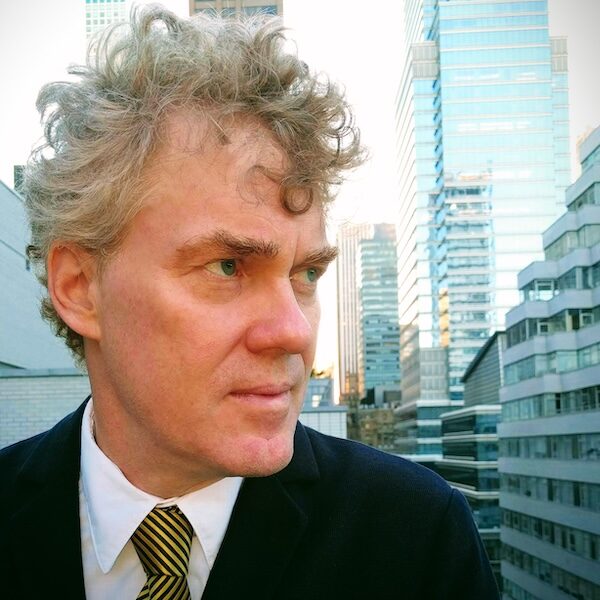
Joel David Hamkins received his Ph.D. in mathematics from the University of California, Berkeley. He is currently the John Cardinal O'Hara Professor of Logic at the University of Notre Dame. He is a pioneer of the idea of the set theory multiverse. He is the top-rated user by reputation score on MathOverflow. He is currently working on The Book of Infinity, to be published by MIT Press.
Click to Show Episode Transcript
0:00:00.4 Sean Carroll: Hello everyone. Welcome to the Mindscape Podcast. I'm your host, Sean Carroll. Mathematics has always been the intellectual subject that has a reputation of being the most precise and rigorous and well formulated and completely grounded. You have axioms and then you prove things with 100% rigor, ideally anyway. But starting in the 1800s, there were these events that kind of might shake your faith in the ability of mathematics to be perfectly precise and clear and understandable.
0:00:32.6 SC: There was the discovery of non-Euclidean geometry. Euclid thought he had figured out geometry, and people generally had the idea that he was putting his finger on something true. This is what we call geometry. And we realized that there were different axioms you could choose that would give you different kinds of geometry, spherical geometry, hyperbolic geometry, etcetera. But okay, we could still handle that.
0:00:57.5 SC: Then Cantor comes along and shows that not only is infinity an important concept, but there are different kinds of infinity. There's a bigger infinity. That is the number of the real numbers, the continuum. That is the number of the integers, right? So that shook people up. They didn't really like that. A lot of people denied that it was true, but still, you were proving things with theorems and so forth. So you can understand the motivation of David Hilbert, the very famous mathematician, who in the early 20th century proposed to really get serious about this program of axiomatizing all of mathematics. Hilbert had this idea you could just write down a reasonable set of axioms that would cover everything. And then not only could you prove all the theorems that were interested in proving, but you could prove that they were consistent. That you had a complete and a complete system that would cover everything that you wanted to cover.
0:01:54.0 SC: So you can also feel very bad for Hilbert when Kurt Godel came along just a few years later and showed that that ambition could not be realized in his efficiently, powerful, formal system. Either the system was inconsistent somehow or there would always be true statements that you can't prove. Statements that essentially say, I am unprovable. So if you prove them, they're false, and your system is inconsistent. If you can't prove them, they're true but of course not provable.
0:02:27.7 SC: Hilbert was upset by this. He didn't like it. But nowadays, mathematicians take this as a centrally important result. And it was also tied up with a bunch of very similar results by people like Tarski and Turing and so forth. So that opens up not only a lot of good research to be done in math, but also deep questions in the philosophy of mathematics.
0:02:50.0 SC: What does it mean to have true statements you can't prove? What does it mean to have different sets of axioms that lead to different conclusions and so forth? It's actually not completely different from what happens in physics. There was always philosophy of physics, but in the Newtonian world, you think you had things figured out mostly, right? And then in the 18th, in 1800s you discover statistical mechanics and things you're maybe a little bit unsure, like, how did probability get in here? And then of course, in the 20th century, you have quantum mechanics, and we're still struggling with that. So now the philosophy of physics has these deep questions that we're still trying to figure out. So I'm fascinated by these questions in the philosophy of math. I hope you are too. I struggle with them a little bit. So we brought on Joel David Hamkins who is one of the world's experts.
0:03:40.2 SC: He was trained as a mathematician. Later moved to philosophy and is now technically a philosopher of mathematics and logic at Notre Dame. He's written many books on the subject. And also, original contributions, he is recognized in philosophy of math as a champion of the view called the set-theoretical multiverse. The set-theoretic multiverse, not the same as the multiverse we have in physics, not the same as any of them. So we'll talk about that a little bit. And Joel's also very active in explaining these ideas. So he is on social media. He has a substack where he talks about infinity and so forth. He gives public lectures. So I think he's the right person to help guide us through this thicket of really intellectually challenging stuff. So let's go.
[music]
0:04:43.5 SC: Joel David Hamkins welcome to the Mindscape Podcast.
0:04:43.6 Joel Hamkins: Oh, it's a pleasure to be here.
0:04:45.7 SC: I have to start, this is more for the audience than for you, but this topic is very dangerous because when I talk about physics to people, I know what I'm talking about. When I talk about economics, I have no idea what I'm talking about. So I have no strongly held ideas that I can get in trouble with. But this philosophy of mathematics is just where I know enough to be wildly wrong but opinionated about things. So I'm hoping that you can set me straight on some of my existing confusions.
0:05:15.8 JH: Well, I hope so. I mean, there's a lot of people who have quite strong views about the philosophy of mathematics and to my way of thinking, well, I mean sometimes discussions in the philosophy of mathematics have this character that we're making a fundamental mistake. And we're going to be wrong. It's sort of like this, they're pointing out this danger that we might be falling into if we have the wrong idea about infinity or about classical logic or something like this. Whereas a kind of competing point of view is that, look, the philosophy of mathematics is really about helping us to decide what are the most insightful investigations mathematically and where can we learn the most and it's not a matter about being wrong mathematically, but rather about where are we gonna find the most interesting mathematics?
0:06:17.7 JH: And so in particular, sometimes people have a view about the philosophy of mathematics that is saturated with skepticism about infinity or something like that. And my attitude in response to those perspectives is often that, well, unless the competing vision is offering me more insight into questions, if it's only a kind of negative skepticism that's saying, oh, we're all wrong about these things, but it doesn't have any positive benefit, then I don't really find much attraction to that point of view. And I would want rather to look at many different philosophies of mathematics and take them as a suggestion about where should mathematics go? And we should investigate further on the basis of those perspectives.
0:07:12.0 SC: But people do get attached. You mentioned in one of your books that David Hilbert was quite annoyed when Godel proved that he couldn't do some of the things that he had laid out as the agenda for mathematics.
0:07:22.5 JH: It's true. Yes, that's absolutely right. Instead of shocking how that all turned out. But I think if anything, the Godel's results in that matter, I mean, you're referring to the incompleteness theorem of course. And the Hilbert program. Hilbert had wanted to solve the problem of the antinomies in the early 20th century, these very worrisome contradictions that seemed to be arising in what were otherwise extremely tempting to Hilbert, the foundational theories like set theory.
0:07:52.4 JH: And he famously said, no one shall cast this from the paradise that Cantor has created for us, referring to the foundations of mathematics as founded in set theory. He didn't want to give that up. But the contradictions and the Russell paradox and the Burali-Forti paradox and so on, the other antinomies at that time were very worrisome.
0:08:14.3 JH: And so Hilbert wanted to settle the matter once and for all by saying, well, look, we have this strong theory, we're gonna hold it a little bit at arm's length. We're a little suspicious of it because of the contradictions, but we expect it's going to answer all of our questions. All of the questions will be settled on the basis of this strong theory. But meanwhile, what we really want to do to sort of give us greater confidence in the situation is to prove that it's consistent by purely finitary means. So in the weak finitary theory, Hilbert wanted to prove this safety of the strong infinitary theory. And I think it's a very sound thing to want to do. It makes a lot of sense in light of the historical situation that he was in.
0:09:09.4 JH: And, so of course, in order to make sense of how one would prove that a theory is consistent, you're led inevitably to the philosophy of formalism where you look at, well, what's really going on in the infinitary theory. When people use the infinitary theory, they don't have to actually be committed to the infinite sets and the posits that the theory makes, but rather they're just writing symbols on paper and reasoning in that theory, pushing these symbols around, right?
0:09:38.4 JH: And that that's a kind of finitary combinatorial process. And we might hope to prove in the finitary theory that it was safe. That's what his strategy was. And then of course, Godel completely refuted this whole picture by showing not only can the finitary theory not prove the consistency of the strong infinitary theory, but it can't even the consistency of itself, of the finitary theory itself. So it must have been quite disappointing for Hilbert at that time.
0:10:11.8 SC: Yeah. [laughter] Well, good. We're gonna get to all of these things, which is great. I mean, they're still the looming, these are the crowd pleasing questions in philosophy of math. But one crowd pleasing question is, there is the one that I am just struggling with, which is realism or Platonism or anti-realism or whatever. I've had the occasional nominalist on the show, the occasional realist. I lean toward nominalism myself, but I think that puts me in a pretty tiny minority of people who think carefully about these issues. So what is the right answer?
[laughter]
0:10:44.6 JH: The right answer. I see. So there's been a really interesting development, particularly in the philosophy of set theory which is very much connected with these issues. And that is it used to be in mathematics and in set theory in particular, if you said that you were a Platonist in mathematics, then this was taken to imply a kind of singularity. Not a singularity in the physics sense...
0:11:13.0 SC: No, I get it. Yeah, it's okay. [laughter]
0:11:17.3 JH: But I mean that there would be only one universe. So Platonism is the view that there's a real existence to the mathematical objects exist in a perhaps idealized real realm. So it's connected with realism, but also there was this kind of connotation of uniqueness that the mathematical universe would be unique. And I think in more recent discussion of the philosophy of mathematics, this connection between Platonism and uniqueness of the platonic realm has been severed. And I think this is a positive development because one can be a realist and a Pluralist just because you think that there are, say, multiple concepts of set each of which serves adequately as a foundation of mathematics, but with incompatible truths. And so we can still be a realist about these perspectives, even if we're real... Even if we're Pluralists.
0:12:21.9 JH: And so now it's no longer true. I think if you say I'm a Platonist, it's not necessarily implying that you think there's a unique answer to mathematical questions. You can still be pluralist and platonist. It's sort of like asking, to put it in the platonic realm, is there only one platonic realm?
0:12:39.9 SC: Ah, yeah.
0:12:40.5 JH: Well, why should there be only one? Maybe there's multiple ones and some of them have certain kinds of mathematical abject objects and not others and other platonic realms have a different combination. That's basically the situation of what's going on in the plural foundations of set theory today. If you think that there are multiple coherent and fully real concepts of set, each of which is giving rise to its own set theoretic universe with different truths. Some of them have the continuum hypothesis, perhaps some of them don't, litigation, in some of them have lots of large cardinals and others don't.
0:13:17.0 JH: And then you don't think that there's gonna be a unique determinant answer to every mathematical question. It's gonna depend on which mathematical universe you're in, but you can still think that they're fully real in the platonic sense. So it's sort of like having multiple platonic realms.
0:13:34.2 SC: Well, and just so do we tease the audience who cares about physics a little bit. They've heard about a lot about the cosmological multiverse and the many worlds of quantum mechanics. So the line you are pushing is a sort of foundations of mathematics multiverse.
0:13:50.2 JH: Exactly. And so my papers in which I first started talking about this was called the set-theoretic multiverse. And I didn't realize the danger I was putting myself into.
0:14:02.8 SC: I could have warned you.
0:14:04.6 JH: I started getting lots of emails from businesses who or from people who make the kind of completion that you just referred to. Really. I think there's not much connection between this kind of mathematical pluralism, multiverse view and the multiverse views in physics. I think they're just not connected very much well. But there is a kind of family resemblance though in the sense that in each case they're positing the view that at bottom reality has this pluralistic nature with multiple coherent universe is sort of standing side by side or independently or on top of each other, superimposed or whatever the metaphor is that you're using to refer to that. I think that much is similar between them. But I don't think there's a deeper mathematical connection between these views.
0:15:02.3 SC: So my own sort of naive physicist's view on mathematical truth, I've learned it has been labeled if-thenism that is to say that we can postulate a bunch of different axioms and then we can prove theorems on the base of those axioms. And the truth of the theorem is relative to whatever axioms we picked, but we shouldn't attach absolute truth to the mathematical results. And that sounds almost like what you're saying, what I think you're saying is, what you're saying is much more sophisticated than that.
0:15:30.2 JH: Well, I see. So the view of if-thenism it's often used in a very disparaging way.
0:15:38.3 SC: It is, yes.
0:15:39.8 JH: It's meant to be kind of dismissive of the view. And I guess one way of discussing it is this dispute that I've tried to call attention to between not enough philosophical attention is being given to the dispute between strong foundations and weak foundations.
0:16:01.2 SC: Okay.
0:16:01.6 JH: Let me explain what I mean by that.
0:16:03.6 SC: Yeah.
0:16:03.7 JH: So mathematicians instinctively seem to prefer weakening the hypothesis of the theorem. Of course, if you have a theorem and it's from some assumptions, you're making your conclusion, then it's a better theorem. If you weaken the assumptions, it's a stronger theorem. It applies to more cases and so on. So you can either weaken the assumptions or strength the theorem, and you're gonna have a better result by doing that. And so I think there's this kind of instinctive reaction to just always prefer the mathematical result with the weaker foundations. And I think for very sound reasons, that's absolutely right. But when you're talking about the foundations of mathematics, where you're trying to identify what are the core principles that sort of underlie all of our mathematical truths that we care about. Then if you apply that sort of instinctual preference for weak foundations, you're gonna end up with a weak foundational theory.
0:17:01.1 JH: That's what it would mean. But the reason we liked the theorem with the weak hypothesis was that it applied in more cases. And so if you have a preference for weak foundations, then you're sort of implicitly suggesting that there would be multiple alternative mathematical realities. It's connected with pluralism. A preference for weak foundations is sort of admitting, well, maybe there's lots of different kind of mathematical realms in which those axioms are true, but maybe not stronger ones. But if you have a slightly different view about what's going on, when we're searching for mathematical foundations, what we really want to do is find the fundamental truths, the fundamental mathematical truths that are gonna help us to prove and answer the mathematical questions that we care about. Then maybe we want to have very strong, but still true mathematical axioms.
0:18:02.8 JH: We want them to be strong because the strong axioms are gonna be the ones that paint the coherent picture of mathematical reality. And this is a very strong reason. If you're, say, developing a physics theory, it's sort of the same situation. You want your physical theory to have a lot of answers to the physical phenomenon that you find troubling, right? But you want it to still be true or not refuted or whatever, not falsified, or whatever. So it seems like in physics, maybe the preference would be towards the strong foundation side. You want a strong theory that has all the answers, right?
0:18:46.0 JH: And from the mathematical point of view, I think that also makes sense to have a strong foundation. So there's this tension between the weak foundations and strong foundations. And it tends to be the weak foundations have a kind of pluralist aspect or affinity to them, and the strong foundations have a kind of monist perspective because if you thought there was only one true mathematical reality in which every mathematical question has a definite truth value, then the true foundational theory is the one that's true in that unique realm. And so we want to find out what those truths are. So this is pushing you towards strong foundations.
0:19:24.4 SC: But then the thing that I'm slowly coming to understand is the important distinction between a set of axioms, at least in first order logic, and maybe you could explain to us what that is, versus models of the axioms, all right? So in arithmetic, we can prove things about addition or whatever and the natural numbers, but then we can get different models of the natural numbers that are compatible with the same axioms. I think that probably most people listening don't know what that means or how important it might be. Because one argument for realism is that sure, you can get lots of models for the same axioms, but one of them is the right one. And it's not pinned down by the axioms.
0:20:06.2 JH: So to express this view that one of them is the right one is exactly the monist view. This is the universe perspective. There's one true mathematical reality and we're trying to figure out what that one is, what the truths of that model are. But of course, because of the incompleteness theorem, we can never write down, we can never describe fully a computable list of axioms that are capturing that truth fully. That's exactly what Godel's theorem is telling us we can't do, but we can get closer and closer, right? We can write down more and more axioms and try to figure out stronger and stronger theories that are true in that one true universe. Okay. But if you're a pluralist, maybe you'll say, well, I don't know if there is this one true universe because precisely because we already understand so well how different truths can be instantiated in multiple different models, we have a very rich understanding of how that could happen.
0:21:05.8 JH: And we have actually very little reason to think that there's a unique standard interpretation of our ideas. So this is especially true in the case of set theory where, I mean, maybe it's helpful to think about geometry. If you go back to geometry. For thousands of years, geometry was viewed as the study of the mathematical properties of space. There was the one true geometry. That's what everyone was trying to figure out. What's true in plain geometry, say, or higher dimensions, whatever.
0:21:42.2 JH: But then with the discovery of non-Euclidean geometry and hyperbolic space and spherical geometry, elliptical geometry, and so forth, the concept splintered and it became pluralistic. But still real. So it relates to what we were talking about before because we don't think that somehow geometry is only now a formal activity because we have multiple incompatible models. Just Euclidean geometry is fully real. I have points in [0:22:14.4] ____. But hyperbolic space is also fully real.
0:22:17.9 JH: I mean, as an abstract thing, you can be a realist about geometry even though we're basically all pluralists in geometry. Okay. But a similar thing happened in set theory because when set theory first started, Zermelo wrote down the fundamental principles that he thought would govern the reasoning about sets and that came to be known as Zermelo set theory.
0:22:42.3 JH: And then additional axioms were added when they were realized that certain things we wanted to do with sets were missing from Zermelo's theory. So we added replacement axiom to get Zermelo-Fraenkel set theory. And the axiom of choice was present from the start in Zermelo's theory.
0:23:00.6 JH: And then this picture emerged of looking at the set theoretic universe as this sort of cumulative hierarchy growing from nothing. Or maybe you start with this sort of urelements objects, the atomic objects that are not sets but out of which you will form the sets. And then on the next layer, you can make sets of those urelements and then sets of sets of the urelements and so forth. And you can keep going transfinitely. And so the universe sort of grows in this cumulative manner. So there was this kind of picture of the set theoretic universe.
0:23:34.5 JH: The one true universe is something like that. And then this amazing independence phenomenon, this pervasive, ubiquitous independence phenomenon. Basically, all of the fundamental open questions in set theory have turned out to be independent of the ZFC axiom. Essentially, every question about infinite combinatorics that you might ask is either completely trivial and you can prove it immediately or refute it, or else it's independent of the ZFC axioms. And so this was maybe first started to be realized with Godel's theorem in 1938 that the constructible universe satisfies the axiom of choice and the continuum hypothesis. And then in 1963, Paul Cohen proved that the continuum hypothesis could fail in a certain model constructed using the forcing method.
0:24:28.7 JH: And since that time, forcing has been used in thousands and thousands of independence proofs to show this pervasive independence phenomenon. Basically, every question that we're interested in is not settled by the axioms. Okay, there's a couple of ways to react to that situation. If you know and you have a proof that your theory can't settle the axioms, then a monist, a universe view person is going to say, well, it's because the theory is too weak. We need to make it stronger to settle those questions. And it's pushing you again to a stronger theory.
0:25:05.9 JH: But the pluralist is going to say, well, the independence phenomenon itself is evidence for pluralism because we can already see how it could be that the continuum hypothesis is true or is false. If you use the right conception of set, you're going to get a set-theoretic universe in which the truth value is one way or the other. And we can sort of make it what we want. And the special thing about this set-theoretic case is that these models are all standard in a sense. They're all well-founded with respect to each other. They have the same ordinals.
0:25:44.7 JH: So they're not completely weird models. If you wanna make CH true, you can go to Godel's constructable universe, and it has the same ordinals as the universe that you started in. And if you want to make it false, you can make a forcing extension, which has the same ordinance as the one you started in. And so they're not these totally weird nonstandard conceptions. They're kind of nice, actually. They seem set theoretically perfectly acceptable. And this is sort of, this fact is part of the basis of what I call the dream solution argument. That some people hope to settle the continuum hypothesis. They describe it as a still open question, whereas I say, no, no, the continuum hypothesis is settled. Even though it's independent, it's settled by our understanding of how it behaves in the multiverse. We can make it true, we can force it to be true or force it to be false. We can make it true in inner models and so forth. And we understand all of that quite deeply. And that's the answer to CH not one.
0:26:49.7 SC: You should explain to us what the continuum hypothesis is.
0:26:53.2 JH: Oh, I see. Okay. You're right. So, okay. The continuum hypothesis is a question that was formulated by Cantor, who at the end of the 19th century, prove that the reals form an uncountable set. So he proved that there are different sizes of infinity. There's the infinity of the natural numbers 0, 1, 2, 3, 4, and so on. And the infinity of the real numbers, which is the sort of continuum of the number line. And Cantor prove that those two infinite sets cannot be put into one-to-one correspondence with each other. We cannot make a list that contains all the real numbers on it. And it's the famous diagonal argument.
0:27:35.6 JH: If you had such a list of numbers, then you could write down another number which was different from the first number in the first digit after the decimal point, and different from the second number in the second digit and so forth, all the way down.
0:27:50.6 JH: And that number, it's a perfectly good number. We wrote, we determined it's decimal and it's different from all the numbers on the list. So, it shows you can't have a list that contains all the numbers, all the real numbers. So therefore the reals are uncountable. It's a bigger infinity than the natural numbers. It's an uncountable infinity. And the continuum hypothesis is the question... Well, the question of the continuum hypothesis is whether or not there is any infinity in between.
0:28:24.2 JH: So we have the natural numbers, that's the countable infinity, and we have the real numbers, the continuum. That's an uncountable infinity. And is there anything strictly in between? The continuum hypothesis says, no, there's nothing in between. But we know now that it's independent of the Zermelo axiom. So Cantor struggled with the question his entire life and never had an answer. And it was open for many, many years, decades.
0:28:53.5 JH: It wasn't until 1938 that Godel had first proved that you can't refute it from Zermelo's theory because he produced this what's called the constructible universe, in which the ZFC axioms together with the continuum hypothesis are true. So, therefore it's safe to assume that there's no infinity in between. And he proved actually a vast generalization of the continuum hypothesis, the generalized continuum hypothesis, which says that for every set, there's no infinity between that set and the power set, which is the number of subsets of the set. Cantor proved the number of subsets of the set is always a strictly larger infinity. So there's no largest infinity. You can just keep making bigger ones. And therefore, by the replacement axiom that the number of infinities is larger than any one of them. There are more infinities than any one of them is a way of saying, it's provable in ZFC, but it's not provable if you don't have this replacement axiom. The thing that was added by Franco.
0:30:04.5 JH: So then Cohen proved in the '60s that the negation of CH is also consistent with the axioms. And that's this forcing method. And so basically the situation is that if you have a set-theoretic universe, you can manufacture from it using the ontological resources that are available in that kind of platonic realm, you can make another one in which the continuum hypothesis is true. And another one in which it's false. And so it's a very pluralist point of view to think this is an answer to CH, to the continuum problem. It's independent and it's, you realize sort of densely in the multiverse.
0:30:52.5 SC: So there's not a fact of the matter full stop about whether the continuum hypothesis is true. There's a fact of the matter about relative to where you are in the set theoretic multiverse.
0:31:04.8 JH: Right. Exactly. This is a way of understanding the CH, the multiverse answer to the continuum problem is exactly how you describe it.
0:31:14.6 SC: And...
0:31:15.5 JH: And I want... Oh, go ahead.
0:31:16.6 SC: No, you go ahead.
0:31:18.2 JH: So I had mentioned this dream solution because it's related to the question that you had asked slightly before. Namely, some people want to settle the continuum hypothesis by finding the missing axiom. The obviously true principle, the set theoretically natural principle, which happens to settle CH one way or the other. This is called the dream... This is what I call the dream solution. You find the missing axiom, which has the character of an axiom in terms of its self-evident affinity with the concept of sets. So we would wanna add it to the theory, and it would settle the question. And I argue, this is impossible. It's never gonna happen.
0:32:03.4 JH: And the reason is, we already know what it's like in a world where CH is true or where CH is false and it's perfectly fine set theoretically. Though, this is the important character of the forcing arguments is that they're set theoretically robust and they're not weird models, weird non-standard models, they're just alternative concepts of set in which the answer to this specific question comes out differently. And therefore any proposed axiom that settles the continuum hypothesis is going to therefore fail in one of these universes that we have just said are set theoretically acceptable.
0:32:54.1 JH: And therefore we can never find such a principle to be obviously true or manifestly true for sets in the way that is required. So if you have a principle and you prove that it settles CH, then that fact itself is undermining for the self-evident nature of your axiom.
0:33:16.8 SC: Is there a principle difference between this idea of adding more axioms or changing existing axioms? You started with the example of geometry, which is the one that I know the best that makes sense versus the idea of sticking with some axioms, but considering different models of them. I know about, in number theory, there are these non-standard integers.
0:33:43.3 SC: So in other words, you can model the axioms of number theory with the good old integers that we know and love, but there's also extras, there's other models with extra integers that don't sort of connect to them. But could we just sort of try to capture which model we're in by throwing in new axioms? So it's the same issue, or are these two separate issues?
0:34:01.9 JH: Right. So, you're referring to the Peano axioms of arithmetic.
0:34:05.8 SC: Yeah.
0:34:06.0 JH: I think is the most common theory. And there's a whole subject called models of PAA, which is all about exploring those non-standard models and I've done a lot of work in that area. And so the problem of non-standard models is inherent. There's no... You can't ever solve the non-standard model issue by adding axioms because every theory will have non-standard models. Even if you think that there's a one true model of arithmetic that you're interested in, then the set of statements that are true in that model that's called true arithmetic. And it also has non-centered models. It's a consequence of the compactness, so you can make all these non-centered models that have all the same truths as the standard model.
0:34:55.9 JH: And that's quite an interesting situation. But actually the question of whether we have a right to say that there is a unique intended model of arithmetic, it's actually not so clear as one might think. It's quite common amongst mathematicians and everyone to think, well, look, when I talk about the natural numbers 0, 1, 2, 3, and so on, this is describing a unique mathematical structure.
0:35:25.3 SC: Yes.
0:35:25.6 JH: But is it really? Because this and so on, of course is hopelessly vague. And if you try to capture what you mean exactly then to prove that there's a unique structure that you're talking about.
0:35:39.9 JH: Now, Dedekind proved a categoricity theorem about the natural numbers, namely he identified the fundamental principles that are true about the successor relation, for example. If you think about the natural numbers with the operation of adding one, the successor operation, then he said, well, zero is not the successor of any number because... We're not talking about negatives, we're just talking about the natural numbers.
0:36:04.8 JH: So starting from zero, 0, 1, 2, 3 and so on, is the structure we're trying to capture. Zero isn't the successor of anything. The successor function is one to one, which means that if X and Y have the same successor, then X and Y are the same number to begin with. So it's a one-to-one function. And finally the axiom says, the third axiom says that every number is generated from zero by successor. So we have to say it in the right way 'cause otherwise it's circular 'cause we're trying to say what we mean by finite numbers. So we can't say, oh, you can get to the number from zero by applying the successive finitely many steps. That's a kind of circular account.
0:36:47.4 JH: We wanna say what we mean without being circular. And so we can say it with the second order induction axiom. We can say, for any set of numbers, if it contains zero and it's closed under successor, then it contains everything. So it's just the induction principle, but stated not in a first order manner because we're not just talking about definable sets of numbers or something, but for any collection of numbers whatsoever, for any set of numbers with this property, then it would contain all of them.
0:37:19.0 JH: Okay, and then Dedekind proved that if you have two models of this theory, Dedekind arithmetic, then they're isomorphic. So there's only one model of the theory up to isomorphism, and therefore that's what we mean by the standard model of arithmetic. That's the model.
0:37:41.4 JH: But, okay, so it's quite common to point to this categoricity theorem as the answer to the question, do we know what we mean by the standard model of arithmetic? And the answer is, well, yeah, because Dedekind gave us the theory, and there's only one model of that theory, and that's the model we need. But how successful is that answer? Because we were interested in picking out exactly the structure of the natural numbers because we wanted to have a kind of absolute understanding of what it means to be finite, what it means to be a finite number. That's part of the goal.
0:38:20.0 JH: So if we were worried about whether it's sort of the concept of finiteness was indefinite, then the Dedekind theory is supposed to be saying, well, the concept of finiteness is definite because it's provided by the Dedekind theory. But if you look at the Dedekind theory, then this third axiom is making this statement about arbitrary set. And so it's grounding the concept of finiteness and saying it's absolute because of some claim about arbitrary sets. So how can that possibly be satisfactory to say, well, look, finite truth, truth about finite numbers is definite and absolute because, well, it would seem to beg the question about the definiteness of the meaning of arbitrary set of numbers. And we can see this, how this happens already in the fact that different models of set theory, different models of Zermelo set theory, well, they each have a unique Dedekind model of arithmetic. I mean, [0:39:25.3] ____ they each have their standard model, but it's not the same model in all of that when we know this already that this can happen. So different models of set theory can have the standard model of arithmetic satisfying different truths.
0:39:41.8 JH: For example, we can make a model of set theory that thinks, say, some large cardinals are inconsistent or other models think that they're consistent, but consistency is an arithmetic statement. It's visible. You can formalize it as a statement about arithmetic. And so these standard models in these models of set theory can have different arithmetic truths in them, even though they both think that that standard model satisfies the Dedekind theory, but they have a different interpretation of that induction axiom because they have a different concept of set.
0:40:16.2 JH: I take this just to show that the attempt to show that our understanding of the standard model of arithmetic has failed because it's based on set theory. But if we think that there's indefiniteness or pluralism in set theory, then it can't possibly work to establish definiteness or monism in arithmetic.
0:40:43.4 SC: You mentioned Gödel a couple of times. Obviously his incompleteness theorems are central to this sort of whole grenade that got thrown into Hilbert's program. But I've heard a lot of claims on the internet that people say Gödel's theorem incorrectly. So could you just tell us what the theorems are actually telling us?
0:40:57.8 JH: Oh, I see. So there's a variety, I mean, there's a whole sort of collection of theorems that are connected, all of which are on this theme. In fact, I'm writing a book right now called 10 Proofs of Gödel Incompetence.
0:41:10.3 SC: Oh, very good.
0:41:11.4 JH: Where, of course, it's not just Godel's theorem, but this Ross's variation and Tarski's theorem and [0:41:16.2] ____ has a version and just a way of thinking about the Russell paradox also is connected and so on. So there's a whole kind of spectrum but the basic theorem, one of the ways of stating the basic theorem, well, I mean, let me give you a sort of simplified version that I often, when I prove Godel's theorem in my classes, I often prove a kind of simpler version.
0:41:40.1 JH: You cannot describe a computable list of true axioms of arithmetic that prove all and only the truths of arithmetic. I mean, so you cannot write down a theory of true axioms of arithmetic that proves all of the truths of arithmetic. Okay. And that's one way of stating the theorem. So there's no computably axiomatizable theory of arithmetic, which is true and proves all of the true statements. So if you know that the halting problem is undecidable, which is a result due to Alan Turing in 1936.
0:42:18.2 SC: Yeah. You should tell us what the halting problem is. Sorry. I know what it is, but...
0:42:22.6 JH: Yeah, no problem. Okay. It's often the case that students who are taking philosophy of mathematics or logic lessons and so on, that they often already know a little about the halting problem in computability theory. And so this is a kind of quick route into the inconvenience theorem basis. So Alan Turing introduced a sort of abstract notion of a concept of computability sort of Turing machines that run programs.
0:42:52.0 JH: And you can take a Turing machine. It runs on a paper tape and it's writing zeros and ones on the tape and moving according to the dictates of the program. So it's very rigid instructions. The program is saying, well, if you're in this state and you see the symbol zero, then you should change it to a one and move right and change to this other new state. And so the program is a sort of finite list of instructions like that. And when you have a computational process, you set it up with the input written on the tape, it's in the start state and you let it run. And it just is moving back and forth and changing stuff on the tape. And ultimately maybe it halts and then you can read off the output of the computation by what's on the tape. So the halting problem is the question given a program and an input, does it halt?
0:43:46.3 SC: Good. Thanks.
0:43:47.8 JH: Either it runs forever maybe, or maybe it halts at some stage of computation, maybe after a billion steps or after a Googleplex number of steps or however many steps it is. Maybe it halts, maybe it doesn't. Okay. The halting problem is the decision problem given a program and input answer the question whether it halts or not. And what Turing proved is that this problem has no computable procedure that will answer it correctly in all instances.
0:44:19.0 JH: Okay. So in other words, there's no computable procedure that will answer correctly whether or not any given program and input halts. So now suppose towards contradiction that we had a theory that Godel's theorem about, a theory that answered all the true questions, that proved all the true questions, then we could solve the halting problem. Because given an instant, consider the following algorithm. Okay. I have my fixed theory. I'm supposing towards contradiction that there's a theory, a true theory that proves all and only the true statements of arithmetic. Now given any Turing machine program and input, I can formulate the arithmetic assertion that asserts that that program halts.
0:45:08.1 JH: I'm not gonna run the program. I'm just formulating the statement that it halts. And that is possible to formalize in arithmetic 'cause you're really just saying, well, there is a number that codes a sequence of numbers. And those numbers in that sequence are each coding sort of snapshots of computations. And they're obeying the program from one step to the next and so on. And the first one is like the starting configuration. And the last one, it's showing a halting configuration. So the existence of such a number is exactly equivalent to the halting of the program. And so it's an arithmetic assertion.
0:45:44.0 JH: So we can form this assertion that says this program halts on this input. And then we can go over to our theory and we can just systematically start searching for proofs, either a proof that it's true, that it does halt or a proof that it doesn't. And if the theory is as we supposed, it knows all the answers, then we're either gonna find a proof that it halts or we're gonna find a proof that it doesn't halt at some stage. And when we find that proof, we can answer the question. And so if there were a theory that knew all the answers, then we could solve the halting problem. But we can't solve the halting problem because that's what Turing proved in 1936. And therefore, there can't be such a thing. This is... Yeah, go ahead.
0:46:42.7 SC: So Godel proves... Good. That's a very helpful way of thinking about it. I think that the difference between someone who's good at this and not is whether they've internalized the halting problem, the undecidability of it. I'm not quite yet. I'm getting there. I'm trying to get better. So if Godel is telling us that in the set of well-formed statements we can make in some system, some of them are going to be true but unprovable if the system is consistent, do we know how many of them there are? Are most true statements unprovable versus the ones that are provable? Is that even a sensible question to ask?
0:47:16.4 JH: Yes, it is a sensible question. Actually, this question has come up multiple times on Math Overflow. Actually, I think people have asked exactly that. What's the density of independent statements? That's right. And you can answer it. It's strictly in between zero and one, I mean the density. So there's certainly infinitely many statements because if something is independent, then I can just say if phi is true but not provable, then phi and phi and phi and phi and phi and phi and phi and phi and phi. I mean, it's sort of a trivial state, but it's infinitely many. So there's at least infinitely many. Okay. But also, you can make other things. Like you could say, for example, let's see, so how does it go? If you have an independent statement, then you can take... If you have any other... Let's see. How does it go? I'm trying to remember how the argument goes. It's just this trivial syntactic thing where you combine phi with other statements.
0:48:20.4 JH: Yeah. And of course, if phi is fixed, then there's a certain proportion of all statements that are like phi or psi for any psi. And so the phi is fixed. So it's pretty small, but you can make a certain proportion of all the statements that involve phi in this trivial way. And you can use that to show that the density can't be zero because there's this tiny percentage of state and can't be one for similar kind of reasons.
0:48:48.5 SC: So do you think that there is a number, the fraction of statements that are well formed and provable?
0:48:54.3 JH: Oh, I see. Well, the question would be, does the density converge or not?
0:48:58.3 SC: Yeah.
0:49:01.3 JH: Right. I think it probably oscillates.
0:49:03.0 SC: That's fine. No, yeah.
0:49:05.6 JH: That kind of question is, it's a little off-putting because it depends highly on the formalism, on the formal language. They give you different syntactic rules and so on. You're gonna get a different percent for sure. And maybe it's gonna not convert. Maybe you can make it not converge just by changing the syntactic rules of the formal language, but therefore it shows that the question itself is not the kind of question that we want. It's related to this, for example, there's a theorem of mine that says, finally, I proved it with Alexei Miasnikov. The halting problem is undecidable, yes, except that the title of my paper with Alexei is that the halting problem is decidable on a set of probability one. So you can decide almost every instance of the whole.
0:50:03.7 JH: For certain Turing machine models, if we just use the sort of standard model that Turing had a one-way infinity with zeros and ones on the... Then what we proved is that there's a set of programs which, as the number of states grows larger, as the size of the program grows larger, then the proportion of programs that are in our set, the ones that we're gonna decide the question for, gets closer and closer to 100%. So as the size of the program grows, the proportion of programs that fall into our process increases towards 100%.
0:50:40.6 JH: So that's the sense in which almost every we're answering. But okay, the theorem is totally unsatisfactory. It sounds pretty great when you say it because we're solving almost every instance of the halting problem. But when I tell you the proof, you'll say, well, and the proof is just the following. We look at the program and we just run it until it repeats a state. Okay, and it's the one-way infinite tape model. Half of them fall off on the first step. They move the wrong way and that causes it to crash. Or if you count that it's halting, that's fine too. So half, 50%, fall off. Okay. And the others go the other way.
0:51:31.6 SC: I see where this is going.
0:51:33.0 JH: But then, as long as they're not repeating a state, it's basically a random walk 'cause if it's in a new state, from that state, in that situation, half of them are gonna go left and half are gonna go right. So until you repeat the state, it's a random walk. But then there's this theorem of Polya, the recurrence theorem that says with probability one, you come back and fall off at that point.
0:51:58.6 JH: And so with probability one, the probability one behavior of a Turing machine calculation is that the head falls off. That's the probability one behavior. And we can solve the halting problem for those.
0:52:12.4 SC: There you go.
0:52:13.4 JH: That's the critical of the theorem basically, it's like that. Okay. So it's totally...
0:52:16.7 SC: That counts. I don't care.
0:52:18.6 JH: Yeah. Okay. But the problem with it, and the reason I brought it up is that that theorem is dependent on the formalism because if you use a two-way infinite tape, it doesn't work at all. But there's other models of computability that don't have, and it's an open question. So the current bound on the two-way model is we can decide the halting problem 13.5%. It's one over E squared is what we can do, which is about 13.5%. And those are the programs that don't have any instruction to halt. You look at the program, and if it never says halt, then you know it's not gonna halt ever.
0:53:03.1 JH: And so you can solve the halting problem for those programs. And that's proportion, if you calculate it, that's proportion one over E squared, which is about 13.5% of the time. So you can solve the halting problem. Originally, it was quite interesting because Alexie came to me and he said, well, he had this concept of black hole problem in decision theory. It has nothing to do with black hole.
0:53:26.7 SC: I get it.
0:53:46.3 JH: Interfix. Okay. But the black hole problem, it's a difficult problem, which is undecidable or maybe it's NP complete or something in complexity theory. It's a difficult problem, but the difficulty is concentrated in a very tiny region outside of which it's easy. Okay. So such a problem is not suitable for, say, encryption because if you could rob the bank 95% of the time...
0:53:53.5 SC: You're happy. Yeah.
0:53:56.7 JH: So even any non-trivial time. Okay. He came to me, he had already found black holes in various problems, famous problems. And he said, well, does the halting problem have a black hole? And the first observation was this 13.5% thing that I made. And so then we said, okay, now we've got a plan because all we need to do is find more and more stupid reasons why the program is going to halt for sure or is not gonna halt. And we just wanted to add up to more than 50% because then we can say most.
0:54:32.5 SC: Most.
0:54:32.5 JH: That was the strategy, right? But then we were thinking about it more and I realized that this head falling off was an incredibly stupid...
0:54:46.4 SC: The best one, yeah.
0:54:47.6 JH: But it had 100% of the probability already, just that one reason. And so that's how we got the result. But okay, but one can definitely criticize the theorem because it's dependent on the computational model. And that would be similar to your question about this density. If it's dependent on the formalism, then maybe it's not the right question.
0:55:10.3 SC: Perfectly fair. We did have the little thing in there about Godel's theorem that the system of axiom has to be consistent, right? And I know that some people, maybe Roger Penrose counts here, think that they can just look at a system of axioms and tell you whether it is consistent or not. But it's more subtle than that. I take it. You gave the example of the continuum hypothesis. You can either add the continuum hypothesis or not to set theory. And I've been very amazed to learn. It was a while ago, but I was still amazed that in number theory, you can add the consistency, an extra axiom that says it's consistent. Or maybe is it number theory? Am I thinking correctly? Or you can also add another axiom that says it's not consistent, and you get equally consistent systems either way.
0:56:18.9 JH: Yes, that's absolutely right. So if you start, say, with Peano arithmetic, it's usually denoted PA, then the second incompleteness theorem says that no theory can prove its own consistency. So therefore, it follows, it's just immediate from that, that you can add the negation of the consistency assertion as an axiom, and it will still be a consistent theory, So PA plus not con PA is how people say it.
0:56:31.5 JH: So it's the theory of Peano arithmetic plus the single assertion that says piano arithmetic is inconsistent. Now, if you think about it philosophically, it's a kind of incoherent theory because it's asserting that a certain theory is true and simultaneously asserting that that theory is inconsistent, which requires, it seems, a certain kind of cognitive dissonance in order to accept, except that it's a perfectly consistent theory. We know. I mean, if PA itself is consistent, then that theory is consistent, and that's a consequence of Godel second inconvenience theory.
0:57:13.5 SC: So wait, sorry, I wanna just repeat that very slowly so that we get it. If PA itself is consistent, then the theory defined by the axioms of PA plus an axiom that says the PA is not consistent is consistent.
0:57:32.0 JH: Yes, exactly.
0:57:34.5 SC: This is why this is very hard for me, my poor physicist brain is not up for the task.
0:57:39.7 JH: But it's not just you, it's everybody because like when I'm teaching it so hard and giving it proof of... And like there's a fixed point and you have these negations and so on, and the self-referential aspect to it, it's so easy to get tied in knots. It's definitely confusing for everyone. But what you said is exactly right, the way that you said it.
0:58:02.7 SC: And so this makes it, for me, apparently not for anyone else, it makes it hard for me to be a mathematical realist, because there's no fact about the matter about whether those axioms are consistent or not.
0:58:15.3 JH: Oh, I see, no, but if you're a realist, if you're a Platonist, then you would say, well, that theory is merely consistent, but it's not true, it's not a tre...
0:58:23.7 SC: Yeah, okay.
0:58:23.8 JH: It's not true in the intended model, right? And that brings, it brings you to the whole question of, well, what is this intended model and do we actually have a good reason to think that there is one and we have the Categoricity Theorem as I mentioned, but that seems kind of circular because it's based in set theory. But if you're a set theoretic universist, then you wouldn't have any problem with, of course, the uniqueness of the standard law of arithmetic either. And so you would think that that's the wrong theory, you wanna add PA plus Con-PA, not the negation and that's a strictly stronger theory because Con-PA, the consistency of PA is not provable in PA. So it's an extra axiom, and that theory doesn't prove its consistency. So we can do it again.
0:59:13.5 JH: So we can have PA plus Con-PA plus Con-PA plus Con-PA plus Con-PA. So we're climbing what's called the consistency strength hierarchy, so there's this tower of theories and it's getting strictly stronger each time where we add the consistency of the earlier theory. But even after you do it omega many times, infinitely many times, you're not done because then you could assert the union of all of those statements and it's a computable list of axioms. 'Cause we just described how to generate the axioms.
0:59:54.6 JH: So the consistency of that theory at omega is also the formalizable in arithmetic. So we can say that it's consistent and so on, we can keep going transfinitely, it's a transfinite hierarchy. So one way of thinking about Godel's theorem is that it has identified towering above any theory that you have is this hierarchy of consistency strength. And that hierarchy is, it provably exists because of the inconvenience theorem, and it's getting stronger and stronger consistency assertions. And then the remarkable thing that happened is, in set theory we found these strong axioms of infinity, the large cardinal axioms. And they have exactly this feature that the stronger axioms, say the existence of a measurable cardinal is implying the consistency of the smaller ones of an inaccessible cardinal say or a model cardinal is in between those and so on.
1:01:00.1 JH: So the large cardinal axioms are axioms that set theorists discovered that express profound infinite combinatorial infinities, the existence of these infinities realizing different combinatorial patterns. They're not these weird logical self-referential things and they're not talking about consistency at all.
1:01:24.0 JH: They're just infinite combinatorics, but expressing sort of natural principles of infinity. And they have the character that Godel predicted because of the consistency hierarchy, they are growing in consistency strength. And so one can take the attitude. So the large cardinal hierarchy lends a lot of support to this monist picture because Godel said, "Look, any given theory that you might have is inadequate but there's this tower of things that you should probably be committed to. Namely the consistency of that theory and the consistency of that and so on, is this consistency strength hierarchy." And then the set theorists find this incredibly tall tower of axioms, the large cardinal axioms that instantiate exactly that predicted feature in a very robust way. And so it seems like we're on the path for the one true theory of sets. So this is, I think, a lot about how the universe view set theorists look at the large cardinals. It's identifying this path upward, the one path upward.
1:02:36.0 SC: But you don't believe it, you don't buy it.
1:02:38.9 JH: No, well, I find quite a lot of attraction in the pluralist perspective and one way of responding to this one road upward is that there's another aspect which is that. Sure, the large cardinal hierarchy is increasing in consistency strength and that's quite remarkable and it makes it sort of an automatically very attractive theory. But yet, there are also many set-theoretic statements that are independent of all of the known large cardinals.
1:03:08.0 SC: Ah, okay, right.
1:03:09.0 JH: Including the continuum hypothesis. So we know for a fact, Godel had hoped that the large cardinals would settle the CH question. Yeah, there's this famous quote that appears, and there must be axioms so abundant in their consequences that... And verifiable consequences and so on that we will be compelled to adopt these axioms. And he was referring basically to these large cardinal axioms which have all these remarkable consequences, and he hoped that they would settle the continuum hypothesis question. But it was proved by Levy and Salovey that this is not true, that given any of the standard large cardinal axioms, it's been proved in almost every case that it's consistent with. If those large cardinals are consistent then we can manufacture forcing extensions in which the continuum hypothesis is true.
1:04:07.7 SC: Right.
1:04:08.0 JH: Or in which the continuum hypothesis is false in which the large cardinal retains its large cardinal nature.
1:04:14.0 SC: It seems to the quasi-outsider that infinity, the notion of infinity is to blame for a lot of these weirdnesses in the philosophy of math. And there is a minority view that is tempted to say like, maybe that's 'cause infinity isn't real or we should just stick with mathematics that doesn't rely on that. Like even as you said at right at the beginning, we talk about infinity, but all of our talk about infinity is used with a finite number of symbols. So is there any there there? Is that like a reasonable source of skepticism for the whole thing?
1:04:50.0 JH: Sure, there's a whole sort of new research area called, which is looking at sort of potentialism, which is a way of understanding what you just remarked on. Of course, the concept of potential infinity versus actual infinity goes all the way back to Aristotle. So the question is, whether can we ever have a completed infinity? So maybe the natural numbers they're infinite, for the potentialist says they're infinite. Yes, you can have as many as you like and you can always have more, but you will never have all of them. So they are potentially infinite. Whereas an actualist would say, yeah, you can have all of them and then continue to use that actual infinity to go on and do further instructions. So it's a historical classic debate between these two perspectives. And the funny thing is, is that throughout most of history, for millennia, almost all mathematicians were potentialists quite explicitly.
1:05:56.4 SC: Okay.
1:05:57.0 JH: Including Galois and so on, until quite recently, whereas nowadays almost all mathematicians are actualists and it sort of made a change around the late 19th century. Okay, it's not universally true, for example, Galileo was critical of the potentialist point of view. And one of the things Galileo said was, "Well, look, if you're a potentialist, then you think that all of these other things are possible. And so you are committed to an infinity, an actual infinity of possibilities." And so he was trying to undermine the potentialist perspective...
1:06:34.4 SC: I see.
1:06:34.5 JH: By saying that the potentialists were committed to an actual infinity of possibility, which is a way of being a potentialists. So that's very interesting and actually there's a whole... In the dialogues of Two New Sciences, it's really quite interesting.
1:06:46.8 SC: Really? Okay.
1:06:47.7 JH: Yeah, I recommend it. And so, okay, sort of what I call the Aristotelian version of potentialism is, you can think about it in terms of possible worlds and the sort of current approach to it is to introduce explicitly this model language of possibility and necessity with Kripke models and so on. So the sort of possible, the possible worlds of numbers are these finite initial segments of the natural numbers. That's one concept of potentialism. What you can have at any moment are all the numbers up to and including some numbers, okay. You can have more if you want, those are the possible ones and then you can define a kind of model language for this situation, like, for example, every number possibly has a successor. Meaning that whatever number you have, maybe if it's currently your largest number, then it doesn't yet have a successor, but it possibly has a successor because you could make it true in a bigger world that it did have a... That that number did have a successor, but then that one is gonna have one. Okay, so necessarily every number possibly has a successor is one of the truths of this kind of perspective.
1:08:02.0 JH: Now there's a competing perspective of potentialism for the natural numbers where, if you have a number, does that mean you're committed to all the smaller numbers already? Do they come in order or no? Yeah. And let me try to convince you that it's really quite reasonable to deny that, because maybe I think probably most of your listeners know what a googol is, the number of googol. It's 10 to the 100, or you could write it a one with 100 zeros after it in decimal. And maybe some of your listeners also know what a googolplex is, right? Which is 10 to the googol, so that would be 10 to the 10 to the 100, or if you wrote it in decimal, it would be a one with a googol number of zeros after it, that's a googolplex, okay? It's an enormous number. But I just described it pretty easily and we know a lot about this number. For example, it's even, it's the prime factors are two and five only 'cause it's 10, it's a power of 10.
1:09:07.7 SC: Right.
1:09:08.0 JH: And so, okay, we can say quite a lot about this number, yeah. But could we recite this number? Well, like if I wanted to recite the digits of it, right? There's a googol number of zeros there and suppose I was really good at saying digits, maybe I could say a million digits every second. Then even if I did that since the beginning of time, since the big bang, I would not even be close to like the tiniest fraction, less than 1%, the tiniest amount, way less than 1%.
1:09:42.2 JH: So I couldn't possibly recite this number in decimal that way. Okay. But now let's think about the sort of typical number less than a googolplex, a googolplex was a one with a googol number of zeros, but the numbers less than it also have about a googol many zeros also, right, most of them do. And the sort of typical, it's gonna have these sort of random digits, a googol many of those digits. And most of them are not gonna have very simple descriptions at all, 'cause there's just way too many of them. And for a truly random one, the sort of easiest way to say what the number is, is going to be to recite the digits. But as we just said, that is gonna... Even if you recited a million digits every second since the beginning of time, you wouldn't be able to even describe a single one of those numbers.
1:10:39.7 JH: And so there's really no sense in which you could ever hold such a number as an object of thought in your mind. It's just not possible. You couldn't really say anything about it, 'cause you couldn't even describe what the number is very easily. So, okay, so this is a kind of potentialism where you might think, look, I can hold a googolplex in my mind and analyze it and discuss its features, and sort of numbers that are easy to describe relative to a googolplex, like a googolplex plus 10 or sort of in the neighborhood of a googolplex, I can sort of jump to other places. But most of the numbers less than that, I just can't have any thoughts about it all.
1:11:19.4 JH: And so maybe a bigger mind, a bigger universe with more time or something would be able to describe it. So we could be a kind of potentialist where some numbers come into existence earlier, but not all the smaller numbers too. And that's a fundamentally different perspective on the nature of this potentialism. And it's gonna have different model truths and so on. The most recent work on potential infinity, potentialism in set theory is sort of severing the idea of potentialism with infinity, with which it was connected for millennia.
1:11:57.0 SC: Okay.
1:11:58.0 JH: And the idea, rather, is that, look, the core idea of potentialism is that the universe of mathematical objects might be unfinished. This is the essence of potentialism. Even if fragments of that universe have actual infinities inside them, for example, in set theory, we can imagine, okay, the cumulative universe grows forever transfinitely, but I can sort of chop it at an ordinal, and it's a kind of potentialist conception of set theory. But if I chop it high enough, then I'm gonna have infinite, actually infinite sets already existing at that level.
1:12:35.0 JH: And so you realize, well, potentialism isn't really about infinity, it's about whether the universe is completed. And so there's quite a bit of work about potentialist set theory and sort of looking at different conceptions of potentialism. And I really found it quite fascinating because, of course, this is an idea that goes back to Aristotle. It's a philosophical question about the nature of our mathematical reality, but it gave rise to this whole mathematical theory of looking at what's possible, what are the model truths? We get S4.2 in certain accounts, that's a certain model theory, and S4.3 in other ones, and on the S4 there's quite a lot of technical work going on.
1:13:21.0 JH: And then as a result of that mathematical analysis now, it sort of feeds back in to the philosophical question by pointing out that there are these different conceptions of potentialism, which I was able to hint at a little bit. And so I just love that situation where a philosophical question gives rise to this mathematical analysis, which then feeds back in and ultimately refines the philosophical understanding. I think that's just fantastic.
1:13:46.9 SC: Well, and it was really interesting that you at least used the physical universe in which we live to make a point, right? Which I think is fine. The best theories we have to describe physics all use the continuum in some very deep way, but no one has experienced most of the numbers in the continuum, right? So there is some back and forth to be had, I guess, about whether or not we are helping ourselves to too much that we need to describe the world when we have all of these infinities and their puzzles.
1:14:24.8 JH: Right. I think that's absolutely right. I heard once that Feynman had been asked at some stage, which assumptions that's sort of basic to physics is most likely eventually to be overturned. And I think this is the story I heard, maybe you know better than me, was that the continuity of space and time was his answer. And it's sort of like what you're talking about, because okay, I don't know much physics, but it seems not... I wouldn't find it completely outrageous if suddenly we discovered that space is discreet on a very tiny scale or something. I would think that that's not necessarily incompatible with what we know about quantum mechanics and so on, if the scale is small enough or something, then maybe the effects are sort of smoothed out at the scale we're looking at it and so on.
1:15:15.1 JH: So I could imagine maybe it's discreet on a much tinier scale, in which case all of these infinities are somehow irrelevant to physics ultimately, if it really is just discreet and finite, then maybe the whole universe is finite in that way. And so what would be the effects? I remember sitting in my office when I was a grad student with Hugh Wooden, my advisor, and he said, "Well, a lot of people have this understanding of infinity because they see this sequence of telephone poles on the highway in the Arizona desert, receding into the distance, they imagine it's infinite. But if the universe turns out to be finite, then that picture is not actually coherent."
1:16:01.1 JH: And so how could it possibly be the basis of our understanding of this mathematical idealization? And so maybe we don't have good reason to think that PA is consistent.
1:16:13.0 SC: Right. Famously, physicists don't frequently interact with philosophers of physics. I get the impression that in mathematics, there's a closer relationship to the philosophy of math. Is that just an outsider's mistaken view, or is that right?
1:16:30.4 JH: Well, my work, of course, is directly in the middle of between the two, so I'm interacting with people on both sides, and so it seems quite rich and robust from my experience, the interaction. But, okay, there's a lot of mathematicians who don't really know any philosophy and maybe they're sometimes dismissive also. But I'm sure there's physicists like that too, in fact, I'm certain of it.
1:16:56.5 SC: There are, there's... But mathematics by its nature is a bit more abstract, theoretical, et cetera kind of, and logic is right there in philosophy as much as in math. So it seems like there is a little bit more room for productive give and take to the average mathematician in a way that the average physicist who is sort of building some detector could not possibly care less about philosophy.
[laughter]
1:17:23.4 JH: But aren't there physics questions that are fundamentally, some of them fundamentally philosophical?
1:17:28.7 SC: Oh, there are, and I live exactly the middle there, but therefore I need to bump into colleagues in the physics department who really need some persuading to think that philosophy is worth paying attention to. But so the last question then is, I think you've given us a pretty good impression that not only did Godel and Tarski, et cetera, prove some really fascinating things, but that the excitement is still ongoing, that there's really a lot of progress being made. What do you see as the next big thing to be thinking about in math/philosophy?
1:18:07.5 JH: Oh, I see. Well, that's great, there's so many. [laughter]
1:18:12.0 SC: Fair enough. That's fine.
1:18:14.7 JH: This work on potentialism is really kind of... I view it as a subpart of the larger dispute on pluralism, which is informing quite a lot of work that's happening now in the philosophy of set theory in particular. But also, I guess more generally, the philosophy of mathematics generally is becoming more connected with mathematics, I think, in a way, instead of... Maybe kind of one could see it as a possible problem with some previous work in the philosophy of mathematics is that it wasn't enough connected with what mathematicians found interesting about the philosophy of mathematics.
1:19:01.6 JH: And I think that issue is becoming much less, that the philosophers are becoming more sophisticated mathematically and more mathematicians are getting interested in philosophical questions and there's quite a lot of collaboration. Well, it's a difficult subject, and I imagine it's very similar in physics, because to do philosophy of mathematics really well and to understand some of the... To master the important questions and phenomenon, you really have to have a high level of mathematical skill, but you have to, of course, also have a philosophical outlook.
1:19:41.0 JH: And so it's this combination, which isn't so common, I think. You need someone with the technical mathematical skill, but also the philosophical way of thinking. And so it's difficult to make advance and I think probably philosophy of physics must be similar in that way.
1:20:00.0 SC: Yeah, but that makes me happy, that means I have less competition for what I wanna do. So it's more work to convince people that it's interesting, but at least I can move at my own pokey pace and still make some progress. Alright, Joel David Hamkins, thanks so much for being on the Mindscape Podcast.
1:20:14.7 JH: Oh, it's a pleasure, yeah, really. Thank you so much for inviting me.
Pingback: Puzzles of reality and infinity, Mindscape Podcast | Joel David Hamkins
Enjoyed this podcast a lot! thanks.
Gregory Chaitin (he would be a very interesting mindscape guest) has an enlightening take on Gödel’s incompleteness theorem, he views it from the standpoint of information and Kolmogorov complexity. I might be paraphrasing incorrectly but the argument goes something like this: Every theory with a finite number of axioms will contain a finite amount of information and complexity, yet the natural numbers with an infinite number of primes are not compressible into a finite string, it stands to reason that there will be facts/truths and structure in the infinite information natural numbers that any finite theory will not be able to represent.
The problem with infinites has always puzzled and captured my imagination, don’t think we can ever know if they exist or not (how would you go about it?), so proposing a multiverse is a reasonable alternative. I also like the focus provided by intuitionistic logic used in programming language theory, it’s a constructive formalism that denies and never reaches infinite dilemas.
Thanks for this great topic!
I have a caveat, though. The phrasing “There are statements which are TRUE but cannot be proved” should be avoided. My math teacher uttered it when I was a graduate student, and this plunged me into an abyss of confusion and led me to study logic. It took me years to figure out why: provability is well-defined in maths, but truth isn’t!
It is better to say “There are statements which, if proved or disproved, would lead to a contradiction.”
With this wording, it becomes clear that (assuming there is no contradiction in our axioms) such statements can neither be proved nor disproved. Also, we can add them-or their negation!-to the axioms without any contradiction. One famous example in set theory is the continuum hypothesis. There are also more “natural” examples in arithmetic (e. g. the Paris-Harrington theorem).
This is extremely counterintuitive, and generally met with skepticism. How could we freely choose to take certain statements or their negation as axioms? Well, as it turns out, we can, but the proof is a little be technical…
So, asking to limit the use of the word “truth” in mathematics is a lost battle? Yes, I know! It was used more than 50 times during the interview 🙂
P.S. The physicist Nicolas Gisin has written on the problematic aspects of using real numbers – i.e. the continuum – to describe physical phenomena.
Classical and intuitionistic mathematical languages shape our understanding of time in physics (Nature, 2020)
When it comes to cosmology (the science of the origin and development of the universe) questions about infinity could be formulated in questions like “what would happen if one were to travel on a geodesic (a curve representing the shortest path between two points in space), would they travel on eternally, never returning to their original starting point?” The answer to that question depends on the geometry and topology (shape) of the universe.
One possibility is that they would indeed never return to their original starting point. So, if that is the case, in some real sense, the universe is “infinite” in extent!
But there is also another possibility. In 1984, Alexei Starobinsky and Yakov Zeidovich, both researchers at the Landau Institute in Moscow, proposed a cosmological model where the shape of the universe is a 3-torus. The 3-torus is a three-dimensional compact manifold with no boundary. In can be thought of as a space that wraps around itself in three directions. Imagine a cube, and then “glue” the three pairs of opposite faces together. When a particle moves inside this cube and reaches a point on the face, it goes through it and appears to emerge from the corresponding point on the opposite face. This produces periodic boundary conditions, creating a torus-like structure in three dimensions.
The 3-torus model proposed by Starobinsky and Zeidovich provides an intriguing way to think about the shape of the universe. It’s a fascinating area of study that combines cosmology, topology, and theoretical physics.
So, if indeed this 3-torus model is correct, then, in contrast to the previous model, in some real sense, the universe is “finite” in extent!
For those who love stories about math perhaps none is more fascinating than that of Srinivasa Ramanujan (1887-1920) an Indian mathematician. The short video posted below ‘The Man who Knew Infinity’ talks about this mathematical genius who died young but left mysteries that still puzzle mathematicians today.
https://www.youtube.com/watch?v=P0idBBhGNgU
That was a good listen. But in the end why should I not regard this whole discussion as about purely metaphysical distinctions? Where do the continuum hypothesis, or large cardinals, emerge into the world? I seem to recall that all of the mathematics that engages with the world can be fitted into a fragment of PA (or predicative type theory, if you aren’t even willing to commit to tertium non datur!).
Would be interested to hear why this is not a reasonable position.
Because the speed of light is a constant (in a vacuum c=2.998 x 10^8 meters/second) the “observable universe” has a finite size. But it’s not that hard to imagine that the “actual universe” is infinite in extent.
As for the question “where do the continuum hypothesis or large cardinals, emerge into the world?”, that’s another matter. At the present time there doesn’t seem to be any way to incorporate those mathematical concepts into cosmology (a branch of physics and metaphysics dealing with the nature of the universe, the cosmos).
The phrase “to infinity and beyond” has become a popular catch phrase thanks to the famous character Buzz Lightyear from the Toy Story franchise. But, for the time being, it shouldn’t be interpreted to imply that the actual universe has more than one degree of infinity.
My point was rather the opposite. It is not that there is nowhere to ‘incorporate those mathematical concepts into the world’, but simply that there is no place where they are relevant: claims about AC, CH or large cardinals are purely metaphysical, and it is – uh – unclear to me what the truth value of purely metaphysical claims is.
Also note that any claim about the universe having an infinite extent is also metaphysical – there is no way to verify it – it can be no more than a compelling consequence of a combination of theoretical assumptions and local observations.
It may well be that any claim about the universe having an infinite extent is also metaphysical- there is no way to verify it- it can be no more than a compelling consequence of theoretical assumptions and local observation. But the same can be said about any claim about the universe being finite in extent. When it comes right down to it, any claim about the so-called “real world” is an assumption. –