
Aging and death happen to the best of us, but there are increasing efforts to do something about it. That effort requires that we have some reasonable understanding of why aging happens, and what processes are involved. You will be unsurprised to learn that it's complicated. Venki Ramakrishnan, who won the Nobel Prize for his work on the ribosome, investigates what we know about aging in his book Why We Die: The New Science of Aging and the Quest for Immortality. We talk about aging and death, and manage to get some thoughts in about ribosomes. Venki and many other great communicators will be speaking at New Scientist Live, which takes place at ExCeL London between 12 - 14 October 2024, and is also streamed live as well as on-demand.
Support Mindscape on Patreon.
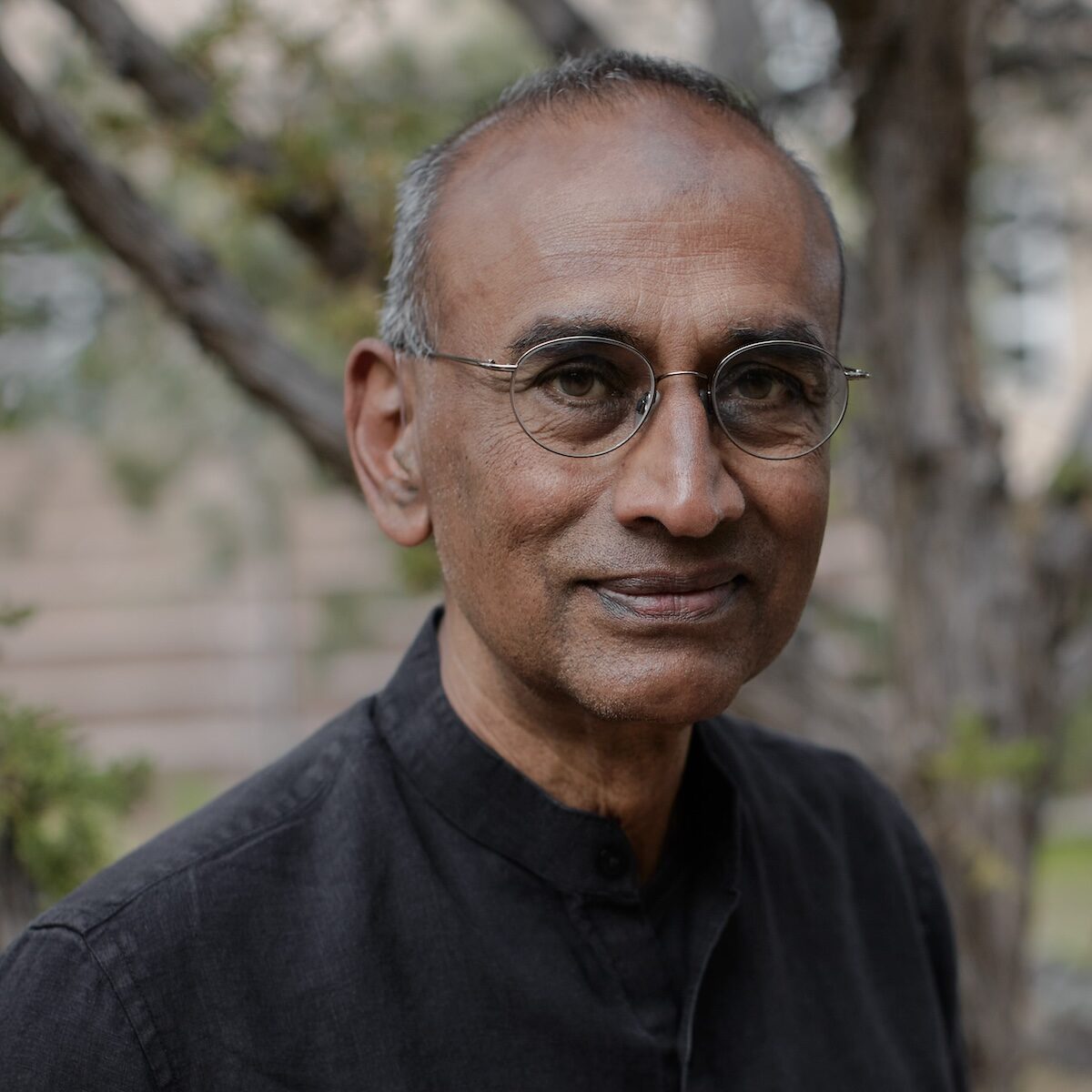
Venkatraman (Venki) Ramakrishnan received his Ph.D. in physics from Ohio University. He is currently Group Leader at the MRC Laboratory of Molecular Biology, Cambridge, England, and is a Fellow of Trinity College. He previously served as President of the Royal Society of London. He shared the Nobel Prize in Chemistry for his work uncovering the structure of the ribosome.
Click to Show Episode Transcript
0:00:00.0 Sean Carroll: Hello everyone, welcome to the Mindscape Podcast. I'm your host, Sean Carroll. Is it possible that listening to the Mindscape Podcast will help you live forever. As we like to say here at Mindscape, Sure, it is possible, it is not especially likely, but it's not necessarily unlikely that listening to a podcast like this or more generally, just doing things to keep your mind active, not just active, doing the same thing over and over again, but doing different kinds of things, thinking about things in new ways, being exposed to new ideas and ways of thinking can help you live just a little bit longer as well as of course, more down to earth things like eating less food and exercising and stuff like that.
0:00:41.9 SC: It's a fascinating subject. We human beings, not only are we going to have only finite lifespans, but arguably we are the only species that knows that we have a finite lifespan, so we are aware of our own mortality, so it's perfectly natural that we human beings would like to extend it. On the one hand, we have an instinct built in, we wanna survive and live, on the other hand, we also have a death sentence built in. And of course, science has already done a lot to extend the lifespans, mostly through better health and nutrition and safety and things like that, but it's interesting, the average human lifespan has absolutely increased, but the maximum human lifespan has not increased very much, people live to be around 120 at most, and that's as true now as it was 100 or 200 years ago.
0:01:32.2 SC: And we think that we understand roughly why that's true, there's a lot going on in our bodies that is not only not meant to let us live forever, but is meant to not let us live forever. We basically have an expiration date on each of us, and we don't like to have that expiration date, so science and technology are trying to think about ways to make us live longer and longer. It's difficult because there's not a single switch inside, it's not like there's one thing going on that says, Yeah, you're gonna do this much stuff and then you're gonna die, there's so many systems interacting with each other from the molecular biology level and the level of individual DNA strands and things like that, up to the various systems that are bigger systems in our cells and our organs that are keeping us working together coherently, so reducing aging, extending lifespans turns out to be a very difficult problem, so who better to talk to it about it with than today's guest, Venki Ramakrishnan is a Nobel Prize-winning molecular biologist. He won the Nobel Prize for his work, understanding the ribosome. And so, for irresistible reasons, I couldn't help but talk about the ribosome quite a bit in this podcast.
0:02:52.6 SC: Venki was part of a group of people who helped sort of figure out the function and structure of the ribosome, if you've ever been told that there's information in DNA that contains your genome and then it gets transcribed into RNA, and then the RNA figures out how to make proteins, that's exactly true, but the thing that takes the information from the RNA and makes the proteins, the actual assembly area, is the ribosome. The ribosome is the thing that makes the proteins, given the template that the RNA provides. So it's super important, it's kind of a really important part of everything that we think about in biology as it is practiced here on Earth, and here's the guy who helped figure out... People knew it existed, but he helped figure out how it works, and it's not surprising that once you do that, you turn your attention to this even grandeur question of aging because of course, copying DNA, copying genetic information from cell to cell turns out to be something that ages. That process can only go on so far. As we'll talk about, even single-celled organisms can die of old age in a very real sense, when they divide, they don't divide completely equally, they divide sort of into an older part and the younger part and the older part can die.
0:04:09.4 SC: So we talked about a lot of stuff. Venki has a new book called Why We Die and How We Live: The New Science of Aging and Longevity, where he talks not just about the molecular biology, but about lots of things about the systems, large scale biology, but also the technology ideas for possibly extending life and the philosophy, what does it mean to us that we're all going to die? Well worth checking out the book, if you're in the London area, it will also be well worth checking out Venki and others at New Scientist Live, which is gonna happen in London from Saturday, October 12th through Monday October 14th, 2024. It's a great event. Plenty of good talks and demonstrations and things like that. I've spoken there before. Sadly, I can't be there this year, but I highly encourage you to go, and whether or not you can do that, you can listen to this episode, so let's go.
[music]
0:05:20.5 SC: Thank you, Venki Ramakrishnan, welcome to the Mindscape Podcast.
0:05:23.5 Venki Ramakrishnan: Thank you. It's a pleasure to be here.
0:05:25.2 SC: We're gonna talk about the new book that you have out, still this year, I think 2024 on why we die, that's a cheerful topic to think about I know, but.
0:05:35.5 VR: The subtitle is not so bad.
0:05:37.8 SC: Yeah, the subtitle is always where you tell the truth, but I can't help but start with the ribosome, you won the Noble Prize for thinking about it, and I think... I kind of have this impression, the ribosome is an underrated part of human cellular molecular biology, so why don't you tell us what that is and why you think that little system is so interesting.
0:06:00.2 VR: It's interesting because everybody thinks they know what DNA is, they've all heard of it, even if they don't actually know what DNA does, they know it has something vainly to do with our genes. And... But if you ask someone what a ribosome is, most people have never heard of it.
0:06:18.4 SC: Never heard of it.
0:06:19.0 VR: And the thing about the ribosome is without the ribosome, DNA would almost have no meaning because DNA encodes genetic information, but it's really the ribosome that reads that genetic information to produce that whole orchestra of proteins that makes a cell actually be able to live. Carry out all the reactions, but also build all of the structures in the cell, all of those structures are either made of proteins, or built by proteins. So I like to say that almost everything in the cell was either made by the ribosome or was made by enzymes that were made by the ribosome, so you can think of it as the sort of mother or grandmother of all things in the cell, and it's also older than DNA, it goes back to an RNA world. Before there was... DNA was used to encode genetic information, life probably began as an RNA world, because RNA can both carry out catalysis or chemical reactions, but it can also store genetic information, and the earliest ribosomes were probably made just of RNA, and were somehow used to make small random proteins, and eventually a coding mechanism evolved so that you started making coding protein, so that was the beginning of genetics, of gene encoded protein synthesis.
0:07:55.6 VR: And it's an enormous machine, it was discovered in the '50s, but it has about... A human ribosome has about half a million atoms.
0:08:06.8 SC: Wow.
0:08:09.7 VR: And so even though it was discovered in the '50s, and then people started to figure out what it was made off and how it... And what it did, the exact mechanism, how it actually worked, remained a mystery for a long time, and that's because when you have a big complicated machine, yeah, if you don't know what it looks like, it's very hard to make detailed hypothesis about how it works, it's amazing that biochemists made as much progress as they did without ever having seen what a ribosome looked like. That just shows how clever many biochemists are in doing the kinds of experiments where they could make inferences, but ultimately solving the structure was a game changer, and it allowed people to do much more detailed mechanistic experiments to understand how it all worked, and now it's led the way to understanding how the ribosome is regulated because that's... You mentioned my book on aging, the connection between ribosomes and aging is that the regulation of ribosomes start to unravel as we get older, and so a lot of current work is about ribosome regulation and regulation of protein synthesis.
0:09:32.5 SC: So it reminds me a little bit of astronomy, which is where I grew up, in the sense that back in the day, you would get this little set of data about the brightness of the star over time, and astronomers would spin this amazingly detailed story about what must be happening and without an image like, Oh, there's a disk and it's secreting and things like that, and you're stuck in the same situation, at least we were stuck a few decades ago when it comes to molecular biology.
0:09:58.9 VR: Yeah. Yeah, that's true. And I think the science of visualization in Molecular Biology has advanced tremendously. First it was X-ray crystallography, and now more recently, there's cryo-electron microscopy, and there's also now predictive algorithms for protein domains and proteins using AI, which is also having a big impact in structural biology.
0:10:25.0 SC: So can we at this point basically take a photograph or an image of something as... It's a million atoms but it's still pretty tiny, a ribosome.
0:10:34.2 VR: Yeah, the ribosome, as I said, it's large in molecular terms, but of course it's only a couple of hundred nanometers across, so you can't really see it by... You can't see it by with an ordinary microscope, but you can see them under an electron microscope and the big progress in the visualization field is that electron microscopy has advanced as a result of better detectors, better algorithms, faster detectors, so that they can freeze the movement of particles while they're collecting the image, and that means that you can get high resolution atomic level images without using crystallography. So you don't even need crystals, which is what you needed for x-rays, and that was a big bottleneck, and the other thing about electron microscopy is you need tiny amounts of sample and they don't even have to be pure, you can sort the particles computationally so that has been a big game changer, and it struck me, there was a paper in bioRxiv just a few months ago, where they had looked at ribosomes inside a cell, so they hadn't even broken open the cell to purify it, they just looked at thousands of ribosomes inside cells, classified them into groups and got a whole bunch of structures, each of which represents a snapshot of a ribosome, so what took us years of work, these guys did within weeks, so... But that's just how science is, right, so.
0:12:09.5 SC: Exactly. When you first saw something approaching an image from an electron microscope or whatever, of a ribosome...
0:12:17.1 VR: Oh, because using crystallography, we did the painful way of producing crystals which would take eight weeks to grow and were tiny, and then you'd have to take them to a synchrotron, these powerful x-ray sources, and hit them with x-rays, and then analyze the data, and then eventually, if everything went well, you would get an image, and the first images were quite fuzzy, they were what we call low resolution images, you couldn't see atomic detail, but you could see broader features like you could see a double helix for the RNA. RNA, of course, also forms double helices like DNA, and when we saw that first double helix in the image of the ribosome, that was a very exciting moment because we knew that it was real, because it had the features that you would expect. So it was a very exciting time.
0:13:14.0 SC: I mean, we're very used to seeing images of molecular structures that have been drawn by a human being, because we've worked out what the structure is, so we draw all we've seen, pictures of double helices, etcetera.
0:13:25.5 VR: Right.
0:13:26.2 SC: When you see the actual image, are you more struck by, Wow, that is exactly what I expected or, No, no, no, it's just... My visualization was kind of off.
0:13:36.4 VR: I think smaller pieces of RNA had been already crystallized and their structures determined, so we knew that that's what RNA's double helices should look like. The thing about the ribosome is not the structure of the individual pieces, but rather how they were put together in this large complex and how they interact and how the different pieces interact.
0:14:01.0 SC: And so the story that we're told is that the DNA in a modern organism, DNA is a good storage unit, it's relatively stable.
0:14:08.0 VR: Yes.
0:14:10.4 SC: And then it zips open, transfers the info over to the RNA, and then the RNA walks over to the ribosome and makes some proteins. Is that still basically the story or are we sort of...
0:14:24.4 VR: That's still basically the story, of course, there are some genes which are never made into proteins, they stay as RNA, and there are other parts of DNA and RNA that are involved in control, start here, or doing this in response to this stimulus, so there are lots of control signals, but the part that codes for the protein, that's the heart of what we call a messenger RNA or mRNA, which again, nobody had heard off a few years ago, but then Covid came along and everybody started shooting mRNA into their muscle. And of course, what that mRNA had was the gene for the spike protein of Coronavirus, so when it went into our cells, our ribosomes latched on to it and made spike protein and displayed it to our immune system to react. So it's a perfect example of how all this molecular biology knowledge that we had accumulated over decades suddenly became useful during the pandemic.
0:15:31.1 SC: Absolutely.
0:15:33.3 VR: People think...
0:15:34.3 SC: Yeah.
0:15:35.2 VR: People think that the vaccine took 11 months to develop, but actually it took decades, and it just so happened that we were at a time, at a point in time where we could very quickly implement these platforms.
0:15:49.1 SC: And how deterministic is this whole RNA goes through the ribosome becomes protein process. I have this feeling that the world at this nano-scale is a lot more chaotic and jumpy than what I'm used to visualizing.
0:16:06.0 VR: It's jumpy in the sense it's stochastic but it's fairly deterministic, to give you an example, the error rate in making a protein is typically one in 1000 to one in 10,000, and that's quite a low error rate.
0:16:23.6 SC: Yeah.
0:16:25.1 VR: It's much lower than the best peptide synthesizers that humans can make in the lab, have a much higher error rate and are much slower. A bacterial ribosome mix adds about 20 residues a second. So if you made a movie of a bacterial ribosome, it would just be a blur. In fact, I have a movie that I sometimes show, and I show it slowly with all the players coming in and out, and then I say, Okay, now I'm gonna speed it up to real time, and it's just a blur. So it's an amazing machine. And yes, it's stochastic in the sense binding is stochastic, but there is a deterministic direction to it, and that's because energy is used at each step, and that's what thermodynamically drives it forward in the forward direction.
0:17:18.1 SC: This reminds us, of course, that you started as a physicist, like all the great biologists.
0:17:23.0 VR: Well, I don't know, I think there are lots of biologists who have nothing to do with physicists.
0:17:29.6 SC: But is it... The other question I had is, every cell in my body has a ribosome in it, a single one.
0:17:35.7 VR: Has thousands of ribosomes.
0:17:37.6 SC: Thousands of ribosomes.
0:17:38.9 VR: Yeah.
0:17:39.9 SC: Oh, okay, good. And are all of those ribosomes identical to each other, or do different cells have different versions.
0:17:43.6 VR: Yeah, so the fact that ribosomes can crystallize suggests that ribosomes are largely identical, but there's now a debate in the field. There are a group of scientists who believe that ribosomes can be specialized. That in some cells, you may get subsets of ribosomes which translate particular mRNAs or translate under certain... Translate, meaning, translate the genetic information into protein. So that they work under certain circumstances. And this field of specialized ribosomes is still somewhat controversial.
0:18:29.9 SC: Okay.
0:18:30.1 VR: But it does have some strong advocates and I would say the jury's still out. But there is some evidence for specialized ribosomes.
0:18:40.0 SC: What about between species? Are ribosomes the same as in mollusk?
0:18:43.6 VR: Very similar. They're not exactly the same 'cause there'll be small genetic differences. So just like for example, a mouse may be well over 95% or so, identical in some ways to humans, but of course that same degree will apply to ribosomes and ribosomal proteins. But I will tell you one thing, the core of the ribosome, the part where the amino acids are joined to during stitching together a growing protein chain, you're going to have add amino acids to the growing protein chain 'cause amino acids are the building blocks. So that part where it's joined, or the part where the genetic code is recognized in the ribosome, those parts are highly conserved. In fact, they're even conserved across kingdoms. So there are only very small differences in the so-called peptide, peptidyl transferase center, which is where the amino acid bond is formed, peptide bond is formed. The very subtle differences between, say, bacteria in humans, but overall, the ribosomes of bacteria look very different. For example, the human ribosomes are almost twice as large, and they've expanded both their RNA and protein components considerably.
0:20:15.8 SC: And you mentioned regulation, which I take it to be sort of like gene regulation. There's sort of external factors that can turn knobs on the ribosome?
0:20:26.5 VR: Yeah. Environmental factors, viruses. So I think part of the reason that, eukaryotes that is a translation in higher organisms with a nucleus is more complicated is because there's more regulation in higher organisms. And initially, biologists thought that almost all of the regulation of genes had to do with how much, and when you made mRNA from a section of DNA. And that once the mRNA was made, the ribosome inevitably had to just do its thing like almost like a slave, but that's not how it is. It turns out that control exists both at the mRNA production level, but also at the protein production level. So what we call translational control. And this means that the cell has ways of deciding when to start making proteins, or it has ways of detecting when protein synthesis has gone wrong, when ribosomes have stalled, 'cause they've run out of amino acids.
0:21:40.1 VR: And what do you do about stalled ribosomes? So there's whole series of control mechanisms and regulatory mechanisms. And the interesting thing is, viruses will often hijack the ribosomes. So they will shut down what's called the initiation machinery. This is what tells the ribosome where to start on the mRNA. It doesn't start right at the extreme end, it has to start somewhere and then go along until it finds the first code on the first amino acid signal to be made, and that process of initiation is very complex. And what viruses do is they shut down the host initiation, so none of the host genes can be made into protein. And then they have alternative ways of recruiting ribosomes to their own mRNA. And so they effectively hijack all of the ribosomes to make their message. In fact, the first gene product of coronavirus is something called NSP1. What NSP1 does is it shuts down initiation from host mRNAs, and somehow still allows coronavirus to make its own genes, proteins from its own genes. So there's a lot of control regulation that's going on. And so, even though the structure of the ribosome, the first structures came out from bacteria at about 2000, and then gradually, we learn more and more about structure, the field is still going forward in all these complicated directions.
0:23:21.7 SC: If I started with a stem cell, for example, in a human being and let it develop into some specialized component cell, will its ribosome also be altered along the way, or is it more or less the same?
0:23:33.1 VR: I don't think so, but as I've mentioned that there is this subset of the ribosome community that believes in specialized ribosomes, and they do have some data to support their view. So I think that it's still a matter of debate in the community, and it could be that there are specialized ribosomes. I wouldn't be completely surprised, although if you had to ask my personal opinion, I think that we still need to have stronger evidence for that.
0:24:08.8 SC: How close are we if the ribosome is a million atoms, to knowing what all those atoms are, and being able to just put it on a computer and simulating it?
0:24:18.5 VR: People have already done that. So the structures of the ribosome do describe it in atomic detail. So we know sort of the x, y, and z coordinate of every atom in one state of the ribosome. But remember, the ribosome is a highly dynamic machine. It moves around. It undergoes all sorts of confirmational changes. And so, it's very much like watching a complicated machine, which moves around. Take a car, for instance. You have pistons that move around, or a rotor that moves around in an electric car, and wheels move and steering wheels move. So it's not a static object. And the ribosome itself is not static. It has complicated movements of its various component parts. And what people are trying to do now is to simulate in using molecular dynamics, how the ribosome might move over time. And as things bound to it, for example, the mRNA bound to it and the small adapter, RNA molecules called TRNA molecules that bring in the amino acids to add to the protein in the ribosome. So all of those things can change the confirmation, the shape of the ribosome, 'cause it's a dynamic machine, and people are trying to simulate that in computers.
0:25:47.5 SC: Okay. Very good. It's funny you must know Bonnie Bassler, the biologist at Princeton.
0:25:53.7 VR: Oh yes. I don't know her personally, but of course I don't offer.
0:25:57.2 SC: I once invited her to give a colloquium at Caltech, and I was struck by one of the graduate students after the colloquium said, it's depressingly easy in biology to come up with good questions we don't know the answers to in physics.
0:26:10.0 VR: Yes. I have to say I was a grad student in physics, and I was trying to do condensed matter theory, and it was just so hard to do any... Make progress and do something interesting. And I used to subscribe to Scientific American, and I don't know if you remember, but in those days, all the articles were written by the primary scientists themselves. Of course, with editorial help, it was really very much a first person account. It was really thrilling, but what impressed me was that every issue had big questions in biology that were being answered left and right. And I thought, well, this is probably where I should be going. So right after my PhD, I went to grad school again at UCSD to study biology, 'cause I felt I didn't know any biology, so I didn't wanna do a postdoc right away. And so...
0:27:05.1 SC: I know. That's very admirable that you can just like pick up and change and you've figured it out just soon enough, right?
0:27:10.1 VR: Yeah. And I have to say, I thought I was in the middle of a revolution, but that revolution seems to still be going.
0:27:17.0 SC: Still be going on.
0:27:17.1 VR: And it's been going for a long time. I would say ever since the discovery of the gene in the late 19th century, there's just been this steady onslaught of advances in biology. I liken it to how physics progressed very steadily after Galileo and Newton, and just kept on going. And then it's when it was stalled, and then suddenly you had quantum mechanics and relativity, and then there was another big wave. So I think biology's sort of behind physics by maybe a couple of 100 years, so it's not as mature field as physics. And that's probably why I think physics is also harder, 'cause it's more mature and the questions are harder.
0:28:00.6 SC: Well, I would say exactly the opposite. I would say that biology is behind 'cause it is harder, 'cause it's messy. There's only so many elementary particles.
0:28:10.9 VR: Well, no, that's another way of thinking about it. Yeah, that's true.
0:28:13.1 SC: And so I could kind of guess or envision how you go from thinking about ribosomes and molecular biology to death, 'cause we need the constant success of these dynamical processes in our bodies to be working very, very efficiently and nearly flawlessly over the course of decades. But let me not just guess, let me just ask you. What is your path from thinking about ribosomes to writing a book about why we die?
0:28:42.8 VR: Well, I think it started 'cause I wrote my first popular book, which was called Gene Machine, which was about the race for the structure of the ribosome. And it was meant to be sort of... It was meant to capture some of the frankness of the double helix, which I have to say I read as a student of physics. And it was... For the first time, it gave me some idea of the thrill of a biological question. And I know it's a very controversial book, but it's influenced lots of people, including Jennifer Doudna, who in the preface to her own book, says that's a book that really stimulated her to become a scientist.
0:29:26.3 VR: So although it's got its downsides, Jim Watson can be frank, but also unnecessarily nasty. I wanted to capture the frankness without the gratuitous nastiness. And so that was my experience at writing that book. And I found I enjoyed the process of writing about a complicated subject in molecular biology for the general public. Then I thought, well, what could I write about now that would be really timely, and that I would have something to say? And the thing is, as I mentioned, protein synthesis is central to aging 'cause proteins do a lot of things. And if the process gets disrupted or becomes less optimal, then it leads to aging. So I was very, very close to the field, even though I don't particularly work on aging. And aging, of course, a big existential question. We may be the only species that's aware of mortality.
0:30:34.5 VR: Animals may know about death, they can certainly sense death, but I think there's no evidence that they know about mortality in the sense that we humans know that we're all gonna die, that we're not gonna live past 120, at least at given current medicine and biology. So, that's influenced us ever since we were aware of it. If you look at all the ways we try to avoid death, building pyramids and mummifying ourselves. And also a lot of religions actually deal with what happens when you die. And they're all... Different religions will have different ideas of what will happen, but they all view it as some sort of transition rather than a finality. So it is a question that's bothered us ever since we became aware of it. But it's only in the last 50 years that biologists have made real advances in understanding what is the aging process?
0:31:40.5 VR: It's not just wear and tear, it's much more complicated than that. And what is the aging process? Why is it that some species live for a day or two and others live for several hundred years, or possibly in the case of plants even a thousand years or more? And why is it that there this huge spread? What causes that? What causes us to eventually die? So the big existential question, then there's a practical thing, which is societies are getting older. And as societies age, what happens is that you have to deal with an aging population, 'cause fertility rates are going down. So the population distribution is being more and more shifted towards older age groups. And if these older people who require lots of care are in poor health, that's not great for either for them or for society.
0:32:40.9 VR: And so there's a big push from governments to do something about improving health in old age, and that requires understanding the whole problem of aging. And so there's a lot of research, but then, now you have injection of a lot of private money. There's 700 companies doing some sort of longevity based biotech, billions of tens of billions of dollars going into this. A lot of it funded by tech billionaires from California. And I like to joke that these are guys who just are afraid of getting old. They like their life and they don't want the party to end, and so they're funding. They can't buy youth, so they're buying research into aging. And that's also distorting the field is it's generating huge amounts of hype 'cause now there's money involved. And so I thought as somebody who doesn't have a personal skin in the game, and since it is this big question, I thought I could look at the current state and talk about how we came to our state of understanding, which is interesting in itself, but also, what are the realistic prospects, and what's just a lot of hype. So I think that's the sort of goal. And it turned out to be a much bigger problem than I imagined, 'cause aging basically encompasses all of biology right from DNA, all the way to cells and tissues and organisms. So but it was fun to write it.
0:34:22.2 SC: Well, and you say that you don't have skin in the game, but of course, in a very real sense, we all do have skin in this particular game.
0:34:27.2 VR: Yes. I do say that actually. We all have a skin in the game, and that we are all aging and we'd like to do something about it if we can. And of course, the other skin in the game I have is I like to say I'm not selling anything, but of course I'd like the book to sell.
0:34:41.8 SC: There you go. That's perfectly okay. No, that's completely a good moral stance. I can back you up on that. So let's get a feeling. Let's work our way into this understanding about why essentially, all higher organisms have death kind of programmed into them, right? It is part of their design in some sense. My impression is unicellular organisms never die of old age. How could they? They need to sort of...
0:35:11.0 VR: Oddly enough, I found many unicellular organisms do die. For example, budding yeast, where you can clearly separate the mother cell from the daughter cell. They do die.
0:35:22.0 SC: Oh, I see.
0:35:22.4 VR: The mother cell only can undergo a certain number of divisions, and then it's, it's basically senescent and dies. And interestingly, people have even done this with simple bacteria like E. Coli. The trouble with E. Coli is, you can't tell which one is the mother cell and which one's the daughter cell. But people figured out that when E. Coli grows, it grows in one direction. It doesn't grow in both directions at the same time. So there's a new part of E. Coli, and there's an old part of the E. Coli when it grows, then when it divides, one half, one daughter cell inherits the new part. The other daughter cell inherits the old part and the old part... And if you keep repeating this by very carefully producing these E. Coli in thin tubes, so you can keep track of it, it turns out that the old E. Coli eventually dies.
0:36:18.0 VR: So it's pretty amazing. So I would say almost everything dies, even unicellular organisms. But of course, that's not what we mean when we say death. And this actually, since we both have a connection with the Santa Fe Institute, this really, I absorb this through a series of workshops on aging at the Santa Fe Institute, where they think of aging as a... Biological aging as a special case of aging of everything. All complex systems, for example, companies or societies cities, they all grow and they age and then they die. So in our case, what do we mean when we die?
0:37:02.8 VR: It's a particular weird thing. It has to do with us as an individual, and that's also hard to define. What do you mean by an individual? 'Cause the strange thing is, when you are alive, millions of cells in you are dying all the time. And in fact, many of those cells are required to die at appropriate times. If they didn't die, you as an individual would die. So that's one side of the story. The other side is that when you die, most of the cells in your body are still alive.
0:37:37.5 SC: That's right.
0:37:38.3 VR: In fact, that's the reason why we can donate our liver and kidney and heart to transplant recipients when we die. And so here, you have this paradox. When you're alive, a lot of you is dying, when you're dead, most of you is still alive. So what does this mean? It means that we can no longer function coherently as a whole individual. And we worry about it because we are aware of ourselves as an individual. We have consciousness, but you can imagine species that don't have consciousness and the extreme of, for example, plants, but also simple animals. They might never actually, even if they had a nervous system, they might not actually even think about death. It's just something that happens. So it's a peculiar situation that we're in, that we obsess about mortality and death.
0:38:33.9 SC: So, okay. But now you've sort of changed my mind in different directions. So you're pointing out that even unicellular organisms can die of old age, because I hadn't quite appreciated, but now that you mentioned it, I had heard before that when a unicellular organism splits, the two copies are not exactly identical there is some differentiation between them, but then even complicated multicellular organisms, there's many layers to the death process in some sense. So, I mean, I guess what I'm striving toward is, is there some difference in how we think about death when you go from unicellular to multicellular life? Is that from the very early stages?
0:39:15.5 VR: Oh, definitely. I think for example when you get to sexual organisms, then you have a clear separation between the germline which is responsible for reproduction and the rest of the body. And in a sense, there's a part of us that has been alive for billions of years because we didn't come out of nothing. We came out of a cell, which came out of a cell, which came out of a cell. So there's a direct lineage all the way back to a few billion years that did not die. Okay. And so the germline, there is a chapter in my book, which is called I think the immortal germline and the disposable body or soma, and so that is really a dichotomy in complex organisms. And in a way that's different from say, bacteria or other organisms.
0:40:21.6 VR: And what is interesting is that germlines aren't actually immortal, but we've evolved so that germlines are much better protected for... Again, for example, DNA damage or other kinds of damage are a cause of aging. And germlines are protected much better against DNA damage and other kinds of damage. The other thing that happens is that germlines are selected almost ruthlessly. For example when a female fetus, in early embryonic stages, there are almost a million eggs or so. But of course you don't have... Those million eggs are not... You don't have a million ovulation cycles, in a human woman's life maybe, a few hundred eggs are secreted during menstruation I mean during ovulation. So what happens to all the others?
0:41:28.1 VR: Well, the others are all ruthlessly selected because there's a whole process of selection from the oocyte, the precursor of the egg all the way to the final egg that ends up ready for fertilization. And at each stage it's monitored for defects and ruthlessly pruned out. And of course, sperm in males is also ruthlessly selected for millions of sperms. And they all have to swim, and if they can't make it and are in any way defective, they just don't have a chance to undergo fertilization. And even after the embryo is formed, many embryos spontaneously abort without the mother even being aware of it in many cases. Some cases they are aware and if it's later and there's a miscarriage, and so there's ruthless selection there.
0:42:25.7 VR: And even within the developing embryo, defective cells are destroyed. So I think this... I thought about why is it that we get old, but when a child is born, it's not born old. So, it's as if the biological clock has been reset every generation. And that's because of this combination of protection against damage for the germ cells and ruthless selection. I think it's that combination that allows us to have an embryo that is... Has gone back to state zero. But of course, all of the little tags on the DNA have been erased. These tags are markers for aging. They've been erased and then reprogrammed to start from scratch. So it's all this combination of things that goes on to reset the biological clock every generation.
0:43:30.7 SC: It does make it sound like we could... Not we personally, but our bodies could do this more efficiently to our actual grownup cells, right? Like we're spending all of this effort to make sure the baby is brand new, but our cells allow our own bodies to age and die, which I guess has a kind of obvious evolutionary explanation.
0:43:56.2 VR: Yeah. So this has to do... We talked about how some species live only a day or two, and others live several hundred years. Well Geoffrey West, who we both know from Santa Fe has written a great book called Scale. And in that book, he talks about relationship between lifespan and parameters like size. And it turns out that large mammals live on average much longer than small mammals. Now why would that be? Well, it's because evolution simply doesn't care how long you live, it cares about fitness, which is how likely are you to pass on your genes, how successful are you gonna be at passing on your genes? And so I think if you're a mouse, there's no point in spending a lot of resources to repair and maintenance, because that's quite... We do have sophisticated repair and maintenance mechanisms.
0:45:00.6 VR: Otherwise we wouldn't even last a year... We would be dead before that. So we do have this very sophisticated mechanism, but that takes energy and takes resources. And in a small animal, it's not worth it because the animal's gonna be killed off by a predator or die of starvation or some other cause. So there it's more advantageous for evolution to put resources into rapid growth and reproduction, and that's what a mouse does. And at the other end, you have things like a bowhead whale or a Greenland shark, very slow metabolism. And well, especially the Greenland shark has a very slow metabolism, large and can produce offspring over a long period. So you have these opposite extremes. An interesting twist on this are bats, so bats weigh about the same as a mouse, they're the same size as a mouse, but can live 10 to 20 times as long. And the reason is bats can fly so they can escape predation, and they can... They also can forage over a much wider area and are less likely to starve. So it makes perfect sense that you would have this evolutionary thing.
0:46:22.0 SC: And there's this well-known puzzle, but I think it's a solvable puzzle. Why don't larger animals get cancer more often? I mean, after all, they have more cells in them. So if there's a rate of a cell becoming cancerous, they should happen all the time.
0:46:39.8 VR: This is named... Called Peto's Paradox, after Peto, who was the scientist who first formulated it because an animal like a whale or an elephant has thousands of times more cells than a mouse. And so if even one of those cells became cancerous and triggered a cancer then the animal would die. So you would think those animals would be more likely to get cancer. Instead, it's a mouse that's more likely to get cancer. And that has to do with the fact that all these repair mechanisms don't work as well in a mouse, because evolution doesn't care how long a mouse... That a mouse should live that long. But anyway so it turns out that there's a DNA response repair mechanism. One of the genes involved is called p53 or TP53. And this is involved in sensing DNA damage and triggering repair mechanisms. And it turns out that elephants have something like 20 copies of this gene. So they're much more efficient at detecting cells where there's been some problem with the DNA and destroying them and so they don't become cancerous. And people have looked at whales, and whales also have... Seem to have alternative repair pathways that presumably prevent them from getting cancer. So that is the way that evolution has dealt with the cancer problem.
0:48:20.0 SC: Yeah, it doesn't quite suggest a cure for cancer, right? Because we'd have to change all of the DNAs in all of our cells.
0:48:27.0 VR: No, no. And yeah, that's right. It is not exactly a cure, but it does give you some understanding, and it also shows you the relationship between aging and cancer. It turns out many of the things that cause aging like telomere shortening, these are the ends of our chromosome get a little shorter each time the cell divides. And when they reach a critical stage, the cell stops dividing and goes into a state called senescence, and then it's eventually destroyed. And you would ask, why would it do that? Why not? And if you were to let cells have the ability to proliferate indefinitely, then if that cell became cancerous, it would be a cancer risk, And so this idea that you down... You destroy that ability to divide forever in most of our cells and restrict it to just a few cells like our stem cells. That's what probably evolved as a cancer prevention mechanism. And that again, is because you don't wanna get cancer before you have a chance to reproduce. And once you've reproduced, okay, the consequence is that you age, but it's okay because you've passed on your genes, that's the evolutionary game.
0:49:46.1 SC: It's a harsh mistress evolution. So you mentioned the telomere shortening. And I think that's probably the thing that pops up in my mind most clearly. When people say things happen as you grow older, that there's aging going on in individual cells. Is that the main thing? Or there are many different kind of things that add up to aging?
0:50:05.8 VR: No, there are many different aspects to aging, and they happen from the molecular level all the way to the level of tissues where cells talk to each other. So just to give you an example, we could start with DNA, which encodes proteins and so on, and DNA damage is one of the primary causes of aging. And of course we have extensive repair mechanisms, but the DNA repair mechanisms themselves can break down with aging. So it's a kind of autocatalytic or accelerating phenomenon that DNA damage becomes increasing with age, but that's a cause of aging. And then the proteins that are made using genetic information they often... The quality of those proteins goes down with age. Our ability to recycle proteins that are defective also goes down with age. So there's all those levels at the... What I call the protein level.
0:51:12.8 VR: And then this also affects organelles like our mitochondria, which are organelles in our cell that are responsible for energy production. Of course some of you may be interested that mitochondria actually were bacteria that were swallowed up by an ancestral cell of ours, And the two somehow managed to live in a symbiotic state ever since. But mitochondria now control a lot of the health of the cell, including a lot of metabolic pathways. And so if mitochondria become dysfunctional, that's another cause of aging. Or the lysosome, another organelle, which is responsible for removing the junk in our body. So all of these proteins that accumulate, that are defective, or entire organelles that are defective, are taken to the lysosome and recycled they're basically degraded and recycled. But that process called autophagy can also decline with age, and then cells themselves can decline. So I pointed out that when cells are stressed, when they sense damage, they go into a state called senescence.
0:52:22.1 VR: These cells can't divide, but in turn they secrete inflammatory molecules. And early on in life, that has a purpose because this senescence cell is saying to the immune system and other repair cells that, look, I'm damaged, this site around me is probably damaged. Maybe there's a virus attack. And so come here and repair the damage. And so in the process, they repair the damage and the senescent cell is destroyed. But as we get older, the ability to destroy the senescent cells is also declined. So you get this... And of course, more and more senescent cells are formed, Because there are more... Other processes stop working and more cells go into senescence. So you get this buildup of senescent cells and inflammation. So that's another problem. And then stem cells, which are the cells which are responsible for regenerating tissues. So they have to do two things.
0:53:24.3 VR: They have to regenerate themselves, and they also have to regenerate the tissue that they are sort of in charge of. Early stem cells can make any kind of tissue. So in an early embryo, you have what are called pluripotent stem cells. These cells can make anything but later stem cells later in development, they specialize. So some stem cells can only make skin and hair, others can only make cells of the nervous system. Of course, there are many different types.
0:53:51.5 SC: Sure.
0:53:52.1 VR: But still a subset. Others can only make cells of the blood, and that includes the entire immune system and our red blood cells. So these stem cells themselves decline with age because many of them go into senescence. And so you get a depletion of stem cells, and the quality of the remaining stem cells is also not as diverse and not as good. 'cause they're often descended from a few clones, which don't have necessarily the optimal properties. So that's another cause of aging, and that leads to tissue loss. For example, a common problem with aging is loss of muscle and frailty. So you can see that every level there's a fact, but each level's not independent, they all interact with each other and so there's this complicated sort of web of things happening at different levels of complexity. So.
0:54:51.1 SC: And it does sound on the one hand as if any one of these aspects like we could target or we could learn how to delay or fix or repair, whatever it is. But there's just so many of them that it really is a quintessentially complex system where all the parts matter.
0:55:11.2 VR: Yeah, It does. And people have made a lot of progress. For example, I mentioned senescent cells. So amazingly people have been able to target senescent cells using some particular biomarkers, things that senescent... Characteristic of senescent cells. And when they destroy senescent cells in say, mice, aging mice the symptoms of aging improve in those mice. And so that's another... That's one way the. One of the more exciting and more challenging ways to deal with aging is to reprogram cells. So you take cells and you reprogram them, so they go slightly backwards in development. So effectively they become like stem cells. So you're reactivating stem cells for different types of tissues. And that I... I would've thought that was almost science fiction. But recently, in the last few years, number of papers have come out doing exactly this in mice and showing that the symptoms of aging have improved in these mice. But of course, reprogramming cells raises risk of cancer. It also raises the risk of how do you do this in a body in a holistic way, because our different organs age at different rates. And how do you ensure a kind of systemic rejuvenation if you like? I think people don't like that word, but...
0:56:40.7 SC: Some people like it.
0:56:44.0 VR: Just for... Just to popularize it. But it's so, it's a challenging but hard problem. It's another way to maybe tackle some aspects of aging.
0:56:55.5 SC: Well, it certainly does give me the impression that simply getting a blood transfusion with the blood of young children is not gonna make me younger. [laughter]
0:57:04.1 VR: It's unlikely to, although that also has a real scientific basis. And many decades ago, people actually connected a young mouse with an old mouse.
0:57:16.5 SC: I remember.
0:57:17.3 VR: And by connecting their blood systems together. And some decades ago people found that actually the old mouse benefited from the young blood, and the young mouse actually deteriorated as a result of the old blood. And so this was an amazing finding. And of course, it raised all sorts of questions like, what's going on in blood and what are the factors in blood? Maybe there are factors that prevent damage or factors that cause damage in old blood, or maybe activate stem cells in young blood. There could be a number of scenarios. And so there's a huge field that's looking for these factors and trying to identify what is different about young and old blood. And of course, of the many differences, not all of them will be relevant. So they have to figure out which factors are actually relevant to aging.
0:58:14.9 VR: And then they have to find out how they work, and then they have to figure out if they could actually use it in some therapeutic way. But the amazing thing is, as soon as these findings were published, by Randall and others at Stanford, they started getting all sorts of weird phone calls. [laughter] From creepy people. And there were all these companies that sprang up, which would collect blood donation. Well, they would buy blood from young donors and then sell them at, presumably at a huge markup to, rich old people who wanted a transfusion. And, there's no evidence that any of this actually worked in humans, and certainly not over the long term. So that's how it is. And that's a, I have to say, that's characteristic of the aging field.
0:59:12.9 VR: Scientists will make a completely bonafide discovery, in animals. The original scientists often, but not always. Okay? I should say there are a number of scientists who are also...
0:59:22.5 SC: Yep.
0:59:25.3 VR: Have a kind of agenda. But by and large, scientists will be somewhat cautious and want to proceed rigorously, but then outside parties will jump on it and then try to commercialize it or hype it up, or use some sort of supplement that, they think will activate this phenomenon. So there's a huge amount of hype in the field. And I've tried to, kind of try to separate the rigorous science and the biology from the hype. Because even knowing the rigorous biology, there are lots of things we can do that will help us age more healthily. So it's not as if, there's nothing we can do and we have to wait around for this industry to come up with something. There are things we can do now, and then potentially there may be more powerful things later.
1:00:19.5 SC: Well, I wanna get to that, but just one tiny question on the mouse. It wasn't just a blood transfusion the mouse got. It literally was sharing blood with a younger mouse, and that sounds like a big difference.
1:00:30.1 VR: It, yes. You, that's very perceptive. So that was a question people asked that maybe the young mouse was actually acting like a dialysis machine. For example, cleaning out the old blood because its organs and kidneys were better and so on. But what people did was then they took actual young blood from the young mouse without connection and gave it to the, an old mouse and did vice versa. And there, it's interesting, they found that the old blood actually was more deleterious to the young mouse, than the young blood was beneficial to the old mouse. And that perhaps why these transfusions. Aren't quite having as big an effect as you as, as you might have hoped. Brian Johnson, the tech billionaire who spends, I guess I'm told, he spends like $2 million a year on various longevity treatments and diagnostics.
1:01:27.3 VR: And clearly he has an agenda. He says he thinks of himself as an experimental animal. Out at the forefront. And he wants to try all the stuff and be an aging pioneer, if you like. Anyway, he did this intergenerational transfer where he took blood from his son, gave it to himself, and then he gave blood to his father. [laughter] So it's this sort of three generation that I joke, he was keeping it all in the family. Anyway, but after a while, he was also measuring all these various markers of aging. And I think he came to the conclusion it wasn't having much of an effect any, I think he stopped.
1:02:11.8 SC: Do you have any feelings about what might be the best science fictiony, but plausible way of slowing, stopping, reversing aging? I mean, I know that we don't have any silver bullets here, and we have a lot of hype, like you said. What are the more respectable ways to think about that very ambitious goal?
1:02:33.1 VR: I think, well, the number of possibilities, I think to me, cellular reprogramming is perhaps, if it pays off one of the most powerful, ways of doing it. But I will tell you, you could reprogram many tissues perhaps, but reprogramming the brain is going to be a real challenge because the brain doesn't naturally regenerate. Neurons don't only very, there's only a very small amount of new neurons, being synthesized compared to things like skin or blood or even liver. And of course when neurons decay or become dysfunctional, how you would reprogram them or even replace them, it's not at all clear. And you would have to do this in a way that maintains the connections between neurons and their states, because that's after all, what determines the workings of a brain. And I think that is, going to be a huge challenge.
1:03:41.7 VR: And there is this worry that we're all getting older, we're staying healthy eventually, if it means that we're gonna come down with dementia. And the incidence of dementia is growing tremendously. It's already the largest killer of old, an old age in the UK. It surpassed other causes, that could be a ticking time bomb. And so, I'm optimistic that we'll be able to improve health in many ways, in old age. I'm not so optimistic about this, eventual thing of extending life, dramatically. I think that that's going to be harder, much harder than people think.
1:04:28.1 SC: Well, what exactly is involved in cellular reprogramming? That sounds hard.
1:04:33.0 VR: Well, cellular reprogramming is, I mentioned how you start with a fertilized egg and it slowly develops, and as it develops, the cells become more and more differentiated into different types. And eventually you still have stem cells, but then those stem cells are differentiating into the final tissue. Those final tissues can only divide a certain number of times, and then they die, and then they have to be replaced by stem cells. And, also those tissues can't be any other kind of cell. Okay? So, cellular reprogramming would be taking one of these final tissue cells, like a skin cell or an epithelial cell from your gut and programming it to go backwards in that development process. And that means changing which genes it's expressing. And what's amazing is that it, and this is why Yamanaka won the Nobel Prize, is that it only takes four factors to take a final cell all the way back to that early pluripotent cell, which could create any type of cell. Okay?
1:05:52.3 VR: The downside is that if you do that, you'll often end up getting cancers if you start developing those cells in a tissue culture, they often will develop tumor like growths and so on. So I think, that's a real, that's both a promising and a challenging approach, which is, and it's the one thing that actually reverses the process. And one reason that I am perhaps somewhat optimistic is, remember Dolly the sheep?
1:06:26.4 SC: I do.
1:06:28.1 VR: Dolly the sheep, was cloned from, something like a skin cell, okay? And it was a sick sheep, and it had all sorts of problems. It had shorter telomeres than normal, and it died at about half the age of a normal sheep. And everybody went, aha. That's because you started with an adult cell, which is already old and damaged, and then you tried to grow a new animal out of it and so of course you haven't reset the clock. Well, it turns out Dolly was only one of a cohort. There were other sheep like Dorothy and Daisy and Debbie. They gave them all D names for some reason. Anyway, turns out most of these sheep were normal. Of course, you have to realize that the frequency of success in a cloning experiment is very small. Most of those experiments fail and don't grow into adult animals. But of the ones that actually made it into adult animals, a number of them had normal lifespan and, apparently normal health. So at least in those cases, and of course, there was ruthless selection involved. 'cause as I said, most of these embryos failed, to take. But nevertheless, the...
1:07:50.1 VR: It is possible, at least in theory to reset the aging clock, just as we naturally do every generation. And that involved wiping out the signals, the trans, the which the programs of which genes are expressed, back to an early embryonic state. And that program is different from, the skin cell makes only a subset of genes, that we have. And it's a different subset from a brain cell or a heart cell or a blood cell. And, but you could take it all the way back.
1:08:28.8 SC: Okay. That's, I mean, I have a lot of cells, so it sounds like a complicated process, but... Yeah. What worth looking into in the meantime? Is there anything more down to earth that an individual, can do to slow down their own aging? Are there obvious things that work?
1:08:45.3 VR: Sure. So it turns out that, you need tissue regeneration. And it turns out that, and you need to recycle bad products. You need a number of things that have to happen, that become dysfunctional as we get older. And it turns out one of the things that allow us to be healthier in old age is caloric restriction. Again, there's a big debate about that, because they're always comparing an animal that gets just the bare number of calories it needs to live without starving. The animal is not losing weight and becoming lethargic. It's getting the bare minimum though, to live. And they're comparing that with animals that can eat all they want an ad libitum diet. Okay? And there's always a difference. Now, some people have argued, including Leonard Hayflick, who was the first person to discover that cells can only divide a certain number of times, and which, eventually was explained by telomere loss and so on.
1:09:55.5 VR: But that guy died by the way. Leonard Hayflick died in his 90s, only about a month or two ago. Anyway, he was a skeptic. He said, all this shows is that an all you can eat diet is bad for you. Because in the wild, you never have all you can eat. Yeah. This is a problem of plentiful food supply, civilized society. But nevertheless, caloric restriction makes a difference, and it does affect a number of pathways. And people have found out that there are drugs that can inhibit some of these pathways, and those drugs will often have some of the benefits of caloric restriction, maybe, many of the benefits of caloric restriction. And one of them, called rapamycin, was discovered in this very odd way. It has a fascinating history how it was discovered, but it inhibits a major pathway called the Torah pathway, but which is also restricted by caloric restriction, inhibited by caloric restriction.
1:11:00.2 VR: And so when they tried to give rapamycin to older animals, those older animals did seem to have improved health and improved symptoms, and also lived a bit longer. So it's become a darling of the aging, some of the aging research community. But rapamycin is also... The reason that it was known as a drug was because it's, immunosuppressant. It's used to give, it's given to, transplant recipients to prevent organ rejection. And you wouldn't want to take an immunosuppressant all your life. I mean, if you're an organ recipient, you would, because otherwise you'd die, you'd reject your organ. But the equation is different if you're normally healthy, why would you want to risk infection? And then it has all sorts of other side effects. So the aging, some of the rapamycin advocates would argue that, well, maybe there's a dose at which it has the benefits without the side effects, or maybe we can find, compounds similar to rapamycin that don't have the side effects, but have the benefits. So that's an ongoing research field. And I would say that's a valid field.
1:12:14.4 SC: It's too bad. It's just not the answer I wanna hear. I don't wanna restrict my caloric intake. I enjoy my caloric intake.
1:12:17.5 VR: Oh, right. So the other thing is exercise. The other thing is exercise and exercise, it turns out, helps to repair and renew, the body. In fact, it's involved in regeneration or mitochondria, regeneration of muscle. So it has a huge number of benefits. And the last leg of this trio is sleep. So we think of sleep as something that maybe mammals do, or animals with a brain and or eyes do. It turns out sleep is highly conserved. Even very simple organism sleep. Even, things like single celled animals, have a daily fluctuation in the genes they express, which is the equivalent of sleep. And sleep would normally, you would, have selected against it because you're vulnerable when you're asleep. And the fact that we all sleep and need to sleep means it's performing an essential function in life.
1:13:24.2 VR: There's a fascinating book called Why We Sleep by Matthew Walker. And he goes into a lot of this detail, and it turns out during sleep, we're doing a lot of maintenance and repair, both of our nervous system, but also of our cells. And sleep is essential for healthy aging. And so this trio, I would say is a great place for us. We don't, you don't have to restrict your calories to the absolute minimum you need, but as long as you avoid bad food, and being overweight or, and especially obesity is a real problem with all sorts of things, including aging and cancer. So if you can avoid that, eat moderately and eat healthily. And exercise regularly, and sleep, that's a great way in which we can take control. And these might have been longstanding pieces of advice, but what's different now is we understand the molecular basis for why they're actually working. So we know that they do actually work.
1:14:37.7 SC: I'm happy to sleep, I'm willing to exercise. I'm sad that I have to cut my calories, but I'll take all of these under advisement. I mean maybe...
1:14:46.2 VR: Well, the goal of the aging research community is to give you a pill so you can have that blueberry pie and ice cream.
[laughter]
1:14:53.4 SC: Get to work, you folks. I guess let's wrap up with, the philosophical questions because you're, one of the things I liked about the book is that you're totally willing to discuss these bigger picture questions. Like we already said, the fact that human beings are perhaps unique in appreciating not just the reality of death, but their own individual mortality. I mean, have you put a lot of thought into how that affects who we are, is death important not only to our biology, but to our, the meaningfulness of our lives?
1:15:28.3 VR: I think, I personally think that our mortality is what gives our lives meaning. There's a famous law, Parkinson's law that work expands to fill available time. I imagine if you had all the time in the world, you would just procrastinate. Yeah. And I think that's a serious problem. It gives us the drive to get things done and gives us some purpose in life. Now, I also think there's another problem. Let's say we all started living very, very long lives. And if you don't want a population explosion, then what you have to have is very slow turnover. And this means the same people are hanging on with very slow change in society. And you would have, I think, a stagnant society, because even though we're living longer, it does turn out that we're at our most creative when we're young.
1:16:25.0 VR: This is true in many of the sciences, but oddly enough, it appears to be true even in areas like literature. Many authors write their best work when they're young, then they go on to produce good work, but it's not necessarily their best work. And Ishiguro, the writer, Kazuo Ishiguro had an idea that he says, when you're young, it's not just about your cells and your DNA damage and things like that, but rather you're experiencing everything fresh for the first time. You're more objective. You're not biased, you don't haven't an accumulated biases. And so that leads to creativity. Another possibility is that as we get older, we, short term memory is one of the things to go. And maybe the creative act requires holding disparate facts in your head in an attempt to synthesize some new thing. And, if we're not able to hold them while we're trying to synthesize it, that makes creativity harder.
1:17:25.4 VR: So there are a number of explanations. And I also think if you, you look at social change, things like that, it's often driven by the young, and there's a whole question of intergenerational fairness. If old people just hang on to power positions, et cetera. It, there's this problem of turnover. And we, in academia are only too well aware of this. And, and so I think for all sorts of reasons, it's problematic. But of course, the flip side as someone pushed back against me was that, look, 150 years ago, we were living half as long as we do now, on average, of course, the oldest people were still living quite long. But on average, and now we're all living about twice as long on average, do you think we should go back to the older time because there was more regeneration, faster regeneration? Or would you wanna go back? And of course, none of us would. Right?
1:18:25.7 SC: No.
1:18:26.0 VR: And tomorrow, if somebody came to you with a pill and said, look, this is the result of anti-aging research. It's gonna give you 10 extra years of healthy life. Nobody wants to live unhealthy, but say 10 extra years of healthy life, most of us would take it. And that's the paradox. We as individuals don't necessarily do what's best for we as a species or as a group. We haven't evolved that way. And this is the problem behind all sorts of social problems, including climate change. We're unwilling to do the things individually that we know might help us, as a society.
1:19:08.3 SC: I like the idea implicit in what you just said, that doing a podcast keeps you young, because you have to talk to all sorts of different kinds of people and shake up your brain in different ways.
1:19:18.1 VR: Absolutely. I'll tell you one thing that, I didn't say, apart from the trio, there are other things that help with aging, and that is avoiding social isolation. It turns out, reduces mortality, but having a sense of purpose also reduces mortality. That to me, was a bit surprising. But in hindsight, perhaps not so surprising, because it gives you that will to go out and do things. So, one of the purposes in your life is your podcast. And it definitely, thinking about it, thinking about what new topics to discuss and whom to invite, those are all things that are going to keep you young.
1:19:58.3 VR: And I think the same thing goes for the audience too. Listening to Mindscape will keep you young. [laughter]
1:20:05.0 VR: I hope so. Yeah.
1:20:06.1 SC: That's a great thought to end on. So thank you, Ramakrishnan, thanks so much for being on the Mindscape podcast.
1:20:09.1 VR: Thank you.
[music]
I disagree with you that humans are the only species that know they are going to die.
Pretty much every living thing from insects on up, will flee if there is danger to its existence. How this is represented in a non-human brain or nervous system, consciousness, I don’t know, but if they were oblivious to dangers to their existence they would not flee or in some circumstances fight. Do they know that if they avoid death due to an external event, they will eventually age and die, I don’t know. Maybe someone has studied aging in non-humans. I do recall, and I think it is true, that elephants, when they get old, will separate and go somewhere to die, which indicates to me that they are aware of their mortality. I would be surprised if more species did not do the same in some way.
Listening to the podcast one thought that came to mind was that aging and death are built into the very fabric of the Universe.
In considering the ultimate fate of the Universe one possibility outcome is that eventually a maximum state of entropy is reached, with no energy left to sustains any form of life or activity – The so-called “Heat Death of the Universe”.
Joseph (Joe), I agree that humans are not the only species that know they are going to die.
I thought you might be interested in the video posted below.
https://www.youtube.com/watch?v=6L4DE7v8oEA
A little bit of coincidence: I had this comic randomly served while listening to the end of this episode
https://www.smbc-comics.com/comic/app-4
From today’s Guardian…
‘Elephants show immense interest in corpses’: Susana Monsó, the philosopher examining what animals know about death
https://www.theguardian.com/science/2024/oct/06/elephants-show-immense-interest-in-corpses-susana-monso-the-philosopher-examining-what-animals-know-about-death