
All ideas have a history, no matter how inevitable and well-entrenched they may seem to us today. The later Enlightenment was a heady time when people were exploring new conceptions of nature, humanity, and the self. Andrea Wulf is a writer of narrative histories, examining the origins of ideas through the lives of the people who explored them. In this episode we discuss three of her books: The Invention of Nature, about Alexander von Humboldt and environmentalism; Magnificent Rebels, about the Jena circle of Romantics including Goethe, Schiller, Schlegel, and others; and most recently The Traveller, about George Forster, an early naturalist, ethnographer, and champion of human equality.
Support Mindscape on Patreon.
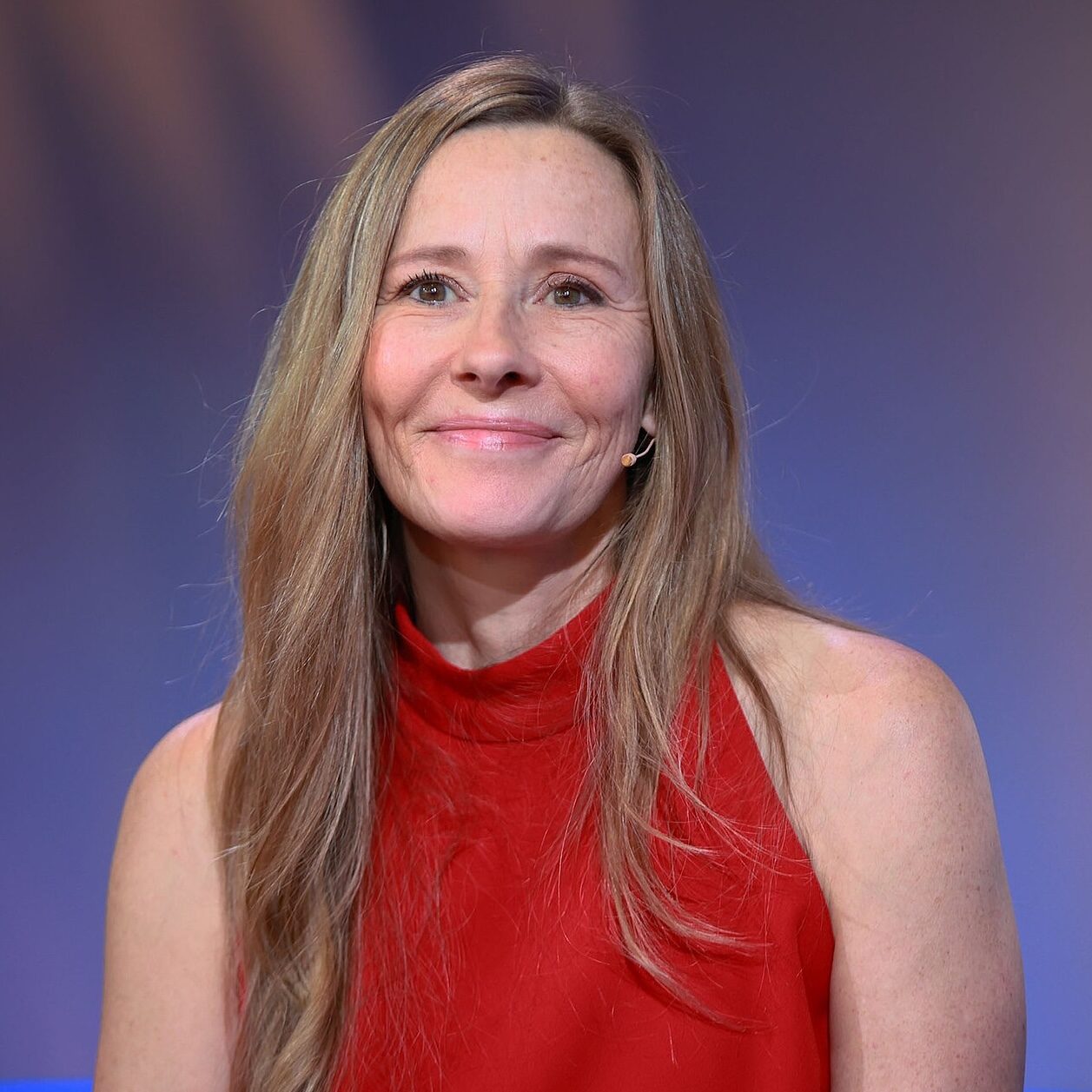
Andrea Wulf was born in India, raised in Germany, and studied design history at the Royal College of Art, London. She is the author of seven books. She is a Miller Scholar at the Santa Fe Institute and a Fellow of the Royal Society of Literature. The Invention of Nature won multiple prizes, including the Royal Society science book prize and the LA Times book prize.
Click to Show Episode Transcript
0:00:00.4 Sean Carroll: Hello, everyone, and welcome to the Mindscape podcast. I'm your host, Sean Carroll. As we've often mentioned here on Mindscape, our focus is on ideas, how we understand the world in the biggest possible sense of that term, trying to figure out what the theories are, how they fit with data, whether it's physics or economics or psychology or anything like that. But of course, as today's guest Andrea Wulf reminds us, ideas come from people. So even though it's important to understand the ideas, sometimes if you really want to understand the ideas, and you want to understand why we have some ideas rather than others, it helps you to look at the people who invented these ideas and the historical context in which they are embedded. And in physics or in other sciences, in chemistry or whatever, it's very often, at least apparently straightforward to pinpoint where the ideas come from, right, the moment in time when someone came up with the idea. Actually, that's harder even in the very physical sciences than you might think, because ideas are kind of in the air and they're shared and they finally appear somewhere. But in the more human side of things, in culture, in literature and art, and even in politics and philosophy, it can very often be harder to pinpoint where the ideas come from. Their gestation is a little bit slower. And by the time they get to us, by the time we have a certain idea, what about, you know, liberty? Or free will is an idea we talk about, or the individual and themselves and their relationship to the world.
0:01:35.3 SC: All these kinds of ideas are just so embedded in who we are, how we talk about where we are in the world, that it's hard to imagine a time when they weren't there, or at least they weren't there in the same way that they're there now. So that's kind of what we'll be talking about today. Andrea has written a series of books. She's written a number of books, but there's actually a sort of reverse chronological trilogy that she's just completed. Her most recent work is called The Traveler, about Georg, or George Forster, who was a German naturalist and travel writer. He was arguably the first travel writer in the modern sense. He went on an expedition with Captain Cook to the South Seas for three years in the 1770s and came back and wrote about it. Both about the naturalist kind of things that he discovered, the plants and the animals, but also as an ethnographer, as talking about the human beings who he met and actually standing up for their dignity against the kind of racial hierarchies that were present at the time. And then she had another book. The previous book was called Magnificent Rebels, about what she labels the Jena circle in the 1790s.
0:02:50.2 SC: And Forster was related to them. He actually interacted with them. But it was a group of intellectuals, big names like Goethe and Hegel and Schelling and Fichte, and they hung out in this tiny little town in Jena and basically invented what we now call Romanticism as an outgrowth of the Enlightenment. And one of the peripheral figures there was Alexander von Humboldt, who is the protagonist, if you want, the subject of Andrea's previous book to that, called The Invention of Nature. And Humboldt, again, was a traveler and a naturalist, much like Forster. And he visited South America, and he came back with enormously intricate measurements of temperature and pressure and magnetic fields, and also observed the various kinds of plant life and so forth. But he really focused, following the Romantics in the Jena circle, on the connections between different things. It wasn't just a collection of this and that. It was the interactions, the systems-level view, and not only systems-level of how plants talk to each other, but plants and animals and nature and humanity. So there is actually kind of a common thread of inventing a whole bunch of really deep ideas about the unity of nature, about the connections between art and science, about the connection between individuals and collectives, and our responsibility to the world broadly, that is being invented at this moment in the late 18th century, the birth of modernity. So it's fun to both think about these big ideas for their own sakes, but also to think about the people who came up with them and why they did that and what we can learn from them. So let's go. Andrea Wulf, welcome to the Mindscape podcast.
0:04:53.4 Andrea Wulf: Thank you for having me.
0:04:55.4 SC: So this is a slightly different kind of podcast than I usually do because you're a historian, which I don't usually do, but also you're kind of a narrative biographical historian. You actually focus on people. And my whole thing is I try to ignore the people and just talk about the ideas, but...
0:05:13.1 AW: But the ideas come from people.
0:05:14.7 SC: Well, exactly. And I do notice that, and I do recognize that. So that's why I want to do the occasional departure of style. So tell us a little bit about that idea that the ideas come from people. How conscious is your methodology in writing these wonderful books that are both biography and history and intellectual books?
0:05:38.4 AW: Very much so. I think I am interested in the ideas. I mean, I don't like to be in a category. So I am kind of a historian. I've done a lot of history of science, I've done philosophy. So I think I'm interested in the ideas, but I'm really interested in who had these ideas. Because I think we sometimes tend to think about the work of someone or the idea of someone as a kind of standalone thing, and we forget that it was very much influenced also by the life they lived. So like a poet, for example, we read the poem or we read a drama or a novel, but that is very often influenced by what that person just went through in their life. So those are the things I'm interested in. But also I think because we tend to focus, if we focus on a person, we tend to focus on one person. And we also forget that we don't really, unless you're a hermit, you don't really exist in a vacuum. So we are all part of a community, of a family, a group of friends, at work, in a country, in a nation. So I'm interested in these kind of threads and connections. But then also who were the people who have given us the ideas of the Enlightenment or Romanticism, for example? And I'm interested in particular the so-called long 18th century, so from the late 17th century to the early 19th century. Because I think a lot of the ideas we have today or who we are today is shaped by what happened during that time.
0:07:31.0 SC: And I love the idea of the connections between the people whose lives you're discussing and other people and their culture and all those things, because that also is a theme at the intellectual level. Because the people who you talk about are, to oversimplify things a lot, famous for drawing connections between different parts of the natural world.
0:07:52.4 AW: Yes. So I wrote a book about Alexander von Humboldt called The Invention of Nature. And he's probably the most famous man who, in the books I've written, he said that everything in nature is connected, that nature is this kind of living organism where everything hangs together from the smallest insect to the tallest tree. So he gave us really this concept of nature that very much shapes us today. But he was also part of a group of young Romantics who came together in this small town in Germany called Jena. That's my other book, Magnificent Rebels. And they were very much interested again in this idea that humans and nature belong together, so that we are part of this one kind of system. And then my latest book is about George Forster. It's called The Traveler. And there I really wanted to look at humanity itself. So it's kind of... I've written a kind of trilogy the wrong way round, chronologically.
0:08:46.4 SC: Yep, I noticed this.
0:08:57.7 AW: The one I just published should have been the first one, but that never works like this, does it? So I started off with Humboldt and then through Humboldt I kind of came across the others. But they are, in terms of the history of ideas, I think they are very important for the way we think today. And also, in Forster's case, really a reminder of the importance of ideas of humanity, our common humanity. So he was someone who returned from Captain Cook's second voyage with a deep-seated belief in the equality of races, which, given our current climate at the moment, I find a very inspiring story and a hopeful story, but also a very important story. How can someone who was brought up in a deeply racist society be so open-minded? What can we learn from that? So that's something that was very important for me in this book.
0:10:01.8 SC: And I'm tempted, and you'll tell me how accurate this is, but the time period we're talking about, the late 1700s, basically, the common theme of the three books might be cast as something like the invention of modernity. But I'm not sure what modernity is, and I'm not sure if that's the common theme. So maybe you can help us out.
0:10:23.9 AW: I think it's definitely themes that are important in the kind of coming together of modernity. If you look at Humboldt, his way of looking at nature as a living organism, so not as a mechanical system and not a machine that somehow, kind of, you put together, but as a living organism. That was a very new idea and an idea that has shaped our understanding of nature to this day. But also because he then understands that, well, if it is a living organism, if it is this kind of web of life, then if you pull one thread in this web, you might unravel the whole thing. So he's the first to really talk about and warn about harmful human-induced climate change, which of course, we are living with the consequences of ignoring him. And then you have Forster, who was Humboldt's mentor, actually. So I came across George Forster through Humboldt. And he is a quite extraordinary human being. So I'm gonna talk a little bit about him so that his ideas make more sense, I think.
0:11:08.6 SC: Right.
0:11:53.4 AW: I think his life is a really good example why you should also look at the life of someone when you look at the ideas. Because he, so he's born in 1754 in Gdansk, so in today's Poland, then part of Royal Prussia. He became a traveler, and my book is called The Traveler for that reason. He became a traveler at the age of 10 when he accompanied, as a botanist, his rather difficult and tempestuous father on a wild expedition through Russia. Just before his 12th birthday, his father took young George to London, where the young boy became the family's breadwinner by translating popular and best-selling travel accounts. He was a bit of a wunderkind, really, who picked up languages and scientific concepts like this. I mean, quite extraordinary.
0:12:44.3 SC: So what was he, sorry, what languages was he translating to and from?
0:12:47.2 AW: Russian. So he spoke Russian, English, German, and French.
0:12:53.9 SC: And he's 12 years old.
0:12:55.5 AW: He's 12 years old. And so he translates into English, which is not his mother tongue.
0:12:58.2 SC: Right.
0:13:00.9 AW: And English he basically picked up on the journey from Russia to England because they were traveling on an English ship.
0:13:09.2 SC: Sure. As one does.
0:13:11.0 AW: As one does. At the age of 16, he starts to attend the learned meetings of the Royal Society. So he has no formal education, but quite an extraordinary education, if you think that this is the Royal Society at that time is the place where all the great ideas are exchanged. And then at 17, he joins Captain Cook's second voyage, the Resolution. And he... So this is a voyage of extremes, where they sail through labyrinths of icebergs and tropical islands in the South Pacific. But for Georg Forster, it really is a voyage of human interaction. And he returns with an unshakable belief in humankind, which is very unusual. So this is a time when I mean, almost everybody in Western society in Western Europe is deeply racist. Where explorers have looked at indigenous people with arrogance at best and utter disgust and brutality at worst, where European philosophers such as Immanuel Kant or David Hume, they have no qualms in talking about Black people as being an inferior race. So his attitude, young Georg Forster's attitude to the indigenous people is very, very unusual. He believes that they are humans like everybody else.
0:14:53.2 AW: He does not see them as savages or barbarians. So he also turns against Rousseau's idea of the peaceful, noble savage because he sees a war armada in Tahiti, for example. He says, "So this is not the peaceful savage who lives in this happy natural state." He says, "Every society has good and evil. The world is not neatly divided into virtuous and immoral. Quite the opposite. It's this complex tapestry of the many shades of human lives and experiences." And that is a highly unusual attitude and completely different to most people. And I think also proof that we tend to say that in the 18th century, it was kind of inevitable to be racist. That's just the way people were. And I think his life really proves that it was a choice even back then. It is not an unavoidable way to see the world. And so I became interested in how is it possible that this young man thinks so differently? He does not talk about the indigenous people as half humans or half monkeys, half human. He sees them as people, humans who have their own value system and cultural norms. And he said, I am not going to use European norms or morals to judge them. "Vice and virtue are relative concepts," he says. And I think there are many reasons for this.
0:16:45.3 AW: But I think one reason is that he was still very, very young. His almost like his mind is still quite malleable. He's open to other ideas. But I think it's also because he was a traveler. He was always... And for the rest of his life, he remains like this. He's always in transit. He's this perpetual outsider. If you are an outsider yourself, you tend to be nicer to other people who are outsiders. And he does not feel, he doesn't even know which country he belongs to because by the time he's 17, he's lived in Russia, in Prussia, in England, and then he goes off on the Resolution. So there's an open-mindedness, I think, that comes from very much not being part of a nation, which is something I think we sometimes forget today when everybody seems to be crawling behind their national boundaries.
0:17:35.3 SC: And so it was Georg Forster and his father who were both on this second voyage of Captain Cook. So how old was the younger one? How old was Georg?
0:17:39.6 AW: He was 17.
0:17:43.9 SC: 17.
0:17:48.2 AW: 17 when he joined, and he was 20 when they came back. So at the age of 20, he has seen more of the world than most people will ever do. So they sailed 75,000 miles, roughly the same amount as if they had gone three times around the equator. They spent a lot of time in the icy polar seas of Antarctica because they were looking for the fabled southern continent, which many scientists back then believed had to exist to counterbalance the landmass in the northern hemisphere. So just imagine being on a sailing boat, and a sailing boat which can't reverse, being amongst icebergs. Not a great thing. It's freezing cold, so cold that the ropes are frozen stiff, the sails are like metal plates. They wear woolen clothes, which is always wet.
0:18:18.0 SC: Yeah.
0:18:47.7 AW: Never dry. I mean, it must have been absolutely horrendous. But then they go New Zealand, Tahiti, Tonga, Vanuatu Archipelago, the Marquesas, Easter Island, and they go back and forth. So they go three times back to Antarctica. So they're really zigzagging through the South Pacific, and they go to several places several times. So they get to know the people who live there. So for example, they go three times to Queen Charlotte Sound, which is at the northern tip of the South Island of New Zealand. And they spend weeks and weeks there. So it's not just a quick stop, because they have to repair the ship. And so they really get to know the people. And because Georg is so linguistically talented, he picks up words and languages, although he always says, "I don't understand everything. I don't understand their form of government, for example, because I don't understand enough." But there's a great open-mindedness, which I think allows him to approach this differently. And then, because you like ideas, he is this prescient scientist who looks, a, at... Or by comparing the different languages across the South Pacific and the distribution of breadfruit trees, he works out roughly the route of Polynesian migration 200 years before DNA analysis and archaeological studies prove it. And I think it's just extraordinary. So the breadfruit tree, for example, which he loves eating because that's one of the food staples in Tahiti, for example, but he notices that they don't have any seeds. Now, because they don't have seeds, he knows that they can only be cultivated by humans. But he wonders, where does, where, where do they originally come from?
0:21:03.7 SC: Yeah.
0:21:07.2 AW: So when he returns, he kind of looks through botanical books in libraries and he finds that there were, that there were some breadfruit trees with seeds in Indonesia. So he comes to two conclusions. One is they must have been transported by someone across the ocean to the South Pacific islands, and the sophistication of the agricultural methods of the Polynesians is extraordinary because through selective breeding, they basically turned the original smaller breadfruit, which has seeds, into this larger, nutritious, kind of bigger breadfruit tree. And then he looks at the languages and he sees, well, they're kind of connected. Sometimes it's just one letter that is different. So you have like va'a, which is the canoe in Tahitian, or vaka in Tongan, or waka in Maori. So he works that out. And then where others, where other explorers see this empty South Pacific Ocean with a few islands, he sees threads of migration. So he sees how everything is connected. So just as Humboldt sees that nature is connected, he sees that really more as an ethnographer, how everything, how humans are all connected.
0:22:41.2 SC: And tell me more about the expedition itself. Is it just one ship? How many people are on it?
0:22:47.2 AW: So there's two ships. It's the Resolution, which is the bigger ship, and the Adventure. Altogether, it's 200 men under Captain Cook. And they set sail in July 1772. And as I said earlier, they're trying to find this southern continent. And they end up doing a full circuit around Antarctica because Cook thinks, "If I do one proper circuit and I can't find land, then if there's a southern continent, it's covered in ice and that's no good for the British. There's nothing they can exploit." So it's a three-year voyage. They kind of zigzag across the South Pacific, and as they encounter islanders, the crew uses firearms to kind of exert power. And with time, Georg Forster kind of gets more and more dismayed by this. So it's quite interesting to see this. So the very first time they land in New Zealand, he still is very much an Enlightenment thinker who believes that the Europeans are superior. So they arrive there, the ship is pretty battered from the icebergs, and they set up all these workshops, and the forest kind of echoes with hammers and saws. And he says, "Look at all the art and industry we bring to the savages, and their life is going to be just so much better." And then within six weeks, he's done a complete turnaround. So within six weeks, he starts criticizing the European influence. And he says, by the end of the voyage, he says Europeans just bring death and disease. It would have been much better for the inhabitants of the South Seas if they had never encountered the English, because he sees again and again how they are wounded and murdered, and he's just shocked by it.
0:24:57.1 SC: And just as a footnote, I understand that this was Cook's second voyage. He never had any scientists on his voyages after that, right? He didn't want any more scientists.
0:25:07.8 AW: No, he really didn't. I think there were, I mean, it did not help that Georg Forster's father, Reinhold, was a really quite a terrible person. I mean, he had quite a temper. He managed to have fights with everybody on the Resolution, even with the quite unflappable Cook. So Cook is really quite well known for his kind of calm character and personality, and he managed to kind of upset him. Like, once he asked him for a duel. I mean, he gets chucked out of the kind of great cabin a few times. So he's not an easy man. And I think after that, Cook was just like, "I am not having that ever again. This man is just unbearable."
0:25:56.1 SC: And is this kind of expedition something that is paid for by the government, by the British government? I mean, that's a... It seems like a long journey with uncertain results. I mean, I'm happy that they made it back, but it just seems kind of wonderfully quirky from our modern point of view, the idea you would go off for years and just poke around and try to learn things and come back with what you've learned.
0:26:24.4 AW: Well, I wish it would just be learning things. This is very much a kind of imperial endeavor. So to set the scene, so there's the Seven Years' War in Europe, which is from 1756 to 1763. And it's been described as the very first global conflict because it was fought in North America, Europe, India. I mean, it's not just Europe. It is really Europe and its colonial possessions. And after the war, Britain really emerges as the kind of dominant global power. France not particularly pleased about that. So France and England begin to look at the South Pacific as something, maybe they can kind of find a few more colonies there. So even expeditions such as Cook's first voyage, the Endeavour voyage, which had a very scientific purpose, which was to observe the transit of Venus. And so Cook sails to Tahiti in 1769 to observe the transit of Venus there, which is the first, really the first global international scientific collaborations where scientists all over the world observe this one moment when Venus crosses the kind of burning disk of the sun. And they measure the distance, or they measure the entry and the exit time of Venus, and through that they can kind of measure the distance between Earth and sun. But that only works if you have lots of scientists doing that together. So that was the original reason for the Endeavour voyage. However, they also landed in Australia, and we all know what came from that. So that becomes a colony for Britain. And it is, even with a scientific purpose like finding the southern continent, it is an imperial endeavor. So it is not like, "Oh well, we just want to find out a few things." So yes, it is very much financed by the British government, by the British Admiralty. And Cook has very precise instructions to write reports about the soils they find, the plants they find, the temper and the temperament of the indigenous people, the local people, just to see, "Could we kind of go in there and just turn them into slaves or something like that? Will they fight us?" So this is very much an imperial endeavor.
0:29:20.5 SC: And nominally, Forster's job was as a naturalist. He was trying to learn about plants and animals. He branched out into human beings very obviously. But what did he learn about the plants and the animals?
0:29:34.1 AW: So he's the assistant naturalist and the draftsman. And he has not a lot of choice in going on the Endeavour because his father decides it. He's not a very talented draftsman when he starts. When you look at his early birds from New Zealand, they kind of cling to the branches and look like they're about to fall off. But he becomes very, very good. So they collect a lot of plants. They shoot birds, they kind of dissect fish. And they don't really come back with any discoveries as such, because Joseph Banks, who was a botanist, and Daniel Solander, they were on the Endeavour voyage, and they had brought back quite a lot of plants already. So Reinhold Forster, Georg's father, is constantly complaining that they spend too much time in Antarctica. Obviously, there's not much to get in terms of plants. So he's really annoyed about that. And he just writes these very angry long entries in his journal, like, "How can we find anything here? How am I gonna be famous when I come back?" So they don't come back with enough, really, to make a kind of splash in the scientific world. And what Georg Forster then does is he writes a travel account of this voyage, which is very different to earlier travel accounts. So he's a born storyteller. His descriptions really sing off the page. But he's also a very intuitive ethnographer.
0:31:14.9 AW: So where Christopher Columbus, for example, described or struggled to describe South America as anything but green, I mean, literally, the landscape is green, the trees are green, and the indigenous people are naked, which for Columbus means not civilized. Forster even turns the icy world of Antarctica into shades of kind of purple, green, and blue. So he writes this book which makes him famous because he brings these different worlds, but also these different people, into the parlors of European houses. And that is actually, I think, what they come home with. It's not their actual collections, except in terms they bring back a lot of ethnographical collections. So they come back with these extraordinary mourning costumes from Tahiti, baskets from Tonga, weapons from Tanna. Which are, and I think that's quite important, which are, because they're early ethnographers, they are actually traded, so they are not stolen. And they give us a really good idea of Polynesian culture before European contact. So I think that his contribution to science in that respect is more in ethnography than as a naturalist.
0:32:53.9 SC: And what were the societies of the South Seas like back in the day? What kind of government did they have?
0:33:24.8 AW: So very different. And he approached every island trying to understand, which was difficult. But he thought, and he was mostly right, he thought that they were more egalitarian than European societies. Or if they had a kind of class system, like they had, for example, in Tahiti, the boundaries were much more fluid. So he was very much interested in that and it shaped his political thinking, which then later made him a revolutionary in Europe, not by reading French philosophers, but by what he had seen in the South Pacific.
0:33:44.4 SC: And let's... I mean, there's just too many other things I want to talk about, so let's kind of wrap that up. I mean, you mentioned that Forster gets involved in the revolution in France. He died relatively young, but he managed to pack a lot of living into the period between coming home from the Cook expedition and when he finally died.
0:34:04.6 AW: Yeah, I mean, he comes back and he becomes really, for a few years, he becomes so famous, he becomes a public intellectual. He picks a very public fight with Immanuel Kant, who wrote this essay about the human races in which Kant wrote that there are four different human races, all defined by the color of their skin, with Europeans as the kind of pinnacle of creation. And Forster says, "Hold on a second. All the people I've seen on my voyage don't fit into your neat categories, because nature is really connected by nuances and by shades, not by these kind of sharply divided categories." And Kant is not very pleased about that. So Kant then writes another article attacking Forster, and it ends up being really a fight about methodology. How do we gain knowledge? So there is Immanuel Kant, who's never left Königsberg.
0:35:11.0 SC: Famously not a traveler, yeah.
0:35:13.1 AW: Yeah. Not a traveler at all. And then you have Forster, who's this traveler. So Forster accuses Kant and says like, "How can you make these statements if you have never traveled and you've never seen any of these people?" And Kant replies and says, "How can you come up with these things if you don't travel with a theory in mind?" So it's all about, do you start with an idea and then you find your proofs, or do you start with your observation and then you form your theory? Which I think was a kind of fascinating, which is really the battle of the methodologies, which are at the nexus of the Enlightenment. How do we gain knowledge? How do we form our theories? So then after a while, he ends up in Mainz, which is only about 80 miles from the French border, about 20 miles west of Frankfurt, which most people maybe know as a German town. But he ends up in Mainz, and then a few months later, in 1789, the French Revolution happens just across the border. And he watches this as if he's watching a kind of gripping drama unfold, because suddenly, when the French revolutionaries declare all men, of course, all men equal, they promise at least the possibility of a new society, a society which is built on the power of ideas and freedom. And so Forster sees that there is the real possibility of a new reality just across the border. So he's absolutely gripped by this. And in 1792, the French, so there's a war, so a lot of European nations are fighting against the French and their kind of dangerous ideas of revolutions, so the French take Mainz, and instead of being worried about the invaders, Forster welcomes them. And he wants to establish a German republic because from the age of 10, when he traveled through Russia, he's seen the kind of harsh reality of despotism and inequality.
0:37:43.1 AW: And these are really the themes that obsess him all his life. When he returns from the Resolution voyage, he fights for the rest of his life, he fights for freedom, equality, and against racism and White supremacy. So he becomes a revolutionary, and he becomes the co-founder of the so-called Mainz Republic, which is Germany's first republic. Very short-lived, only a few months. He then travels to revolutionary Paris to ask the French government if the Mainz Republic can become part of the French Republic. By the time he's doing that, the Prussians have taken Mainz back. So he's declared an outlaw, basically. I mean, he's a traitor. He cannot go back to Germany. So he is in Paris during the brutal Reign of Terror. But despite seeing this bloodshed, he still supports the revolution, which makes him very unpopular in Germany. It's one thing to support what happened at the beginning, another thing to initiate a German revolution, and then to support the kind of bloodshed in France. It's not gonna make him popular in Germany. But he thinks that... I mean, he's dismayed by it. He really does not like violence, but he thinks that the return to despotism would be worse. So he supports the French revolutionaries. And then... And I'm not gonna give away how he dies, but he then dies in 1794 at the age of 39. So it's a short life, but it's really quite a packed life, which for a biographer is just fabulous because his adventures start when he's 10. So you don't have 20 years of, "He went to school to this school and his teacher thought he was clever." You go straight into a wild expedition. And then you don't have this... I mean, even revolutionaries, even explorers, most of them end up with a quite boring last few decades if they get old.
0:38:44.7 SC: Yeah.
0:39:59.5 AW: Humboldt not, but most of them. So for a biographer, this kind of short, tight life is great because you have all the ideas without the tedious boredom of daily life of your main character.
0:40:17.3 SC: And I guess I have a mixed feeling about the whole story. I mean, there's a kind of inspirational aspect of he was someone who apparently truly held the best kind of Enlightenment ideals, right? He was for equality, but for real, for people of other races also. But at the same time, that was a very tiny minority view, and he had to swim upstream a lot, and it took quite a while for it to catch on.
0:40:50.9 AW: Yes. I mean, he's not mainstream thinking, what he's doing, at all. I mean, he's one of the very first to use the term human rights, for example. And unlike the American and the French revolutionaries, who very firmly excluded women, slaves, and non-Europeans, he includes them. He talks about the general rights of mankind, and it means all people from every single part of this world and of every gender. So he's way ahead of his contemporaries. I mean, he's also... Today he would be called a feminist because he believes in the equality between men and women. He admires independent and strong-minded women. He's married to one. He believes in the education of girls. He's a proud father of daughters. So he's very unusual in that respect, and the society he lives in does not approve at all. And there are, I mean, he has these not just public fights with Immanuel Kant, but also with other thinkers where anyone who writes that slavery is good or that there are inferior nations, he criticizes. And he uses, quite cleverly, he writes a lot of reviews. And the beauty about, I mean, I really enjoy writing reviews because it's a kind of little... It's like a jewel of writing. It's short, but you obviously describe the book you are reviewing, but you can also bring in your own opinion. So he uses... He purposefully chooses books that are either pro- or anti-slavery and then uses those to elaborate his own opinion. So they're kind of these sharp, short forms of text which he uses in a very, I think, tailored way.
0:43:05.0 SC: And then you also have a book, Magnificent Rebels, about the Jena Circle, which you can tell us about. But as a segue, is there a connection between Forster and the Jena Circle?
0:43:20.5 AW: There is, very much so. He is... So the young romantics who come together in Jena, the Magnificent Rebels, there is one extraordinary woman there called Caroline Schlegel, and she is, or was a very good friend with Forster. So she lived in Mainz during the establishment of the Mainz Republic. So when she afterwards moves to Jena, she brings his ideas with her. So they talk about him, they read his writings. He's very much admired because also he is really the stepping stone from the Enlightenment to the Romantics. Because on the one hand, he very much values observation and rational thought, but he also underlines the importance of subjectivity, feelings, art, and imagination, which are, of course, subjects that become very, very important for the young romantics. So he's almost this kind of first stepping stone away from pure Enlightenment thinking to something slightly different, which then becomes full-blown Romanticism.
0:44:46.5 SC: So who is in the Jena Circle? There's some recognizable names in there.
0:44:51.9 AW: Yes. So it's a group of rebellious thinkers, philosophers, and writers, including Goethe, Schiller, who's the famous playwright who wrote The Robbers. Then we have Schelling, who was Friedrich Schelling... A lot of them are called Friedrich, so Friedrich Schelling, who was this young philosopher who really comes up with a philosophy of oneness where we as humans are part of nature. Then you have the Schlegel brothers, who are literary critics, really, very unconventional, who kind of take on the literary establishment. August Schlegel, the older one, is also a very famous Shakespeare translator. And then we have in the periphery, we have later on we have Hegel, he pops up there, we have the poet Novalis. And then we have an extraordinary woman who was called, well to give her her kind of full name, Caroline Michaelis Böhmer Schlegel Schelling. So she carries the name of her father, but also of her three husbands, which shows you a little bit what kind of character she might have been. So she was the daughter of a famous German scholar and she was very open-minded and wild and free-spirited. And so she married young, she was widowed, she then goes to Mainz, she gets imprisoned for being a sympathizer with the French revolutionaries. In prison she discovers that she's pregnant after a wild ball night with a 19-year-old French soldier. All pretty outrageous behavior. And so when she leaves prison, she is really treated as an outlaw. And then the older Schlegel brother, August Schlegel, he marries her.
0:47:07.5 AW: He comes to her rescue, he marries her, gives her a new name and a new beginning, and they move to Jena. And this is really the beginning of the Jena set. I forgot one very important one, which is Fichte, who is a philosopher who kind of puts the self in the center of his philosophy. So they all come together in the mid-1790s in this kind of small town in Germany which most people outside Germany have never heard of, like 4,000 people. And it becomes the kind of the nexus of a new philosophy of Romanticism. And so in one day, with some luck in Jena, you would have seen more famous people than in a whole century in another town. It's quite extraordinary. So they believe that working together, not everybody in their kind of little study, but working together will create a kind of greater philosophy. It's about the group. So they kind of sit together in Caroline's house and they work together, and they are the very first to use the word Romanticism in its kind of new meaning, in its kind of literary meaning. And today, I mean, and I've tried this a lot of times, if you ask people, "What's Romanticism?", you get so many different answers. So many people will think of the paintings of Caspar David Friedrich, kind of these lone figures in moonlit forests. And others think, "Oh, the Romantics, they were all against reason and celebrated irrational thinking." And others think of passionate declarations of love or candlelight dinners.
0:49:06.8 AW: But for them, Romanticism was something much more complex and unwieldy and dynamic. And they basically said that everything is Romantic poetry. So from a piece of music to a painting, even a scientific experiment is Romantic poetry. Because they said to romanticize means to unite humankind with nature and to unite arts and science. And for me, that was always the thing that I did find so fascinating about them, this kind of bringing together the arts and sciences, which at that point were beginning to really separate. So if you look back much earlier to someone like Leonardo da Vinci, for example, this is someone who's interested in engineering and botany and sculpture and mathematics. But with the Enlightenment and with the sciences becoming more and more specialized, you have that kind of separation between the arts and the sciences more and more. And the Romantics are really trying to fight against this disenchantment of the world, this more and more materialistic world. So they believe that Romantic poetry can kind of bring together these very different disciplines and create something completely new with it.
0:50:44.5 SC: Would they have thought of themselves as opposing the Enlightenment or kind of developing it in a different way?
0:50:51.5 AW: I think developing it mostly, but they're also very young and contrary.
0:50:59.6 SC: Of course.
0:51:01.7 AW: So it is also part of being young and contrary to stand up against the literary establishment and the scientific establishment. It was part of the fun also to take those stuffy older thinkers and say like, "We are doing this very differently." And I think one of the important aspects for them was also that it was quite ephemeral. So it was not about coming up with a theory that was finished. It's all about... So Fichte, for example, with his philosophy of the self, he would develop quite a lot of that in front of his students. So his students, instead of listening to, I don't know, the philosophy of Aristotle or something like that, they actually saw how in front of their eyes their professors were developing something very new and dynamic. And that was also incredibly thrilling for the students. So you suddenly have all these students really flocking to Jena, wanting to see these new young professors who were really trying to change the world and who were shouting from their lecterns about their new ideas.
0:52:15.5 SC: And my impression is that a big emphasis was put on sort of a changing conception of the self. As previously you would have thought of yourself in terms of what categories you belonged to and you would try to be a good Catholic or baker or whatever, and the Romantics wanted you to sort of be yourself for yourself, to express something more inward.
0:52:40.0 AW: Yes, I think it was really... I mean, I think we have to paddle back a little bit and think about what's the kind of world they were brought up in. So this is the world when most of Europe is held in the iron fist of absolutism, when your life is pretty much determined by your place of birth, the class you were born into, the ruler of the nation you live in. So you don't have a lot of choice or freedom. And it's a world where thinkers believe that there are absolute truths, that there's God-given truths. And then you have these philosophers who come along and say, "Well, the only certainty we have is that the world is experienced by the self." So there is a shift, an emphasis on the self, on the subjective kind of view of the world. And so it's Fichte who... He kind of takes ideas from Immanuel Kant and he kind of puts them in another framework. And he basically says that the self determines how we see the world. The self is the source of all reality. And he says there's the self, the Ich, and then there's the Nicht-Ich, the non-self, which is basically the external world, the kind of animals, plants, nature.
0:54:22.7 AW: And he says that the self posits its own being, and not only that, through this kind of powerful initial kind of positing, it also creates the Nicht-Ich, so the external world, not in itself but in our mind. So everything we understand of the external world is shaped by our self. And what it does is it gives us free will. And that is an incredibly powerful thing. And this happens just after the French Revolution. So I think without the French Revolution, Fichte would have not come up with... So his philosophy is sparked by the ideas of the French Revolution, but this happens at the same time. So you have a bunch of brilliant scientists, thinkers, philosophers, poets who all are given this idea of free will and self-determination. And it's just the most empowering thing. I mean, combined with the French Revolution, which explodes really into Europe and no one is unaffected by this moment. It is a very, very powerful moment, I think, in the history of who we are, how we understand us. It gives us a power that we didn't have before. And the French Revolution really also proves that a revolution is a revolution of ideas. So ideas, words, philosophy is more powerful than weapons and swords and kings and queens. And I think it's almost impossible for us to imagine what that must have felt.
0:56:25.6 SC: And I guess there... I don't want to be overly simplistic about it, but if we were to come down on, did they win or lose, the Romantics? This image of the self and free will and so forth, incredibly powerful and influential and lasting. The aspirations to a unity of art and science may be less successful in terms of the modern world.
0:56:52.2 AW: Yes, I think that... I've been talking about this, the arts and the science, this kind of very weird division for a long time. And I find it quite hard to understand why it's still... I mean, when I look at education, like six-year-olds get put into these kind of boxes. "Oh, you are so mathematical and logical and you are so artistic or creative," and that's it. You're basically... You're gonna be a scientist and you're gonna be an artist. And you think that it really comes together and works together. Curiosity, imagination, part of the arts and sciences, I think. So I think that experiment kind of pretty much failed. But I think if the self has remained for the better or the worse at center stage of our life. It's definitely, you know, it's... We still have this kind of tension between free will and self-determination on the one side and being selfish and narcissistic on the other side. It's a balancing act which began back then and which we are still walking. And I think underpinning this are two crucial questions. One is: who am I as an individual and who am I as a member of a society? So how can I live a life in which I fulfill my dreams and my opportunities, possibilities, capabilities with the kind of being a morally good person, with the kind of restraints of society? And it's a negotiation which we still kind of do. And I think it's... I mean, we undoubtedly live in a society that is obsessed with the self. I mean, there's a whole generation called the Me generation.
0:59:00.9 AW: And I think we kind of circle around ourselves, but we've kind of forgotten where this came from. And when Fichte put the self in the center of his philosophy, he never wanted this kind of narcissistic celebration of the self. Because he always said that freedom comes always with our moral duty. Our freedom is only as far as we are not impinging on someone else's duty. So freedom gives us the power of the choice how to be and how to act. It is not about being selfish. We've just kind of gone down this kind of selfish route a little bit too much. And it's about finding the kind of balance. And in a way, with the arts and the sciences, it's the same. We've almost like we've divided it and kind of decided these are two different parts, they're not going to overlap, this is it. When, I mean, you are a scientist. All the scientists I know say that imagination is incredibly important in their work. Curiosity is incredibly important. Most scientists will have... One of the reasons why they've become a scientist is because they felt this wonder of nature at some stage as a child or as a teenager, and they want to understand this wonder. But it's something we don't really talk about in the sciences. It's almost like peer-reviewed out of you.
1:00:41.7 SC: Yeah. Yeah. Well, I like the word negotiation that you used. I mean, the Enlightenment left us with this legacy that there are individuals and they are sort of the locus of freedom and responsibility, but then there's also society, right? That we do interact with other individuals, we have collective interests and responsibilities, and we don't always negotiate fairly between those. Like you say, there's a bit of a tilt toward the selfishness and the egoism of the individual.
1:01:14.3 AW: Yes, exactly. Exactly. So, how do we reconcile our personal liberties with the demands of a society? And that is a negotiation that we have to deal with on a daily basis.
1:01:24.1 SC: There we go. And so the last person to talk about, although the first book in your belatedly realized trilogy was The Invention of Nature, talking about Alexander von Humboldt. And was he connected to the Jena circle at all?
1:01:42.8 AW: Yes, he was. That's why it's a trilogy. He was. So he is actually part of the Jena group. He's not in the inner circle, but definitely in the outer circle. So he comes to Jena for the first time in 1794 because his brother, Wilhelm von Humboldt, lives in Jena, and he visits him. And he then meets the group, and in particular, Goethe. So the friendship with Goethe, between Goethe and Alexander von Humboldt, is important for both of them, actually. So when Humboldt arrives in 1794, he's in his 20s. He's this young, very bright scientist, very much an Enlightenment scientist who believes in reason, rational thought, observation, experiments, his instruments. And then you have Goethe, who is Germany's most famous poet, but he's also a scientist. I mean, Goethe is a great example of the arts and the sciences coming together. So when he meets Humboldt, Goethe's natural history thinking has been, as he said himself, in hibernation.
1:03:01.2 AW: And meeting Humboldt is just like rain falling on a dry patch of earth, and it's just sprouting all over. And these two men just really, really like each other, and they experiment together, and they dissect frogs and mice and people, and they go to lectures together, and they do experiments with light and optics and botany, and they watch caterpillars hatch. So they really go into this scientific thinking. But at the same time, it is Goethe who inspires Humboldt to just move a little bit away from this very "objective" science. So he basically says, "Well, it is the eye through which you see the world, but it is your eye, so this will shape the way you see the world." So he gives Humboldt a slightly stronger emphasis on subjectivity. And Humboldt himself says that Goethe has given me new organs to see the world. Because the Jena set has this greater emphasis on the self, Humboldt, when he sets off on his five-year exploration of South America after his visits to Jena, he sees this new world through these new eyes that Goethe has given him, through a greater emphasis on subjectivity. So you have Humboldt exploring South America with... I mean, he carries 42 scientific instruments, all wrapped individually. He's obsessed with measurements.
1:03:17.0 SC: Very sympathetic.
1:04:49.7 AW: He climbs up volcanoes and sets up his instruments every few hundred yards and measures everything. But, and I think that's very important, he's not just interested in empirical data. He also always says, "In order to truly understand nature, you also have to feel it." So it's a bit like, I think it was Humphry Davy whose journals have, on the one page, he describes his observations of an experiment, and on the other page, he describes his feelings. And that's what Humboldt does. He really wants to also inspire this sense of wonder in nature. So for me, Humboldt, inspired by first Georg Forster because Humboldt always said throughout his long life that Georg Forster inspired him to go on his own exploration and really guided his ways of thinking about nature and politics, and then also the Jena set. But Humboldt is the bridge that bridges the Enlightenment and Romanticism. He is the connection. I mean, he's the... You have, on the one hand, you have, I don't know, Isaac Newton who says rainbows are created by light refracting through raindrops. And on the other side, you have Romantic poets such as John Keats who says Newton has destroyed the poetry of the rainbow by sending the light through a prism. And Humboldt does both. He gives us this bond between the subjective and the objective, between the emotional and the rational. So he's that bridge between the arts and the sciences.
1:06:41.2 SC: And it wasn't just for his personal benefit. You can make the case that Humboldt was a or the founder of the idea of environmentalism.
1:06:52.0 AW: Yes. So because Humboldt sees nature as an interconnected whole, he also sees the dangers of destroying it. So as he travels through South America, he warns about the destruction of forests, monoculture, irrigation. Because although you think he's always in the wilderness, he's not. I mean, these are the Spanish colonies. So he sees a lot of plantations, for example, and how those plantations have entirely destroyed forests. And then as he travels, he sees these destructions, and he is, for example, the very first to explain the fundamental functions of the forest for the ecosystem. So he talks about the forest's ability to store water, to enrich the atmosphere with moisture, to protect against soil erosion. And when he comes back, he talks about harmful human-induced climate change in 1800. Pretty extraordinary. And in 1832, he writes a paragraph where he says, "Irrigation, deforestation, all really terrible." And then he says, "What's really bad are the gases that come out of the industrial centers." I mean, he didn't understand CO2 yet, but he understood that this is not good for the environment. So I've always called him the forgotten father of environmentalism. He really understands the threat to nature and he warns about it. And then he then inspires people just like John Muir or George Perkins Marsh, who then take this and become more politically active in it. Humboldt does not do that, but because he sees nature as this web of life, this interconnected whole, he understands, I mean, it's simple things. Like he sees, for example, at the Venezuelan coast, he sees how ruthless pearl fishing has completely destroyed the oyster stock. So he watches, he looks around, and he sees the consequences of the devastating effects of humankind's intervention in nature.
1:09:11.7 SC: And like Forster, he wasn't just about nature. He noticed things about human beings and racial hierarchies and things like that.
1:09:20.5 AW: Yes, and I think because he says he was very much guided by Forster's ideas. I mean, they were friends. So Forster was his mentor. Forster was 15 years older. They traveled together through Europe. And as Humboldt is traveling through South America, he sees again and again how, for example, the colonists and the missionaries treat the indigenous people. He sees slavery there. I mean, one of the very first things that he sees when he arrives in South America is a slave market. And he says that made him a lifelong abolitionist. So he's very much influenced by Forster's way of looking at humans. But I think, and that's the interesting thing about both of them, they don't ever just see nature and humans as separate things. We're all part of one thing. And Humboldt talks about how one breath of life is poured over plants, animals, rocks, humans, mountains. The whole planet is one breath of life, he calls it, because we are all part of this one beautiful planet that is ours. Just messed it up really badly.
1:10:35.7 SC: I do wonder about what lessons we can learn about how these people had the strength of conviction to resist racism or environmental degradation or whatever. I mean, you mentioned before, Forster was young at the time and he was a bit of an outsider, but I don't know about that. I think there's a lot of young outsider-y types who are pretty darn racist and violent or whatever. So can you say more about maybe what are the characteristics of these people that gave them what we would, I hope most of us today consider to be these virtuous ways of thinking about the world?
1:11:16.9 AW: I mean, I think it's always a combination. I mean, Humboldt, for example, Humboldt comes from a Prussian aristocratic family. Very, very different background to Forster, for example. But he feels absolutely stifled by Prussian society and by his upbringing. And I think one of the reasons is because he was... Well, I mean, most historians, me included, think that he was gay. So he's again a kind of outsider in a certain respect, and he finds a certain freedom when he travels and is away from German society. And I think it's the same for Forster. He is an outsider. He's always in transit. Humboldt is always in transit. So there's a sense of movement, of not being stuck in a place. I mean, Humboldt himself also calls himself a kind of citizen of the world. He lives for many, many years in Paris, then he moves back to Germany. So I think there's a certain fluidity in where we belong, which is very important. I do think that traveling, and I don't mean traveling like the Instagram generation, traveling to a point, photograph a spot which everybody has been on. That's not what I mean. I mean traveling to discover. And I don't mean discover in a colonial way. I think you can also travel in your mind. It doesn't have to be... You have to have the open-mindedness to travel to other places, to other concepts, to other ideas, to allow yourself to be challenged by others. I find it very, very difficult that you can't criticize people anymore. I really like a kind of fiery discussion with someone. I do not have to agree with someone. That is for me traveling in my mind. And I think they were all very willing to do that, to not... They didn't feel the need to conform because there was something in their life that was already different. And that's maybe the reason why they then celebrate that. I don't need to conform because I'm anyway not like everybody else. But it's very difficult in hindsight to kind of say, is it because of their upbringing? Maybe they were just different. There are people who just are different, and maybe that's what they were. But I like to believe it has a lot to do with being willing to step out of your comfort zone intellectually, but also physically.
1:14:07.5 SC: And I guess the last thing is, this might be a downer sort of last thing, but I can't help but feel jealous of all these stories of people having these salons with the great intellectual minds of their lives, reinventing what it means to be human and think about nature. Have we lost the ability to do that? Is that a little bit less common or is it just my selection bias?
1:14:30.6 AW: I think it's slightly less common. I do think so. But I think it can still happen a little bit. I'm a member of a writers' club in London and I had my book launch yesterday and it was a bunch of wonderful, wonderful, very different writers and friends of writers. And it just feels like a community. I mean, we've both been to the Santa Fe Institute. That feels like a community.
1:14:47.4 SC: Yeah.
1:15:04.3 AW: So I think there are still these places. And I think in hindsight with history, when we look back at this time, we might see them also more clearly. I'm pretty sure that people who lived in the 18th century were not really quite aware that they were doing something extraordinary or special maybe, or that the group of people they were hanging out with was pretty extraordinary if you look back 200 years. So maybe this happens right now under our noses somewhere, but we just don't really know because we don't have that distance yet.
1:15:39.2 SC: I just worry that if all these people lived in the present day, they would just have podcasts rather than getting together and talking to each other.
1:15:50.9 AW: I know. I do think that is... Being together, I mean, the Jena set in particular, for them being together, drinking together, eating together, reciting poems together, that was very much part of it. If we don't want to end on a down, but on the positive side, I mean, there is also something really remarkable that I can speak to you.
1:16:02.6 SC: Yeah.
1:16:14.3 AW: I'm sitting in London, you are in America, and we can have a conversation. That's beautiful. So there are also nice things about it. But it would be nicer if we now could go and have a meal together and continue talking.
1:16:29.1 SC: Look, that would be nice. But like you said before, it's a negotiation. This is a wonderful thing that we can have this conversation and then share it with a bunch of people out there on the internet. And next time we're both in Santa Fe, we'll go out and have that drink.
1:16:42.6 AW: Exactly. We'll do that.
1:16:44.0 SC: Thanks very much, Andrea Wulf, for being on the Mindscape podcast.
1:16:47.0 AW: Thank you for having me.
About the following remark at around 18 minutes into the conversation:
“they wear woolen clothes which is always wet never dry”
Wool has a reputation of performing comparatively well in damp conditions. My understanding is: the wool fibers have the property that they _bind_ water molecules, such that wool fiber can absorb a considerable percentage of its own weight in water while still not feeling damp to the touch.
While the explorations in the antarctic were in all miserably cold, it could be that the woollen garments outperformed what modern synthetic fiber garments of the same weight and thickness will do for the wearer.
Pingback: Podcast Mindscape: Interview – Andrea Wulf