
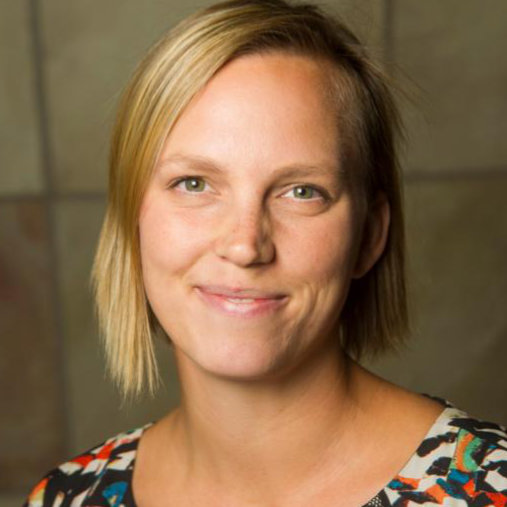
The concept of the city is a crucial one for human civilization: people living in proximity, bringing in resources from outside, separated from the labors of subsistence so they can engage in the trade of goods and ideas. But we are still learning how cities grow and adapt to new conditions, as well as how we can best guide them to be livable as well as functional. I talk with urban scientist Catherine Brinkley about the structure of cities, including the fractal nature of their shapes, as well as what we can do to make cities thrive as much as possible.
Support Mindscape on Patreon.
Catherine Brinkley received a Ph.D. in City and Regional Planning as well as a degree in Veterinary Medicine from the University of Pennsylvania. She is currently Associate Professor of Human Ecology and Faculty Director at the Center for Regional Change at the University of California, Davis. She has been awarded fellowships from the Fulbright Foundation, the National Center for Faculty Development and Diversity, and the Santa Fe Institute.
- Web site
- UC Davis web page
- Google Scholar publications
- Brinkley and Raj (2022), "Perfusion and Urban Thickness: The Shape of Cities"
Click to Show Episode Transcript
0:00:00.4 Sean Carroll: Hello everyone, welcome to the Mindscape podcast. I'm your host, Sean Carroll. This is kind of an obvious thing to say, but cities play an increasingly important role in the modern world. We've talked about cities a few times on Mindscape, we talked to Will Wilkinson about the relationship between urban versus rural and political partisanship. We talked to Joe Walston about the environmental impact of cities, which are largely positive, concentrating all of the people and their products and resources in a tiny area.
0:00:30.0 SC: But the cities themselves, we haven't talked about that much. The growth of a city, the shape of a city. The UN estimates that by 2050, more than two-thirds of the global population will live in cities, so understanding how they grow, how they form, how their shape becomes what it is, is very important.
0:00:48.7 SC: And by the shape, I don't just mean the shape of the boundary, of the city limits, right? Inside the city, there is structure, the central core downtown area might have a different mix of residential and businesses and manufacturing than the outer periphery does.
0:01:05.9 SC: And what I like about this question is, it's a wonderful example of the differences between top-down and bottom-up ways of making a complex system, because in some sense, the natural growth of the city is completely organic. You have people, they wanna buy some land to build something, put up some way of living together in some complicated fashion.
0:01:27.4 SC: But then you have to also have some planning. You have to have sewers, you have to have streets, you have to have transportation and so forth. And sometimes you get very ambitious kinds of planning where you plan out a whole city from the start, and inevitably those planned cities don't quite look natural in some way.
0:01:46.1 SC: So today's guest is Catherine Brinkley, who is a ecologist and urban scientist, who really has thought very carefully about what a city is, how cities grow and what kinds of shapes they have, and for what reasons. It is very much sort of urban studies as a physics problem. It's made of individual people, and those people feel pushes and pulls, and basically they're kind of searching for an equilibrium where they can all settle down and be happy.
0:02:12.7 SC: So why do cities take the shapes that they do, how do they grow and get bigger, and how should they grow and get bigger? Because in that set of many, many people, all of whom have interests and ideas about how things should go, not everyone might benefit from every single idea. So how do we build cities that are not just a place to live, but a good place to live? A place where you would be happy to live, given that we human beings like a little bit of green space and outdoor time, not just a few square feet in which to house ourselves.
0:02:43.2 SC: So there's an important and interesting conversation that goes in all sorts of areas. Unlike the usual physics conversation, you have to bring in ideas from very many different fields to think about cities and how they grow, and like I said, it's important even if you don't live in a city, many other people do.
0:02:58.7 SC: Our world is governed by mostly people who live in cities, for better or for worse, so we want that to be good for the people who live there and for the people who don't. So let's go.
[music]
0:03:26.1 SC: Catherine Brinkley, welcome to the Mindscape podcast.
0:03:27.9 Catherine Brinkley: I'm so honoured to be here.
0:03:30.4 SC: I wanna talk about the science of cities, this is something you work on, something you've written about, but I thought it'd be fun to just ease our way in by starting with the romance of cities, or the way that we feel about the idea of the city. It's clearly a resonant concept that has different kinds of connotations for different people.
0:03:51.0 SC: There's the idea that it's sort of exciting in the city and cosmopolitan and sophisticated, but also the idea that maybe it's a little bit less authentic, the heartland and the rural areas are more real America, presumably other countries feel the same way. I don't know, what is your feeling about how we should think about the whole phenomenon of the city from a more emotional point of view?
0:04:13.6 CB: I think you're right that people think about it in so many different ways. There are so many analogies for the city from people talking about cities as if they are slime molds just eking out into the rural area and sucking up nutrients. Jane Jacobs famously wrote that cities are the wealth of nations, and that the sidewalk is like a ballet, so lots of beautiful imagery there.
0:04:37.0 CB: I like to think of cities as coral reefs, these incredibly complex structures that are diverse, that are responding to their environments, growing, changing, but also very vulnerable to some of the same things that coral reefs are vulnerable to, like climate change.
0:04:58.3 SC: Right.
0:05:00.0 CB: And then others boil a city down to thinking of it as just a cell, so a simple cell, simple organism. They are far from simple, but sometimes those analogies are really useful if you're trying to simplify the study of cities. [chuckle]
0:05:12.4 SC: Well, it brings up something I was gonna get to later, but I might as well hit it right now, which is the idea of a city as a complex system. The idea that if we can analogise it to coral reefs or to cells, there must be some common properties between all of these different ways to be a complex system.
0:05:29.4 CB: Yes, and that has formed the basis of a lot of shared research in human ecology. Thinking about the ecology of cities, the rank size order of cities, trying to take this incredibly complex feature and boil some simple facts out of it. Because... So whether you live in a rural area or an urban area, you are impacted by the city. Whether you are drawn to it because you need to work there, or where you live there and you love going to the theatre, the city touches all of us. Some of us try and run away, others run towards it.
[laughter]
0:06:16.8 SC: Right, it exerts an effect one way or the other. I think more people are running toward? Was it in your paper I saw the statistic from the UN, that two-thirds of people are gonna be living in cities before too long, worldwide?
0:06:28.0 CB: Yes, this is the... The UN has been touting the rise of cities as more and more people are moving to cities for jobs, and as a result of that, there has been an expansion of the urban footprint, but the footprint is such a small, small footprint compared to agricultural land. So the urban footprint is about 3% of the land area compared to the agricultural footprint, which is about 30, sometimes 40%, depending on how you count.
0:07:04.3 CB: So it's still a small footprint, but because there are so many people moving to cities and when they moved to cities, they walk more, bike more. There's less sewer line laid per capita. There's some economies of scale to be had, and there's a lot of hopes planned on reducing greenhouse gas emissions as more people move to cities.
0:07:31.4 SC: Yeah, this is definitely a message I've gotten in a couple of different podcasts I've done with Joe Walston and Geoffrey West. I think a lot of people think about a city, they see all the concrete, all the electricity, all the cars, and they see energy and consumption, and something that is not natural, but per capita, all this consumption is relatively less. Cities are really much kinder to the overall environment than other ways of living. Is that a correct impression?
0:08:00.8 CB: I think it's a debated impression. On the one hand, there's less, as I mentioned, sewer or concrete laid per capita, but on the other hand, there are these vast networks of resources that city suck up in terms of energy, in terms of water and food. And so there's a whole literature on teleconnections with cities, that problematises that are cities really good for the environment, that perhaps not as good as we like to say they are.
0:08:28.3 CB: And then on the flip side, as much as people are moving to cities, anyone who's been to a city knows that they are not optimised systems. There are neighbourhoods that are very much struggling, there are sections of the city which are losing population. So it's a total... It's a total sum growth, but it's not all the parts that are equally growing. And there are cities that are shrinking too, globally. So it's a complicated picture. [chuckle]
0:08:56.5 SC: Well, I think that's perfectly fine. I'm glad that you're here to help us understand the complications, 'cause not my area, I will simplify things a little bit. But you're completely right about those dependencies. I remember living here in Los Angeles being struck by learning about how bad earthquakes would be, not because buildings would fall down, because we're pretty good at building buildings that are not gonna fall down in an earthquake, but because all connection to water and power would be shorn. If the San Andreas Fault does anything terrible, then LA would just be kind of plunged back into the Middle Ages pretty quickly.
0:09:31.1 CB: Yeah, and that's kind of the scary thing with a lot of the climate models that are predicting extreme weather events, cities, many of them are in coastal areas or in the direct path of potential disaster and like coral reefs very, very vulnerable to that. So there's this dual need to think about how to adapt and also how to mitigate, and we have excellent models for predicting where we will experience more extreme weather events. We have excellent models for the policies we perhaps should adopt to reduce emissions or to adapt.
0:10:12.6 CB: But what we don't have is a really good grasp on what we're actually doing, and this is where my field, planning, comes in, and there is a lot of work to be done in terms of how we plan cities, how we're planning for these futures. Part of that is that Jane Jacobs and many others worked very hard to move city planning from a top-down, experts are telling you how to develop cities, towards a bottom-up justice, social justice-oriented version of how to plan cities, where you are talking to housewives about how they get their kids to school and you're talking to cyclists about how they safely navigate through the city, and you're reflecting that back in the plan.
0:10:55.9 CB: But one of the problems with the way that we do planning is that a lot of plans that are made are then put on the shelf and there's a real need to aggregate all of that data, what cities are planning to do in terms of where they're building housing, roads, read those plans, which are thousands of pages long, and then demonstrate how we're going to meet these challenges.
0:11:20.6 SC: Well, this is great because it leads right back to this cities as a complex system kind of question. Real world complex systems, whether they're coral reefs or cells, have this kind of fractal structure. They're kind of heterogeneous, there's different sub-things doing different things, and planned cities seem very different to me than unplanned cities.
0:11:42.4 SC: I know you're talking about planning within the life of an organic already existing city, but especially in Asia and other places, there are experiments now where we're just building a city from scratch, building this huge thing. And I'm struck by the different ways that roads are laid out in a square grid versus something more organic and vibrant. How plausible is it that a puny human mind can plan a successful city all by itself?
0:12:08.6 CB: There are a lot of indicators that an emergent model of planning cities works out better in terms of considering equity issues, and a lot of the cities that were planned in top-down fashions, as Geoffrey West I think talked about on your podcast as well, have ended up not keeping that form and have major traffic issues.
0:12:33.8 CB: There are cities that have been planned to have a particular form and it's worked out really well. So an example of that is Copenhagen's Finger Plan, where it's got a five-finger plan with Copenhagen in the palm and then high-speed transit rail out on the fingers. That plan, which was set in the '50s, has worked.
0:12:56.8 CB: You still see these green wedges of protected farmland and then urban areas, and the fingers have gotten a little short and fat at this point in time, but it's a plan that worked. I think that part of the reason that plan has worked is there is this dualism in terms of wanting the urban life, but also wanting access to green space.
0:13:22.6 CB: And this gets at the heart of what has perhaps not worked with a lot of urban theories about city building, and how we need to do city building differently, to think about green space and urban space in the same breath, so that we're not building an urban theory that's only science of cities, but it's science of cities plus green space plus food systems.
0:13:47.5 SC: And forgive me if this is just hubristic on my part as a physicist, but I tend to think of some of this as thinking of cities as physics systems, where people and resources and things like that all have interactions. Some of them attract, some of them repel, and we search for an equilibrium and the equilibrium might have to be found naturally rather than imposed from above. Is that a useful kind of metaphorical way of thinking? [chuckle] Or is that just my simple-minded way of squeezing urban planning into my own focus?
0:14:20.7 CB: No, I think that's a good way of thinking about it, but just like in physics, everything is connected. [chuckle] So June Jordan, who is an urbanist in the 1960s, has this beautiful short poem on Bell's theorem, which states that we can't fall apart. There are no parts.
[chuckle]
0:14:43.4 SC: I like that. You need to email me that poem. We'll put a link to it in the show notes. That's very good. Okay, yes, of course quantum mechanics areas of physics are a little bit harder. I'm well aware that that can be an analogy that is pushed further than it should be. But okay, but statistical classical mechanics might make sense. And so, good, let's get in the nitty-gritty a little bit about what those forces are that work in shaping how cities look, etcetera.
0:15:13.8 SC: So apparently, this goes way back. There are people, more than a century ago, were thinking about why there's central concentrations in cities and what kind of characters they take on.
0:15:25.1 CB: It goes back even further than that. Aristotle was openly questioning how big should a city get, and making statements in awe and wonderment that you could conquer the city of Babylon and it took some neighbourhoods three days to find out that their city had been conquered. It just took that long for the information to percolate.
0:15:46.4 CB: And that those theories helped inform where you put city walls, which of the city walls encompass farms, how big should the city get, should you have multiple cities. And then of course, some of the real theory building in the 1800s with Heinrich von Thunen, who first noticed to the bid rent curve, which is this idea that if a lot of people stand together on the same land or build houses in an urban area, it changes the value of the land under their feet. And when you change the value of the land, you have to change how you use the land in order to meet rents.
0:16:26.8 CB: So around that urban area, you would have, the first zone would be dairy because you could make more money off of dairy, so you could pay your rent, and then the next zone would be crop, and then further out into the distance would be forest where you had a longer timeline to recoup your value. This model was very focused on the outside of the city, so how the city was changing the land uses around it.
0:16:54.2 CB: That model has been tested. It was tested in the '70s by a scholar with the last name Heart, who noticed that as cities grow, they create these perimetropolitan bowel waves where the city grows and then the uses are pushed further away from the city, and dairy spreads out. And this was the '70s, so we had advances in transportation and rail, and it still held true.
0:17:19.6 CB: And then Angel Shlomo has done a lot of work on urban expansion and noted that where those agricultural land values are high enough, I.e, getting enough rent, they curb urban expansion. That's one of the few variables that can shape urban expansion.
0:17:35.7 SC: So sorry, say that again? I didn't quite get the argument there.
0:17:40.3 CB: That where the ag land is producing enough value, it can out compete urban expansion. So you're not changing it over into housing, you're able to keep those dairies or orchards in place.
0:17:56.2 SC: When we're reading Aristotle, I kind of sometimes feel when people raised Aristotle's name, he would have been a great podcast guest. I'm sorry that he was so long ago, I couldn't invite him on. Maybe there'll be an AI version of Aristotle I can interview one day.
[chuckle]
0:18:10.2 SC: But when we're reading Aristotle or these people from the 19th century, etcetera, and they're talking about cities, are they really talking about the same kind of thing that we're talking about? Now we have 10 million-person cities. Does it scale that simply so that the cities of those days were just tiny versions of our cities? Or is it a completely different kind of phenomenon?
0:18:31.0 CB: I think it scales in the sense that those observations in the 1800s about city's impact on surrounding lands held true even with the advent of cars. And cities and their food supply, those are big issues to national security. They've shown up as big issues of national security during times of crisis, we are in another time of crisis right now, and cities are politically combustible if you cut off the food supply. Very quickly. Moreso than other issues like cutting off energy, which is still awful. But food supply, you can end up with riots within days.
0:19:19.0 SC: Yeah, okay. But I guess... Okay, but it does make sense to me. Now that you mention it, I remember this, another factoid maybe again from your paper, that cities tend to be the size or there's a maximum size, which is an hour commute. But depending on what your mode of commuting is, that could be relatively small or relatively large, so modern cities can be bigger just because we can commute faster.
0:19:43.6 CB: Yes, yeah. That is something that's held true from early medieval walled cities to cities today. You can go on Google Maps and you can ask yourself, "If I wanted to get from the center of Shanghai to the edge, how long would it take me?" There's this joke about LA, which is no matter where you are in LA you're an hour from wherever you wanted to go.
0:20:04.3 SC: So true.
[laughter]
0:20:05.3 CB: Even down the block. So that may be a special case, but for other cities that commute time holds. Which has led to some urban designers pushing for a 30-minute city or a 15-minute city where you don't have to go that far to get to all the things you need, job, daycare, school, groceries.
0:20:26.9 SC: But then I worry about that in the sense that this hour commute seems like an organic constraint that grows out of what human beings wanna do, and it seems like the kind of thing that is resistant to planners trying to improve it. Famously, if you add more lanes to a big highway that has a lot of traffic on it, the amount of traffic doesn't go down because now more people use it 'cause it's a bigger highway.
0:20:50.6 CB: Yes, yes. You cannot... You cannot highway yourself out of a problem, which is a great thing to realise.
[chuckle]
0:21:03.2 CB: But you can interweave all of those things that people are trying to get to into the urban fabric. So instead of having a big dense city where you have to travel that hour to get to green space, to relax, to a park, you can do what Copenhagen did and interweave green wedges, bike paths, and there's a lot of effort right now to reconnect urban spaces with those more natural landscapes that people are constantly trying to get to.
[chuckle]
0:21:40.5 SC: That makes sense. But I guess maybe that's a perturbation, as we physicists would say, on the sort of central thing that we could think about, which is that there does seem to be some momentum toward centralisation of the major city functions. There tends to be an urban core, much like a cell has a nucleus. Right?
0:22:02.8 SC: And that's the kind of thing that these 18th century people were trying to explain, that there's valuable land and there's certain kinds of people who are willing to pay the rents for the most valuable lands at the middle of the city.
0:22:14.8 CB: Yes, and that forms the heart of these ideas of agglomeration economies, which is really what was first talked about in the early 1900s, and then brought up again through Bettencourt and West's work on scale, looking at how per capita they focus on the number of people, not the land area or the urban morphology, but for more people you end up with more jobs or more patents than you would expect on a per capita basis. Also more crime.
0:22:51.0 SC: But it makes sense... Actually, sorry, let me back up. Let me just ask what that agglomeration idea is. Is it simply the sort of super linear scaling that when people conglomerate in a small area, everything happens more rapidly and more vivaciously?
0:23:09.0 CB: It might be partly that. It also might be a sorting effect where you have a group of firms, and so people are commuting long distances to get in to work there. But you can imagine with Silicon Valley, it's easier to have multiple tech firms together, then they can hire from each other and learn from each other and compete, rather than being, I don't know, somewhere else.
[chuckle]
0:23:41.5 CB: Which is why it's so hard right now because it's very difficult to build new housing in a lot of communities because they don't want new housing. And as firms grow, if their cities are not willing to grow with them, then firms start asking themselves these hard questions about, "Should we relocate? And if we relocate, will we be able to attract the same caliber of knowledge?"
0:24:07.9 SC: Yeah, presumably... That's an interesting thing. So what I was thinking of in my head was this plot I think I saw on Wikipedia in preparing for this, about how from this bid-rent curve analysis, retail likes to be the very center of the city, and then manufacturing is a little bit more dispersed, and residential is the most dispersed of all.
0:24:30.9 SC: But what you're saying now is that there's an economics behind that. There's also this human tendency to say, "Okay, I got mine, let's not let anyone in," which is sort of acting as a break on the growth of some of these neighbourhoods.
0:24:48.1 CB: Right, right. And in some cases, you get things like Jewelers' Row in Philadelphia, where a lot of companies that do the same thing collocate because they know that when people go jewelry shopping, they can stop at multiple stores. And in other cases, you get communities that say, "No, we don't want any competition. We're the only bookstore in town." [chuckle]
0:25:11.7 SC: Literally last night we had delivery Indian food, and Jennifer, my wife, was reminiscing about living in New York in the East Village, and she said there's literally one block where all the Indian restaurants were, so that you knew that if you couldn't get into one, there was one right next door. So you can imagine why that, there's sort of different ways of thinking.
0:25:31.2 SC: If your thinking is, "I would like Indian food," it makes perfect sense for all the restaurants that are nominally in competition with each other to be right next door.
0:25:40.8 CB: Yeah, and then you have to balance that competition-cooperation scale, who's getting bigger.
0:25:49.9 SC: Right, right. Okay, so it makes sense to me that there's a sort of stratification of what happens where in the cities, but part of me wants to historically, I was a kid in the 1970s. And in the US, at least on the East Coast where I was growing up, the inner city was where you did not want to be. There's been a sea change. Today, the inner city seems like the fun hip place to be. So how do we explain that sort of flip of desirability in terms of these theories?
0:26:21.7 CB: I think partly it's that a lot of political will went back into the city and to zoom further out and put this in sort of academic terms, scholars like to think of cities is having a metabolism and they're feeding... They're feeding off of something. And there are three main schools of thought, there's Karl Marx's political ecology, it's political will, and that political will was focused on inner city New York and crime and schools.
0:26:54.1 CB: Then there's the human ecology thought process, which is focused on resources like water, air. And then there's the industrial ecology portion, which is focused on just raw energy. All of those think about feeding the city something, and the political process for a while was starving cities of funding, of capital of redevelopment opportunities.
0:27:25.2 CB: When that shifted, inner cities were able to rethink themselves, to build new buildings, renovate new buildings, attract younger families. And younger families were then moving into older buildings and renovating them themselves as well. So there was some of that happening.
0:27:45.5 SC: I mean, you mentioned these three theories, I presume that they all capture some part of the puzzle. It's not like one is right, and we're gonna discover it?
0:27:54.4 CB: No, and you imagine if you don't have political will, you can't direct a new water system to the city or shift energy demand. So they're all one and the same. What they're lacking, however, is that in any analogy of metabolism, you have to think about a metabolic interface. That metabolic interface is really important to metabolism doing its job.
0:28:16.9 CB: So if you think about the human gut, which is a great analogy for a metabolic system, the intestines have a surface area that's the size of a tennis court, they're just big, and you need that surface area in order to absorb all the nutrients. And what the metabolism, the urban metabolism theories were missing is this analogy of, "Well, what's that surface area for a city?"
0:28:42.2 CB: So this is where the unifying theory that we've built and urban development comes into play, where we say, "Well, what if that surface area is the urban periphery itself?" And if it's the urban periphery itself, then you don't want that concentric city, you really want a highly rugose complicated structure, and that complicated structure helps perfuse the system with all the nutrients it needs, and it also allows it to grow in a branching fashion.
0:29:12.2 SC: It sounds like it's almost a mistake to think about the metabolism of the city rather than metabolism of the region that has both cities and suburbs and rural areas. The city takes a lot from its surroundings. Here in LA I don't know what fraction of my drinking water comes from northern California, but a lot of it. But hopefully we give something back, whether it's ideas or sports teams or whatever. So is there some realisation that we need to be more holistic when thinking about this?
0:29:48.4 CB: The center that I run, the Center for Regional Change is very focused on explicitly acknowledging the interchange across regions, and that it doesn't just stop at a jurisdiction. But I think it's really difficult because you end up with some cities that have decided not to add housing or not to grow up or out, and so they're very expensive.
0:30:11.6 CB: Right next to those same cities are other cities that are less expensive and have less services and amenities and poor school districts, and they are co-located with each other, because the service workers need to live a little bit near, but they can't live quite where they work. And you see this in terms of mega region commuting in the Bay Area, where people can't afford to live in San Francisco and they commute two hours one way, and that impacts people in the Central Valley and frankly causes displacement as well.
0:30:49.3 SC: Yeah, whenever people are moving to LA, I say the primary consideration about where you live, who cares where you live, just don't live too far away from where you work, because then your life will be... They never listen to me, but I do think that it's a real decrement to your quality of life if you're spending three hours a day in your car commuting.
0:31:06.6 SC: But I guess when you mentioned those constraints, San Francisco and New York are the two cities that come to mind where you have very, very wealthy areas and they need to be adjacent to areas where people with lower incomes can live, to have this kind of economy. Are there other places we should have in mind, or are there other places that do it more successfully and mix people together better?
0:31:31.3 CB: There are other places that do it more successfully, but that this co-location of slums with high-income development is worldwide, it's not just New York and San Francisco. And the places that do it better focus on a whole lot of social support programs and cash support for wealth distribution, which gets outside of the whole city building paradigm, but gets at the heart of the inequality that can happen in cities when you end up with these mismatched neighbourhoods.
0:32:12.2 SC: And presumably there's some historical path that matters as well. When I was undergraduate of Villanova, Villanova is a very, very wealthy neighbourhood on the main line in Pennsylvania, outside Philadelphia, but there's little tiny streets with very tiny affordable houses on them, and eventually it was explained to me that's where the servants used to live 200 years ago when the rich people lived in their mansions, and maybe that is repurposed later on, but gives a little bit more of an organic feeling to how to mix the populations together.
0:32:44.3 CB: Yeah, there are historic precedents to why certain neighbourhoods have the development trajectories they have, and some of that is red-lining, denying mortgages and loan programs, particularly to communities of colour and low income folks, and that creates these pockets where neighbourhoods are not invested in. And it's not just the loans, it's the funding for transportation lines, for street cars, which provides job access at schools.
0:33:18.1 CB: Philadelphia is a great example. Your property taxes are what fund the schools, and if you're in a lower income area, there's less property taxes to go to the schools, which shifts how often you can renovate the school, how many teachers you can hire. Which is why you get these huge disparities with wealthier suburbs having amazingly resourced public schools.
0:33:40.0 SC: Yeah, no, I think it's an amazingly huge scandal that we pay for public schools with property taxes, but I can't get anyone to listen to me. I don't know, I don't know what the better system would be. But why in the world when you build in that richer people have better public schools? If they wanna go to private schools, that's fine, but why should there be better public schools? I don't understand that. [chuckle]
0:34:00.2 CB: Well, California has solved that a little bit with a very complicated school funding formula to move away from the disparities.
0:34:10.6 SC: There's still are very big disparities here in California, as you know.
0:34:12.0 CB: There are, yes.
0:34:16.7 SC: So it doesn't seem to be perfect yet, but okay, anyway, off of that. But there's one thing I didn't wanna quite lose, 'cause you mentioned these theories about the inner city versus suburbs, etcetera, but those theories are all sort of political, economic, and I think that in the '70s, when I was growing up through this sort of feeling, I think a lot of it would have been more...
0:34:39.4 SC: The story that you would have heard would have been a lot more about individual preferences. The dream was to live in the suburbs and have a yard. Whereas somehow 20 years later, the dream is to be in a high-rise apartment with a beautiful view or something like that. And so how do we judge that interplay of individual preferences versus socio-economic forces?
0:34:58.9 CB: I think part of it is acknowledging that there's not one dream, there are multiple dreams and multiple stages of life. We lived in a condo in Philadelphia and it was great, but eventually we wanted to have a house with a yards.
[laughter]
0:35:14.8 CB: So there's different stages, and creating cities that provide for all of that is the trick. But I also think that there are huge disparities in which neighbourhoods have access to green space. Park equity is a big issue. And part of this gets to how we design cities, where we're thinking about building cities and urban fabrics and access to jobs, but we're not necessarily thinking about those green spaces where kids play, where they develop deep appreciation for nature, for conservation for the planet. And that's the piece in the science of cities and city building that needs to shift a little bit, to consider cities and green spaces together.
0:35:54.9 SC: So is it a matter of searching for more heterogeneity on a smaller scale? In other words, just don't have a huge swath of city that is all business high-rises. Don't have a huge swath of the city that is all apartment buildings either. You need these mixtures, this, "Here's green space, here's a school, here's a high-rise." Is that a better model to think about?
0:36:18.2 CB: It is, and it's a model that's not particularly new, this is a model that Jane Jacobs was a proponent of. That we weren't going to talk about the city in terms of, "Here's how it should be," but we were gonna organically let it grow through accretion. And the more difference you could build into spaces, the better. That should be celebrated. That diversity and complexity would help make it resilient. Which is, again, I think the piece that has been missing in a lot of these conversations of city development.
0:36:54.1 SC: I actually, at one point asked how often architects or city planners use random number generators. [chuckle] Isn't there a tendency like we wanna draw straight lines and do things that way, 'cause it's orderly and we can hold it in our brains, whereas organic growth is a little bit less predictable and regular?
0:37:11.9 CB: I think you're giving planners too much credit. In the 1950s or '40s, planners were coming out with these big plans, and this was part of the problem, 'cause you had planners like Robert Moses saying, "We're gonna build a highway through the Bronx," and there was a massive uprising against drawing the straight lines across neighbourhoods. Philly is another example of a highway that went right through China Town. The highways seem to always go straight through communities of colour.
0:37:43.1 SC: Weird.
0:37:44.0 CB: And there was a major upheaval and pushback, and that pushback meant that planning as a discipline had to completely change. And planners are now facilitators of community voices, so if the community says, "We want a playground," then you make a plan to make that playground happen, as opposed to...
0:38:02.2 CB: As opposed to coming top down and saying, "Here's what would be best." It's not... The way the planning works now is still fraught with problems because the people who have the time and the energy to come to these City Council meetings will then have more say in the plan. However, you can be undocumented, you can be six years old, and you can show up to City Council and advocate for what you wanna see in your city plan. Which is pretty beautiful, it's a more inclusive democratic process than voting is.
0:38:35.0 SC: Am I right that I read somewhere where high-income Black neighbourhoods tend to share qualities with low-income White neighbourhoods. It's not purely economic. Or there's still cultural things that get in the way of, I don't wanna say equality, 'cause there's still economic equality there, but even within an economic stratum, there's not pure equality.
0:38:56.7 CB: No, there's not. And this is, I think Kimberly Crenshaw does a really great job of talking about intersectionality and how even at that community scale beyond the individual scale, there are race, class, gender, they're all cross-cutting issues in terms of who's got access to capital, to investment opportunities.
0:39:21.1 SC: And these neighbourhoods are they're not even static. Neighbourhoods change. There is gentrification, people get pushed out. I've always had mixed feelings about gentrification, 'cause to me, part of it seems like you're making the neighbourhood nicer, but then again, I'm very sympathetic with the idea that, yeah, but you're kicking people out who've lived there for generations. Among people who are experts in this field, is there some consensus way to think about this?
0:39:45.0 CB: There is not consensus. This is a great question because somebody was asking me, "Okay, well Catherine, you have this great idea about how we should interweave green space with urban areas, and you've shown that that cities have a perfusion gradient where we're all trying to reach that edge, and we want that edge. But what if the city is already built, we can't really do that?"
0:40:10.9 CB: Which is a fair point. But on the other hand, you have examples like New York's High Line where you put this beautiful green space in the meat packing district and it's awesome and it's heavily used, and then you see what that did in terms of increasing property values. Which again, we talk about these early theories, von Thunen was thinking about land values tied only to population density, and here you have green space is a premium.
0:40:38.5 CB: I mean, this is just theory-breaking. It's 200 years of theory breaking. Because green space is so heavily valued. And it's not a use, you can't extract anything from that. So your green space, we really value it, we're willing to pay a premium for it, and that means that low income folks who can't afford to pay that premium end up being displaced. So urban scholars are thinking about how to do amenity building that's just green enough, that doesn't cost displacement. That's got problems.
0:41:10.2 CB: Others are thinking about, okay, well if you build an amenity then there are other supports you could put in place at the same time, like rent controls or community benefits agreements, which is something we've worked on with Aggie Square in Sacramento as the university is moving into development in a historically Black neighbourhood. We've encouraged a community benefits agreement that can really help keep folks in place.
0:41:35.0 CB: But it's really tricky to do amenity building, especially around green space like the Atlanta Beltway is another great example, that doesn't cause those price premiums. And I think part of it is that urban science has not anticipated that there would be such a price premium for green space in urban areas. It just has not been in the models of city development.
0:42:04.6 SC: I have in mind a picture in my head when you say "green space", but do things like museums or libraries also sort of fit in in the same kind of category? They're very, very useful amenities, but you're not gonna make a lot of money off of them.
0:42:18.0 CB: That's true. You can look at how those institutions are valued. I'm talking about the price premium that's captured in land value immediately adjacent. So it's one thing to be valued as a community institution, it's another thing for that value to be then captured in the housing market. And even things like street trees end up bringing price premiums to the houses adjacent to them.
0:42:49.0 SC: I see. Okay, so I guess I got it wrong, because I was thinking that what you meant was, if I build green space, there's sort of less square footage to generate economic opportunity. But maybe what... And therefore, the price goes up for the square footage that there is. But maybe what you mean is just that I would rather have a view of a park than a view of a factory, or a view of someone else's apartment building. And so as soon as I build a park, the rents go up everywhere around it.
0:43:16.5 CB: Exactly. It's your viewshed.
0:43:18.9 SC: I see.
0:43:20.2 CB: And that goes for farmland as well, where you can do these willingness to pay studies, where people will say, "I'll spend an extra dollar in taxes every year if we preserve this farm next door to me." But you can also look at differences in property values when you do preserve farmland in perpetuity.
0:43:39.1 SC: This seems like a terrible paradox that I'm just now appreciating. I get gentrification in the sense of developers move in, renovate apartments and now they're nicer, but now you're saying that if I just take a neighbourhood and try to make it nicer by planting some trees or putting a park there, the people who are supposed to benefit from this can't afford to live there anymore. That sounds like a problem.
0:44:02.1 CB: It is a problem, which is why you can't just do urban development without also thinking about big policies like basic income programs and poverty alleviation.
0:44:14.4 SC: We're not good at thinking about those questions very good as a society. I gotta say, yes.
0:44:18.9 CB: No. [chuckle]
0:44:22.0 SC: Anyway, I do wanna dig into... We delayed it too long here, 'cause you already mentioned the word "perfusion" and we haven't defined what that is. It's a great concept to be borrowing, thinking about cities. And this is the topic of your research work and I wanna get into it, so why does the word like "perfusion" come in to talk about cities?
0:44:42.4 CB: We use "perfusion" to get at all of these urban metabolism theories, that we're thinking about cities being perfused with energy, with goods and services, with knowledge, as you're telling your neighbour something and that gets told to the next neighbour, but we didn't define what that discrete unit is.
0:45:07.4 CB: The idea behind this is that urban areas grow in relation to the nutrients that they're uptaking, and you can imagine something very simple like a cell growing in a medium, and that cell gets plumper and plumper and plumper, and it gets so plump to the point where the central part of the cell is no longer evenly perfused and you end up with necrosis.
0:45:30.3 CB: To avoid that, what the cell will do is elongate instead. We suggested that cities perhaps operate the same way, where they grow to a certain point and then they elongate and they branch. And you can observe these branching patterns in cities across the US, which is work by Michael Batty and Longley who've looked at the fractal growth patterns of city.
0:45:51.4 CB: So this branching pattern has been observed, but it hadn't been explained quite yet. Part of the reason it hadn't been explained is 'cause so many theories about city building were looking only internally at agglomeration economies, at how urban areas form, and they weren't thinking about how cities form in response to their environment.
0:46:13.3 SC: So the word "profusion", correct me if I'm wrong, is borrowed from our circulatory system?
0:46:19.2 CB: Yes, it's borrowed from biology. And this is a long history of urban science first borrowing from physics when urban planners were thinking, "Well, we just explain how this works and then it'll work," to shifting the analogies and the science over to biology as cities began to be seen less as machines to be programmed and more as emergent phenomena to be observed and a perhaps prodded. [chuckle]
0:46:52.6 SC: Yeah, this makes perfect sense to me. Exactly that progression. Physics is the simplest science, it's a science for short attention span people, and so it's where you start. Biology is more complicated. I can see that there are physics analogies in biology that would then extend to the city.
0:47:13.4 SC: But the thing about biology or an organism is that it is not rectilinear grids, we have these complicated fractal networks inside of ourselves, like circulatory system, the respiratory system, and the perfusion, if I get it right, is how those systems give us nutrients.
0:47:31.3 SC: And so what you're saying is that if we were thinking about cities as just who wants to live next to who or what business wants to live next to what business, fine, but you're missing something, you're missing all of this exchange with the outside world. And including the need for that exchange is gonna give you different predictions for the shape and the morphology of the cities.
0:47:48.7 CB: Especially considering that these patterns have held true for hundreds of thousands of years where transportation has revolutionised from walking to automobiles, and cities have kept within a radius of their urban edge. A constant radius.
0:48:07.9 SC: Do we know what it means to have an urban edge, is that a well-defined thing?
0:48:12.4 CB: No, it's a highly debated thing. Part of the problem is that defining what a city is or isn't, is tricky. I mean, take Philadelphia and New York, for example. You can live in Philly and commute to New York. They're not the same city. But you could argue New Jersey is New York. And some people do, when you ask them where they're from, they say New York, but they're not.
[chuckle]
0:48:34.3 CB: So the way that we got around that is we looked at census designated urban areas, and those are agnostic about the jurisdictional boundaries, so you end up with contiguous urban areas and you can approximate an edge, as opposed to getting into the nitty gritty of where exactly does Philadelphia end. Or where exactly does LA end, for that matter.
0:48:57.8 SC: Oh my God. [chuckle] Well, LA... Southern California is weird, because we have cities inside of LA that are nominally independent, but clearly are spiritually part of LA.
0:49:10.1 CB: Yes, exactly. 90, I think you have. [chuckle]
0:49:11.3 SC: Yes, something like that. Okay. Okay, so the basic idea is that when the city is small enough, there can be relatively easy communication of resources from the periphery to the inside. But when it becomes too big, you have to start crinkling the edges in order to pull that off. Is that the basic idea?
0:49:31.2 CB: Right. Perhaps when it comes to big, certain neighbourhoods are cut off from urban metabolism, from goods, services, from that green space that is so desired in urban centers. And when that happens, you end up perhaps with more inequality.
0:49:56.2 SC: It seems... I think I can think of counter examples, like Paris is a big city that is more or less a blob, but maybe the point is that Paris has a structure that has a lot of green space and big boulevards and a river going through it, and that does the job.
0:50:10.6 CB: It does. Paris has been surrounded by agricultural producing land, it's been able to retain its foodshed around it, moreso than many other cities globally.
0:50:22.9 SC: Okay, that does make sense. But maybe distinguish, because I keep thinking of the roots on which energy and food come, the transportation routes, or the motion of water or electricity, but you keep mentioning the green spaces, which is like a human need. How do those fit together? Is one more important than the other, or are they both flip-sides of a similar set of requirements?
0:50:49.7 CB: They're important, but in different ways, and I think this is again where our science of cities needs adjusting. So if you take Bettencourt and West's theory of scale, they talk about three assumptions for city building. That cities need to be optimised, which you could argue cities are not optimised. That they're space filling networks, but then don't use... They don't use roads and they don't use sewer lines, which is interesting.
0:51:16.8 SC: Sorry, sorry. They... "They" meaning Bettencourt and West don't use?
0:51:22.9 CB: Bettencourt and West. They base their scale approximations on human population, total number. And the networks they say are social networks. So part of that is that you can have a roadway, but it doesn't necessarily predict use because places, parks for example, have a lot of use, a lot of social interactions, not a lot of roads, hopefully, and a lot of commercial activity around them, a lot of civic activity, a lot of business as well.
0:51:52.3 CB: So those transit lines are important, but as we talked about earlier, you put a highway through a neighbourhood, it destroys the urban fabric. So it's not... The highway is not analogous to our blood vessel system, it's just not.
[chuckle]
0:52:13.0 SC: Am I correct in thinking that there's an increasing number of major metropolitan areas that are either getting rid of big highways or shunting them around or putting them underground?
0:52:24.4 CB: You are correct. And some major cities like Stockholm are burying entire ring roads, bigger projects than Boston's Big Dig. And those projects, what they're doing, which is pretty clever, is they're pushing those highways underground and then selling the land that's on top for more housing development, commercial business and creating park space.
0:52:50.0 CB: And part of this feeds into this public health effort that has come about because of COVID really, where this has been a knee-jerk response to the last few pandemics, where we've realized, "Gosh, we need to create more green space in cities for health reasons." Not just being able to eat and not get COVID, but also recreation and mental health.
0:53:16.0 CB: We acknowledge that green space is very important to our health and our stress levels, which is why cities across the US have closed roads during COVID, have created outdoor dining areas. It's part of this broader trend to excavate roads from cities, to remove them, to make the urban fabric more enjoyable.
0:53:39.1 SC: It seems like sometimes we human beings are pretty slow on the uptake, like the fact that I live in Los Angeles and the weather's beautiful year-round, and there's very little outdoor dining compared to places like Paris where that is not true. But we are, like you just said, we're sort of discovering the possibility of it, and hopefully that improves things. But why is it taking so long for people to realize that it's kind of fun to be outside? [chuckle]
0:54:04.6 CB: I think a lot of our dominant theory building in cities was centered on cars and car access, and if you didn't have enough highways running through and to your city, then you wouldn't get all of those commuters who were living in the suburbs. So there was this real idea that you should push urban development out further away and you should have a low density fringe, and this is again where this perfusion idea flips all of that completely on its head.
0:54:34.6 CB: If green space creates such a price premium, then you want high density development on that urban edge so that it's not limited to the wealthy few and you're capturing more of that value that's being generated. Which is not how we've done development in the US.
0:54:50.5 SC: Yeah, so you want more contrast where you have both green space and high density development, cheek by jowl.
0:54:56.0 CB: Yes, exactly. Scandinavian cities do this very well, so there are excellent examples.
0:55:03.2 SC: Again, this is gonna be my desire to make things simple and physicist-like, but as part of the conceptual shift to go from thinking in terms of space, in terms of how big the city is, to terms of time, like if you have different ways of traveling, that's kind of what matters. What matters is how long it takes you to get there, not how many miles away things are. So as we get different transportation methods, the structure of the city is gonna change along with it.
0:55:32.8 CB: Yes. Exactly. Which forms the basis of the 15-minute city or the 30-minute city, or these other efforts to cure what's called "food deserts", so lack of a grocery store in a neighbourhood, to get all of the amenities close enough to where people live so that they can live, work, eat and enjoy in the same area, without having to travel two hours to get into San Francisco during rush hour to work and then two hours back home.
0:56:02.5 SC: So I'm sure that you're in a field where there's plenty of data, in some sense. Maybe there's not enough, I don't know, you'll tell me, but there's a lot of cities out there doing a lot of things. Just as one question that comes to mind, are there clear differences between cities with good public transportation and subway networks, and cities without? Do cities sprawl a little bit more when you can get places on the subway?
0:56:28.4 CB: Places that have subways tend to not have built those subways unless they already had a high level of density to begin with. And then places that are investing in subway systems tend to encourage more density, 'cause they get more value out of this huge public investment that they've spent. So there's this correlation. It's all correlations. [chuckle]
0:56:53.2 SC: Okay.
0:56:54.2 CB: So if you decide as a community that you're gonna invest in the subway system, then you're also gonna invest in more density to support that. Is how that should go. It doesn't always go that way. And here's part of the problem. So nationally, we don't have an urban agenda.
0:57:17.6 CB: The State of California, where we are both located, and many other states make promises about how they're gonna do development, but it is up to the local city and the county to come up with their own plan, and each of those smaller jurisdictions makes their plan.
0:57:32.2 CB: But until recently, we haven't really had data infrastructure to visualise all of those plans, stitch them together, see how they're interacting with their neighbours, and we haven't had the ability to read across all of those plans with natural language processing, for example.
0:57:51.2 CB: So there's a lot of work to be done in looking at how all of these emergent areas are planning for their futures, and to stitch it all together at the state level and at the national level. And other countries don't always operate that way. A lot of European countries have a centralised planning agency, and then they tell their regions what they need to do to build. So it is top-down that is met with how to do that bottom-up.
0:58:20.9 SC: Is there data about how well that works? Again, the planning is very complicated, it's the feature of complex systems, there's lots of unintended consequences and therefore planning is hard. But we tend to do stupid things in the absence of planning also, so can we say how useful planning is? Are we getting better at it?
0:58:41.4 CB: I like to think we're getting better at it. For example, when we look across plans in California, big issues around social justice are more and more making their appearance in city plans that are tackling systemic racism, historic redlining practices, that are building in social support programs and emphasising an environmental justice.
0:59:06.8 CB: And environmental justice has been a goal at the state level for a long time, but those communities haven't risen to that challenge as much as they perhaps could have. They haven't met that mandate head-on. And there's no agency in California that is empowered to read all of these city plans, with the exception of Housing and Community Development, which looks at just the housing element of plans, so they're not looking at green space planning, they're not looking at...
0:59:39.4 CB: Hazard planning is a huge issue in nationwide, because if you don't have an up-to-date hazard plan, you're not eligible for FEMA payout if disaster strikes. And with 40% of the population across the US experiencing a major climate hazard just last year, this is a really big problem. But without this data infrastructure and ability to read all of the hazard plans and ability to help communities come up to date, particularly cash strapped communities, we're in trouble.
1:00:11.2 SC: Some of these sounds like self-inflicted problems, or at least problems that human beings set up for either bureaucratic or political reasons, and therefore I'd like to think that they're solvable, they're not intrinsic to the situation. But it does seem like it would require a certain amount of political willpower to make those changes?
1:00:28.3 CB: It would. And this is local political willpower that is required. There are plenty of examples of communities that have that willpower and are making those changes and differences, and the research community has a lot of work to do and has done a lot of work in bringing climate science to the forefront and making amazing models about who might be impacted and how.
1:00:53.9 CB: And here are different suites of policies, like Project Drawdown has this excellent suite of policies that are all priced out and ground-truthed for communities to choose from, but then the rubber hits the road with that local plan.
1:01:09.6 SC: Right. You got to make it happen, yeah. And speaking of data and fitting to theories, the perfusion discussion about how a crinkly kind of heterogeneous structure is going to be better both for getting the resources in and out and making people happier with green space, and presumably those effects grow with the size of the city.
1:01:31.2 SC: So is that something we can see in the data? I guess it's confused by the fact that even if it would be better if you were crinkly, that doesn't mean the city grows that way, so I'm not even quite sure what question we should be asking here.
[chuckle]
1:01:44.5 CB: The city does grow in a very branching pattern, as Batty and Longley have pointed out with their fractal cities work, and Angel Shlomo as well with the Urban Expansion Project has looked at this globally. But what has not yet happened is that intentionally acknowledging we grow in a branching pattern, that's a good thing, we need to peruse urban fabric with green space.
1:02:08.4 CB: Part of that is because our theories of city building have just not factored in the amenity values of green space in urban areas. For example, that von Thunen bid rent curve that we talked about in the beginning. He was only focused on farmland, and when that theory got sucked up into urban theory, you ended up with these graphs where you have the central business district fetching a really high premium and then it just tapers off to the edge in a really nice smooth line.
1:02:40.1 CB: That's not how it works. There's not a smooth line, there's a big bump at the urban edge because people pay a premium to live on the urban edge. So there's a mismatch between the very simplified theory and the testing of that theory and what's happened, and there's an adjustment that needs to be made there.
1:03:00.8 SC: All this talk about green space, are we making a mistake by lumping together all the different ways that spaces can be green? I mean, presumably there must be better and worse kinds of green space? I used to live in Chicago, where apparently a brilliant decision had been made early on that they were not gonna allow too much development right on the lake. So the lakefront was a wonderful resource for the city.
1:03:23.2 SC: They made the opposite stupid decision for the river, the river was completely ignored. What are the good kinds of green spaces that we've learned to work especially hard to preserve or build?
1:03:35.3 CB: That's a great question because... And again, I really love the analogy of a city as a coral reef with all the diversity of uses. You can have a river that has been an industrial waste zone for a century, and you can clean it up to the point where people can swim in it, which is what's happened in Copenhagen, and what used to be a scuzzy, nasty canal, is now a highly sought after redevelopment opportunity. So you can shift a natural feature into an amenity. Or you can trash it.
1:04:12.9 SC: Right. [chuckle] But specifically when we say "green space", are parks, that is just general purpose things, the best thing? Or does it make sense to have specific baseball diamonds or whatever? Are there worries that certain individual preferences are gonna ruin the good intentions of building green space if someone really wants a polo ground and there's not really anyone around to play polo? [chuckle]
1:04:38.5 CB: These are all heavily debated issues. You can go into any city hall across the United States, and people are debating, "Should this be a pickleball court or should we have another tennis court?" Or should it be a parking space, the other favourite thing in city council meetings. And I think it's up to each community's preference.
1:04:57.2 CB: If you're talking to wildlife conservationists, they would say you want contiguous urban spaces to allow wildlife corridors, to be able to move around so that you don't end up with wildlife trapped and urban environments and roadkill for example.
1:05:17.5 SC: That's definitely a deal here in LA. Yeah. But okay, it reminds me that we sort of didn't give enough attention to the parking space phenomenon or the role of cars more generally. You did touch on it, you mentioned it. Should we try to get rid of cars more, or at least should we try to reserve more city spaces for purely pedestrian use? Or is that kind of a little bit utopian and cars are always gonna serve an important role for people in the middle of the city?
1:05:48.7 CB: There's been some really interesting work done on where cities create pedestrian malls. You would think that they would just thrive everywhere, which is what a lot of cities thought, and they don't. You need a critical mass of people who are already walking and biking using that space like that, in order to close the road and keep it a vital walk bike area.
1:06:11.7 CB: And if you don't have that vitality to begin with, then you can't just create it out of nothing. So as with all things, it's a game of accretion and hardcore incrementalism to shift away from certain uses and add other uses. It rarely happens that you can just slam something down and it works.
1:06:35.5 SC: I like the idea of hardcore incrementalism, that's a great phase. [chuckle] A little bit of attention there. Okay, then just to wrap things up. There's a lot of great ideas here, and there's a certain worry that I have that we can have all the great ideas in the world and not implement them. As a big fan of Parks and Rec I know that these town meetings don't always lead to great decisions. What do you see is the future of cities in the US, abroad, everywhere?
1:07:06.1 SC: Clearly, they're more and more important for the world. Are we gonna be getting better and better at creating useful urban environments? Or are the countervailing pressures gonna overwhelm any good intentions we might have?
1:07:18.7 CB: There are countervailing pressures, but I am an optimist and I believe that generally people want to live in a really nice place and they're gonna try and make that so. What we don't have is a lot of data infrastructure for a plan, so you might have a zoning map for city, you might not know how to read that. So it's inaccessible in that way. And then your zoning map dead-ends at your city and isn't stitched together with the 89 other cities that make up LA. So creating these big datasets and then educating the public on how to interpret them, is really important.
1:07:53.4 CB: And then there's the plan piece, which is where we've created a portal that's just for California right now, but we're going to expand to other states, where advocates can look up whatever they care about. It could be parking lots, it could be mountain lion habitat, it could be a safe routes to school, and they can see how other cities have planned for those similar features and then pull those policies or talk to those cities about how to do better. So I think that level of transparency will help with advocates who are trying to move the needle in their own cities.
1:08:29.9 SC: That's good. I think that's optimistic, but tempered with a healthy dose of realism right there. So, Catherine Brinkley, thanks so much for being on the Mindscape podcast.
1:08:39.2 CB: Thank you so much for having me, Sean.
[music]
During the discussion with Catherine about cities I recalled learning about Paolo Soleri from a classmate at the San Jose State Cybernetic Systems program. The only way to read the publication from MIT Press, “Arcology: City in the Image of Man” is on your knees on the floor, very humbling. Conceptually, the images were marvelous and the philosophy basically incomprehensible, however that didn’t stop me for spending my Xerox Social Service Leave on staff for a year in Scottsdale, AZ. Regrettably I gave up on my MS thesis “Entropoic Measurements for Viable Cities”. That theme was influenced by my late thesis advisor, Dr. Fred Wood, (http://www.fredbernardwood.org/) who created an entire concept regarding entropy as Communication Theory in the Cause of Man (http://www.fredbernardwood.org/CTCM.htm) . Too bad he’s not around for an interview.
A link to images of those positive Scandinavian examples would be nice here.