
There is an image, especially in Western cultures, of the rugged, authentic, self-made individual choosing how to navigate the intricacies of the social world. But there is no mystical soul within us, manifesting as the immutable essence of self. What we think of as our "self" is shaped by our environment and our genes, and most of all by our interactions with other people. Psychologist Brian Lowery argues for a strong version of this thesis, positing that our sense of self is largely a social construct. We talk about the implications of this idea, and what it means for shifting notions of personal identity.
Support Mindscape on Patreon.
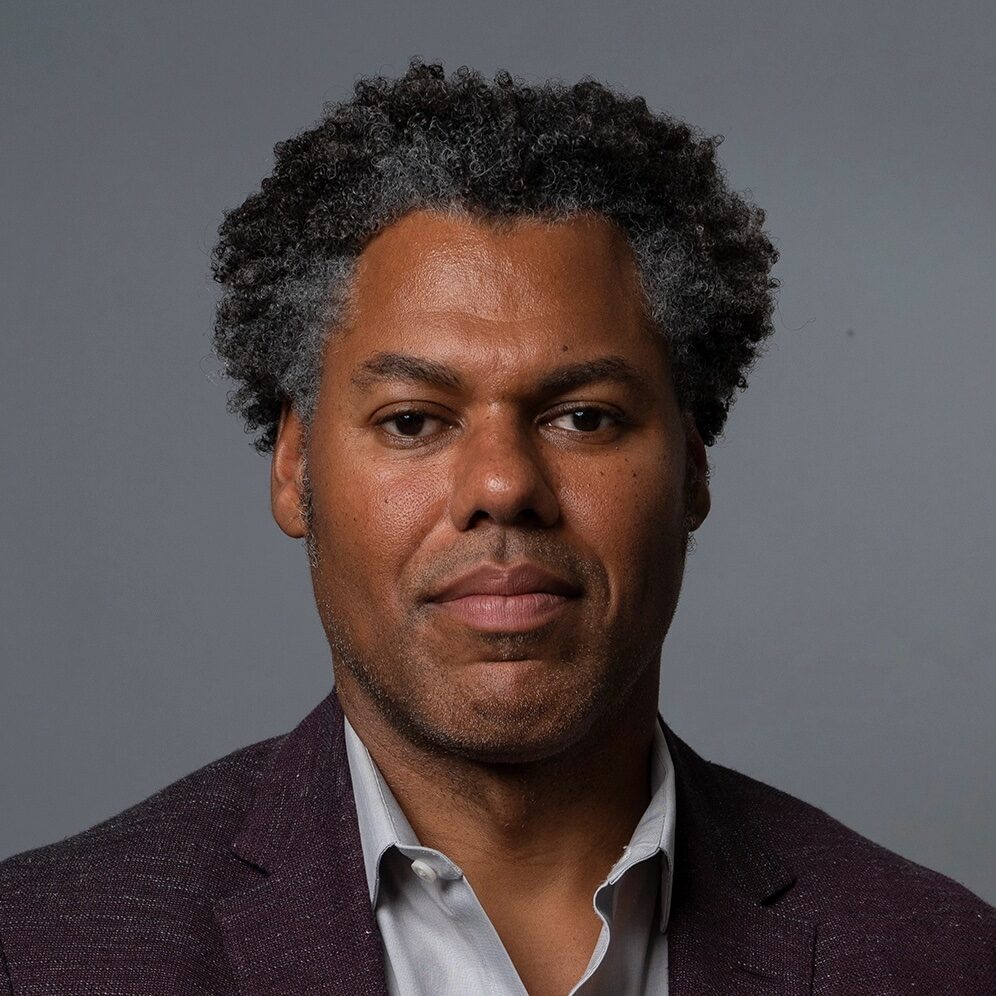
Brian Lowery received his Ph.D. in psychology from the University of California Los Angeles. He is currently Walter Kenneth Kilpatrick Professor of Organizational Behavior at Stanford University Graduate School of Business. His new book is Selfless: The Social Creation of "You."
Click to Show Episode Transcript
0:00:00.1 Sean Carroll: Hello everyone. Welcome to the Mindscape Podcast. I'm your host, Sean Carroll. Longtime listeners will be aware of my personal point of view on questions of emergence and fundamentality. There are things that are supposed to be fundamental to the universe, ideas, concepts that you cannot do without in discussing the universe at the most comprehensive level. And then there are emergent concepts that are useful to us at maybe a microscopic level or some other version of analysis. The word useful being very, very important here. You don't just make things up. They have to serve some purpose. Typically in a scientific discussion, the purposes are, you can make predictions. They have causal relationships to other things in the world. A table is an emergent concept. It's not anywhere in the standard model of particle physics or anything like that, but by saying there's a table here, that conveys a lot of information.
0:00:55.6 SC: I know things like I could put a cup of coffee on it or sit down and read a book in front of it, and so on. So when it gets to human level questions like the self, that's something that's a little bit trickier to think about where it is. A more traditional way of thinking about the self would've been that it's very fundamental to what nature is, how the universe works, is that there is an essence of each human being, and maybe it changes with time or it evolves, but it's part of them. There are plenty of cultures which thinks it survives after you die and so forth. I, of course, do not want to say that. I don't think that the self is fundamental. I think it is very much emergent, but that's not the end of this discussion. When you say, okay, something is emergent, there's a lot of questions that get raised by that. Out of what does this concept emerge?
0:01:46.5 SC: Why is it useful? What are the boundaries? How can you improve the definition of it or your understanding of it? With the self, that's gonna be an especially tricky thing. So we're gonna think about that today with Brian Lowery, who's a social psychologist at Stanford University. He's the author of a new book called Selfless: The Social Creation of "You". And not to give too much away of it, but his idea, not coming from a physics background, of course, coming from the psychology angle here is what we think of as the self is not immutable. It is not fundamental. It is not absolutely there in some way that can never be changed or our concepts of it can never be updated. Not only, he says, is the idea of the self constructed and emergent, but it is really dependent on other human beings. It does harken very much back to our recent discussion with Hugo Mercier, who says that the reason why we invent reasons and giving reasons for our actions is because we want to offer them up to other humans as reasons to believe something.
0:02:53.7 SC: So what Brian is saying is that our notion of self necessarily involves ideas of other people and how they think about us. If you say you are a physics professor, you attach meaning to that by assuming that your audience knows what it means to be a physics professor, what a professor is, what physics is, and so forth, and all the expectations and all of the presumptions that come along with that. And this view gives us the ability to imagine changing the notion of the self. If you want to change your identity, for example, or if you think that your identity is misunderstood and you want to correct those misunderstandings, that is allowed. But communities matter. You can't just do it by yourself. That's the interesting implication of Brian's way of thinking. So we're gonna get into it. Occasional reminders. You can support Mindscape on Patreon by going to patreon.com/seanmcarroll. Those are the people who get ad-free versions of the podcast and, of course, get to ask questions for the Ask Me Anything episodes. We always appreciate every little bit of support. So with that, let's go.
[music]
0:04:18.2 SC: Brian Lowery, welcome to the Mindscape Podcast.
0:04:19.8 Brian Lowery: Thanks for having me, Sean. Great to be here.
0:04:22.8 SC: We will get into the issues that you study for a living that you talk about in your new book, Selfless. But I gotta start out talking like a physicist just for a second because we're talking about the self. The first question is, should we think of the self as part of the fundamental architecture of reality? Or is this something that human beings use as a concept that they invent to make sense of the world?
0:04:49.3 BL: Oh, I think of it as a concept they invent to make sense of the world. But who knows?
[laughter]
0:04:56.5 SC: No, that's the right answer. Don't break...
[overlapping conversation]
0:05:00.4 SC: Don't back down. You gave the right answer. [laughter] What I mean is, back in the day we might have been Cartesians and thought that there was an essence of our minds that was not our bodies that somehow communicated with it, but we're... These days we're more emergentist constructivists, somehow this arises out of a whole bunch of things.
0:05:21.5 BL: Yeah. I think it's... I think the self is a social creation. And I think that we still under appreciate the extent to which we exist because we're embedded in the social network and the we have in mind. There is the self as we understand it, ourselves, as we understand them.
0:05:40.8 SC: So even if one didn't think that... Even if one was not a Cartesian dualist, you might still have thought that you could think of the self as just things going on in your brain. But your point is that we need to take the rest of the world into consideration as well.
0:05:54.9 BL: Yeah. But I don't think that even if you're a hardcore materialist that's just going on in the brain, without the social interactions, without the interactions among different people, you don't get selves, is what I'm saying. Yeah.
0:06:09.2 SC: Okay. And the craziest physics question I have is... Maybe this isn't even a question, but there is a place where this question of what the self is and how it evolves comes up in hardcore physics, which is in the many world's interpretation of quantum mechanics, which is something that I study for a living. When you measure a spinning particle, many worlds says that if it could be spinning clockwise or counterclockwise, there are literally two worlds, one of which a version of you sees it spin one way and the other one it sees it spin the other way. And there are people who don't like this on the basis of saying, yes, but which one is me? [laughter] As if there's an essence of them that has to flow through somehow. And I wanna say neither one of them is you. We have to update our notions of personal identity in a world like that. But that's okay.
0:06:57.7 BL: Yeah, I think that's right. I used to be really into theoretical physics too as a layperson apart from this reason, because it's this interesting intersection between the physical world, our understanding of consciousness. That's kind of what... When you think about the perception, the consciousness, and the more complex concept of self, they kind of all intersect in what you just described. So there is the, I guess, the ontology, the reality of the world is you could be spinning in both ways, in one way in one world, in one way in another world; and you could be observing it spin each way in these different worlds. But when you say you observe it, what are we talking about? That's when this conscious observation kind of intersects with this concept of self 'cause now you wanna personalize that observation and say, it's me or not me. Now, which me is real. Now you're going from conscious perception to something deeper, which is like personal identity. Now you're saying they're two people. [laughter] That's a kind of a leap that people don't understand. Conscious perception to people is not... Those are not... I mean, there's a step between.
0:08:12.3 SC: Yeah, that's what I want to say. People who wanna say, the many world's point of view doesn't comport with my notion of personal identity, I wanna say your notion of personal identity was never that good. [laughter]
0:08:25.1 BL: That is... I completely agree. Yeah.
0:08:26.9 SC: Good and good. So that's... Thank you for indulging me with that. Now we're gonna... We'll move much more onto your territory here. I like how you begin the book, or in the book, early in the book, talking about the very basic idea of where the self is. I talked recently with Andy Clark, who is a philosopher and cognitive scientist who works on the extended mind hypothesis. That our notebooks and our computers and our wrist watchers are part of our minds. And I did ask him, I said, yeah, but I think that I live right behind my eyeballs [laughter] and you actually have something to say about that.
0:09:06.1 BL: Yeah. It's interesting. Most healthy individuals have that experience. They're in their head, right behind that, with you and just maybe three or four inches behind their eyeballs, looking out, controlling the machinery of the body, or something like that. And obviously that's not true. Anybody listening to this podcast who is like, yeah, that cannot be true, then you have to say, then what is it? And as science evolves, I feel like our answers to that have evolved, but they still end up being some version of still an essential self in there. It's just is the essential self some soul, is the essential self brain architecture, is it neural pathways? But it's still... That's just a way, I think, for most people to still say the same thing, which is like, I'm in there as a soul. And it can extend beyond this physical being too. It's something more than this. So you get that a little bit with this kind of desire for immortality of uploading your neural pathways, your neural network to the cloud, as if that would be you. That's an interesting assumption, right?
0:10:13.1 SC: Are you saying that it wouldn't be you, or you're open to think...
0:10:15.9 BL: I think that it would not be you.
[laughter]
0:10:17.0 SC: It would not be you. Actually, this is a diversion, but this is... That's okay. That's why we're here. I'm fascinated by this idea because I also think it would not be you. I have a set of reasons for thinking that. Why would you say it would not be you if you uploaded yourself into the cloud?
0:10:32.1 BL: Well, one, I think that you only make sense in the context, like your sense of self, your identity only makes sense in the context of other people. So you'd have to upload your whole social environment for that to work. And you could argue you'd do that too. But there's these interesting philosophical games where you're like, what if you upload your brain but you don't die? You still exist also physically. Are there two yous, is that right? And you'd say like, that doesn't sound right. There's something wrong. Something is... You've got something wrong. And the question is, what have you got wrong? And I think what you've got wrong is the assumption that you exist as a pattern or neural firings or something like that. I don't think that's how we exist.
0:11:16.0 SC: Because you want to say that we exist more socially or in a more embodied sense?
0:11:21.3 BL: I think, I wanna say we exist more socially. But I also think this is a separate issue from... I mean, a separate point from the point that I make, but I also think we exist in an embodied way too. But that's, I think, a separate compelling argument. But it's not my argument.
0:11:34.4 SC: Let's go back to the right behind my eyeballs question. Is there a good reason why I tend to think that I live literally in my head if I'm gonna locate myself? Is that pain cultural? Is that universal? Does every human being think that way? Or do different kinds of people think that there is a self that lives somewhere else?
0:11:54.0 BL: That's a really good question. So I don't know in terms of the phenomenology how much that differs. I'm not sure. What I know that psychologists have studied what differs is how embedded people think they are in the social network, how much they think that constitutes who they are. That varies by society. But this phenomenology of, am I in there? I don't... I'm not sure how much that varies.
0:12:21.4 SC: But you do mention that there are out of body experiences for which we don't need to violate the laws of physics. It's our brains giving us the impression that we're not inside our bodies.
0:12:32.3 BL: Yeah. Well, what I love about that is it also suggests the opposite, that our brains might be giving us the perception that we're in there. And that might not be true.
0:12:38.7 SC: Exactly.
[laughter]
0:12:40.2 BL: So, there's these studies where I don't... Maybe you know these studies where you can create, you can reliably create the outer body experience. A simple way to do, well not simple. But one way to do it is to put a VR headset on someone and have them look at themselves from the backs. They see an image of themselves and outside of their body through VR. And then you stroke the person's physical back while you stroke the avatar that they're looking at back at the same time. And they will start to have a sense that their self is in that avatar that's outside of their body that they're looking at.
0:13:13.5 SC: So this is an example. We don't need drugs or a sensory deprivation tank, you can just induce the feeling that you're located somewhere other than inside your brain.
0:13:24.0 BL: Yeah. And this is the one that people know. My guess is if your listeners know... Are interested in this, they might know of the rubber hand.
0:13:30.6 SC: Oh yeah, I know that one. But let's assume we don't. Yeah.
0:13:34.3 BL: Yeah, yeah. So that one is, so you put a hand... You put someone's hand on a table but you have it such that they can't... They're not looking at... Actually looking at their hand. It's a mirror. So you have a... But you can have a rubber hand. So actually it's... Let me start again. You put someone's hand below a table, but you put a rubber hand where their hand would be. Okay? And then you stroke the rubber hand and you see them, their rubber hand being stroked at the same time they see, they feel their real hand being stroked. And then after you've done that for a little bit, you go to smash the rubber hand with the hammer and people yank their hand back as if their hand was gonna get smashed because they experience the rubber hand as their hand. It's called the rubber hand illusion.
[laughter]
0:14:15.8 BL: And you can do that with the whole body, which is amazing. So it suggests that there's a way in which we come to understand our physical body or ourselves being in a body, or our body being ours through these perceptual experiences. That it's not just how it is, it's something that our minds have to learn.
0:14:35.1 SC: What strikes me is actually how easy it is to give ourselves the impression that we're outside our bodies or that our bodies are something else. I would think that that would be possible but difficult. And it's like, yeah, it just takes five minutes with a feather and a hammer. [laughter]
0:14:50.8 BL: Yeah, yeah. You know the funny thing and the one I love most is not even these, it's the enfacement effect where you get people to incorporate someone else's face into their own sense of self.
0:15:01.0 SC: How does that work?
0:15:02.5 BL: That one is where you... It's the same kind of effect, except instead of me stroking my hand and a rubber hand or looking at an avatar, I'm looking at someone else. So we are sitting across the table from each other. I'm looking at your face, your face gets stroked at the same time that I feel my face gets stroked. And then later I show you photos. And the photo is either a photo of you, a photo of me, or a photo of us morphed at differing levels. And I ask you just let me know when you see it, when the photo is mostly you versus not mostly you. And if you've had simultaneous stroking when the photo is, let's say, I don't know, let's call it 52% you and 48% me, you get it's mostly you. But when it's 52% me and 48% you, you still think it's mostly you. Only if our face have been stroke simultaneously. So you start to incorporate the other person's face into your sense of self.
0:16:03.6 SC: I see. So there's two things going on here. One is just the photos and there is sort of a natural, I guess, implicitly in what you said, we're pretty good at picking out when it's mostly us if you don't prime us in some way, but then you do this physical action and it starts blurring a little bit.
0:16:22.1 BL: Yes. Correct. And that just suggests that it's possible to blur. You would think you would never confuse your face with someone else's face. And the stroking thing, if I stroke you, there's a sense that there's some confusion happening. If I don't stroke you, you've just been looking at this person, then you don't see that effect.
0:16:38.2 SC: And all of this, the ease of out-of-body experiences and things like that is at least nudging us in the direction of thinking that the self is something other than absolute and objectively out there in the world.
0:16:49.6 BL: Yes. I think so. All these things suggest that there is a way in which we are constructing the self. It isn't just there. There's something that's happening. There's some kind of process by which it's being created.
0:17:05.5 SC: And I think that you mentioned in the case of the morphing into other people that there might even be a reason why that is the case. Having to do with closeness to other people, empathy, something like that.
0:17:19.1 BL: Yeah. So there are social psychologists who talk about closeness as a degree of self and other. You can think about take... Put aside the stroking and just think about someone who's really close to you in your day-to-day life. You spend so much time with them, you get to know them. At some point, closeness is about incorporating that person's self into your sense of self. And this sounds... And on the extreme it seems really hard to believe, but you can honestly start to confuse yourself with someone else's self. Like you could confuse, for example, something happened to someone else, you might think it actually happened to you if you're close enough, those sorts of confusions can happen. And in some sense, because yourselves are being entangled in a particular way, they're becoming merged. That's one way to understand it.
0:18:07.2 SC: Is this related to the very basic psychological phenomenon of people being oversharers or having boundary issues?
[laughter]
0:18:17.2 BL: Maybe all humans wants have bound issues. Maybe that's what makes humans, humans.
[laughter]
0:18:22.3 SC: Maybe. My cats definitely have a boundary issue. So I don't know. I don't think it's exclusively human. Okay. So the lesson, like you say, the self, maybe it's not only not as objective as we think. It's also, there's another aspect of that. It's not as immutable as we think. The self changes over time and how should we think of ourselves at one time versus another time? Is that something that the psychologists have figured out?
0:18:49.7 BL: I love that question. I love that question because my answer is so ridiculous. That's why I love that question.
0:18:53.5 SC: Cool. [laughter]
0:18:55.0 BL: I love that question because I think that the self is fluid. This is the most extreme version. And I haven't been... I'm not the first one to say this by a long shot. Like Hume argued there is no self, there's just the illusion of continuity of self, right? Not that there's no self, we put too much stock in its continuity for sure. The self is constantly shifting, you just don't experience it that way. And there are good reasons not to experience it that way. So it's useful to have the sense of stability, but it could just be wrong. It could just be that's just not true. It's only an illusion.
0:19:33.2 SC: I don't know if you know Laurie Paul, who's a philosopher we had on the podcast and she studies transformative experiences. So the question is, how do you make a rational choice if choosing a certain thing is going to turn you into a different person who has different values? [chuckle] Whose values should rule there. I don't think there's a clear answer there, but it's a clearly a fascinating question.
0:19:56.5 BL: It is and and you get easier one too. You don't even need the transformed experience. You just need time right that people who do work saying like how how nice are you to your future self? You don't know who that self will be but you make decisions right now that will affect your future self. How do you think about that? What's your responsibility to that person that you're not right now.
0:20:19.3 SC: Is there a right answer to this question?
[laughter]
0:20:23.2 BL: If there is, please tell me.
0:20:24.5 SC: Okay well, I did... I heard a talk once by Philip Zimbardo who famously did the Stanford prison experiment and so forth. But it was about how people have different attitudes towards time. Some people are past-oriented, present-oriented, future-oriented, and his claim was that you could easily test this psychologically to figure out which one you were and it correlated much more strongly than other psychology test results with outcomes in life, careers you choose, things like that. And it kind of did make sense to me. I do care about my future self more about my past self. But I think there are definitely people who are the other way around.
0:21:03.1 BL: Yeah, I see the question. A good thought like how do you think about how much you value the past versus the present version of yourself?
0:21:13.9 SC: Yeah.
0:21:17.4 BL: It's an interesting... I hadn't thought of it as an individual difference. But it is... I think that does make it really interesting, individual difference.
0:21:24.7 SC: So let's move on to the where the rubber hits the road here for you this claim that the self is very social, very created by a community. Let me... I'll let you lay out the basic idea here. I think that intuitively I might have said the self is inside me and there's other things which are interactions with the rest of the world. You wanna update us a little bit there?
0:21:49.8 BL: Yeah, I want to say that... I mean this is a strong social constructionist argument, basically. So for those of you don't know that, it's just the idea that the self is a social construction, by which I simply mean that who you are is created by the interactions you have, the relationships you have, the people around you. And so there's not... It pushes against the idea that most of us probably feel or the way we experience ourselves as essential... Essentially they are like a soul. I think that's how most of us experience ourselves, like, again, going back to in there the self. But more importantly, there's a core us that was somehow imparted to this physical vessel, I don't know, at conception, at birth, or whenever you think that happened. And I am pushing against that and I don't think that exists at all. It's not genetics. It's not... That doesn't make the self the self, it's the story you were born into, its way that came before your birth, the culture you exist in, the networks and relationships and people who construct that culture, the people who raise you, the friends you've met, the relationships you've had, all those things are what end up constituting your unique individual self.
0:23:11.6 SC: Is that an extremist version of something for which there's a more wishy-washy version that says that there is something that is purely me inside me and also how that interacts with the community around me matters?
0:23:26.4 BL: Yeah. I think that most people probably have some version of there's a me and interacts with the environment and just change with the environment. I think that's the most people's kind of reasonable understanding of how it works. And I push against that simply because I'm like, "Okay tell me that me part, what is it?" [chuckle] 'Cause if we keep pushing hard on it, it just starts to... I think it starts to crumble a little bit. I think you end up falling back on something like a soul which they don't... They would never start with, they will be like, "No, no, this is scientific." What is it then? It's temperament or it's genetics and these kind of things where I'm like, "Is that really what you mean by the self and genetics is?" In particular, I think lazy because genetics don't determine what we are. Maybe its potentials made... Certainly has some effect. It's not like I'm denying the points of biology or genetics, but it's not determinative. It's not enough to tell you who a person will be. You can't [0:24:35.1] ____ genes and conception of birth and know who they are. That clearly is not how it works.
0:24:40.9 SC: So, but if you wanna say the self then really is socially constructed, how do I... What is the definition of self that we're using here like as opposed to for example identity? People might want to say that their social identity is socially constructed, But there's still something inside me that I'm making up.
0:25:00.9 BL: Yeah, and I guess, again, this is where I like to ask questions as much as make claims. I'm like tell me what that self is. Like, when you take away all those social identities, what are we talking about? So I just never know what we're talking about. Are we talking about... Even when people say temperament, I'm like you only really mean how that temperament is understood or experienced. You don't mean that temperament per se, you mean how it manifests or how it makes you you. There's some interpretation necessary. That's what I think, anyway. This is my... I'm not gonna make this as a claim about truth. I'm gonna make this a claim. This is like my view of what people actually mean, so I could be wrong, but.
0:25:42.7 SC: Yeah, we could all be wrong. But it does remind me... I hate to keep bringing up old podcasts, but it does remind me of Hugo Mercier who we recently had on the podcast who wrote a book with Daniel Sperber about reason and reasons and reasoning and their claim is that the idea of having a reason for doing something rather than just doing it is uniquely human and uniquely because we want to offer reasons to other people. It is uniquely social. If we lived completely by ourselves that we would not attach reasons to our actions.
0:26:17.8 BL: Yeah. That's interesting. You know what I love about these ideas, is that they contact so many other ideas. So this is like when it's... It really is... I think we're coming to see the importance of our social nature, and it may be in a different way. And I feel like there's something in the air around this a little and maybe it's these big societal level issues like climate change or the rise inequality and the effect on governance, like democracy, right? And you look at these big issues now that are affecting the world, and they seem to revolve around how we engage with each other as human beings, to some extent. So what do we owe each other? What role do we have in affecting other people's lives? It's like moving away from rugged individualism. It just cannot account for or help us solve some of the biggest issues we face today. It just doesn't work, I think. And so I think we started to look and see and understand the degree, the depth of the interdependencies among human beings.
0:27:32.8 SC: So you wanna say that not only is this sort of more accurate description of the self, but normatively thinking of ourselves this way is gonna make us better human beings?
0:27:43.6 BL: I would hope so. I don't have a lot of hope for human beings, sometimes.
[laughter]
0:27:49.6 BL: But I think if you accept this view, that we are constructing each other and are constructed by others, it should change the kind of questions we ask and the kind of society we live in.
0:28:08.1 SC: Okay.
0:28:08.3 BL: Is what I would say. But this is not... I'm not utopian. In the sense that if we got that, we'd have tons of problems to address and the society would have to shift in so many significant ways that it's hard to even know what problems would arise. But I do think that that way of thinking is more accurate. I do think that the idea that we are individuals who can make choices that don't affect others is just, on the face of it, not reasonable.
0:28:42.1 SC: Well, the other point you made which I thought was a great one, is that the moment we're born, we have identities, we're embedded in a social matrix, and it wasn't our fault. Who we are in many ways is already there and we can't really claim credit or be blamed for it.
0:28:58.7 BL: 100%. I think the way I try to what I say is like, we're born to a story that's already ongoing. I think you have the sense of like, I'm here now, the story starts. [laughter] Especially as a child, it's clearly there was a lot going on before you showed up. You just stepped into something you didn't understand. And that's not your responsibility... You don't determine what's going on before you get here, but while you're here, it seems like an interesting thing to imagine how you can participate in the story.
0:29:33.0 SC: And it becomes operationalized when you just imagine being asked the question, who are you? And what are the answers that we give to that? So what are the answers that people actually give as a psychologist? And what are the ones that that matter to you?
0:29:51.9 BL: Yeah. So this is where there's cultural differences. So there's studies that look at these questions like I am, and you just give blanks. And more individualistic society will say things that are like, I am 6 feet tall, I am... Hold on. I am a basketball player or whatevers, these things that seem very individualistic. And then in other societies, people say things like, I'm a son, I'm a mother, I'm a caregiver. So things that seem to have more of this social aspect, those are things that I care about. And I think the social ones, and I think those are the ones that make us who we are. I think saying, for example, even when you say something like, if I said like, I'm 6 feet tall, I think the reason you're saying that is not just to list your absolute height, is to say something about your height relative to other people. Even things that don't seem social, I think really are capturing something about people's relationship to other people. So when I think... When you think about the self, I think you're thinking about others.
0:31:02.9 SC: I guess one way to make this real is I've been told that if you're at a party and you meet somebody, you're not supposed to ask them, what do you do for a living? That's a boring question. There's other questions you should ask, but I don't know. I think that's the most obvious one to ask. What are your professional opinion about this?
0:31:22.8 BL: I would... Here's the thing about it. I think that it's nothing necessarily wrong with the question, but I do think there're more interesting questions to ask. Mostly because I think people separate their professional lives from the rest of their lives in a way that makes the question... Makes the answer that people give less interesting.
0:31:42.6 SC: Right.
0:31:42.6 BL: And makes them less interesting to talk to.
[laughter]
0:31:44.8 SC: But wait a minute, say more about that.
0:31:47.8 BL: 'Cause I think that when people think about their work, they again, because they separated from their lives, and you asked the question, what do you do for a living? What they're gonna do is like, click into this other person that is in some sense separated from who they believe themselves to be, right? Like, they're gonna tell you about their work life, and if they're not excited about that, it's gonna be a boring conversation.
0:32:10.0 SC: Do you not say that you're a psychology professor when people ask you who you are?
0:32:15.8 BL: I certainly don't, most because people are weird when you tell them you're a psychologist.
[laughter]
0:32:20.4 SC: That's true. Physicist also works for that, by the way.
[laughter]
0:32:23.3 BL: Yeah. And I like to ask, you know I like to ask people, I like to ask, what are you excited about right now?
0:32:30.2 SC: Okay.
0:32:31.4 BL: What's the most exciting thing going on right now for you?
0:32:33.4 SC: Okay.
0:32:35.3 BL: That's the kind of question I like to ask people. And that could be work, you know?
0:32:38.8 SC: Yeah.
0:32:39.0 BL: Most people don't respond with that, but it could be work.
0:32:42.0 SC: Well, I think, and again, this is my physicist training kicking in, but I think of this in terms of course graining. If you ask a person who they are, there's literally an infinite number of two things they could say, and they boil it down to a few pat answers. And what you're aiming for is to give answers that convey the most information in the fewest words. And maybe thinking of ourselves as socially constructed selves would alter our choice for which aspects of ourselves really matter.
0:33:12.9 BL: Yeah. And I guess the question is like, what kind of information do you want? If you want... What I'm looking for usually is an opportunity to close the social distance when I'm meeting someone new. And by that I mean, I want the opportunity for them to have an experience of being closer to me. And it's got... I think that's just a more interesting interaction. And so it's not necessarily the most information, but I would say the... From their perspective, the most intimate information they're willing to give me as someone that doesn't know them.
0:33:51.5 SC: Okay. That's a tricky one. Now I'm gonna start thinking about that.
[laughter]
0:33:56.5 SC: I hope no one asks that on my next Ask Me Anything episode, what are the most intimate facts about you?
[laughter]
0:34:01.3 BL: If you're willing to give, that you're willing to give it...
[overlapping conversation]
0:34:03.2 SC: That I'm willing to give. Yeah, they don't have to be that intimate, I suppose, but.
0:34:05.8 BL: Yeah. So I'm gonna ask about your background, for example. That was an entry point just for you to tell me something about your life or about your music. That is what I'm doing in saying, how can I create a sense of closeness quickly?
0:34:21.5 SC: Right.
0:34:21.8 BL: How do I, again, how do I make it comfortable for you to ask me something personal...
0:34:25.4 SC: I see, you're revealing your tricks.
[laughter]
0:34:32.1 SC: For the audience listening over audio, by background he doesn't mean my personal background, he means the video of the office that I'm in right now that we chatted about before we started recording.
[laughter]
0:34:43.6 SC: So this is great.
0:34:44.3 BL: Now I know you moved from California to Baltimore...
0:34:47.3 SC: You do know that.
0:34:48.2 BL: I know that you're an aspiring bassist. I know that you're married, probably did not have an office in your previous... A podcasting office in your previous place.
0:34:57.5 SC: I did not, I just had one little tiny room that I used for everything. Yeah, I know, the deprivation of it all. It was terrible.
[laughter]
0:35:06.5 SC: But, yeah, okay. I don't know. When I think about myself, when I give the answers at the party, when someone says, tell me about yourself, to what extent are the answers that I'm going to give really ones that society has suggested to me over the years versus things that I've come up with myself?
0:35:28.1 BL: I think you're gonna give the answer that you feel is most culturally appropriate in that moment. And so in that sense, it's gonna be not so much what society who you are, but what society tells you you should say.
0:35:40.2 SC: What matters, yeah. What society says matters, right. Yeah. 'Cause I'm talking to another person, I have an idea of what they would care about and that's gonna affect what I tell them. Yeah.
0:35:53.0 BL: 100%. You're trying to... What human beings are really good at is trying to have smooth interactions with other human beings.
0:36:00.2 SC: Are they good at that, really? I have not noticed.
[laughter]
0:36:01.4 BL: Yeah. I feel like you're really good at this. You have a podcast, you're a very personable guy. It's like you try to... You wanna make it work, right? You don't want to be like... You don't want to be tough to have a conversation, you want it to go smoothly. That's what people like if that's true.
0:36:18.2 SC: That's true. It's true. All right. Okay. Let's raise the stakes a little bit. It's a little bit hard for me 'cause I always wanna play the devil's advocate, but I'm totally on your side about many of these things. So it's always fun to see how it affects how we actually think about issues in the world. So gender, is that something that community just made up?
0:36:41.1 BL: Gender is a really interesting one. This is the one... I love to talk about gender 'cause it's so interesting and it also is the one that's most likely to get me in trouble.
0:36:47.8 SC: Exactly. [laughter] Those are rated as cold.
0:36:52.6 BL: So look, I think that, again, biology, humans reproduce sexually. So there's just a... There is a biological reality underlying sex. Gender, as I think about it is not that. Gender is not the biological sex. It's meaning that we layer a top, usually a top biological sex. And I think that is a social construction, which is different from saying it's not important. It's not saying it's not real, and it's not saying that it's... That there's no... There are no parameters that have to be respected in the construction of gender. But I do think that it's much more flexible than most people experience as being, that it varies more than people imagine it does. And that as societies evolve, our understandings of gender evolve.
0:37:47.0 SC: And what does it mean to say that gender is something that society uses as a role? Do I have a gender when I'm just by myself, or is it only when I'm out there in the world?
0:38:00.7 BL: I think you have a gender when you're by yourself to the extent that you have a self when you're by yourself. [chuckle] I think that gender is one of the most important ways that society organizes. So yes, I think that you have a... I think that you have a gender when you're by yourself because you have a conception of self when you're by yourself. But that is a function still of your relationships and interactions you have. But I do think your community constructs gender. So there's a societal construction, but I'd like to be a little bit more nuanced and say a community construction of gender.
0:38:42.0 SC: Well, it's very compatible with, again, bringing up previous podcast conversations with Sally Haslanger, a philosopher who talks a lot about social construction. And we talked about gender. And her point is just like you said, it doesn't mean it's not real, when you socially get together and you build a bridge, the bridge is real, but you could have built a different bridge, right? You decided to build that bridge rather than a different one. And our notions of gender and other things are similar to that.
0:39:09.0 BL: Yeah. I'm thinking, example, I like to use... The metaphor, I like to use is money.
0:39:12.3 SC: Okay.
0:39:12.5 BL: For real. I don't think, most people would not say money is not real, but money is only... It exists as an idea, right? There's nothing physical. It doesn't require anything physical. It's really like... It's in our interaction and our expectations of each other, our beliefs in each other, right? Our beliefs in how others will behave, that's what makes money powerful. It's incredibly powerful but it's a construction. Gender, I think, is like that.
0:39:40.6 SC: I love that example because it really relies on sort of a shared set of beliefs and expectations and agreements, right? And we don't ever signed a contract, you're not asked when you're six years old, please agree that a dollar is a dollar or something like that. But like you say, you have no choice. You're born into the society, there are certain rules and you do play along for the most part.
0:40:03.4 BL: I mean, it's again, yeah, you come into a story already being told and you understand its importance. So you learn its importance and people teach you its importance, right? It's not just you, and it's from nowhere. It's like people engage with you in a way that you learn what it means to be a man or a woman.
0:40:22.7 SC: I guess one of the things that people who are on the more socially conservative side of things worry about is the idea that people can just decide what they are. They can just decide, I'm gonna identify as a dragon [laughter], or whatever. And how is that just okay? Or is that so unrealistic that it happens very much, we don't need to worry about it? Or what's the give and take between me deciding what I am and society deciding what I am?
0:40:54.5 BL: So this is where... It's something for everyone to be mad at me about.
0:40:57.6 SC: Deal.
[laughter]
0:40:58.3 BL: Conservatives don't like this idea, which I think is fine. Like if you're 6'2 with a beard and a lot of muscles, you could be a woman like that. That's not that problematic from my perspective, how the world operates, the way the world works. At the same time, and this is where liberals will be upset with me, no one, you just can't just decide. That's just not... From my perspective, that's just not... You don't have to worry about it because it's not possible. I can't decide... Right now, I present as a man, I think of myself as a man. Most people I engage with understand me, and believe me to be a man. So it's fine. If tomorrow I said I was a woman, that would not make me a woman. Right? I can't just decide on my own to be a woman. Right? This is what it means to be socially constructed and then exist within the community. So my community has to accept me as a woman for me to be a woman. I'm not a woman until my community accepts me as such.
0:41:49.2 SC: I see. So that kinda makes sense to me. I guess, one possible loophole there is what if there was a trans person who identified as a woman, but nevertheless still passed as male?
0:42:04.5 BL: Yeah.
0:42:04.6 SC: Is that...
0:42:04.5 BL: It would be... But I know, see, when they're passed, this is what's important. We can talk about race too here. If they passed as male, they're still a man from my perspective.
0:42:12.8 SC: Okay. Okay. But there is another perspective that says inside they're psychologically identifying as female, yeah?
0:42:21.5 BL: Ah. Okay. So good. This is where... This is the nuance. This is where it gets complicated. And I'll give an example about race and lemme come back to gender really quick.
0:42:27.9 SC: Yeah. Good.
0:42:27.9 BL: So, Rachel Dolezal, people remember she was this person who was born to a White family, was a White girl, identified as Black [0:42:38.7] ____ from her. What she says, like most of her, all of her remembered life, she's thought of herself as Black. And so she started to present as Black as well. I think was in Spokane, really committed to the Black community, issues of the Black community, represented herself as Black, understood herself as Black. And then the community saw her and accepted her as Black, but they didn't know that she was born into a White family as a White girl.
0:43:01.3 BL: And then at some point it was discovered that she was born a White person and then the community rejected her claims that she was Black. Okay? So what I say about that is this is now ontologically, she was born White. So she was White. She then became Black. She was Black. And then, this is the important part, I'll come back to gender now, then she became a White woman that wanted to be Black. So she became a not Black woman. So I wouldn't say she was a White woman, I'd say she's a not Black woman. And this is important because from the way I think about it, is it's both your view of yourself and the community's view of you when they align that that determines what you are, not what you would like to be, not what they think you are. But from all intents and purposes, again, 'cause of social construction, what you are. And so when you talk about someone who's like, say, a trans person who passes as a man but thinks of themself as a woman, I would say that they exist in some liminal state when they're in communities that don't see them the way they see themselves. They're not really either one of the things in terms of the ontology at that moment.
0:44:17.7 SC: So yeah, I mean, it makes perfect sense if we're moving beyond the naive essentialism about these categories, that there are going to be liminal cases, edge cases, complicated things.
0:44:30.0 BL: Yes.
0:44:30.6 SC: And that's fine. And it's not a flaw, right? [laughter]
0:44:34.2 BL: Yeah. Like there's a place where it's like, I don't know, it's monopoly money, money. People say no, but it is in the context of monopoly, right? I mean, it's just like there's a way in which there's these things that are complex cases if what you require is the agreement between the conception of self and the internal, or not internal, this is another thing that gets complicated. I don't know how much what you want, but.
0:44:58.3 SC: I want all the details.
[laughter]
0:45:02.1 BL: I see that as like, not as a disagreement between yourself and the community, but some kind of conflict between communities. 'Cause that conception of self has to come from somewhere.
0:45:15.9 SC: Okay.
0:45:17.2 BL: Right? And so there's a way in which there's some sort of disagreement between communities, is how I think about it.
0:45:28.8 SC: That's a very good point. So we all live in more than one community. I keep sometimes saying society, but you are politely correcting me by saying community. And it matters because we can be different selves in the context of different communities.
0:45:42.8 BL: 100%. And this is easy to see. Right? But then you just have to push it. What you see, the easy case, you have to push it to harder ones, which is you're at home with your parent, that's a very particular identity. But if you go out, I don't know, you go out for a vacation and you leave the kids with your parents, their grandparents, it's a different you. Right? Or if you're out having drinks with your friends, that might be a very different you than you at the office. And people can understand that. That's easy to see. You just have to push it a little bit harder to see the point I'm making.
0:46:16.0 SC: Right. But in the social media era, sometimes we cross boundaries as far as the communities are concerned. And that gets us in trouble.
0:46:25.5 BL: 100%. I mean, I think we've always crossed boundaries but they haven't necessarily come into contact as much as they do get in social media. You know some people live a very different lives in different communities, right? And social media has a way in terms of broadcasting all these lives to similar audiences then you get in, you can get in a little bit of trouble.
[laughter]
0:46:55.5 SC: And I mean how prescriptive or normative can we be here? I mean, is it are there right and wrong ways to identify and shape ourselves given what the community is trying to tell us? Like at some point, can we just say, "The community wants me to be this, but I'm just not gonna go along"?
0:47:12.4 BL: I don't think... This gets into another really hairy issue of free will and I try to... I lied that a little bit. We can talk about it. But I think let's stay with the gender for a second. I think you can move between communities and be different selves in those different communities, right? So you might exist in a community that you feel like you don't have control over or they refuse to accept your, the conception of gender that you prefer. And so you move into another community that will accept that and you'd feel more at ease. And there are many people who have that kind of experience. So, I think we all move between communities and have different levels of comfort in different communities or comfort on different dimensions in some communities than others.
0:48:05.1 SC: How does this jive with the idea of authenticity? I am gonna bring up yet another recent podcast. I don't know why I'm talking so much about the self on these podcasts. [laughter] Maybe it's an important idea. But I just talked with Skye Cleary, who is a historian in some sense of philosophy and she wrote a biography of Simone de Beauvoir who argues that we find meaning and mattering in our lives by getting in touch with our authentic selves. And everything you're telling me calls it to question the idea that there is any such thing, or doesn't it?
0:48:36.5 BL: Yeah, I don't know what authenticity means. Like this is one of those things where I get it. I think people love the idea of I'm me, I'm like my authentic self.
0:48:47.4 SC: Right.
0:48:47.5 BL: There's a version... I truly just don't know what they mean. I'm not saying that there's no such thing, but the way people talk about it, the lay sense of authenticity, I think is probably not coherent.
0:49:01.1 SC: I remember when I took an English class as a sophomore undergraduate, and I think we were reading Eugène Ionesco or something like that, and our professor was talking about the masks that we wear in different situations, different social situations. And I was young and naive at the time. I figured that he was gonna go on and say, so we should remove those masks and be our authentic selves. But his actual lesson was you just gotta pick the right mask for the right situation. [chuckle] There's nothing under the mask. It's just a matter of which mask you're putting on that day.
0:49:33.5 BL: I was gonna... You know I said this and I also... I said this in a recent podcast somewhere. It's like, it's masks all the way down.
0:49:39.6 SC: Masks all the way down.
[laughter]
0:49:43.6 SC: But maybe I can... Well, let me ask it rather than state it, is it a coherent thought to say, I can choose which mask to wear? That has I choosing in there? And I know that's a free will question, but what you wanna do all [0:49:57.3] ____ alive, which is fine.
0:50:00.9 BL: I wanna say yes, but I think the right answer is no. I feel like I should say this. Like I experienced like most people, I think in that I have an experience of living behind my eyes too. I have an experience of making all these choices in life and thinking that my outcomes are affected by the choices I make and feeling constrained by this situation, and that if only they'd let me be my true self, I'd be happier. Like I have all those experiences, I just don't... When I examine them, I just don't think that's right. That's certainly how it feels to me.
0:50:34.7 SC: Okay.
0:50:34.8 BL: I just don't think that's right.
0:50:38.5 SC: But okay, I mean maybe I think something is finally sinking in through my thick skull here. So I think I am getting something. It might be okay to talk about desires that I have or wants or aspirations without necessarily connecting them to the idea that they reflect a true self underneath. I mean I could absolutely say, "I am not happy in this situation. I would like to change my situation"?
0:51:00.6 BL: Yeah. I mean, like you have experiences, you have feelings. The question is just like what's the source? Right? And when you locate the sources like some true essential self, I'm like, that's probably wrong. Right? That's what I'm saying. I'm not saying you don't have these experiences or you don't have these feelings, or you don't have these wants and needs. I just think it's really, really hard and may be impossible to truly identify some singular source of those things. And certainly if there's a singular source, I don't know, as a materialist, I don't think it's the soul. [chuckle]
0:51:33.5 SC: Yeah. Yep. [laughter] Is the temptation to identify some singular source or even just talk about a coherent self more or less a Western/modern invention, or? I mean I know that some people talk about capitalist societies as being more individualistic and other societies as being more communal, et cetera. I have no way of judging whether that's true or just a fun story to tell.
0:52:03.8 BL: Yeah. So, in the book, I talk a little about this that there are professors of classics who argue that our conception of self is a relatively recent creation. And say classical Greece that there wasn't this sense that things emanated from your immortal soul, right? Like that you'd have an experience you could say like the gods breathed that into you, or something moved you, but it wasn't necessarily located in a self. And then you look at literature, there was people will point out that there was a really... Long after literacy in writing, there wasn't a tradition of writing from a first person perspective until very, very late. People point to St. Augustine's confessions as the first major work that takes on a first person perspective on the world, and all that to say that like, no, it's not clear that our conception of self is the only one that humans have focused on as we look through history. So, no, I don't know that this is the only way for us to think.
0:53:16.9 BL: And some people also suggest that this conception of self is individual conception... Individualistic conception itself is necessary, possibly for a capitalist society. I don't know that you would say that capitalism produced it, but that they certainly go hand-in-hand in that if you believe in free markets as we discuss them now, you have to kind of accept or really have deep faith and individual choice and freedom of choice.
0:53:45.5 SC: Well, the idea of standard utilitarianism is that each person has a utility and you add them up, and there's no sort of nonlinear effects that people can individually be muddling along with society is going great or something like that.
0:54:01.5 BL: Yeah. Yeah. And this is right. And then capitalism depends on that as well. Right? This is like the best for me, my own personal greed will somehow end up producing the best outcomes if everyone else acts in their own self-interest as well. And self-interest is understood very narrowly.
0:54:20.8 SC: So I did, after a while reading your book, I googled when was the first person narrative. And of course, people don't agree, right? There's different claims.
0:54:29.4 BL: Yes. They never do.
0:54:30.8 SC: They never do. But at least one of the interesting candidates is the Song of Songs in the Old Testament.
0:54:36.4 BL: Huh, it's interesting.
0:54:38.4 SC: It was very interesting to me. I'm not a really an Old Testament scholar by any stretch, but I went in and read it and it's like really racy poem [laughter] these two people like you can see why they don't talk about it very much, but it is also in the voices of a man and a woman. There's a chorus in the background, right? And they're expressing their desires in no uncertain terms. And it's always hard for me to imagine what it was like to be a person living back then. Was that considered shocking? Was that way of talking unusual? Or was it just an oral tradition that we just don't have any access to these days? I don't know.
0:55:15.7 BL: That's an interesting one. I hadn't seen that one, but that makes sense, and also it's hard to know exactly what... I haven't read it. I actually read it a long time ago, I haven't read it recently. So I'd have to go back and look and think, is this really first person?
0:55:30.3 SC: Yeah, yeah.
0:55:32.3 BL: Exploration.
0:55:32.8 SC: Those details matter. I mean, there are people who say that Shakespeare invented the concept of a character in literature, which, yeah, I don't know, that might be a stretch. But, okay. But again, one of the ideas that I thought was provocative that you put forward is that the idea of a self limits your personal freedom in some way, like, it circumscribes certain things that you either can do, certain capacities, certain privileges you have in the world. Tell us about that a little bit.
0:56:04.4 BL: Well, I'm curious, why I was provocative? 'Cause once I think... I mean, sometimes that one seems to me to be almost so obvious as to be uninteresting. [laughter] So the idea is here, I'll just say the idea then you can tell me why it strikes you as provocative. The idea is that when we say what we are, when we say who we are, when we give any definition, definition has to include what is inside and what is outside, right? Like you have to... A definition has to exclude as well, even if it does that implicitly. And whatever we exclude when we're talking about ourselves is by definition a limit on what we are or what we can be.
0:56:45.0 SC: Okay. That makes perfect sense actually, when you put it that way. But I guess the provocative aspect of it would've been, in my mind, that you're sort of attributing these limitations to selfhood rather than other aspects of our existence in the world. Like, I don't know. It depends on what we... I guess if the self is entirely socially constructed, then maybe they all count. But, I mean, obviously how much money I have or my status in society, my job, those limit what I can do in the world. Yes, but are those... Is the argument going through those being aspects of what is myself?
0:57:28.3 BL: No, not necessarily. I mean, sure we could, but if you think of yourself as a dad, or if you think of yourself as a man, like take gender, like by definition, you're accepting limitations, right?
0:57:41.0 SC: Okay.
0:57:41.1 BL: And you can see them in your life. It's not just an abstraction, right? If you think of yourself as a man and you're behaving as a man, because that's what in part it requires to understand yourself in that way, that there are things you do and things you don't do.
0:57:54.9 SC: Right.
0:57:55.4 BL: Now, you might have more or less stringent by some people's conception... Ideas of what it means to be a man. But once you say you're a man, you are accepting some kind of limitation.
0:58:11.0 SC: I guess the flip side of that is that one reason why people like traditional roles so much is that it gives them a set of clues as to how to treat people.
0:58:21.3 BL: And yes, it does. And how to behave as well, right?
0:58:25.4 SC: Yeah.
0:58:25.5 BL: I mean, I think... I have a chapter called Hugs and the Straitjackets. And this is kind of the point, which is, when we think of who we are, it's really important for us to maintain that sense of clarity about who we are. We think about authenticity. People care about authenticity, even though I said I don't know what it means. Because it's really like integrity of self, right? It's like this is who I am, it matters to me. And that suggests that those boundaries, those limitations are comforting. They give you a place in the world, they tell you what the world looks like. It's a perspective, it's a place to stand.
0:59:01.7 SC: Yeah.
0:59:02.0 BL: And it's a place by which you can... Location from which you can make a judgment about who you are and what the world is and your place in it and there's something deeply comforting about that. But in that is also limitation.
0:59:17.4 SC: Right, right. I like that a lot because even though I don't agree with them, it helps me understand the anxiousness on the part of people who really want certain old roles just respected forever. It makes your life easy. The decisions you have to make, the way you treat people, things like this. If there's a script you can just run and it never deviates, then a lot of your decision making is made much easier.
0:59:46.6 BL: Yes. Your decision making is made much easier and the world is made more sensible.
0:59:56.3 SC: Yeah.
0:59:58.0 BL: Right? It's hard to have meaning in a world where you don't understand your own place in it. And when people start to disrupt the nature of that meaning, this is why I think there's not a live and let live on issues of significant identities, right? What people care about other people being able to change their identities 'cause it says something about their own place in the world, right? People are really committed to having clarity in terms of how the world operates and their place in it. And these identities play a significant role in that.
1:00:31.1 SC: Is that something that we should strive, in your personal view, to get better at, to have a little bit more relaxed point of view with how other people construe their own identities?
1:00:45.2 BL: Yeah. My attitude toward this is like, look, if someone asks to be something, I personally, like, if you say, if you tell me right now, like, I think of myself as a woman, I'd be like, if that is important to you, I'm with you on that.
1:00:54.6 SC: Yeah.
1:00:55.0 BL: That's my personal view. I think it's important that we understand that we are in this together. That's what I think is important. And that when you ask to be a thing, whatever it is, if you think of you... When you ask to be a podcaster, right? Like that, it's a request that you also understand that request has consequences for me, right? It's not just what you want to be, what you want to be does affect me. And I think there's a loss of, or insufficient understanding on all sides. I think there's asymmetry. I think when there're people who are really committed to being a certain thing, when we deny them that in some sense we're denying them their sense of humanity. I think that's a bigger burden to place on someone. But it's not the case that it's no burden to ask someone else to accept identities that aren't... Don't allow with the way they experience the world.
1:01:50.6 SC: Okay. Yeah. I think that's a perfectly fair point. I mean, one, I don't know if this is a trivial or a profound example, but some people get upset when they see other people walking outside in public wearing a mask. They think that it is somehow insulting to them. [laughter] Which... I kind of get it, right, because it's kind of what they think is that they're being judged, right? Like they're just walking down the street not wearing a mask and this other person is wearing a mask. You might say, well, let them do whatever they want, but in their minds, this other person thinks less of them because they're not being as socially conscious or as safe by adopting this practice.
1:02:32.8 BL: Yeah, yeah everything that you do is being interpreted by someone else, right, as in a way that's meaningful from their perspective, right? Not from the world... That the world as you experience it. And so if you wear a mask and I see that as like questioning me, or an easy example is like you're vegetarian and you go out to eat and you're like, "Oh, I don't eat meat," people will feel that as like questioning their choice to eat meat and sometimes people will feel uncomfortable with that. We're all connected in these ways, right? Your choices and your decisions are not somehow irrelevant to mine.
1:03:08.3 SC: But maybe it's getting better in some sense. Or maybe we're still struggling to work through these things. Another thing I think of which might be a trivial example is that certain conventions or meetings now will have name tags that are color coded. A certain code means I'm happy with physical contact, give me a hug. Another one says, we can shake hands, but don't get too familiar. And another color says, don't touch me. [laughter] And some people really get upset at that. They're like, they mock that. They're like, why are you trying to be so explicit about these cultural norms that are supposed to remain unspoken and universal?
1:03:48.2 BL: Yeah. I think there might be differences in the degree of clarity that people want and the degree of conformity. So clarity, and I would separate those things like clarity, 'cause you can get clarity by having the badges, but it suggests a lack of conformity, it suggests like people are making different decisions, right? And I think that lack of conformity can be discomforting as well.
1:04:11.5 SC: So let's... Since we're winding up near the end of the podcast here, the other big topic that you use sort of just drop in there in the book that I kind of love is the fact that human beings are really aware of our own mortality.
1:04:24.1 BL: Yeah.
1:04:24.4 SC: We're gonna die and we have understanding of that in a way that at least arguably other animals don't. And that affects who we are and who we want to be and what we want our legacies to be 'cause we, unlike other animals, have the concept of a legacy. So how does that feed in? What is... Yeah, what does that have to do with the self?
1:04:45.0 BL: Yeah, so I think of the self as like, if you wanna have a sense of meaning and like that the self is critical, and I'll give you quickly psychologists think about meaning as needing three things. One is coherence, right? You have to understand the way the world works and a sense of your place in the world. It has to make sense. The world just needs to make sense. Coherence. Another's purpose, means like you get up at the horn and you have to have something to do. Like there's purpose. The third is significance. Sometimes it's called mattering. You need to believe that what you do matters beyond the present moment, right? It can't just be it matters now then it's it doesn't matter any further than that. And I think the self is critical to the first and the third. So the self is a way in which we create coherence to the world. It's a way that we understand ourselves, which is what obviously is embedded in the word. It's almost tautological.
1:05:39.3 BL: Like we understand a sense of ourselves in the world, who we are, how we are related to other things and other people. So the self is, I think, in large part, the way that we make sense of the world, it is coherence. And then in significance, in mattering, I think is the most interesting because it suggests the self is kinda like a time machine. So the self allows you to think about how the past is connected to you, right? Like the past is not just the past, like if you think in terms of your ancestors, your history, the story of your parents, how you came to be, all these things are connected to you. And it also allows you, and this is the part that is really important for [1:06:24.4] ____ it allows you to project yourself into the future, right? So you can think about how the things you do right now will reverberate even past your death.
1:06:32.9 BL: And it allows you to connect to larger things. For example, you can feel connected to the nation, include that in yourself, and then when you physically pass, if the nation persists or you believe it will, there is a way in which you believe that you will persist. So it allows for this symbolic immortality. And this is the kind of what the research focuses on, the research's theory called Terror Management Theory focuses on this concept that human beings are aware of their own mortality. As such, they seek ways to experience symbolic immortality. And one of the ways they do that is by connecting their sense of self to groups, ideas that will live beyond their physical being. And you can do things like in experiments where if you remind people of their death, they will tell you that, for example, their nation will last thousands of years longer than if you don't remind them of their death.
[laughter]
1:07:32.7 BL: These sorts of things where... It looks like death commits people to concepts, communities that extend their lives symbolic it looks like.
1:07:46.5 SC: I like the name Terror Management Theory. It makes it seem... Maybe it is even just true that whenever self-awareness sneaked into the human mind and psychology, it is just so terrifying that the existence of ourselves, the existence of embarrassing past events, the existence of our future demise, that most of our... Most of what we have to do is just manage that terror somehow and live productive lives nevertheless.
1:08:15.4 BL: Man, that is... Isn't that the truth?
[laughter]
1:08:23.5 BL: We have to... I don't know what it is. We have to learn how to play bass.
1:08:26.5 SC: Yeah. Something that keep our vibrations out there in the cosmos.
1:08:31.7 BL: Exactly.
1:08:32.2 SC: All right, Brian, last question then, I always ask this question of psychologically-oriented people in the podcast. So do you think that your research, your academic work in this area has changed your own psychology or how you behave or think about yourself?
1:08:49.0 BL: Oh, that is a really good question. Whenever I talk about this book, and I am sure this will happen now, so the self, Selfless, the book, I feel more aware of how my engagement with other people affect them. And I'm much more sensitive to the interactions I have with other people, and I feel like it sounds I'm a better person. That might sound strange in that I try to engage more deeply, I try to be more thoughtful about the experience of the other person, not just with me, but where they are from or what their experiences are outside of the interaction with me. And I think it makes, when I do that, it makes my day-to-day experience much better 'cause it's surprising how much it affects what they reflect back to me and the way they engage with me. So it really changes my interactions and I feel like that's changed me. Right? And this is where the kind of that 'cause I believe in the book, right?
1:10:00.5 BL: Yeah.
1:10:00.5 BL: I behave differently, people interact with me differently, and I'm a different person because of it and I hope that they are better people for the interactions as well.
1:10:12.5 SC: No, I love that. And maybe the flip side of what we have been talking about most of the podcast, which we haven't said out loud is that, if ourselves are constructed by our communities, then we are part of other people's communities and we are constructing their selves. And that is something that we should be mindful of as we interact with other people.
1:10:32.7 BL: Yes. I think we should definitely be mindful of that as we interact with other people. I think there is something to be gained when we do that. Like we gain something ourselves and we provide something to others. And I think society would be better off if we really thought hard about the degree of connection among us, among all of us.
1:10:55.0 SC: I think that's good advice. Brian Lowery, thanks so much for being on The Mindscape Podcast.
1:11:00.2 BL: Thanks for having me, Sean. I really appreciate it.
[music]
Great podcast, and definitely food for thought. I think BL is too blasé about the contribution of biology to the sense of self (see the discussion on gender), and a better understanding of how biology and brain/body systems contribute to the sense of self in the social context is important. Nonetheless, I agree with the notion that the social contribution to self is still underestimated in our thinking about ourselves.
I like the comparison made between so-called ‘Authentic Self’ and Monopoly money. Most people would agree that Monopoly money isn’t real money, but in the game of Monopoly it is. Likewise, there might not be any such thing as an ‘Authentic Self’, but in the ‘game of life’ there is.
What is personal identity?
“Every man has two sides, the man he wants to be, and the man he really is.”
– William de Nogaret (1260-1313)
Fascinating discussion. I also agree with Curtis, above. Perhaps Brian Lowery overlooks a bit the role of biology, because social contributions seem more likely to arise from and feedback into the underlying basis of the configuration of the organisms. The episode is very interesting though, and I felt it connects well with the discussion with Michael Tomasello, as well as more generally with ideas about the behaviour of social animals discussed by sociobiologists like Edward Wilson, who sadly passed away not long ago.