
Why are people wrong all the time, anyway? Is it because we human beings are too good at being irrational, using our biases and motivated reasoning to convince ourselves of something that isn't quite accurate? Or is it something different -- unmotivated reasoning, or "unthinkingness," an unwillingness to do the cognitive work that most of us are actually up to if we try? Gordon Pennycook wants to argue for the latter, and this simple shift has important consequences, including for strategies for getting people to be less susceptible to misinformation and conspiracies.
Support Mindscape on Patreon.
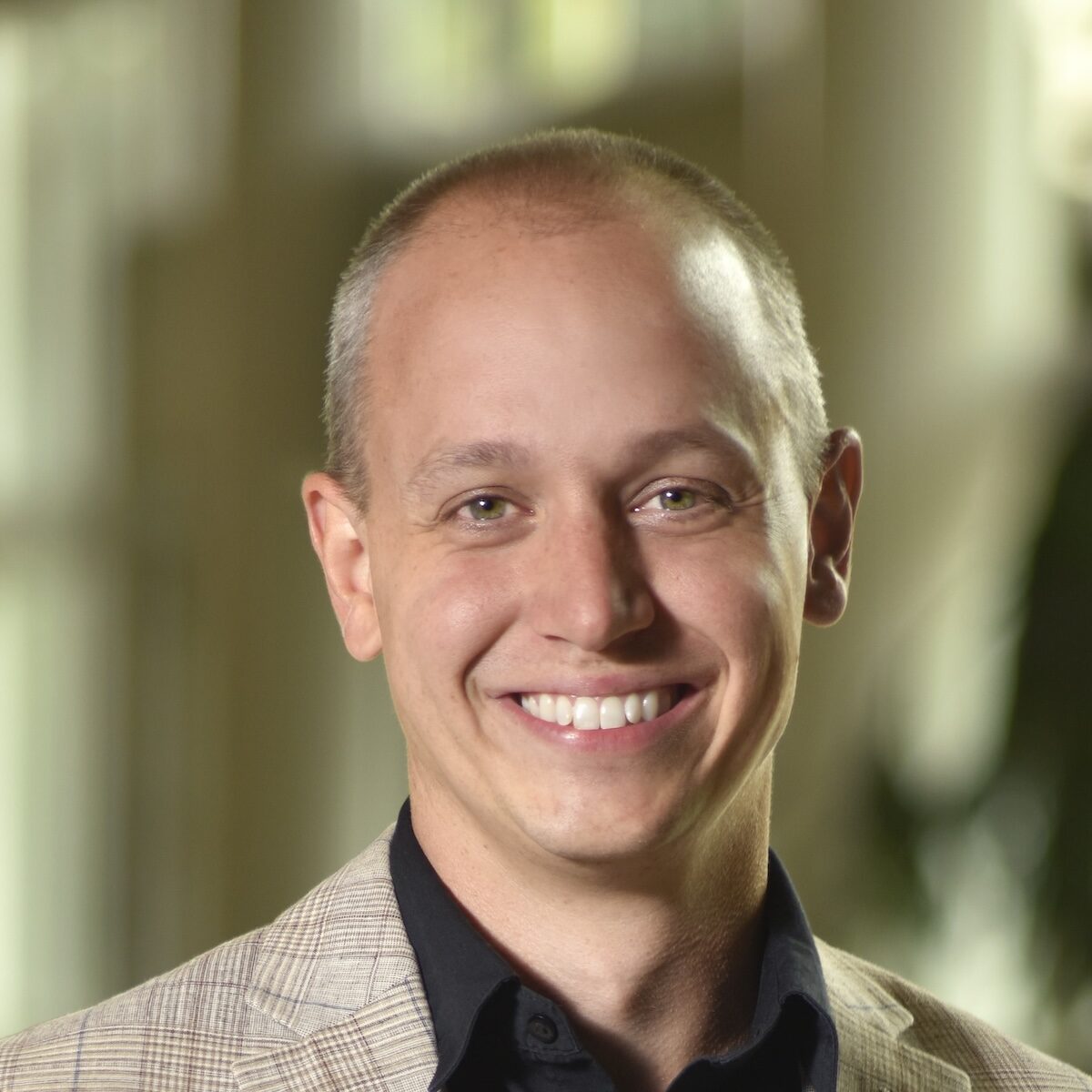
Gordon Pennycook received his Ph.D. in psychology from the University of Waterloo. He is currently an associate professor of psychology and Dorothy and Ariz Mehta Faculty Leadership Fellow at Cornell University as well as an Adjunct Professor at University of Regina’s Hill/Levene Schools of Business. He is a member of the Royal Society of Canada's College of New Scholars, Artists, and Scientists, and a 2016 winner of the IgNobel Prize for Peace.
Click to Show Episode Transcript
0:00:00.7 Sean Carroll: Hello everyone, and welcome to the Mindscape Podcast. I'm your host, Sean Carroll. I don't know about you, but doesn't it bug you when other people are wrong about things. Like, I know you and I generally are correct about all of our beliefs, but out there on the internet or even in society, it seems that there's more and more people who have false beliefs about things, and they even sort of nurture those false beliefs by hanging out with other people who have false beliefs. What is up with that and what can we do about it? Now, of course, all of us have some false beliefs, and famously there's this idea that we have biases that nudge us towards one set of false beliefs or another. Then some of us are gonna say like, there's a whole group of people who have more biases than we do, and we can have that argument.
0:00:46.5 SC: There's motivated reasoning. There's a reason that people either for wishful thinking purposes or for identification with some political drive or other kind of group want to have some beliefs 'cause it's part of their identity. Okay? But is that really the reason why people have these false beliefs? Either susceptibility to just as our guest, Gordon Pennycook will put it today, pseudo profound bullshit or susceptibility to misinformation or conspiracy theories. And what Gordon is gonna tell us is it's actually not quite about cognitive biases and motivated reasoning so much as it's about what he calls unthinkingness. That is to say, when you're faced with a claim, whether it's a claim you see on the internet, or someone's giving you a fortune cookie, you evaluate that claim and you can evaluate it either instantly, like, oh, it feels right to me or it feels wrong, or that fits in with my views.
0:01:44.9 SC: Or you can evaluate it in a more careful, reflective, cognitive way. Like, how do I know that this claim is on the right track? What are the sources? What are the reasons to believe it? The same thing goes true for not just a proposition about truth in the world, but a saying or an aphorism. Like, if something feels kind of profound, we might just accept it without thinking very much, without even thinking whether or not it makes sense. And so Gordon is gonna argue that if we just sit down and think about things, all of us can be better at understanding the difference between profundity and nonsense, the difference between a conspiracy theory and something that is more accurate. And this goes very broadly, and he has some wonderful results with very high statistical significance by psychology experiment standards.
0:02:37.4 SC: And also what is really fascinating, and we'll see whether this holds up because it's all very new, and of course any such claim needs to be further investigated. But there's even a suggested mechanism for talking people out of their conspiracy theorizing by having them talk to AIs, by having them talk to large language model chatbots, which are very patient. They're willing to talk to you for a very long time. And if it's a good LLM, it has access to an enormous amount of information, much more so than any one of us who is not embedded in the conspiracy theory might have access to. It turns out, again, this is a slightly optimistic finding, which I'm always happy to share with Mindscape listeners. People generally want to think things through. People want to talk about their beliefs. People are even susceptible to evidence, even the deepest conspiracy theorists.
0:03:31.9 SC: So maybe we just need more patience and access to resources to convince them that their conspiracy theories are not correct. And maybe that is a use case for AI. Just have people chat with it, push them in the more reasonable direction. Again, we're gonna have to see through further experiments whether this is the right direction to move in, but maybe this is the kind of thing that the internet and social media really need to correct the fact that it's very, very possible in today's information environment to be surrounded by nonsense and to think it's all correct. Maybe we can do better than that. That's the kind of optimistic take we're into here at Mindscape. Let's go. Gordon Pennycook, welcome to the Mindscape podcast.
0:04:31.8 Gordon Pennycook: Thanks for having me.
0:04:33.6 SC: I gotta start... Plenty of places to start, but the one that's irresistible to me is you are, I guess, maybe one of our first Ig Nobel laureates that we've had on the show. You're a winner of an Ig Nobel Prize. Tell us about that. Some people might not know what the Ig nobels are, so maybe explain that first.
0:04:52.7 GP: You need to be dipping more into that reservoir. There's some great stuff.
0:04:55.7 SC: I know.
0:04:57.6 GP: So the Ig Nobel is... Well, actually the way my mom described it was it's the Nobel Prize for smart asses or rather, that's the way I described it to my mom. But, it's for research that makes you laugh and then makes you think. And so I mean, some of the awards are given to people, that they're kind of making fun of. And some of the awards are for people who are doing legitimate research that is both amusing and interesting and maybe even important. They don't tell you which ones are which, of course, but I assume [0:05:27.6] ____ category.
0:05:29.2 SC: You like to think.
0:05:31.7 GP: Yeah. And that was for the research on bullshit.
0:05:34.0 SC: That's right. So you wrote a paper on pseudo profound bullshit. And of course, as someone who has a part-time position in a philosophy department, I know that philosophers are super interested in bullshit, but you're thinking of it from a more empirical perspective.
0:05:49.4 GP: That's right. I mean, you come across this sort of thing. The way that this was triggered actually was a website called wisdomofchopra.com. And so this... If you are aware of Deepak Chopra is, he's kind of a new age guru who doesn't use that term himself, but that's the way I might characterize him. And it's a lot of very kind of elaborate jargony terms, quantum consciousness and et cetera. And the way that the communication seems to be geared towards is not helping people understand what you're trying to say, but trying to make it seem like you're saying something important. So the question though is do people actually find these things profound? And so we took these, like, basically the way that the website works is it takes buzzwords from Deepak Chopra's Twitter feed consciousness, intentions, intentionality, whatever. And it puts them together randomly in a sentence. So I'll give you an example. This is my favorite one. Hidden meaning absorbs abstract unparalleled beauty. I think I'm... Something like that. Anyways, it's something close to that. Well, hold a second. I'm gonna get it right.
0:07:00.4 SC: Okay. Let's get it right. Was this one of the random ones or is this a real one from the Twitter feed?
0:07:04.7 GP: This was a real one. I'm missing just one word. And this is funny 'cause I guess I must have said it 1000 times.
0:07:12.3 SC: You gotta get the pseudo profundities right.
0:07:14.2 GP: Yeah, exactly. You don't wanna get it right and then... Hold on a second. But we also did... So we gave... Hidden meaning transforms unparalleled abstract beauty. It's pretty good.
0:07:25.7 SC: Yeah, it sounds profound.
0:07:26.0 GP: Now, it sounds profound, but you have to think about it to kind of understand that you don't know what it means. And so we took sentences like that, just random sentences, but we also took some actual tweets from Deepak Chopra. Intention and attention are the mechanics of manifestation. That's one of the tweets, that kind of thing. They sound pretty similar, obviously, and they are psychologically exactly the same. Like the people who believe that the random sentences are profound are the same people who think that the tweets are profound. And the kind of key part of the paper, it was mostly actually a mythological paper. It was just how do you measure one's receptivity to this pseudo profound form of bullshit? And so we would just kind of use... It's basically like creating a measure to assess that. And then people who tend to rely more on their intuitions, and like their gut feelings tend to think that these things are more profound. People who are more likely to kind of like, go with alternative medicines and believe in pseudoscience, all the kind of things that you would expect.
0:08:31.1 SC: And so, bullshit bs doesn't just mean falsehood in this particular case. Like this is a kind of a technical term, at least in the philosophical discourse.
0:08:40.6 GP: That's right. Yeah. That's the key point, because we weren't just trying to be smart asses by using the terminology. There's a real philosophical literature about what bullshit is, and it's actually not even falsities. The way that Harry Frankfurt, the Princeton philosopher defined bullshit, by the way, you gotta check out, there's this great essay that became a little book that you can buy. It's a good book for your coffee table. This is called On Bullshit by Harry Frankfurt. And he distinguished between bullshitting and lying. So if you're lying, that implies that you care about the truth to some extent. 'Cause you care enough about it to try to subvert the truth. Bullshitting is kind of almost the opposite, where if you're bullshitting, that means you don't really care about the truth. You're just trying to get someone's attention, get them to think you're smart, get them to buy your product, whatever it is. It's just truth is just not a consideration for that utterance. I mean, and you can bullshit about something that's true. It can be happen to be true but really it's about your orientation towards the truth, is what bullshit is all about.
0:09:43.3 SC: So you can accidentally say something completely correct by just bullshitting and you're trying to get... But your goal is not to get to the truth, it's to elicit some reaction.
0:09:52.2 GP: Exactly. I mean, a broken clock is wrong. It was right twice a day. Same thing can happen when you're bullshitting. Now there have been like further debates within the philosophical field about how to define bullshit. And there's a whole interesting sense.
0:10:04.0 SC: Once you start, yeah.
0:10:05.9 GP: Yeah. Once you start. But for the purposes of our work, it was mostly just a matter of capturing that underlying idea of people not really having a regard for truth or evidence when they're making statements. And that captures a lot of the kind of like pseudoscientific and kind of just general new age hooey stuff that you see in books online, et cetera.
0:10:26.7 SC: And when you say pseudo profound bullshit, is that a subset of bullshit? I love this conversation. This is gonna be fun for the transcribers to make the transcript here.
0:10:36.5 GP: Yeah, exactly. I think we broke the record. We said bullshit like 200 times in the paper or something. Not on purpose. It's just you use the term. Well, so yeah, pseudo profound is the category of bullshit that's where you're... The particular goal in that case is instead of communicating in a way that actually produces meaning for the other person, it obscures it. I mean, any good science communicator knows that you take something complicated and you distill it so the person really understands the core underlying theory or message or whatever. This is the opposite. You take usually some sort of like basic trite observation, and then you make it sound like it's really important and then you can sell more books or whatever.
0:11:19.6 SC: So what is the basic psychological result here? I mean, are many people very susceptible to this? Or is it a certain set of people who are susceptible universally? Or does it depend on the kind of bullshit?
0:11:32.9 GP: It depends on the kind and there's no... So, there's no definitive answer on like where it falls. It depends on how you measure it and all that kind of stuff. Some people are more kind of inclined towards the new age soundy really positive stuff. But then there's like a whole other class of bullshit that's even more insidious than that where like political persuasion and all that advertising, et cetera. So, it's kind of hard to answer that question. So the key point though is... I mean, one way to think about how the mind works that I think captures it pretty well is there's two fundamental different ways in which our brain kinda works when we're processing information. We can respond intuitively and automatically, and that's often very useful. Like, I can recognize someone's face who I haven't seen for 20 years within milliseconds. And that's an intuition that we have that's very effective. But also there are times in which our intuitions are wrong. The things that come to mind are things that we should be kind of like questioning. And so we have to stop and engage in effortful deliberation sometimes. And so the key kinda messes the paper is that if we're relying too much on that kind of intuitive gut feelings, then we're going to eventually fall prey to bullshit in the world. And so we should really be thinking more about the stuff that we're engaging with, and that might be particularly true online.
0:12:49.1 SC: So, is it a system one, system two thing in the [0:12:52.9] ____
0:12:52.7 GP: That's exactly what it is. Yeah, exactly.
0:12:55.1 SC: I always forget, which is system one, and which is system two.
0:12:57.8 GP: System one is the first one, which is the intuitions. System two is the kind of like thing that is kind of more optional and happens afterwards.
0:13:06.8 SC: Well, and this is one of... It seemed to me to be one of the most robust and believable conclusions of psychology, which is that most of our thinking is sort of subconscious, intuitive, quick system one stuff. And there's only like a little bit of super effortful system two guidance at the top.
0:13:25.4 GP: Exactly. And evolutionarily that makes sense. Like if you have a process that requires resources, cognitive resources, energy, then it wouldn't be that adapted to be doing that all the time. The problem is that people vary in how much they do it. They don't do it when they need to do it and sometimes they're doing it when they shouldn't do it. I mean, there's cases in which you can overthink also. And so knowing when to expand effort is really the kind of the trick to making better choices.
0:13:54.3 SC: Okay. So basically... I mean, as a psychologist... Is a psychologist the right noun for you?
0:14:00.2 GP: I'm a psychologist. Yeah.
0:14:00.9 SC: Okay, good.
0:14:01.8 GP: I'm an experimental psychologist. Yeah.
0:14:03.2 SC: People get upset if I use the wrong words of whatever their field is. So, do you try to then correlate how well people do in recognizing the pseudo profound bullshit with how much effort they're putting into cognition versus just intuition?
0:14:18.1 GP: Exactly. That's what we do in the paper. It's like we have ways of measuring the extent to which somebody relies on their intuitions in general and then we have these like various other kind of dispositions that people have, like how receptive they're to bullshit or other like just general attitudes or beliefs, like their stance on alternative medicines or whether they trust science and stuff like that. And through lots of different studies on lots of different topics, people who are more intuitive have really different beliefs and ways of processing information. They tend to believe more in the pseudoscience. But also, like, I'll give you one completely kinda more random example. In grad school, one of the studies that I was working on was with the Emeritus professor Al Shane. And what Al was... He was a global expert in sleep paralysis.
0:15:07.0 SC: Okay.
0:15:09.1 GP: So sleep paralysis is when... If you're dreaming about running, your body doesn't get up and run. There's a kind of a disconnect between what's going on in your mind and what's happening with your body. And so in a certain sense, your body's kind of paralyzed while you're sleeping. I mean, you're moving around, but it's not connecting the thoughts in your head to your actions. Sometimes when you're waking up, you're in a semi-conscious state, and so you're sort of awake, but your body is still asleep. And so it feels like you're paralyzed. And many people hallucinate, they think that there's a demon on their chest, whatever. People who are more intuitive are more likely to believe in the demon on the chest than the kind of fairytales. But, the interesting thing that we found was that the people who are more analytic, who question their intuitions have less distress following sleep paralysis, like in the days that after this kind of event, which is very scary for everybody. They're not as distressed because they're using their thinking to be basically kind of like contextualize the event to deal with the emotions and all that kind of stuff. So it has kind of these wide ranging effects on lots of things.
0:16:05.5 SC: And is it that there are certain kinds of people who are just susceptible to this overall? Or is it that there's like certain moments in my life when I'm susceptible to it? Like, can I be told, "Oh, focus now and try to use your cognition," and that makes me less susceptible to bullshit?
0:16:25.3 GP: So both. So everybody relies on their intuitions and probably everybody could spend more time questioning their intuitions and thinking and reflecting. So this is not like a... And certainly people, researchers usually think about themselves as people. I'm the reflective one, so it's me versus them. It's not like that. Everybody needs to question their intuitions. And there are cases in which we have blind spots. Like I'm a sports fan. I'm not making a lot of rational judgements and I don't have a lot of rational beliefs when it comes to teams that I cheer for. And so there's... We have strength and weaknesses when we do this sort of thing that we all could work on for sure.
0:17:04.8 SC: I have this argument 'cause I'm a sports fan too, and it's not really an argument, but I have this feeling that these days there are too many sports fans who are trying to be objective about their team. They're like, I think that we should not sign this person to this contract because blah, blah, blah. And I'm like, who cares about that? I just wanna like assume that my team's gonna win every game and root for them. Like, we're giving people too much access to the mind of the general manager these days.
0:17:32.7 GP: I think that's a solid point. I mean, I've had this conversation with a friend of mine who viewed my sports fandom as being an inconsistency as someone who really values engaging analytically with the world. Whereas, what I said to him was, like, for me, it's a rational choice to allow myself to be irrational in this domain. It's more fun if you just watch it and you hope for the best.
0:17:56.5 SC: The whole point of sports is to like, be a little bit irrational and just let that part of your brain go.
0:18:01.5 GP: Exactly. Although I'm a Maple Leafs fan, so if you have any hockey fan listeners, I don't know that that was... It's not working out for me. But someday maybe it will.
0:18:14.5 SC: Speaking of parts of the brain, I mean, how much can we be neuroscientists and actually connect this system one, system two cognitive versus intuitive thing to particular parts of the brain doing particular actions?
0:18:29.0 GP: So it's a difficult question because it's... I wanna dissuade people from thinking about it as actually different systems. I never usually use the term system 'cause it's not like there's two parts of the brain, one does one and one does the other. And they're also highly interconnected. So like, if you think about, if I give you a math problem, 17 times 37, okay? So unless you've memorized that particular question, nothing's gonna pop into your head. You have to decide to think about it. But what you do is you break it up into easier problems that you solve intuitively 10 times 20, whatever. And then you hold those in your mind, then you put them together. And so there's deliberate steps that require intuition. And so if you can put someone a scanner in and do that, but like, knowing what are the intuitive parts and what are the deliberate parts, that's a pretty complicated question to answer.
0:19:17.7 SC: And the way you're using the idea of intuition, it's not necessarily like instinct or innate. It's something that you can actually learn.
0:19:24.6 GP: Oh, certainly. My favorite example of that is chess grand masters. They can immediately identify just through rote memorization and playing the game and like literally like studying 50,000 different orientations on the board, in the same way that you see someone's face and can identify it, they identify the orientations on the board. That's purely intuitive, but of course, it's not like they were born with that capacity. They have to learn it by thinking analytically. So the things work together.
0:19:53.1 SC: And so when faced with these pseudo profound bullshit statements... Well, so again, like is it most of the time we only engage at our intuitive level? Or is it, there are some people who are just really bad at going beyond the intuitive level?
0:20:10.5 GP: It's both of those things. Most of the time we engage at the intuitive level. But there are some people who don't really do the other thing that much. They really don't. And some people actually literally value deliberation more than others. And those people also tend to value evidence more and getting it right. So just as an anecdote, my mother-in-law, who I love very much, and she's a nice lady, and there's no animosity, she explicitly identifies as being a not rational person. Like, she just, she thinks feeling and emotion is a kind of a better way of engaging in the world. And I wouldn't say that's completely kinda like thought out. That's just what she thinks or what she feels. And so she's just totally fine with being kind of irrational and not deliberating. And that's just... So if I could try to encourage her to be more reflective and deliberate, but she's not gonna really do it because she doesn't see the value in it.
0:21:01.9 SC: And it sounds like this is something you can test with your array of pseudo profound statements, how good people are and recognize them. But it probably extends beyond that narrow categorization to go beyond like how we deal with the world more generally.
0:21:16.3 GP: Certainly. I mean, you can assess it in some ways by kinda just asking people the right sorts of questions. Like you can also do tests, like, I'll give you an example of a question that we use that kind of probes this sort of thing. So, if you're running a race and you pass the person in second place, what place are you in? A lot of people are gonna wanna say they're in first place. But of course, if you pass the person in second, you're now in second, and the person first could be a mile ahead. You don't know. But the way that you think about that intuitively is you maybe imagine passing the person. And you're not imagining the person at first, you just imagine you pass and now you're in first in your mind. And so, like the intuitive answer is different than the one that you get from... In that case, it's not a lot of thinking that helps you understand that. Like, once you explain it to people, everyone understands that no one's disputing that the correct answer is second place, but they just have to think about it in the right sort of way to get the right answer.
0:22:05.8 SC: Is this something that we can train ourselves to be better at?
0:22:09.3 GP: So, I think the jury is out on that to some extent. I mean, there are certainly, when it's hard to teach old dogs new tricks, I think if there are ways we could intervene and encourage people when they're developing reasoning skills to get in the habit of questioning their intuitions, taking someone who's thought about the world in a particular sort of way for decades and changing the way they think, this is not a trivial thing. And I don't think, we haven't really done the sorts of long-term heavy intervention experiments that you would need to do to really test that. So other scholars in the area might disagree, but I think that the jury is basically out on that to a great extent.
0:22:51.5 SC: I think we'll get to this later again in the conversation, but I do wonder as a non-expert when it comes to psychology experiments that are looking to test the efficacy of interventions, how much they do care about the timescale, the time horizon. It seems like I'm worried, and I actually, this is a biggest worry in kind of politics where you ask people, do you agree with this statement politically? And they give you an answer, but maybe they're changing over time and maybe you tell them something and they switch their view and they switch back, they fall back to an equilibrium. Is that a worry?
0:23:24.2 GP: It's a big worry. And it is actually even larger than that because for psychologists, we have people for 15 minutes, 30 minutes, you know?
0:23:34.4 SC: Yeah.
0:23:34.9 GP: And so the sorts of interventions you can do if you wanna really test causal mechanisms are things that you can do in a matter of minutes. And there's not... That takes away a lot of bullets outta the chamber when you're trying to really understand human nature. And it's human nature and very slim thin slices. And it's almost an intractable problem because like, it's not like we can treat people in the same way that you would have birds in a bird laboratory. I say that because I'm at Cornell, there's lots of bird labs here. So that makes it more difficult. But at the same time, there are really interesting things you can learn, of course, from the small snippets and in many ways, that's what our lives are, just a collection of small snippets. But you have to kind of understand the scope of that. And it's a general problem for us for sure.
0:24:20.9 SC: I did have Joe Henrich on the podcast a while back, and he emphasizes the weird culture kind of thing and I presume that most of your experiments are done on college ed undergraduates at Cornell. Are there cultural differences between this ability to detect pseudo profound bullshit?
0:24:41.2 GP: So actually in most cases, we actually don't... I haven't run a study with student participants since grad school. Which was about nine years ago. We use online samples that have a broader, more representative kind of like set, but they of course, are not truly representative. These are people who are engaging in online studies for fun or for work or whatever. And we have done lots of cross-cultural studies, but usually among similar samples in different cultures. So a lot of stuff that Joe would talk about would be like going to places where people don't usually go to run studies out to Amazonian tribes and stuff like that. And that's such a small fraction of the amount of psychological work, because it's much harder. And also it'd be very annoying to all the people out in the Amazon to have thousands of researchers always hanging out, you know what I mean? So not everyone can do it. But yeah.
0:25:34.6 SC: I guess I'm just wondering, are there like differences of discipline between let's say northern Europeans and southern Europeans, or Buddhist monks and atheists or something like that?
0:25:46.0 GP: Yeah. In terms of the bullshit thing?
0:25:49.5 SC: Yeah.
0:25:50.7 GP: I haven't looked at that in particular. I think there was a study that looked at a form of this, which was, if you tell the person that it's like an expert, then they'll think it's more profound. And that effect was consistent across a bunch of different cultures. But mostly undergrad student samples. So there's always like a caveat in all these kind of cross-cultural studies and stuff like that. So, there's like... I can't see any particular reason why this... Apart from the fact that certain sorts of pseudo profound bullshit are more common in different cultures than others and so you might be used to that sort of terminology or whatever. But the underlying propensity to kind of rely on your feelings and kind of assume that because it doesn't make sense, it might be meaningful, I think that there's no... I don't think there's any particular reason I think that's specific to a particular culture.
0:26:36.0 SC: Right. Am I correct in recalling from one of the things you wrote, that people are better at recognizing when other people are falling for pseudo profound bullshit than they are recognizing when they are falling for it?
0:26:49.7 GP: Oh, this is like a psychological truism. Like, it's way easier to see bias in others than bias in ourselves. It's almost definitionally. 'Cause like if you saw the bias then you wouldn't have the bias. Right. And this is kind of the critical problem is that, when we are very bad at detecting our own bullshit. And that's the bullshit that's the most important to detect. That's the stuff that's gonna have an impact. And by the same token, being overconfident is one of the most... It's like the mother of all biases, essentially. Like, it's the thing that leads us to not really question that we might be wrong is because we are overconfident. And this is a very endemic problem for people in general.
0:27:30.1 SC: I have to ask at the danger of going down a rabbit hole. But is there a political component here? Or are certain sides of the political spectrum more ready to fall for the pseudo profound bullshit than others?
0:27:45.4 GP: On the pseudo profound bullshit there's this kind of a slight correlation where people on the right tend to be a little bit more supportive of that sort of thing. People would think that's the opposite, because it's like the new age woo-woo market tends to be kind of left coded. But generally speaking, in our samples, that's not really the case. But it's a pretty small correlation. It's much bigger if you move into other realms of bullshit. So a lot of my work relates to misinformation and fake news. It's basically another category of bullshit in many ways, depends on how it's made. But, there you see a very big political aim asymmetry. In the US in particular there's way more misinformation on the right than on the left. But this is one of the difficulties with making inferences from psychological studies. So if I had a random sample of misinformation headlines or content or whatever, people on the right would believe them more than people on the left.
0:28:39.4 GP: And then you might conclude, well, people on the right are particularly susceptible to misinformation. However, at the same time there's a asymmetry in exposure. There's way more misinformation on the right than on the left. And this is not just... That sounds like a political statement. There's been like dozens of studies that look... And you can look at various different ways to determine fact checking. You can look at like fact checker reports. You can look at journalist reports. You can even get politically balanced samples where you have both democrats, republicans, that equal measure rating the truth and falsity of statements. And even based on that, there's more falsity on the right. So, it's less about susceptibility. Well, maybe to some extent it might be susceptibility, but also it's just the market. And so these things are difficult to disentangle in many ways.
0:29:24.0 SC: Was that true 50 years ago or is it new?
0:29:30.4 GP: That's a great question. And I'm gonna caveat this by saying I'm not historian. I took a minor in history in undergrad. That does not count. That does not make me a historian but I would say no. I mean, to take to my historical take on this is that it's Reagan's fault. And the kind of war on science really started earnest around that time. A lot of it has to do with climate change. And in fact, if you look at the Scopes Monkey Trial, which was one of the... That was the case in which they were trying to outlaw teaching evolution in schools, it was William Jennings Bryan who was a Democrat. And that was 1929. Of course that was a Dixie Democrat, and they become Republicans under Reagan. But anyways, the war on science is something that has kind of progressed gradually over the last few decades. And now it's just... It's expanded well beyond that.
0:30:26.9 SC: We did have a nice podcast conversation with Naomi Oreskes who really laid out the history of that. For that, anyone who's interested in the history and...
0:30:34.9 GP: Go check it out. She is...
0:30:35.7 SC: Yeah. It was not just natural. It was very, very, driven by political and economic forces. So misinformation. Yeah. Let's get into that. And what is the relationship we should have in our mind between misinformation or fake news and conspiracy theorizing? 'Cause they're certainly interconnected.
0:30:53.6 GP: They're interconnected. I mean, a lot of misinformation contains conspiracies. A lot of conspiracies contain misinformation. But of course, they're not completely overlapping. Not all misinformation is about a conspiracy, obviously. And some conspiracies are true like the Tuskegee syphilis trials and MKUltra and whatever. It's just that most of the conspiracies that we talk about as like conspiracy theories are the unverified speculative sort. And so they kind of like... They are often connected in literature in many ways the underlying psychological processes are similar. Because the underlying kind of thing that matters at least for me as a psychologist, is kind of detachment from reality, implausibility, are people making claims that are consistent with evidence or are made up and bad arguments or based on bad evidence.
0:31:50.1 SC: I think there's probably a widespread belief that susceptibility to conspiracy theories has something to do with motivated reasoning. Like you believe things 'cause you want to believe them, or your friends are believing them or whatever. And my impression is you wanna push back against that a little bit.
0:32:06.1 GP: That's the accurate impression. And that's a great question, Sean. I have to try to regulate how long I spent answering this question.
0:32:12.7 SC: Go for it. We have no limit.
0:32:15.7 GP: So, it is a kind of like almost a truism among the general public within certain circles of psychology that the reason that we fall prey to kind of political, or otherwise like falsehoods, it's sort of because we want to, like we have these motivations to be a part of a political group, and we have these identities that we wanna preserve, or we just wanna feel good or whatever. And so there's a lot of theories that put that at the forefront of the kind of explanation for why people seem to be so susceptible to misinformation. But that counters, in many ways, the way that I've already described things to you, which is the reason why people are susceptible to misinformation, is because they're not really thinking that much about what they are engaging with and what they're coming across, or what their beliefs are, or what their intuitions are, or whether they might be wrong.
0:33:07.5 GP: And so that's a different story, that's more about, you might call it lazy thinking than kind of a, like, where people are like, literally they're so motivated that they're spending all this extra effort convincing themselves that the things that they want to be true are true. And that doesn't really consist... That doesn't really kind of accord with the idea that we're kind of lazy thinkers, we don't expand extra effort. And so we've done all these studies where you, like, for example, people who are... If you give people fake news headlines that are consistent with their ideology or inconsistent, people who are more reflective and analytical are better at distinguishing between the true and false ones, regardless of whether they're inconsistent or consistent with their ideology. It's not contingent on that. It's just knowing whether someone is gonna believe something, whether something's true or false, knowing whether it's true or false, people believe more true things than false things in general is important. But also like, are they reflective and deliberative? That's critical. It's not just knowing whether they're political or not.
0:34:04.6 SC: So in a nutshell, you're saying the problem's not motivated reasoning, it's unmotivated reasoning, you're not motivated to put in the work to reason.
0:34:12.6 GP: Exactly. I've been saying that and sometimes I say that exact thing. So, yes, exactly. I think, yeah, the idea that people are too motivated is really going in the wrong direction. Yeah. I mean, there are context in which people are engaging in motivated actions. Like some people are trolls on the internet and they're trying... Or they have a vested interests and they're trying to persuade other people to take their position. Or they're like, maybe they're selling a product or whatever. I'm not gonna like say that there's no motivations ever, but I think if we're going to like, take the big pie of people believing things that are on bad evidence and false, a lot of it is just because they haven't thought about it.
0:34:49.0 SC: And this tendency to sort of not be willing or able or interested in putting in the cognitive effort. This seems like prior to a whole bunch of things, like if you're that kind of person, you're gonna be susceptible to lots of misinformation and conspiracy theorizing.
0:35:05.0 GP: Exactly. And you often see people who are likely to believe one conspiracy are also likely to believe a conspiracy that might even directly contradict it. Or they might believe things that are really separate. Like people who are very often have lots of religious beliefs, they believe in angels and demons and heaven and hell, all those things. But also really believe in like, superstitions, and like things that would be classically referred to as like occult counter to religious claims. And because just like they're just not scrupulous, the things that they see are kind of like, just already believed. And they're not really putting the effort into like distinguishing between what are the things that are true and what are the things that are false.
0:35:51.4 SC: This might be too vague to even answer, but I'll give it a shot. Are there kind of characteristics that people have that go along with this tendency to not want to do the cognitive effort? Does it correlate with just other, I don't know, personality traits or other features of human nature?
0:36:12.8 GP: That's a good question. I mean, in general, but not as much as you would think. Like people often will think about demographics, it doesn't really relate that much to demographics, there's things like personality traits, like being open, open to experiences. It's not as related as you might think. You can be very reflective person and be open to experiences, you know what I mean? Or introverted or extroverted. These are like just kind of separate psychological mechanisms. One thing that is very highly related to whether you have the disposition to think in an analytic way is your stance on the kind of importance of questioning evidence that goes against... Or questioning evidence that is consistent or inconsistent with your views. And I mean, it sounds like I'm saying the same thing in two different ways, which is like, naturally in order to question the evidence you have to be deliberative. But it's more about whether you value evidence, whether you kind of value accuracy. And of course, people who are more reflective tend to be better at it. They tend to be more intelligent and have higher cognitive capacity in other domains. So, it's a kind of collection. If you have all those things at once, then those are the people who tend to be the most kind of like pro science and et cetera.
0:37:30.5 SC: But it does sound like maybe something that training or education or exposure could help with if you just are sort of used to thinking things through in a carefully deliberative, cognitive way that would make you less likely to fall for conspiracy theories, for bullshit, et cetera.
0:37:47.9 GP: I think that's for sure true. And it's now going back to like different domains, like as someone who... And you're someone who... You did a PhD in a thing. Once you have really dug down into a topic, then you... Once you've done all that kind of actual deliberation, then you see the difficulties and uncertainties in the thing. And then now once you see something that's within that domain that you've thought about, you immediately can be the reflective person. You say, wait, wait, I'm used to there being more... This is not so straightforward, this is complicated. But then if you read something that's outside of the domain, then you can kind of see where you're not being as reflective with that. Another example is... This is also the kind of simple behaviors that you can teach yourself to do better, more reflective, some of our work on misinformation is about, when people see like false content online, they might share it without even thinking about whether it's true.
0:38:43.0 GP: Like, they might be thinking about other things. They might be thinking, oh, is this important? Or how does it make me look? And so they're just... But they're just not like... The thing that's popping to their mind is not like, is it accurate? And so we've done these experiments where we just remind people about accuracy. We just give them little... We ask them questions before at the start of experiment about accuracy, then they're better at distinguishing between the true and false stuff when they're deciding what to share. Or like little ads that are about, like, make sure you think about accuracy, those little things can get people to be a little bit more reflective about the truth. It's not gonna make them more reflective people in general, but in that particular context, that choice can be more rational.
0:39:19.8 SC: So you think we should buy a whole bunch of popup ads saying accuracy matters?
0:39:23.9 GP: Yeah. I mean, we have done that experiment. It does have a small effect. I mean, it's not gonna save everything, but it stops a subset of behaviors where people are reflexively sharing things without even considering whether they're false or true. And that's a kind of a problem.
0:39:38.1 SC: I remember a long time ago reading an article about a biographical sort of essay by someone who had been really, really into new age beliefs and had eventually abandoned them and become more like rational scientific, whatever. And one of the things that they said was they had this impression when they were in the new age group that one of the problems with scientists is they claim to know everything, they're certain about everything. They have all the answers. They think they have all the answers. But she realized eventually it was exactly the opposite. Like they were questions you could ask a scientist and they would say, well, we don't know yet. We don't have the answer to that yet. But for her new age friends, there were no questions that she could ask, that they wouldn't give an answer. Do you think that there is some like desire for certainty that makes people more susceptible to this?
0:40:24.5 GP: There is some research on what's need for cognitive certainty, cognitive closure. And so that is an element of that kind of... It's a legitimate individual difference that people have, or they need to have more certainty. And that having the need for certainty is not usually generally good. You know what I mean?
0:40:45.1 SC: Right.
0:40:45.7 GP: It's scientists understand this that you... Unless we do not live in a simple world, you can pretend that you do, but you still don't. And if you want to have certainty, then you have to often construct it yourself. I mean, there's a version of it that's fine. Which is like, you cannot be okay with not knowing if you're a scientist, you have to have the drive to figure it out. But you have to be in the same sense that you have to be acknowledged that you don't know. And that you want to get to a place where you do know, and you have that kind of thirst for knowledge, but you have to be okay with the fact that you don't know. And so it ultimately comes down to overconfidence and intellectual humility.
0:41:28.2 SC: Well, that's another thing that you studied, the level of confidence that various people have in their beliefs. And again, I'm gonna say what I think that you said, and you can correct me if I'm wrong, that people who are prone to believing in the conspiracy theories are actually more likely to be overconfident in their beliefs generally than people who are more skeptical.
0:41:51.8 GP: That is what we've found. Yep. And so this goes to what you're saying. So, need for certainty is kind of one element of it, but we have this test that we're giving people that's a general test of just whether you think that you're good at things when you aren't.
0:42:06.5 SC: In perfect generality.
0:42:08.4 GP: Just like, that's the intention of it. Just now we have to convince people that this is right. And we're at the earlier stages of that. So there's scientific uncertainty being discussed, as we speak. But it's a very simple test. We give people like a fuzzy image that's hard to discern. This is better visually, but just try to imagine something that is difficult to discern. And then we make them guess. And like, is there a chimpanzee or a baseball player? And people don't know, their guesses are random. And then we ask them how confident they are and how many they think they got correct out of like maybe 10. And the people who think they're doing better, they aren't doing better. Like everyone's guessing but some people do think they're doing better, and they have a feeling that like, they at some level know that they're guessing, but they also really feel like they could do it And that's what we're calling this general overconfidence. It's a task that's completely novel. So it's not like there's some other like background thing that led them to be overconfident about that thing, they just like brought that to the study and they're overconfident. And those are the people who tend to be more likely to believe conspiracies and it's got all sorts of other possible downstream consequences.
0:43:24.3 SC: So it's similar to, but not the same as the Dunning-Kruger effect. Which I'm not even sure if that held up psychologically, but the idea that like a little bit of knowledge makes you way overconfident in your knowledge in some domain, but you're just identifying a general psychological tendency to overconfidence.
0:43:41.8 GP: Exactly. In fact, what we're trying to do is circumvent the Dunning-Kruger problem. The Dunning-Kruger problem is that if you're really bad at something, it's hard to know how bad you are at that thing because the same thing that you used to be good at it helps you understand how good you are at it. You know what I mean? So the most incompetent are at least able to recognize their incompetence. And what that means is, if I wanna measure how overconfident somebody is, if I give them a math test and they happen to be bad at math, maybe they had a bad school or whatever, they don't like math, they'll appear overconfident. But if I gave them a test of like how good they're identifying humor, they might be good at that and they won't appear overconfident on that test. And so it has more to do with the test than their general tendency to be overconfident. This is why we devise a test where there's no relationship between how good people think they're doing and how good they actually are doing. It's just completely all the action is in the confidence and not in the performance.
0:44:35.1 SC: And this does seem compatible consistent with the idea that the people who are susceptible to this kind of stuff are just not putting in the cognitive effort to reason through it.
0:44:43.9 GP: Yeah. You're seeing the thing that the thorough line throw all the things. It's really about unthinking this for sure. And people who are overconfident, you might not be surprised to find tend to be more intuitive. And they're particularly bad at those tests because if you give... Remember the question I asked you about running a race and you pass the person in second place, the people who give the immediate answer, and it doesn't dawn on them that they might be wrong, those are the most overconfident people. I've had this way back in the day when I gave these tests to actual in-person participants like undergrad students. A person would raise their hand and be like, why are you giving us these easy problems? And they've gotten obviously one of the problem right. So, that's that's overconfidence.
0:45:30.3 SC: And you used the word unthinkingness. Is that a technical term? I like that. I'm gonna start using that.
0:45:35.3 GP: No, I don't think I've written it down. I'm not sure that I've ever even said it before, but you can use it.
0:45:39.7 SC: It's a good one. We should, yeah. We should definitely propagate that one. So another interesting result you got along these lines is, for the conspiracy theory angle, wondering whether or not people who believed in conspiracies, are they like proud of being in a tiny minority that no one has the truth except them? Or are they of the opinion that secretly everyone agrees with them?
0:46:01.8 GP: I think that this is the... To me, that part of the paper was the most interesting part because there's this idea of conspiracy believers. I think that it's consistent to some extent with the overconfidence thing, where they think, well, I'm the one who knows the truth and all the... And everyone disagrees, the scientific establishment disagrees, but it doesn't matter because I'm the smart one and they're the dumb ones and whatever. And that it is consistent with this kind of motivational idea of conspiracies that we talked about before, where it's like people believe conspiracies because it makes them feel good, 'cause it fulfills... It's consistent with all these needs they have that need to feel unique for example, is one of the things that people have written about. However, in that study, what we found is, we asked people to estimate the extent to which other people agree with them.
0:46:50.7 GP: So like... And the underlying idea with overconfidence that we're talking about is that it's the unthinkingness that's important. So if you're overconfident genuinely, then you're going to overestimate how much people agree with you, because it's like, how could anyone disagree if it's so obviously true what I believe? And so I'll give you an example. In one study we asked people, like, there's a bunch of different conspiracies, but one of the conspiracies was the Sandy Hook false flag conspiracy, which is a pretty ridiculous one, that was an Alex Jones special. And in that experiment, 8% of people thought that was true. So it's a pretty...
0:47:28.1 SC: Could you just like, give us more of the background? Like, I always like to imagine people are gonna listen to this 500 years from now and they don't know who Sandy Hook is.
0:47:34.0 GP: Right, right. So the Sandy Hook was a horrible massacre of children, and the conspiracy was that it was a false flag meaning there was actually no children that were killed in that despite, very kind of obvious evidence to the contrary and like parents giving interviews and like, all that kind of stuff. And it was mostly to do with like, people were... Sandy Hook had some impact on whether people were wanting to regulate guns in the country or whatever. Obviously we haven't gotten very far on that one. Maybe in the future someone listens to this podcast and they're like, you guys had guns? But any case, so it's a... But most people don't, most people realize that Sandy Hook actually happened, it is not a false flag.
0:48:17.9 GP: But 8% of people thought it was more likely to be true than false. And then we asked the people, everyone to estimate what percent of people agree with you. Okay. And so if they're calibrated, they will say 8% of people agree with them, or 10%, or maybe they overestimate and they think, well, only 1% of people believes this. I'm in the minority. In reality, what they said was 61% of people they thought agreed with them. So, they thought they were in the majority. In fact, almost all cases, people who believe conspiracies think they're in the majority, even in cases where less than 10% agree. And so they have no idea where they are relative to other people. And people who are overconfident are even more likely to overestimate how much people agree with them. Because it's just how could you possibly disagree with this thing that's obviously true? I mean, I can't be wrong. And that's over confidence.
0:49:09.0 SC: Is part of that kind of an information bubble situation where they're hearing the same things over and over again and they figure everyone else is hearing the same things?
0:49:17.3 GP: Yeah, exactly. I mean, some of it has to do with... I mean, think about the experience of the conspiracy believer. Then I have people that I know that are down the rabbit hole. You come up to somebody, maybe it's a family member at a barbecue or something, and you start talking about a conspiracy. What's gonna happen? Well, most likely scenarios that they walk away or they try to change the subject. They might vaguely agree with you to kind of be polite. Very infrequently will people say you're out to lunch. Maybe to some extent online, but even there, even if you post a conspiracy on Facebook, most of the time you're gonna get a few likes, and then no one's gonna say anything about it. And so that feels like agreement, I think.
0:50:01.3 GP: And then you go on to whatever dark parts of the internet that you hang out to talk to people, and everyone's in agreement. And so, yeah. It makes sense that it seems like everyone's in agreement here. So it's actually called the false consensus effect, which is an old effect. But it's like the biggest false consensus effect I've ever seen. It's very, very large effect. There is like very little calibration in terms of what conspiracy believers think other people believe relative to them.
0:50:26.3 SC: Well, and this is a perfect segue into the other thing I wanna talk about, because I mean, you're right, I would certainly generally not engage with someone who I thought was a completely loony conspiracy theorist. I don't have the patience to do that, but who does have the patience to do that is chatbots. So maybe we can make AI programs talk people outta their conspiracy theories. What do you think about that?
0:50:49.5 GP: Hey, you know what? We have a paper on that too.
0:50:51.5 SC: Oh, good.
0:50:54.5 GP: That it is the case that chatbots are way more patient for this sort of thing. And also forgetting about patience, and this is the more important part. They have access to all the information that you need in most cases. If you were of the disposition to debate a conspiracy theorist, you soon realize that they're talking about things that you've never heard of. 'Cause they went down the rabbit hole. Unless you went down the rabbit hole looking for debunks, then it's gonna be very hard to deal with the... It's called the gish gallop, where they're giving new different... And if you say something that says, counter to one thing, they say something else, and they're just like jumping around to all these obscure facts. And it's very difficult to win that debate.
0:51:36.0 GP: We've discovered in our research that you can get AI to be quite good at this. And in these experiments, the thing that's unique about them is unlike other, like, people have done experiments where they tried to debunk conspiracy theories or misinformation, but to do that, you have to guess what people believe. You know what I mean? Like I'm gonna debunk the moon landing hoax. You have to kind of make guesses about what piece of evidence people care about in that context. In these studies, what we do is we ask people to write it in their own words so they can enunciate their own conspiracy in their own words. And then we have the AI directly counteract the specific reasons that people put forth for why they believe. And they have a conversation about it with the AI. They know they're talking to an AI. And the AI just gives very, very detailed counterarguments. And what you find is that people actually do change their minds. Like, in one study, for example, the conspiracy theorists had a 20% decrease in their confidence in the belief. Another way to think about it is, so everybody at the start of the experiment believes in the conspiracy. After the conversation, which lasts about eight minutes, 25% of them don't believe it anymore.
0:52:46.9 SC: Wow.
0:52:47.9 GP: And that's eight... Yeah. That's, oh, in psychology, that's as big as you get. I mean, that's still 75% of people who still believe it, but they generally go down. They're less confident. And people usually actually like it. They're like, they're not mad at the AI, the AI gives them information they think is useful. And evidence matters more than people. We thought it was. I mean, I did not predict that coming in, and the evidence was more powerful than we thought it was.
0:53:15.1 SC: But the role of knowledge is also really interesting. I mean, on both sides. I think it was Ezra Klein, when I talked to him on the podcast, somehow we got talking about conspiracy theories, and he said, nobody knows more about the tensile strength of steel beams than 9/11 truthers. It's not because they have a lack of knowledge. They have way more knowledge than you do, because you basically say like, come on, like, everyone agrees on the certain thing. I'm not gonna spend a lot of time learning about it. Whereas they're really into it. So it's absolutely not that they don't know the details. They're just somehow putting the big picture together in a weird way.
0:53:48.8 GP: Exactly. I mean, they have fallen down the wrong rabbit hole. One of the things that people construct in their kind of mental model for a conspiracy theorist is someone who spends too much time thinking. And I think that's true to some extent. Like, this going back to what we talked about before, they are putting together pieces that are like... Shouldn't actually go together. And I think there is a version of that, that's the kind of conspiracy theory producer. But there is a lot of conspiracy theory consumers, people who just end up going down YouTube and they're watching another video, a different video, and then suddenly the earth is flat. And those are the ones who are kind of like kind of globally accepting information. And those are the people who you can have the biggest positive effects on. Because if you just give them the alternative information, especially in a way that's very comprehensive or even engaging, then by the same mechanism that they went down the rabbit hole, they can come back out of it. And so if it's not just all motivations, it's underlying just giving them the right information. And so, like, that doesn't work for everybody, but it works for a lot of people more than we thought.
0:54:50.7 SC: Well, it sounds to me like there's two aspects of the AI, the chatbots that are really helpful here. One is the infinite patience, like, they're never gonna go like, okay, I'm just gonna go back to the buffet, I am tired of talking to you. And the other is this access to lots of specific information, especially I think like the new generation of AI is much better at pointing to its sources, et cetera. But maybe a third aspect is just the unflappable cheerfulness. Like the chatbots are trained to flatter you and say like, that's a really good question and things like that. I'm not sure how much that helps with the syndrome.
0:55:26.9 GP: Well, we've done experiments where we shut off different valves. And so in one experiment we did a bunch of things where we made the AI be less polite. Basically, all it was doing was just providing facts and evidence in a kind of like, in a non persuasive way, just like directly just saying, you said this, but actually this is what contradicts that. That has more or less the same effect as what we found in our original study. If you get the AI to try to persuade, but you say you can't use any facts, it doesn't work. You take all the bullets.
0:56:00.0 SC: Oh, wait, sorry, that's very interesting. Let's think about that. So the sweet talk by itself doesn't have any effect. It's actually facts that matter.
0:56:07.0 GP: It's the facts that matter. Yeah. You take away the facts, you cannot speak talking somebody into changing their beliefs. It might help with getting people to engage. In these studies, it's important to know that like, tou know we're paying... People are paid to do the study, and so they complete it in order to get the money. And so like maybe in a case where you like want to roll a bot to just talk to people on the internet randomly, then being nice and polite would get more people to have the conversation. But when it comes to changing people's minds, it's the facts and evidence that matters.
0:56:38.8 SC: Is there a way to sort of tie this into the unthinkingness idea by imagining that the interaction with the chat bot is sort of nudging them toward thinking more carefully?
0:56:49.8 GP: I mean, it certainly is in the sense that in order to have the conversation, you have to sort of reflect on both your beliefs and what's being said. In fact, in many studies, what we find is simply going through the exercise of writing out the reasons for why you believe something is enough to kind of decrease how certain you are about it. Now, that's only a pretty small effect. Then once you give all the people the counter evidence, that's a much bigger effect. But just the engage of reflecting on it is beneficial. So these things kind of go hand in hand.
0:57:17.0 SC: And another part I guess that you mentioned in the paper was that surprisingly or not, people want to talk these things through. They don't wanna just hector you, the people who are susceptible to these conspiracies are kind of exactly the ones who wanna have a dialogue about it.
0:57:35.1 GP: Yeah, exactly. I think we've improperly misaligned the conspiracy theorist. I mean, in many ways they're very interested in... It's a failure of science communication that they fell down that hole instead of a different one. They could be learning about the Big Bang or quarks or whatever. And they went down the other one maybe... I mean, it's harder to be as interesting if you are constrained by reality, so it's a losing battle, perhaps. But, it is the case. I mean, people... This goes back also to the idea of the motivations driving everything, that general viewpoint on conspiracy theorists is that they want to be... They are totally fine with believing falsehoods because they kind of want to. And that's a... The one thing that kind of bugs me about that theory is that it's really a theory about the other. Whereas...
0:58:27.8 SC: No one thinks they want that.
0:58:29.4 GP: Yeah, exactly. But we all have the same kind of... We could all fall down our own rabbit holes, it's just that we're lucky with that the rabbit holes that entrust us aren't filled with falsities.
0:58:40.6 SC: It's a somewhat optimistic take. I mean, there's pessimistic parts of your story, I think. But people do want to talk, they want to reason, they're susceptible to hearing evidence. There's a lot of good nuggets in here.
0:58:54.9 GP: There are. And if you look around the world, you might think, really? But I think that there's... I think it comes down more to not successfully getting good information out there in the market. And that's if we're losing the misinformation war it's not because of people, it's because of the information environment itself.
0:59:17.1 SC: Is there a relationship between the efficacy of talking to the chatbots and that overconfidence that we talked about? Like, are the most over competent people harder to move? Or are they the ones who have a little epiphany and change their minds?
0:59:32.2 GP: Yes. Although in that case it's mostly related. The stronger relationship is with how much they value evidence and they are reflective people. So in this case, 'cause overconfidence isn't quite as strong because everybody is being confronted with these things that contradict their views. And also there's one kind of other complication with the experiment, which is that you get as much as you put into it, meaning that the more you talk to the AI, the stronger the counter evidence is going to be. And so the overconfident people are a little bit less willing to kind of put in the effort to get good counter evidence. But people who are intuitive, they might be like, oh yeah, these are my thoughts. And then they're like, oh, okay, I didn't realize that. I didn't realize that the steel beams, yeah, maybe they don't burn at the amount of degrees, but it loses half its carrying capacity, and that's enough to collapse a building. It's like, oh, that makes sense I guess.
1:00:26.6 SC: Let me ask again then about the timescale for this kind of thing. Is there any idea that talking to the chat bots and convincing people to move away from the conspiracy theories is still true a month or a year later?
1:00:40.6 GP: Yeah, exactly. It was one of the key findings was that not only do people change their mind in the context of the experiment, but we... So we recontacted them like a month and two months later. And not only is the effect still there, it doesn't even decay in that case. They're exactly the same level they were after the conversation. They didn't go back to believing a little bit. They just were like... I mean, their minds were changed and they didn't think what they thought before the experiment. And you don't ever see that. We were like, hold the presses, that was exciting. We've done a lot of other kind of like experiments that are on different topics, but they often don't have as much carryovers. That one had a pretty big one.
1:01:22.4 SC: This is certainly too much to ask, but we indicated earlier that there was sort of a general tendency toward unthinkingness that made you susceptible to a lot of misinformation. And if you're talked out of a single conspiracy theory by your AI friend, does that at all carry over to your susceptibility to other conspiracy theories?
1:01:45.7 GP: That also is what we've... We found evidence that that happens too. Like in the context of the study, what we did is we asked people about a bunch of common conspiracies, like 9/11 was an inside job, whatever, moon landing's a hoax. And then they talked about whatever particular conspiracy they wanted to talk about, and there's like huge variability in what that is. And then we remeasured both how much they believed the conspiracy that they talked about, but also all these other conspiracies. And you have some carryover effects. People believe the other conspiracy is a little bit less, now, it's a much smaller effect, but it's still there. And again, in psychology, you never see what we would refer to as like a transfer effect. Like where people are like... I mean, the conspiracies are not connected to each other, but it's breeding a little bit more kind of additional skepticism. Now it's not making them more reflective people in general. I don't think that's unlikely, but maybe over time, like you do like a bunch of these sorts of things on different topics. You're kind of like, maybe I should be doing this myself. I should really be scrutinizing things. And maybe they might use AI for that, or just other resources or whatever.
1:02:45.0 SC: I mean, we have to mention that AI is infamously prone to hallucinating or confabulating and maybe even giving people very, very bad advice if they talk to it too long. Do you see that a factor or do you have a specific sort of technology that guards against that?
1:03:03.8 GP: So we don't see that. What we did in this study is we fact-checked a subset of the claims that the AI was making, and we didn't find any that were false. That is, we had external fact checkers. There was like 100 claims and 99% of them were true or something like that. And there was one that was maybe somewhat misleading, but it depends on how you look at it. But it was like not entirely true, I guess. So it was like very, very accurate in this case. And that has to do with the task itself is like kind of perfectly built for this. It's trained on the internet and what does the internet know more than conspiracies? There are other contexts in which maybe it wouldn't be as effective, like more dense, like, scientific topics or whatever. But in this case, it was right in line with what it was good at.
1:03:47.6 SC: I mean, there's a famous thing, I don't know if you follow, but on Twitter/X, you can ask Grok, the AI agent, and there's this notorious thing, there's even a subreddit dedicated to people who love their conspiracies saying, Hey, Grok, come in and help me and explain this conspiracy theory is right. And Grok always says, no, actually it's not right. And they get very mad at it, which I presume is a reflection that all of these AI chat bots are trained to sort of more or less reflect the majority view of things. Is that fair?
1:04:16.6 GP: Yeah, for sure. Yeah. Yeah. And there's like, they have different versions of levers they pull to make sure that the information is accurate, and all that has to do with treating... Having something that tells you what are the good sources, what are the bad sources that it needs to learn. And even with Grok, like, Musk has put his thumb on the dial to change, but they have to kind of hard code that in. It's really a lot of work to try to get it to espouse the views that Musk wants it to espouse. And so that's just reality is a constraint. And if you train things with some connection to reality, then you're gonna face that constraint.
1:04:56.1 SC: Yeah. There was that brief moment when Grok became a very, very pro Hitler, and the implication was that you can't get the support for your favorite slightly right-wing conspiracy theories without going full Hitler.
1:05:09.7 GP: Yeah, exactly. Yeah, exactly.
1:05:13.5 SC: But okay. I mean, are there lessons, and this is beyond your domain I guess, but can you think that this suggests lessons for either social media platforms or media more generally or human beings more generally about how to combat misinformation and conspiracies?
1:05:32.7 GP: Well, the how to combat question isn't answered that appealingly by this, which is like what you need is lots of really good information and make sure that people engage with it, but which is... Maybe we knew that already. I think that what it combats is the idea that the truth doesn't matter. And if you take those theories of motivation that we talked about, seriously, what those imply is that the truth shouldn't matter. That like our identities, our motivations, our biases, these are the things that drive how we engage with information in the world. And so in order to really get people to be more rational, you have to kind of undermine the motivation somehow, or like undermine people's political identities. And no one's really offering ways to do that. And I don't think it is very likely. Under this kind of perspective it is a kind of a battle. We have to get good information out there to overwhelm the bad information. We are in the age of information. And so like, that's where the problem is. And that's not easy. And that's like, there's no simple solutions as there ever are, but at least tells us that the thing that we care about as educators, as people that make science podcasts, there's value in that. I mean, we're doing the thing that we need to do, get the information out there, but it's just, it's not easy.
1:06:57.4 SC: I've always had this belief that I wanted to be true, but I'm never quite sure that I'm just not telling myself what I want to think, which is that if you're just out there in the InfoSphere talking to other people, you can get a lot of good information, a lot of bad information, and you can kind of pick and choose, and you can easily fall into a whole system of wrong beliefs. But you also have to interact with the real world, with the external reality. And their only true beliefs are going to help you so that there is a bias built into the system for ultimately true beliefs to prevail. I would like that to be true, I'm not sure if it is. But maybe you're giving me a little glimmer of hope here.
1:07:36.4 GP: I would like for that to be true too. I think that we evolved such that that is generally the case, but I do fear that there are contexts in which power may overwhelm the truth. And we know that historically is the case, that if you... Propaganda does work, and this is one of the things that actually you can overwhelm... We don't have divine access to the truth. If people can only know information that they're exposed to, so you have enough control over that, then you can influence in a very strict way what people believe. And that's a problem. But one that we could undermine if we have some control over what good information people are exposed to as well.
1:08:17.4 SC: Well, I guess, yeah. And so this is a good sort of final thought kind of question. The birth of the internet was of course accompanied by all sorts of optimism that we're gonna be sharing information and everything is gonna be low effort, no more gatekeepers, things like that. Of course, what we have seen is the ability to immerse oneself in a particular subfield of false information. And maybe what your research suggests is the truth can fight back in certain ways because the people, they're not trying to be wrong. Like the people want to be right, people want to think things through, people want to talk about it. These are all positive messages and maybe the next technological step helps them find the truth which they wanna find after all.
1:09:07.8 GP: I think that's a great way to summarize it. I mean, if you think about the media landscape, the people kind of think back of like, oh, how nice it was when there was like, the three stations with the nightly news and everyone shared the same kind of reality. And then now you have choice and you have all these different things. Now people are living in different realities. And there's no going back to that. So given that we are in this reality where information is diffused, that means the work that you have to put into, you cannot assume that you have unique access to people's attention. And so we need to understand that. And I think scientists have taken kind of too long to catch up. And we need to get there.
1:09:48.9 SC: We need to get there. I like that thought. I like that thought. Gordon Pennycook, thanks so much for being on the Mindscape podcast.
1:09:55.8 GP: My pleasure.
[music]
Title and summary are misleading. Conspiracies and conspiracy theories are importantly different. History is full of actual conspiracies. Believing in the existence of conspiracies is not wrong. In fact, denying their existence is being susceptible to a weird kind of optimistic bias. Conspiracy theories may or may not be true, depending on whether they allege real conspiracies or not. Many of them are crazy. But one should not conflate the two.
Pingback: Sean Carroll's Mindscape Podcast: Gordon Pennycook on Unthinkingness, Conspiracies, and What to Do About Them - 3 Quarks Daily
Is it okay not to be certain about everything?
Absolutely – in fact, it’s ‘human’. Uncertainty is a natural part of learning, growing, and navigating a complex world. Some of the most profound discoveries and insights have come from people saying, “I don’t know … yet”.
Here’s why uncertainty can actually be a strength:
o ‘It keeps you curious’. Not knowing pushes you to ask questions, explore, and stay open to new ideas.
o ‘It builds humility’. Admitting uncertainty show self-awareness and a willingness to learn – traits of wise thinkers.
o ‘It fosters better conservation’. When you’re not rigidly certain, you’re more likely to listen, collaborate, and grow with others.
o ‘It reflects reality’. Life is full of ambiguity. Embracing that can make you more adaptable and resilient.
So, yes – it’s more than okay. It’s essential.
Ref: Microsoft Copilot
The point, Mr. Delon, is that conspiracy theories are nearly always arbitrary, fact-free nonsense that don’t track actual conspiracies. That’s literally the point.
This was wonderful. I was intrigued by the results that chatbots were able to convince people that conspiracies were false. Is there a published reference for that?
Ah, to answer my own question, I found it. Very recent: https://academic.oup.com/pnasnexus/article/4/11/pgaf325/8285733