
Economic markets are efficient ways of deciding fair prices, at least in ideal circumstances of perfect competition, information, and choice. But there is more to life than fair prices. Two people might decide on a fair price to carry out a contract killing, but society generally frowns on the idea. Many examples of morally contestable markets feature less consensus than that one: sex work, drugs, selling organs, adopting children. In his new book Moral Economics, economist Alvin Roth investigates how we should reason through such tricky cases, and what we can learn from them.
Get twenty percent off your first purchase at Fast Growing Trees when using the code MINDSCAPE at checkout.
Mindscape listeners get free shipping and 365-day returns on clothing from Quince.
Support Mindscape on Patreon.
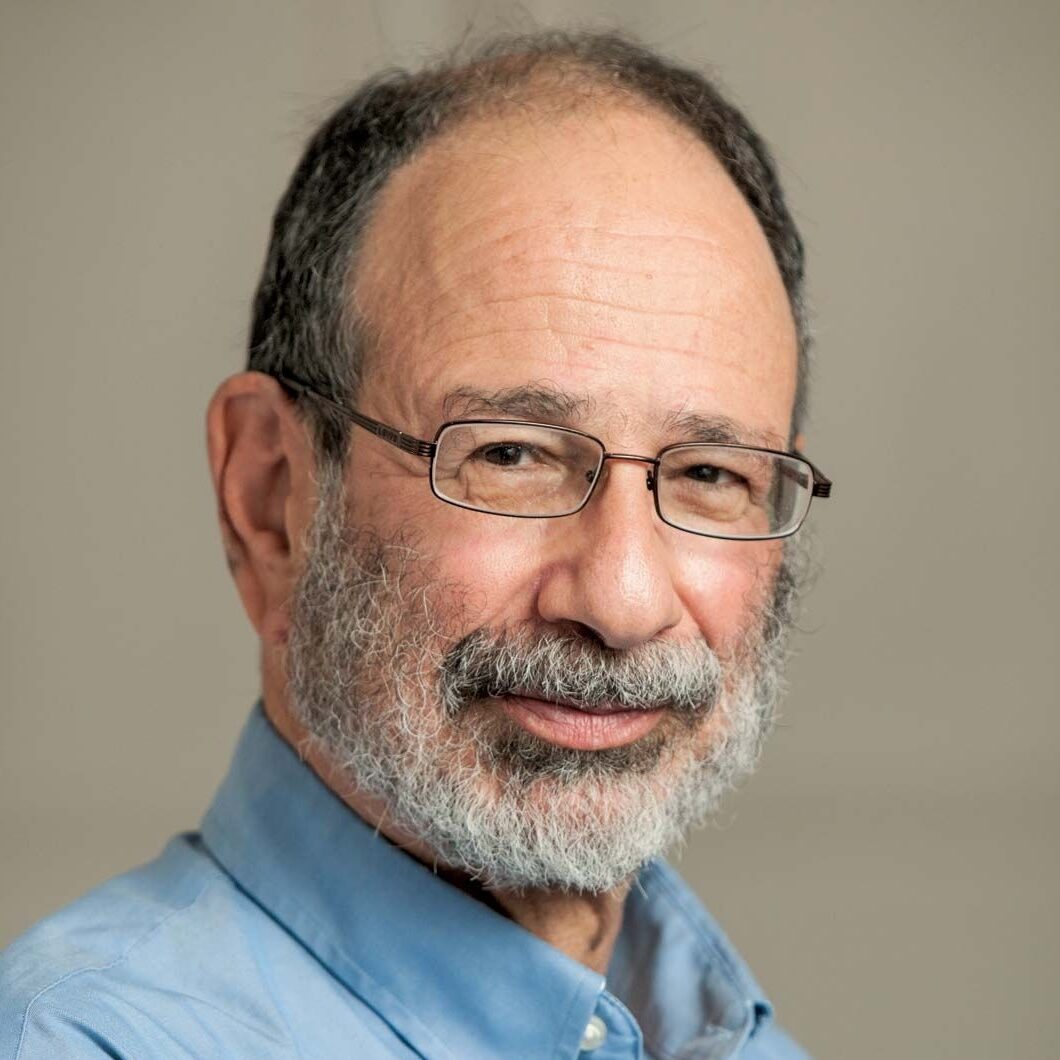
Alvin Roth received his Ph.D. in operations research from Stanford University. He is currently the Craig and Susan McCaw Professor of Economics at Stanford University and the Gund Professor of Economics and Business Administration Emeritus at Harvard. He was President of the American Economic Association in 2017. He and Lloyd Shapley shared the 2012 Nobel Prize in Economics for "the theory of stable allocations and the practice of market design."
Click to Show Episode Transcript
0:00:00.0 Sean Carroll: Hello, everyone, and welcome to the Mindscape Podcast. I'm your host, Sean Carroll. I'm sure that various Mindscape listeners have opinions about markets in economics, the way that we set prices and exchange rates for all sorts of goods and services. Markets are clearly everywhere, both, of course, in capitalist countries, but even elsewhere, there are things that play the roles of markets, deciding how different people who want to sell things and buy things can decide on a fair rate of exchange and make those exchanges happen. They also have downsides: Markets can be exploitative, they can be unfair, they can be monopolized, and so forth. Put aside all of those issues for the moment. So, forget about most of the ways in which markets help us or harm us in typical everyday situations. Let's focus in on an ideal situation where you have one party who has something that they don't need anymore. They want to get rid of it, they want to sell it, they want to give it for some price to some other person. And you have another party who would like that item and has some money or other commodities in order to spend to get that item. And they're both interested in doing this. They would both be made happier by having this exchange happen.
0:01:22.3 SC: Is it always a good thing to allow that exchange to happen? You might say yes until you think about it a little bit more and you go like, "Well, okay, there are counterexamples, like, what if the... As we'll talk about in this podcast, what if the good in question is a contract to assassinate somebody? [chuckle] That might not be something that the society really wants to let happen as an exchange in the free market, but that's okay, that's just blatantly illegal. A similar case is what if it's some meth or heroin or other addictive drug? Then again, even if both parties are very interested in doing it, you might not want to let it happen. But again, you would just pass a law saying, "Okay, this kind of thing, smoking heroin or assassinating somebody for pay, is illegal. What if the thing that I have to sell is my kidney? I'm perfectly healthy, I have two kidneys, and I only need one, really, to get along in my life. There are other people out there who are not as healthy, they need extra kidneys. Why can't I just sell them my kidney if both of us would be made happier by that transaction?"
0:02:35.0 SC: Generally, in most countries, almost all, as we'll hear, in the world, you're not allowed to do that. You're not allowed to sell your kidney. You're also not allowed to sell your kid, [chuckle] your child. If you have a baby and you're thinking, "Well, I don't really want to have a baby, I bet there's some other family that would have a baby," and you want to sell it for a couple hundred thousand dollars. Not allowed in most countries in the world. So where do we draw the line? Are we always drawing the line in the right place, letting these markets happen or not letting them happen? Are there ways that we could let them happen that would make people happier or be more fair? There are real worries about exploitation and things like that, you know, powerful rich people taking advantage of powerless poor people. But then again, if the way that they're exploited is to give the poor people more money that they can use for something, maybe that's good. These are genuine questions, I think. And today's podcast guest is Alvin Roth, who is a Nobel Prize winning economist at Stanford. He has a new book out called 'Moral Economics: From Prostitution to Organ Sales, What Controversial Transactions Reveal About How Markets Work.' And the subtitle is playing a role there because he's going to be talking about a lot of markets and potential markets in things that we often feel a little bit reluctant to let be subject to market forces. And he doesn't come out and say, "But we should." He says, "Let's examine what's going on here." There are deleterious effects in society that you could have by just letting the free market run rampant. There are other cases where maybe it would be good to have a little bit more market equilibrium situation impose itself on these transactions. So it's food for thought, both a good lesson in economics, but also lots to think about in terms of morality, ethics, psychology, the law, things like that. A very good mindscapey kind of conversation topic. So let's go.
[music]
0:04:52.4 SC: Alvin Roth, welcome to the Mindscape Podcast.
0:04:54.2 Alvin Roth: Thank you.
0:04:55.6 SC: I think that this is a situation, economics is not like particle physics, which I spend a lot of my time doing. Everyone thinks they know something about it, so they've heard of the free market and supply and demand and things like that. But I thought because we all get misimpressions that sort of build up over time, it'd be nice to get an expert level reminder of what economists mean when they talk about a market. I mean, how does that differ from other modes of exchange?
0:05:23.1 AR: Well, economists have a much broader view of what a market is than many people do who just read the newspapers and the financial section. And among economists, I probably have an even broader view of what's a market because I think about markets that aren't commodity markets and in which prices may not do a lot of work. So it might help to first think about commodity markets, which is what most people think about when they think about markets. And a commodity market is a market like the New York Stock Exchange or the Chicago Board of Trade, where you can deal anonymously with the whole market because all the goods that are named by particular securities are the same. So all the shares of Microsoft that you might buy are the same, all the bundles of 5,000 bushels of number two hard red winter wheat are the same. So you don't care who you're dealing with, and prices do all the work.
0:06:25.8 AR: But in lots of markets, you do care who you're dealing with, and prices don't do all the work. For instance, labor markets, when you apply for a job, you're not applying for just any job, you're applying for particular jobs. And when you hire someone, you're not hiring anyone, you're hiring a particular person. So, those are matching markets that form relationships, and they're also markets, but prices don't do all the work. And there are some markets that we don't let prices do any of the work, like putting children in public schools. There are resources that have to be allocated. A given kindergarten class can only hold so many students. But deciding who gets what, who gets into which kindergarten class is a market exercise because markets are the human institutions, the human artifacts that try to aggregate private information and turn it into collective action. And so that's where I would come out as saying what markets are. They're pervasive. They're ancient. Human beings have been transacting with each other for a long time. And marketplaces and markets are the tools we've built to coordinate and compete and cooperate with each other.
0:07:41.5 SC: So just so we're clear, what is an example of something that is not a market?
0:07:43.6 AR: Well, family is not a market.
0:07:48.6 SC: Okay.
0:07:52.1 AR: A corporation is not necessarily a market. It can be a hierarchy. An army is not a market. There are lots of things that aren't markets.
0:08:03.5 SC: But, I guess, in the land of exchanging some goods for some other goods, does that automatically make it a market whenever we're exchanging goods?
0:08:12.3 AR: No. Families exchange goods, but they don't do it in a market way. The relationship is so... So, among other things, markets allow people who don't know each other to engage with each other, even though they may be engaging in making a match. But when I think about families, the thing about a family is genetics and lifelong relationships.
0:08:40.0 SC: And you used the word information in there, which I think is crucial. I don't know whether Adam Smith ever used that word information. Did he? Did he talk about that?
0:08:48.7 AR: I'm not sure. I mean, he certainly talks about information, about having... The phrase which he hardly ever used, but which he's famous for, is the invisible hand.
0:08:58.8 SC: Right.
0:08:59.5 AR: And what he means by that is that collectively, we're aggregating our information. We're pursuing our private goals while being constrained by other people's pursuit in ways that might produce good outcomes. And so that's the joint action of many people, that's the aggregating of information.
0:09:23.7 SC: And this is going to become important later down in the podcast because this ideal of everyone having all the information is not always met, right?
0:09:33.3 AR: Oh, not at all. In fact, I don't even know that that's an ideal. When you go into a market, you have some information, private information about what brings you here today. What are you looking to get? And maybe you want to buy wheat from me, or maybe you want to hire me. Those are things that... And you may not know... I mean, you want to hire someone, but part of a labor market's job is to help you decide whether you want to hire me. And so we have to exchange information so that we can see whether we're a match, whether I want to work for you, whether you want to hire me.
0:10:09.9 SC: And I guess part of the genius of the market when all is going well, there's failures, which we'll talk about, but you have a bunch of people with preferences, a bunch of people with goods to sell, and the markets figure out a way to kind of maximize something. I'm not exactly sure the right way to put it.
0:10:28.3 AR: Well, so markets don't always maximize, but they try to reach outcomes that are as good as possible for the market participants, given what everyone else is doing. So in labor markets, we sometimes invoke this idea that we call a stable matching, which is a market where I may not get the job I want most and you may not hire the person you want most. But if you hire me, it's because the people you preferred to hire didn't want to work for you. They got jobs they liked better, and the people who I would have preferred to be hired by didn't want to hire me. And so you and I are doing as well as we can.
0:11:07.2 SC: Well, good.
0:11:08.7 AR: Yeah.
0:11:09.8 SC: And I think just to give you a chance to let the public in on this kind of thing, there's maybe a stereotype of economists out there in the world where they're acolytes...
0:11:22.8 AR: I'm shocked to hear you say that.
[laughter]
0:11:25.2 SC: Look, I'm a physicist. I have stereotypes, too. But the idea that they are acolytes of the free market and don't want it distorted in any way, I mean, that's not my experience of talking to economists. They love markets, but they want to distort them in all sorts of ways.
0:11:39.2 AR: Absolutely. Markets are human artifacts. They're built by people to serve different purposes, but to serve their participants. And I'm a market designer, I work in the part of economics that talks about how we should design markets and how we should fix them when they're broken. So the idea that markets somehow appear magically is not a true statement about the way markets are. It's like talking about roadways. Roadways don't appear magically. We build them. Languages are another human artifact that seems to appear magically. You and I are talking to each other in English, and we can't easily change English, but it changes all the time. We're talking on a podcast, that's a new word that we use to describe this thing that we're doing. So we're collectively modifying language all the time, even though often we don't think of it as an artifact. We just think of it as something we learned.
0:12:43.3 SC: This is a very good point, and I want to sort of emphasize it because it might glide by too quickly, that within the market... I'm just gonna rephrase it, and you tell me whether I'm right or wrong. Within the market, we give the actors some freedom to make choices about what prices to set, what goods to buy. But it's society that designs the market itself and allows it to work and puts regulations on it, and all of those matter in crucial ways.
0:13:09.2 AR: Well, society has big influences on markets, but I wouldn't say society designs them. Think about Uber, which is a market for drivers and passengers.
0:13:20.9 SC: Right.
0:13:22.3 AR: It's a company. Or it was designed by the company called Uber. Now cities regulate it. California passes laws about how gig workers have to be treated compared to regular employees. So lots of further design goes on. And of course, Uber modifies its market as it gains experience, its marketplace. Again, one distinction that's helpful is to talk about marketplaces as being small parts of big markets. So the way I would put that for Uber is that there's lots of transportation opportunities in the world. There's a big market for transportation. Uber is a marketplace in that market. And that's mostly when we talk about market design, what we get to design. We design marketplaces. And so Uber is a marketplace. Lyft is another marketplace. Municipal taxi services licensed by cities were another marketplace.
0:14:25.7 SC: Okay, that is very helpful. But I tripped up by using the word society designing markets. I really should have just said people design markets in the broadest possible sense.
0:14:36.9 AR: Yeah.
0:14:37.1 SC: They don't just appear. We shape them in some important way.
0:14:39.5 AR: That's right. And they don't just appear in their final form immediately. They also get modified by their users, by regulators, by observers who feel impacted by the market even though they're not participants. Think about Airbnb and the regulations. So Airbnb is a marketplace for hosts and travelers. And cities are starting to have some concern about neighborhoods that might be having too much concentration of Airbnbs, that changes the nature of the neighborhood. And it wasn't covered by existing zoning laws that talked about hotels, for instance. But now when you look at Airbnb, it's a combination of the original design of Airbnb, the modifications they put in, the way the users have used it, the way cities have regulated it.
0:15:32.6 SC: Okay, good. And the other important word that you used was commodity markets, as opposed to financial or monetary markets. What is the...
0:15:42.0 AR: Well, as opposed to other markets. I think commodity markets are special. They are a great market design invention. Before the Chicago Board of Trade and before commodity markets in wheat, if you wanted to buy wheat, you had to inspect it. Every field of wheat is different. And so there was a lot of work done before you could buy wheat. You had to have someone go out and look at the field or look at the harvested wheat and measure its water content and see how much hard red wheat was in and how much white wheat was in. But the Chicago Board of Trade commodified it by having all these adjectives when we describe the wheat; number two, hard red winter wheat. They all remove some of the possibilities so that when you buy bushels of that, 5,000 bushels at a time, you don't care who you're dealing with and you don't have to inspect it. Right?
0:16:35.0 SC: Right.
0:16:36.3 AR: And that's why you don't care who you're dealing with, because if it was farm by farm, you'd care which farm you were dealing with and you'd want to buy from someone who you'd bought from in the past and who had reliably kept the soft wheat out of the hard wheat.
0:16:51.0 SC: And then on the other side, you have these matching markets, I guess, where you really do... Like, when I'm hiring... Not hiring. When I'm inviting someone onto my podcast, that is a market. Right? There's more people who want to be on the podcast than I have room for.
0:17:05.7 AR: Yeah. And there are other podcasts, so not everyone will want to be on your podcast.
0:17:09.3 SC: Yes. Exactly.
0:17:12.9 AR: So matching markets are markets where you can't just choose what you want, you also have to be chosen. And so here we are, you and I.
0:17:22.7 SC: And what are the big, obvious differences between a matching market like that and a sort of monetary market or a commodity market where it doesn't matter who's doing the buying?
0:17:34.5 AR: Well, in a commodity market, since you don't care who you're buying from and they don't care who they're selling to, you can just quote a price. You can say, "I would like to buy some Microsoft shares at this price," and you might want to sell at that price, and then we have a transaction. And I don't worry whether you've taken good care of those shares while you had them, and you don't worry what I'm going to do with them when I get them. We don't care who we're dealing with. But that's, as you say, just the opposite of how you organize a podcast where you care who you're speaking to.
0:18:03.2 SC: You're giving me the idea that maybe one out of every 10 episodes I should just sell to the highest bidder and let them come on. Like, maybe that'd be a mixed market that would benefit everybody.
0:18:13.1 AR: Maybe. You might see whether it benefited your listeners.
0:18:16.7 SC: Yeah, the listeners might suffer and it would be more work for me. Not really worth the trouble. So markets, famously, are super efficient in some things. They can also fail in all sorts of ways. Is there a general theory of how markets fail, or is there just too many individual ways that it could happen?
0:18:36.8 AR: Well, there are lots of individual ways it could happen. There are some general theories as well. We talk about markets not working well for public goods. So if I make some valuable commodity, but a byproduct of my manufacturing process is that I pollute the air and the water, that's often not priced into what I'm selling, but I'm harming people, I'm creating negative externalities. I'm harming people external to the transaction. And so that's something that markets can't always do, and we try to fix them with regulations and taxes and different ways of trying to fix them. But what I talk about often is not what's traditionally called market failure, but what's called marketplace failure. So what makes a market like Uber work well? Well, let's think about Uber for a minute in a market design sense. The Internet made all sorts of markets possible, like eBay and maybe Airbnb, although it came much later. But it didn't make Uber possible, because Uber had to wait for smartphones and global positioning satellites, because Uber needs to know where you are and they need to know where the cars are. But as a result, Uber has a very simple sort of problem, because they pretty much already know what you want. You want a car to arrive soon, so their job is mostly to match you to the closest driver. But Airbnb has a very different problem. They can't automatically tell what kind of apartment you want. They have to elicit your preferences. They have to show you pictures of the living room and the view from the bedroom and convince you that this would be an apartment you would like. The form of these markets is very different from each other, and they can fail differently.
0:20:30.7 SC: Yes. Good. Okay. And then you've just written a book. Tell us the title of your book.
0:20:38.5 AR: So the title of my book is 'Moral Economics,' and it's about controversial markets. And the reason I wrote it... I mean, let me take a step back.
0:20:49.0 SC: Please.
0:20:49.3 AR: And tell you that I wrote a previous book called 'Who Gets What and Why' in 2015 that came out. And that was an optimistic book about market design. And it said, along the lines we've been talking about, it said a lot of markets have failures or marketplace failures. They're not working well, they're broken, but sometimes we can fix them. And I talked about markets that I'd been involved in where we'd been able to redesign or design new markets. But it turns out that there are lots of markets that aren't working well that are gonna be very hard to redesign, and that's because they're controversial. We don't agree on the manner in which they're broken and what we would like them to be. And that's what this book is about. This book is about controversial markets. And early on in the title, I used the phrase repugnant transactions. And what I mean by a repugnant transaction is a transaction that some people would like to engage in and other people object to and think shouldn't be engaged in, but not because they're harmed personally, but because they have moral or religious objections. And so I talk about a lot of markets like that in this new book.
0:21:59.5 SC: And I like the distinction you had in the book between repugnance and disgust. Those were two different ideas.
0:22:06.3 AR: Okay, so repugnant transactions are transactions that some people want to engage in and other people don't like. Whereas disgusting transactions are mostly things that no one wants to engage in. So for example, in California, where I live, we have a law making it a felony to sell horse meat for human consumption. Right? You can't buy horse meat in a California restaurant.
0:22:17.6 SC: A recent law?
0:22:28.9 AR: 1998 referendum.
0:22:40.3 SC: 1998. We're not that recent anymore. I'm getting old. Okay.
0:22:44.9 AR: But not an old cowboy law. It's not when a horse was a man's best friend. This was a law passed by people who thought of horses as pets. The same law makes it illegal to sell dogs for human consumption. But there's no law in California against selling worms for human consumption, nor is there a law for selling beverages made of other people's saliva, for instance, because those are disgusting. And the law of supply and demand takes care of those. No one could run a restaurant that sold saliva-based drinks. But on the contrary, there are people who like to eat horse meat. There are parts of the world where it's considered delicious food. And the reason we have a law against it in California is we don't like it collectively when people eat horse meat.
0:23:36.2 SC: If you tried to be a careful moral philosopher, it would be difficult to come up with a scheme under which eating horse meat should be illegal but eating cow meat is fine.
0:23:45.9 AR: Right. And repugnance is a funny thing because the people who I think organized the referendum really liked horses, but some of the people who supported it happened to sell beef.
0:23:59.3 SC: Well, economics makes strange bedfellows. That makes perfect sense. Okay, it's interesting, so the idea of this morally questionable market, we have people on both sides, both the providers and the consumers who want to do it. And there's other people who want to butt in and say they shouldn't do it. So this sounds almost like a political philosophy question more than an economics question.
0:24:28.4 AR: Well, economists have the bad habit of whenever there's a difficult question saying, "Oh, that's politics." But it's too important to be left to the politicians. There's an old joke about economists and sociologists which says economists study how we make choices and sociologists study how we really don't have any choices. And my book is about how as a society, we try to legislate which choices you're allowed to have and which you're allowed to make and which you're not. But it turns out that to work well... And speaking as a market designer, to work well, markets need social support. And it turns out that bans on markets also need social support. That is, we can ban things, but that doesn't mean they vanish. Right? We don't like heroin, and we have lots of laws against it, but there's lots of heroin and lots of overdose deaths every year. So one thing I explore a little bit in the book is I say, how come it's so easy to buy drugs and so hard to hire a hitman?
0:25:41.4 AR: And the way to think about that is supposing I were to say to you, "I'm gonna come visit you where you live, and I'm not gonna take heroin on the plane with me. That seems risky. But you look like you would know where I could buy some heroin, which I like to buy. Could you give me some advice?" Well, you'd be very surprised. That would be the first time anyone on your podcast asked you where to buy heroin.
0:26:02.6 SC: Yeah.
0:26:04.5 AR: But that would be the end of it. You might mention to someone, you might edit it out of the podcast, but that would be it. But supposing more privately, probably, I said to you, "There's someone who lives in your town who once gave a very bad referee report on one of my papers, and I can't take it anymore. I want him killed. And you look to me like the kind of guy who would know where I could hire a hitman. Can you give me a tip?" So you probably don't know where I could hire a hitman. And anyway, you wouldn't give me a tip.
0:26:37.0 SC: I wouldn't tell you.
0:26:38.7 AR: Yeah, you wouldn't tell me. But now when you mention to your friends that this had happened, they'd say, "You know, you should call the police. I mean, that's really serious." And when you called the police, they would treat you with great respect, and they would say, "Call back this guy who asked you that and tell him if he comes to this dive bar with $5,000 in 20s and asks for Joe, Joe will take care of him." And I would find myself talking to an undercover detective. So as a society, we treat trying to hire a hitman much different than trying to buy or sell drugs. Whereas our laws about the two things are very similar. If we catch drug dealers or hitmen, we put them in jail as long as we can.
0:27:26.4 SC: What is the relationship between what we're calling a sort of repugnant transaction or a transaction that is repugnant to some people and one that would just be illegal? You've given some examples where the transactions would be illegal. They fit into the category where there's someone who wants to sell it and someone who wants to buy it, but as a society, we've said, "No, you just can't do that at all." Is that what is meant by a sort of morally questionable market?
0:27:50.9 AR: Well, no, I mean, legal and moral are different things.
0:27:54.1 SC: Right.
0:27:54.7 AR: But a good way to find controversial markets is to find markets that are legal in some places and illegal in others. So a lot of the markets I talk about in my book have that property. But another way is to find markets that are illegal maybe almost everywhere but have active black markets. So heroin is a good example. It's illegal almost everywhere to produce, to consume, but there's a lot of it. And we're struggling. It's... Of the controversial markets I consider in my book, I think that's the most difficult one because I don't have good suggestions about what to do about that one. We're losing the war on drugs, but neither does it accept our surrender. In Portland, we tried decriminalizing opioids, and that turns out to have bad effects on cities and not such good effects on opioid overdose deaths. So we need to experiment. We need to think about what to do and to judge our policies not by our intentions, which are pure. We would like there to be no heroin addicts, but there are. So I think that the discussion of what to do has to take that into account, and we have to start at least thinking of how to treat... Somewhat how to treat addicts more like patients than like criminals. But on the other hand, we can't just decriminalize without treatment. So we've learned the hard things. But these are things that can be experimented with. We can gather evidence on what works. And maybe they have a plan in Switzerland that's worked better than the plan we have in the US, and we should be thinking about things like that.
0:29:38.0 SC: And so just to be clear, then, so people don't get confused about the book, you're talking about these morally controversial markets, but you don't have a one-size-fits-all recommendation. They should all be legal or they should all be banned. It's actually a whole set of complicated issues.
0:29:56.5 AR: Absolutely. So, again, I'm a market designer, and one of the first things you learn when you try to look into different markets and marketplaces is that the details matter. Uber is already... We talked about Uber is different than Airbnb. They have to organize their market differently. And the solution to drug addiction, which I don't have to offer you, is gonna be different than the solution to whether we should allow in vitro fertilization, which we do in the United States, but it's not legal everywhere. But it's very hard to ban. Right?
0:30:31.4 SC: Yeah.
0:30:31.6 AR: So the other thing is, if something is legal in one jurisdiction while illegal in others, people travel to where it's legal. Right? So there's fertility tourism. And when I talk about that, that touches on some of the most deeply felt opinions that people have. So a good example, IVF, in vitro fertilization, is a good example because it was awarded a Nobel Prize in 2010. A guy named Robert Edwards got a Nobel Prize at a time when, by 2010, millions of children had already been born by IVF, and millions more have been. But the opposition to IVF has to do with the fact that multiple embryos are created and not all are used. And if you think that the embryo is a living person, then you think of IVF as committing a massacre. So on the one hand, there are people who think of in vitro fertilization as life-giving, and it's how they got their children or how they came to be born themselves. And on the other hand, there are people who think it's murder. So people can have really strong opinions of praise and of condemnation for transactions that happen millions of times.
0:31:50.4 SC: Why don't we... Before I forget, why don't you give a quick list of some of your favorite morally questionable markets that you talk about in the book that we can use as examples?
0:32:04.2 AR: Well, let's say morally contested rather than morally questionable.
0:32:04.8 SC: Sure.
0:32:04.9 AR: Because the people on each side of these arguments don't think there's any question at all. So, okay, so to start with one that is often not thought of as a market, but is a matching market, of course, same-sex marriage, right? Two people want to marry each other, and other people think that shouldn't be allowed. And that's one of these transactions that doesn't apparently harm the people who object to it, because you can't even tell if people are married if they don't tell you. That's why people wear wedding rings, to tell you that they're married. Otherwise it's not apparent. So that's something that for centuries was not common at all, certainly not legally recognized anywhere, and now is recognized in more and more places, but it's still controversial. Let me segue.
0:32:59.0 SC: Sure.
0:33:00.0 AR: Let me go back and forth. Abortion is something that in the United States was legally banned in most places in the United States before the 1970s. But Roe v. Wade made it a right of women to be able to choose whether to terminate a pregnancy. And then recently, the Dobbs decision reversed that. In his concurring opinion to the Dobbs decision, Justice Thomas said the court should also reconsider the mistakes it had made about same-sex marriage, about consensual sex between adults, and about contraception.
0:33:37.9 SC: Yeah, I remember that.
0:33:39.5 AR: Yeah. So some of these controversies that we think of as long ago resolved are still simmering under the surface, or not so under the surface. So those are repugnant transactions that have been resolved, have gone through the courts. In the United States, many controversial markets often make their way to the Supreme Court.
0:34:02.0 SC: Yeah.
0:34:03.4 AR: So the way I got into the discussion of controversial markets was thinking about kidney transplantation. So, right now in the United States, there are half a... There are 500,000 people, half a million people on dialysis, and there are about 90,000 people on the waiting list for a kidney transplant. But we only do fewer than 30,000 kidney transplants a year. So most people who could have longer, healthier lives with a kidney transplant will die without getting one. Okay? Now, it turns out you can get a kidney not just from a deceased donor, but from a living donor, because healthy people have two kidneys and can remain healthy with one. So my late colleague Gary Becker, who had a Nobel Prize in economics, he used to say to me, there's no shortage of kidneys, there's a surplus, everyone has two. The problem is we don't let prices adjust the supply. And indeed, it's against the law to pay someone to be a kidney donor. So we have about 7,000 living kidney donors a year. But the law requires the kidney to be a gift. The price is zero. You can't be paid for giving a kidney, although it's a great thing. You can save the life of someone who you love. And so the question is how to increase the supply, because millions of people around the world die without a transplant that would have saved their life. And of course... Well, and it turns out paying a donor for a kidney is against the law almost everywhere, with a single exception, which is the Islamic Republic of Iran.
0:35:42.0 SC: Why is that? I've heard you say that. Why does Iran let you do this? What happened?
0:35:49.8 AR: Well, I've read the Shia fatwas, the religious rulings that allow it, and they just say, it's not so bad. It saves a life. I mean, saving a life is very important.
0:36:03.1 SC: Yeah, so there's no prehistory of special kidney transplants in Iran helping somebody?
0:36:07.2 AR: Not at all.
0:36:08.1 SC: Yeah, okay.
0:36:08.8 AR: I mean, the first kidney transplant is only from the 1950s. So kidney transplantation is a very modern thing. It's not biblical or Quranic. But yeah, they just didn't see it to be a big problem. And indeed, it's not a big problem in Iran, apparently. They have other big problems, I understand.
0:36:31.1 SC: Right. So if someone were advocating the position, or defending the position because it's almost universally held, that you shouldn't be able to pay someone for a kidney transplant, like, what is their argument? Why shouldn't you?
0:36:45.6 AR: Okay, so I think there are, broadly speaking, two arguments. One is it's simply wrong. You shouldn't be able to sell body parts. You shouldn't be able to buy them. That commoditizes people in a way that we just shouldn't do. The other, more nuanced argument is only poor people are gonna want to sell their kidneys and they're gonna be coerced to do this terrible thing, which is a wonderful thing if they do it altruistically to save someone's life, but it would be a terrible thing if they did it just in order to be paid. And so those are the two arguments, that it would corrupt the medical profession and do things like that. So there's a parallel argument to be made. Another market I talk about in my book is the market for blood and blood plasma. Okay? So that's different than kidneys. You can give blood or plasma frequently, whereas you only have one extra kidney. But also, it's against the law in many parts of the world to pay plasma donors. And plasma is on the World Health Organization's list of essential pharmaceuticals, plasma itself and the pharmaceutical products that can only be derived from human plasma.
0:38:02.0 AR: So if you wanted to start a hospital anywhere in the world, the World Health Organization says you must have a bunch of plasma products, those are essential pharmaceuticals that you can't operate your hospital without it. But they also say, and it's law in many parts of the world, you can't pay the donors. You must get blood and plasma from unpaid donors. Now, unlike kidneys, there's not a widespread shortage of plasma in the world. And the reason is you don't have to pay donors where you live, you can always buy it from the United States because we export tens of billions of dollars of plasma and plasma products every year because we pay donors. So there's no shortage of plasma here. And the people who donate plasma are, on the whole, not as rich as the people who don't donate plasma. It's something people do to supplement their income. But some economists, who I should remember well enough to name right now and I don't, but a recent paper's come out that said, let's look at what happens when a new plasma facility opens up that pays people for plasma. What happens to the frequency of payday loans?
0:39:16.7 AR: And payday loans go down when plasma facilities go up. That is, some people are living paycheck to paycheck and donating plasma is a way of supplementing their income in ways that's substantively helpful. And it also helps not only Americans, but people all over the world who have hemophilia or immunological deficiencies. Your plasma is full of your antibodies. So it's an unusual situation where in many places they think it's immoral to pay plasma donors. And besides, you don't have to because you can always buy it from the US.
0:39:53.9 SC: So, this is great. I think that if I'm hearing you correctly, I can identify at least three pretty different sounding objections to these morally contested markets. One would be that it's a market in something that is just ethically wrong, like killing people, right? Like, okay, that's bad. A second one would be that the existence of this market would be exploitative of the people doing the selling. And the third is that... And these are all of course tied to each other, but the third is this idea of commoditizing people. Like, even if everyone's better off, we don't want it to happen anyway because people shouldn't be treated like commodities. That third one sounds a little bit less defensible. It sounds more like just being paternalistic. Maybe I'm being unfair.
0:40:42.5 AR: Well, let's come back to paternalism because I'm of two minds... We should be of two minds about paternalism also. But yeah, I think you're right. And one of the reasons I wrote the book is when you see people making moral arguments, often they don't do the thing that economists do all the time, which is think about trade-offs. So we might not like the idea of paying people for kidneys or for blood plasma, but neither would we like lots of people dying of hemophilia or immunodeficiencies. And plasma saves lives. So I personally have no problem with people selling plasma and with the US exporting it. So we have to think about consequences. We might really hate heroin because we think no one should be addicted. Being addicted is like being a slave and we just don't like it. So we passed a law that says if anyone sells... We catch them selling heroin, we're gonna put them in jail for a long time. But it hasn't worked. We have lots of addiction. So I think the idea that it's a moral position that we should just try to solve drug problems by policing and now military action shouldn't ignore the fact that we've failed to solve those problems.
0:42:02.6 AR: There was recently an article in the New York Times about drugs in prisons and that people are soaking paper with drugs that can then be smoked in prison. And what it said is this is really a hard problem to solve because they were getting deliveries that seemed to be books from Amazon that were, in fact, pages were full of drugs. So I think the lesson that we have to take there is if we can't even keep drugs out of prisons, what's the chance that we'll figure out a way to keep them off the streets using purely police methods and military methods? And I think the answer is it's hard because people, human beings, are resourceful, and this is a market that some people want to engage in, and it's very hard to stop them, even in prison, where surely there's no place with more police control than a prison.
0:42:58.5 SC: And so for the plasma markets, for example, it's really the United States that lets people do it, we export the plasma. Are there ongoing controversies elsewhere like, gee, we should hop on this train, get some of that sweet plasma money?
0:43:13.1 AR: Yeah, there are. And plasma... So Canada, which has had many laws, province by province, against selling plasma, has always potentially allowed Canadian Blood Services, the government, to pay. And just recently they've started to do so. And they've started to do so by allowing a Spanish company, Grifols, which also operates in the United States, to collect plasma in Canada for pay and to be used in Canada. And Grifols is a good example because Spain is one of the countries where it's illegal to pay plasma donors. But Grifols is a subsidiary of a Spanish company that operates in North America and collects plasma here, and that's why Spaniards are not dying of blood shortages.
0:44:00.0 SC: And I mean, I can see why... There's another line you have, I forget whether it's from the book or from a talk, but about economists contemplating some of these markets and going, how could anyone object to Pareto improvements where [laughter] everyone is happier? But for the plasma, I'm kind of on board. You haven't yet quite come down on the kidney selling yet. Are you in favor of kidney selling?
0:44:25.0 AR: Well, I'm a market designer, remember?
0:44:27.4 SC: Right.
0:44:28.0 AR: So I think if I were asked to design an ethical, legal market in which we could be more generous to donors than we now are, that I could do so. That doesn't mean that I'm in favor of a market where rich people directly buy kidneys from poor people, pricing poor people out of the market and with no safeguards. So I think one thing that would be defensible, but is not about to happen anytime soon, would be to amend the National Organ Transplant Act, which says no one may give valuable consideration for a kidney for transplant, to amend it to say, the way the Canadians have done with blood plasma, to say no one but the federal government may do that. And then the kidneys that are obtained in this way would be as deceased donor kidneys now are, considered to be a national resource that are allocated on the basis of medical need so that poor people wouldn't be priced out of the kidney market when we now had a greater abundance of kidneys. So I think that would be one thing to do. Right now, there's some... Periodically, there's much less ambitious legislation in front of Congress. And now a bill that's trying to make its way through Congress is called the End Kidney Deaths Act. And it would give a limited compensation through income tax credits to non-directed donors, to people who... To kidney donors who donate a kidney anonymously without specifying who it should go to.
0:46:11.8 SC: Okay.
0:46:12.6 AR: And they're very valuable in the kidney exchange system that's been developed that I had a hand in because they can spark long chains of donations where patient-donor pairs who are looking to participate in kidney exchange can each get a kidney before they give one. And that produces a lot of kidneys. And we have about 500 non-directed donors a year in the United States. So we're not talking about a giant expense by being nicer to them. If we were able to double it, that would be really good for patients who need kidneys and would pay for itself in the fact that it's really expensive to take care of kidney patients. And Medicare pays most of the bills for kidneys, even for young people. So this is a real no-brainer, it seems to me, at least as an experiment. In my book, I'm often talking about experiments. That is, we're looking at some market that isn't working well. Most people who need a kidney die without one. Could we move the needle a little bit with this modest legislation? So I am not optimistic, but I would like to see that legislation passed.
0:47:30.1 SC: Tell us more about this kidney exchange system that I know that you did have some hand in.
0:47:34.6 AR: Yeah. So here we are back in 2000, and there's a terrible kidney shortage. There were about 40,000 people on the waiting list for kidney transplants when I started to get involved in this. Today there are almost 100,000 and many more who would be on the list if being on the list was a reliable way to get a transplant. And the question is, could we do some market design to increase the scope of kidney transplants? And an idea had been proposed already for kidney exchange. And that has to do with the fact I already mentioned that a healthy person has two kidneys and could donate one to save someone's life and still be healthy. But it turns out kidneys are a matching market. You can't just take... They're not commodities. You can't take just any kidney, it has to be one that's compatible with your physiology. And so you often get someone... You might love someone and you're healthy enough to give a kidney, but you can't give it to the person you love who needs one because they don't match. And that could... One of the reasons why people can't get kidneys from someone who loves them is they have developed antibodies to that person's proteins that mean that their immune system is ready to attack the kidney if it should appear.
0:48:56.3 AR: And one way of developing antibodies is by giving birth to a child, right? So children inherit their proteins half from mom and half from dad. So a mother might, not always, but in course of childbirth might develop antibodies to the father's human leukocyte antigens. And if so, then she won't be able to take a kidney from the father of the children or the children, right? Because they also have those proteins. So a lot of transplants like that, which shouldn't be... The mother isn't necessarily hard to find someone who could give her a kidney, but it's not in her family. So kidney exchange is the idea that maybe you're in that situation, you want to give to the mother of your children, and I'm in that situation, but we can't. But maybe I can give to your spouse and you can give to my spouse, and that's a kidney exchange. And over time, we've developed kidney exchange to involve many more complicated transactions than that, including those chains begun by non-directed donors. So the End Kidney Deaths Act is meant to be more generous to non-directed donors who save a lot of lives.
0:50:10.2 SC: Yeah, in some sense it's the information story coming back to us again. Like, who needs a kidney, who's gonna get it? There's people who might be willing to give it, but they can't find the person. And this is maybe a place where some combination of technology and law can improve things quite a bit.
0:50:28.9 AR: I think that's exactly right. And I'd like to see that. And another way that... Right now there's a barrier is if you live in a small country and you're hard to match, you need a kidney, but you have a lot of antibodies, it's gonna be very hard to get a kidney either from a living donor or a deceased donor. It would be nice if you could do kidney exchange across borders. So during COVID, I got to go to the United Arab Emirates for the first kidney exchange between the UAE and Israel. And that took a lot of doing, but they managed to do it, and they've continued. And it gives me hope that one day the US and Canada will be able to do kidney exchange together, because periodically I... Twice I've been to Canada to evangelize for that. And the transplant professionals all recognize it as a good idea. Canada doesn't have much bigger population than California, so we wouldn't do kidney exchange in the United States without California. And it's sort of a shame that we and Canada can't help each other out. But so far, just bureaucratic obstacles. I don't think there's a moral contest there. It's just that they have very different health systems. They pay for things differently. And what you need is a year of work by the bureaucrats on both sides to make it happen.
0:51:47.5 SC: I don't know if this is a helpful analogy or if you think this way, but I think of the markets, when they're working, as finding an equilibrium in a very thermodynamic sense. Right? Like, maximizing entropy of something.
0:52:03.0 AR: So economists are good at thinking about equilibrium, but we're not very good at thinking about equilibration.
0:52:11.8 SC: Yes. This is state-wise, by the way. So, yeah.
0:52:16.4 AR: Yeah. So that's an interesting thing, because sometimes equilibration... The process of equilibration seems to be slower than other things going on in the market. And consequently, we may often be looking at markets that are not in equilibrium. They're moving towards some equilibrium, but the equilibrium is a moving target. As other things change in the economy, the direction of movement will change. And that's something that we don't... That's one of many things that we economists don't understand nearly as well as we would like to.
0:52:50.8 SC: Is that an active area that people are trying to get better at?
0:52:56.7 AR: There are people who are actively trying to make us better at it. But it's a hard problem.
0:53:01.8 SC: It's a hard problem. Fair enough. So non-equilibrium thermodynamics is a hard problem in physics. So okay, back to the markets a little bit. I really do want to... I'm kind of sympathetic to the idea that there should be more open markets in many of these morally questionable areas you're talking about, but I want to make sure I'm understanding the reasons why there aren't. I mean, one example you talk about is indentured servitude in people who were getting trips across the Atlantic back in the day. And there it was pretty clearly exploitative. It was a market, but there was a real good reason to say that was a bad kind of market.
0:53:41.7 AR: Well, it was... I mean, first of all, it was terrible employment conditions, right? So indentured servants voluntarily entered into something like five years of slavery. And when I say slavery, I think an indentured servant who left his job could be captured and brought back. I mean, the laws supported that the indentured service was essentially a slave for five years. I mean, so for a fixed period. And lots of people, that's how they bought passage across the Atlantic Ocean from Ireland or England when there were 13 colonies. And markets with real information asymmetries can lead to real abuse. That is, presumably they didn't really know what they were signing. You're sitting there in Ireland and you're hungry or ambitious or whatever and you want to go to North America and some ship captain says, "Well, you don't have the money to buy passage, but if you sign this article of indenture, I'll take you across." So we don't allow that anymore. And sometimes it might work to people's advantage to be able to sign an employment contract that says I won't quit. And so since that's not a legal labor contract in the United States, we have all sorts of ways around it. You can agree to work for a company and be paid a significant portion in stock options that will only vest after five years. So now you are free to quit anytime you want, but much of your compensation will go with you out the door if you'll leave behind, you'll leave on the table as you go out the door. So that's a workaround. That's just a sign that you might have been willing to hire me in your startup at higher pay if I could more credibly commit not to quit. So that might be something we prefer to the stock options and five-year vesting.
0:55:44.3 SC: I mean, yeah, your stock options vesting after five years, there's clearly a formal parallelism with the indentured servitude case, but it does seem at the end of the day different in some way. One seems truly exploitative and one isn't. Is it easy to tell the difference?
0:56:00.7 AR: Well, I mean, it's easy for lawyers to tell the difference. [chuckle] I mean, that's why we have laws and regulations about markets. Regulation is part of market design. Right? Regulators play a big role in designing the details of how markets work. And often regulations apply to many markets. So the Santa Clara County Board of Health has some authority over all the restaurants in my neighborhood. And that's good because we all agree restaurants should have clean kitchens that don't have rodents in them. But when I go to the restaurant, I don't inspect the kitchen and they don't invite me to inspect the kitchen. So it's nice that Santa Clara is doing it. Now, there are other ways of doing that. McDonald's, presumably they don't want rats in their kitchens either, and they have some way of trying to get uniform quality across all the franchises. But it's very good that Santa Clara County Board of Health looks into kitchens here in Palo Alto.
0:57:02.8 SC: But I'm still struck by this payday loan study that you quoted. At what point are we as a society just not letting less well-off people make choices for themselves? We don't want them to be allowed to choose to become heroin addicts, I think that I get. But why shouldn't they be able to sell some things? Is it exploitative? I truly don't have a strong opinion about this.
0:57:30.3 AR: Well, I think you have to look at case by case what are the details? So let's talk a little bit about paternalism, which you brought up. Paternalism itself isn't a terrible word. Maybe it should be called parentalism. When we think about children, if you don't supervise your children properly, you might be guilty of neglect. Right? Sometimes your kids... My kids might have wanted to do something when they were little, now it's grandchildren. But if it's going to make them sleepy or miss school or ill, then they just aren't allowed to do that. And they're little and it's your job as a parent to take care of your kids. So behavioral economics is the part of economics that says not all of us are completely good at deciding things in our own best interest. All of us former children who have had enough birthdays to be legal adults sometimes still eat too much or drink too much or things like that. So we see proposals like banning giant cups of soda because once you fill it up with this sugary liquid, you feel like you should drink it all. And sometimes those are defeated.
0:58:47.5 AR: Mayor Bloomberg in New York tried to have such a rule and he wasn't able to because people say, "Well, it's paternalistic." But you could imagine that many of us need some protection, and that's what consumer affairs bureaus are for. There might be financial products that are hard to parse and that maybe the Securities and Exchange Commission should have rules to protect you from making investments in pyramid schemes, things like that. So paternalism... The idea that we want to protect vulnerable people, but also each other because we're vulnerable people, is not crazy. There are giant markets, for instance, for prescription drugs. So prescription drugs are drugs that are good for somebody, but we don't think you should decide for yourself whether they're good for you. You should have a prescription from your doctor who says, "Here's this drug that could have side effects but might be good for some disease you're suffering from." So we have plenty of markets that are not laissez-faire.
0:59:50.1 SC: Right.
0:59:53.2 AR: If we talk about decriminalizing narcotics, we're not talking about having vending machines in elementary schools. You can do something in between laissez-faire and banning a market.
1:00:08.7 SC: Well, another example that I forgot to mention earlier on, but it's just too blatant, we don't talk about it, is you're not allowed to buy children. [chuckle]
1:00:18.0 AR: Right.
1:00:18.5 SC: Not allowed to just say, "I will buy your child and adopt them for a lot of money." And maybe this would be a Pareto improvement. Like, the poor people get more money, the rich people get a child they want. But that seems like a straightforwardly moral objection, right?
1:00:34.0 AR: Right.
1:00:34.5 SC: Now you're really treating people as commodities.
1:00:37.0 AR: So is it Jonathan Swift who wrote 'A Modest Proposal...'
1:00:39.9 SC: Yeah.
1:00:40.3 AR: Years ago in which he proposed eating children? The way to solve a famine is to buy children and eat them. So I'll see your buying children, I'll raise you one. Buy them to eat them. Yeah, I think we don't want that. And there are lots of laws about adoption and particularly international adoption. So adoption is expensive. If you want to adopt a baby from overseas, you need to jump through many hoops to show that you're a qualified adoption person. And it's expensive. You'll need lawyers, you'll need international travel, but you can't pay the birth mother for the baby. Okay. So that's a law that we have pretty much everywhere. There's a Hague Convention on that. I don't know if the US is a signatory, but it's also illegal in the US to pay the birth mother for the baby. Now, there are a bunch of transactions that become morally contested when money is added to them that aren't otherwise morally contested. So we've already talked about kidney donation. Surrogacy is another good one. In California and in most of the US, it's now legal to pay someone to bear a child for you under different regulatory regimes in each state.
1:02:01.8 AR: But in most of Western Europe, it's not legal at all. They don't recognize parenthood. And in the British Commonwealth, including Canada, they recognize surrogacy and parenthood, but you're not allowed to pay the surrogate. So there's, of course, fertility tourism. People who need the help of a surrogate to start their family can come to the United States. It's not cheap. They used to go to Ukraine, where it was much cheaper, but the war has destroyed that part of the market. So there's lots of laws from forbidding surrogacy entirely to not letting it be paid, making it more like kidney donation. Now, when you forbid something, you still have to cope with the fact that people might get around it. And people have wanted to have children for a long time, right? We are all descended from unbroken generations of people who had children. And so people come to the United States even from countries where surrogacy is illegal. And as a result, there are babies. And so the German courts, the Spanish courts, the French courts, where surrogacy is illegal, have to think, "Who should this baby go home with?" And a natural answer is, "Why don't we send her home with her parents?" And so they've had to allow the surrogate parents to adopt their children, things like that. So, again, you have to think it's one thing to say we won't have any of something, and it's another thing to actually not have any of it.
1:03:40.1 SC: And you're not... I mean, I admire the attitude. You're exploring what's going on, you're in favor of experimentation. You're not quite coming out and saying we should allow more of these markets to be a little bit freer than they are.
1:03:52.5 AR: Well, I think I say that in many respects.
1:03:54.9 SC: Okay.
1:03:55.6 AR: I think that, again, the laws against surrogacy are designed to protect the vulnerable. And when you read the French judicial opinions, they say, "We understand that there are people who would like to have the help of a surrogate to start their family. And we understand there are people who would like to help them and bear a baby in return for being paid. But this is wrong and we don't do wrong things in France." So they're protecting people against their own judgment of a transaction they'd like to do. Nevertheless, there are babies and there's no one more vulnerable than a baby. So they have to allow adoptions. They could say, "Eat the baby," but they don't. So I think that when we make policies, we have to think not just about what our intentions are, there should be no heroin addict, we have to also think what the consequences are. And that's what I talk about is economists deal in trade-offs and I think that a lot of moral contests don't deal in trade-offs.
1:04:58.1 SC: That's right. Which brings us to the very last morally contested market that you bring up in your book, which is medical aid in dying, which I am very interested in as a topic. I have not really thought about it as a market.
1:05:15.4 AR: Well, medical care is a market, right? There may be third-party payers, but mostly we purchase medical care. So remember, I'm prepared to have a much broader definition of markets that includes kidney exchange where you don't pay the donors. But I think medical care is just unquestionably a market. In many places, we have a national payer, I mean, not in the US, but that doesn't make it not a market. The doctors have to be paid, hospitals have to be built, the equipment has to be maintained. So medical aid in dying is medical aid. People have always had some ability to end their own lives, right? And the question about medical aid in dying is more often seen as how to manage your own death. And 12 or maybe 13 states, New York State is about to have legal medical aid in dying, I think come August of this year, but a dozen American jurisdictions now allow medical aid in dying under restrictive circumstances. And some other countries allow it under less restrictive circumstances. And in the absence of... And so there's some travel.
1:06:35.3 AR: I start the book with a paragraph about Danny Kahneman's decision to go to Switzerland to end his life even though he was healthy enough to go to Switzerland. He was still pretty healthy for a 90-year-old guy. But he didn't want... He'd in his family had witnessed some lingering deaths and didn't want to have his be that way. So I think that there's a lot of opposition to that and there's a lot of interest in it. So among the strong opponents is the Catholic Church. And the governor of New York is a committed Catholic lady, and she talked a little bit publicly about the struggle she had in approving this. But what she said is she was aware of some extremely painful, extended medicalized deaths and it would have been better if New York State had medical aid in dying.
1:07:41.9 SC: So you give the impression that that is increasingly common.
1:07:46.6 AR: In the US it is. Now, we have two Supreme Court justices presently, Gorsuch and Amy Coney Barrett, who have written in the past before they were justices about their opposition to medical aid in dying. So I wouldn't be surprised if, like abortion, it comes again before the Supreme Court.
1:08:07.7 SC: And we get in trouble. Okay, very good. Well, this has been fascinating. I think it's a wonderful example of turning the economics lens on questions that involve a whole bunch of other considerations at the same time. Do you think... Is it too much to ask for like one big wrap-up lesson that we have learned here? Should we be more open or less open or just more aware of the big questions in these morally contested markets?
1:08:35.1 AR: Well, certainly we should be more aware. I think the big lesson, which maybe we've already touched on, is that to work well, markets need social support, but so do bans on markets. So the example I gave you at the beginning of our chat was why is it easy to buy drugs but hard to hire a hitman? And our laws are the same. If we catch drug dealers or hitmen, we put them away for a long time. But it's working for hitmen. There's very little market for commercial killing. So that's one where we should keep it up. We are successfully deterring hitmen by putting them in jail when we catch them and their clients. Let's keep doing it. Now, the same set of laws, catching drug dealers and putting them in jail, 40%, a little more than 40% of our federal prisoners have drug convictions. So we're filling our jails with these guys, and we have plenty of addicts though and plenty of overdose deaths. So the same laws that work so well against hitmen aren't working so well against drugs. So I'm not in favor of relaxing the laws against hitmen, but I am in favor of experimenting with ways to not just incarcerate but also to treat drug addicts and think of how to manage that process. And we might be able to learn from countries that have had some modest success. I don't think any place has abolished addiction. But think about prohibition and alcohol. So in the 1920s and early 30s, we had a constitutional amendment that tried to eliminate the production and sale of most alcoholic beverages in the United States. And then we re-amended the Constitution to say, forget that, it's now going to be up to the states again. And so today, we haven't solved the problems of alcohol. Right? Alcohol still kills people, and not just the people drinking. There's driving under the influence. It still damages families. It does all the things that the prohibitionists worried about. But it turns out prohibition didn't prevent those things. There was a lot of alcohol during prohibition and a lot of crime. And the one thing that clearly results from legal markets is you can no longer buy moonshine whiskey from gangsters. They've been outcompeted by the legal market.
1:10:58.2 SC: So maybe if there is a single big overarching lesson, it's that there's some questions that are complicated enough that we can't just think our way into the answer. We have to experiment and see what works and try that.
1:11:12.3 AR: I think that's a good summary.
1:11:14.2 SC: We can all get on board with that. So, Alvin Roth, thanks very much for being on the Mindscape podcast.
1:11:18.8 AR: Thank you.
[music]
Pingback: Sean Carroll's Mindscape Podcast: Alvin Roth on the Economics of Morally Contested Markets - 3 Quarks Daily
Hi Sean! I have a book idea for you. You have occasionally mentioned wanting to write a more thriller type story set in the world of physics. If memory serves me right you even dropped the title idea “Only Murders in the Wavelenght” or something similar, but said it didn’t work out. How about using the formula popularized by Agatha Christie in “Ten Little Indians” a.ka “And Then There Were None”? The formula itself is popular to the brink of trope, you might even think of it as an equation for basic thriller writing . I last encountered it in Loreth Anne White’s brilliant “In The Dark” (https://www.goodreads.com/book/show/44527037-in-the-dark), but googling other examples ain’t hard. You could call yours “Ten Little Particles” or “Ten Little Equations” and have your ten favorite physicists/mathemathicians from history whisked away to some unspecified place and time where they suddenly start dropping dead one by one in ways related to their most famous contributions to science, and that way get yourself an excuse to let the the ones still alive have discussion about the pros and cons of their ideas before the next one is offed. I don’t know what the final twist should be, but I’m sure there are plenty of time paradoxes to use if nothing more down to Earth comes to mind. 🙂
// Peter, Sweden
I didn’t think that I’d be interested in this episode at first. It was also a bit longer – luckily traffic inbound and outbound cooperated and gave me the time to listen. I had no idea market designer was a job option when I was in high school. I may have made different decisions! This was a fantastic episode about the ways that humans interact or are prevented from interacting. I am now looking for Dr Roth in prior podcasts to hear him interviewed on different topics. thank you for this episode!
Timestamp 18.45 Alvin says “we talk about Markets not working well for public goods, right. So if I make some valuable commodity but if a by-product of my manufacturing process is that I pollute the air and the water that’s often not priced into what I’m selling. ”
Was there an splice edit there? – because public goods have a specific meaning in economics and aren’t about negative externalities, and its a bit crazy that a Nobel prize-winner would say the above.