
Did I have any freedom in choosing this particular podcast guest? At the level of particles, fields, and the fundamental laws of physics; no. At the level of human agents navigating the world, yes. Today's guest, Christian List, is a philosopher and political scientist who has arguably done the most to articulate the "compatibilist" perspective on free will, according to which the freedom of rational agents is entirely compatible with underlying mechanistic laws. The reconciliation depends on thinking carefully about emergence and the relationship between levels of reality.
Take your personal data back with Incogni! Use code MINDSCAPE at this link and get 60% off an annual plan: https://incogni.com/
Support Mindscape on Patreon.
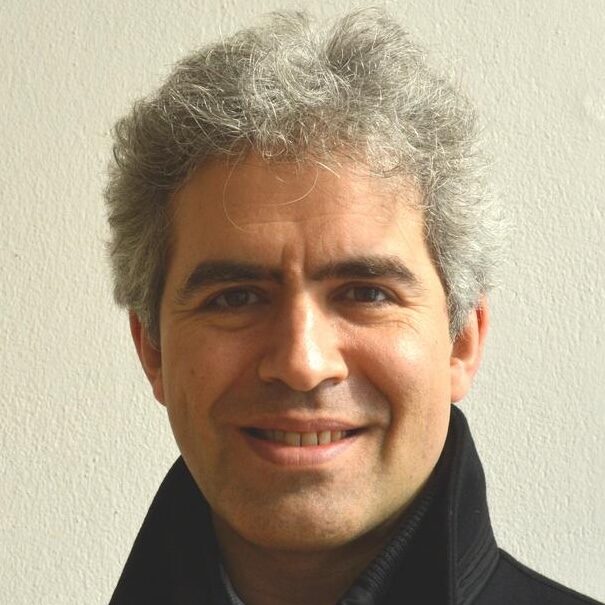
Christian List received his D.Phil in Politics from Oxford University. He is currently Professor of Philosophy and Decision Theory and Co-Director of the Munich Center for Mathematical Philosophy at LMU Munich. He is a Fellow of the British Academy and a member of Academia Europaea the Bavarian Academy of Sciences and Humanities. Among his honors are the Joseph Gittler Award from the American Philosophical Association. He is the author of Why Free Will Is Real and (with Philip Pettit) Group Agency.
Click to Show Episode Transcript
0:00:00.5 Sean Carroll: Hello, everyone. Welcome to the Mindscape Podcast. I'm your host, Sean Carroll. Hey, has everyone heard about the idea of free will? The idea that individual people have the ability to make choices and decisions based on reasons that can have a causal influence on how the world behaves? [chuckle] Yes, you have. I know you have. Don't worry. I'm just kidding. You've heard about free will. It's a hot topic. For reasons that I will admit I do not completely understand [chuckle] why free will is such a hot topic. But on the internet in particular, people like making claims, and I really think that they're not always listening to each other. There are claims about determinism, indeterminism, compatibilism, incompatibilism, responsibility, blame, whole bunches of things that are bounced around. It surprises me, and I guess I should be happy that so many people care about what is, in some sense, a relatively abstruse philosophical point. I've certainly not noticed any difference between people who say they believe in free will and people who say they don't believe in free will in how they act, in how they behave, in how they treat what it means to make a choice, or to place responsibility or blame on anyone else for making a choice. So I guess I should be happy that there's some sort of philosophical discussion going on here.
0:01:24.5 SC: As many of you know, I have two things that I like to say about free will. One is about the determinism versus indeterminism thing, which is, I like to say, it doesn't matter [chuckle] whether the laws of physics are deterministic or indeterministic. That's an interesting question to ask, but has nothing to do with free will. Even if the laws of physics were indeterministic, I would still think that you could either believe in free will or not. In particular, quantum mechanics has nothing to do with free will. Quantum mechanics does say that to observers in the world, the world is indeterministic. And there's this weird backwards logic, according to which people start from a conviction that there is no free will, and convince themselves that must mean that there is determinism in the world, and therefore quantum mechanics can't possibly say that there's not, which is very backwards and very wrong to me. So that's one thing I think. The other thing I think is that compatibilism is roughly right. That's my personal take. Compatibilism is just the idea that even if there's determinism at the lower level, you can still talk very fruitfully and should talk very fruitfully about free will at higher levels, the level of people and their actions.
0:02:38.1 SC: So I've said that many times in many different places. It's time to get it right. [chuckle] In other words, time to talk to somebody who is really, truly an expert in these questions and who has thought through them very, very carefully and see how the experts think. And unsurprisingly, there's many points of agreement and many points at which I learn new things by talking to these experts. So Christian List is a philosopher. He is at the Institute for Mathematical Philosophy. Not mathematical physics, mathematical philosophy in Munich. And he's done a lot of work in many different areas, a lot on social choice theory. He's written papers about quantum mechanics. But I think that he's probably most well known for his defense of compatibilist free will. That is to say, he is explaining why, given how the world is structured and given the metaphysical commitments we have and our understanding of emergence and how the world appears to us in layers and different levels and so forth, the right stance to take is treating people as agents who have free will and therefore moral responsibility. And not only does he say that, but he defends it. And he investigates what it means to say that, what it means to be an agent, what are the necessary criteria, how it fits together, how you can extend these ideas from individual human beings to groups, to nations, potentially even to large language models or other kinds of AIs. At what point do you say that the AI has free will? As Christian will emphasize here, that's a different question than whether the AI is conscious. In fact, it's a much easier question and maybe a more important question. So we really should start thinking about these questions more than we do. It'd be nice to have a rigorous philosophical framework with which to do that, he's the guy who has it. So let's figure out what that framework is. Let's go.
[music]
0:04:57.3 SC: Christian List, welcome to the Mindscape Podcast.
0:04:59.4 Christian List: Hi, Sean, nice to be on your podcast.
0:05:02.2 SC: Yeah, it's very good to have you on. You've been a philosopher working on a lot of things, including quantum mechanics. Weirdly, we're not going to talk about quantum mechanics for the most part today. Maybe at the end, we'll bring it up, but we have other fish to fry, as we say in this part of the world. For the listeners who are not philosophy experts, there's lots of different kinds of philosophy you can do. There's moral philosophy and political philosophy, whatever. What kind of philosopher are you? What is the world, the specialty in which you live?
0:05:32.7 CL: Okay, so well, officially my area is described as philosophy and decision theory. So this is at least my job description here in Munich. I work at the so-called Munich Center for Mathematical Philosophy, which is a fairly interdisciplinary place. The people working here are philosophers who interact with several neighboring disciplines. So we have people in the areas overlapping with maths, with physics, with economics, with cognitive science, with AI, with neuroscience, and with a whole bunch of different things. So it's an inherently very interdisciplinary place. And yeah, so I think my interests have been all over the place around individual and collective decision making and a whole bunch of metaphysical questions that are raised by this.
0:06:26.5 SC: I love the idea of a center of mathematical philosophy. Is that a thing? Do other places have centers for mathematical philosophy?
0:06:34.0 CL: I think the MCMP, Munich Center for Mathematical Philosophy, is probably the only place with that kind of name and label. But of course there are other places with related interests. So there is a very good place in Amsterdam called the ILLC, Institute for Logic, Language and Computation. They do a bunch of things that overlap with what we do. My former department of Philosophy, Logic and Scientific Method at the London School of Economics also specializes in similar things. So, yeah, we are quite a big place in this area, but by no means the only one.
0:07:19.1 SC: I guess it does make sense. I love the idea that... I'm well aware with philosophers of physics, of course, but philosophers of economics, philosophers of biology, philosophers of computer science also have this mathematical bent, logicians, I suppose. And so it must be fun to have them talking to each other.
0:07:38.8 CL: Absolutely, yeah. So, no, the interdisciplinary nature of the place was one of the big attractions for me when I chose to come here. And yeah, I absolutely love it.
0:07:49.1 SC: And I want to sort of give away the punchline of a lot of our discussion right away and then we can back up and lay the groundwork. But we're going to be talking about free will, and free will is weirdly popular topic on the internet. I don't know if you know this, but people love debating free will.
0:08:08.7 CL: Yes. Yes.
0:08:08.9 SC: And maybe you could just lay out the options for us. I know that there's this idea that you're a determinist or not, but that's not really how philosophers think about it.
0:08:20.9 CL: Yeah, okay. So the big distinction in the philosophical landscape is that between compatibilism and incompatibilism. I mean, as I'm sure a lot of your viewers know, there's a long-standing debate about whether we could have free will if the world is deterministic. So determinism would obviously be the idea that if we fix the state of the universe at a given point in time, then there's only one possible trajectory of future states under the laws of nature. And that seems to prevent the idea that there are forks in the road, decision nodes where I can do one thing or I can do something else. And the idea of free will is so much bound up with having choices between alternative possibilities. And so that leads many people, the so-called incompatibilists, to say, well, if the universe is deterministic, then there can't be free will. And then on the other side of the divide are the compatibilists. They say that even if the universe is deterministic, we could still have free will. And then they try to give us an account of free will which is often gonna be a little bit more subtle or nuanced, that then tries to make sense of free will in this scenario.
0:09:42.3 CL: And, I don't know, I mean, I could also go into the sort of two conventional options. I mean, two conventional options on the map are roughly the following two. One would be to say it's just a mistake to define free will in terms of the possibility of doing otherwise. So here the idea is what matters for free will is not alternative possibilities, but what matters is simply that an agent can endorse their actions. So if I do something which is in line with my goals, my motives, I believe in it, I want to do it, it expresses my character. I mean, you can spell this out in a variety of different ways, then those compatibilists say that's sort of good enough for counting the whole thing as free.
0:10:32.7 SC: Right.
0:10:33.4 CL: And then the other type of compatibilist takes a different strategy. So they say, well, some form of choice between alternative options is actually important for free will. So we must give an account of how we could do otherwise. But then they try to render this compatible with determinism by redefining what it means to say I could have done otherwise. So, for instance, I mean, trivial example, so this morning I had coffee rather than tea. Now I want to be able to say, "Oh, I could have done otherwise, I could have had tea instead." So what those compatibilists then would say is that it wasn't required that at the time of the choice it was genuinely possible for me to have tea, because maybe if the universe was deterministic, only one thing was possible, maybe only the coffee trajectory was a real possibility. However, what those compatibilists would say is what matters is that if the world had been a little bit different, so if I had had a slightly different back history, maybe I'd had a desire for tea instead, but then things... Would have been ever so slightly different, then if things had been a little bit different, then the trajectory would have unfolded in a different way, in the tea direction. And then that's good enough for free will. So that second kind of compatibilist basically redefines "can do otherwise" in terms of a counterfactual conditional. And those are sort of the conventional options out there.
0:12:16.4 SC: Can you tell us which one you are?
[laughter]
0:12:19.5 CL: So I actually like to reframe the debate. So what I've just given you is the sort of standard framing. Of course, that's also what I present to my students when I give an introductory lecture on free will. But maybe in a bit we'll go into much more detail...
0:12:40.1 SC: We will.
0:12:40.8 CL: But sort of in a nutshell, my point is that this standard debate frames things in the wrong way because it fails to distinguish between different levels of description at which we can think about the world, namely a physical level on the one hand and a level of agency on the other hand. And then my claim, and I'm sure we'll get to discuss this properly, my claim is that once we carefully draw the distinction between levels, this opens up new space for defending free will in a more interesting way.
0:13:17.5 SC: Good, that makes perfect sense. Thank you for the preview, and we will get there. Do you have a quick standard response to the claim from some people that you're not defending free will, you're just redefining what it is?
0:13:34.4 CL: Well, so my response is that actually the strategy that I'm then about to explain more properly gives us a wonderful rebuttal of this objection. So what I would say is that some of those standard compatibilist routes that I very quickly summarized earlier on really can be accused of redefining free will or watering down free will. I mean, for instance, we say that free will does not require the possibility of doing otherwise at all, free will does not require alternative possibilities at all, then we have definitely watered down free will compared to our common sense understanding of free will. I mean, if you ask people outside academic philosophy, I think most people will think that some notion of choice is really essential for free will.
0:14:32.6 SC: Yeah, sure.
0:14:33.5 CL: So if we take this away, we have redefined or watered down free will. But even if we redefine, can do otherwise, just in this counterfactual way, arguably we've still ever so slightly redefined free will or watered it down because I want to say this morning I really could have chosen tea instead. It's not just if the world had been a little bit different I would have chosen tea. Sure, I mean, if the world had been different, a lot of things could have been different. But what I want to say is at the moment of choice, it was open to me. I mean, I could have gone the coffee way and I could have gone the tea way, and I opted for one, but the whole thing was under my control. And so yes, I mean, I totally get the point that some versions of compatibilism look like they are redefining or watering down free will. And my whole point is if we reframe the debate in the right way, we can avoid that.
0:15:33.1 SC: Okay, that's very, actually super duper helpful. I mean, I'll confess, and I think a lot of my longtime listeners know, I'm already totally on board with your way of thinking about it, but it's not my professional expertise either. So hearing the true experts explain the ground rules is very helpful. The other thing I wanted to very quickly get on the table is most of what you just said doesn't involve words like determinism or indeterminism. I mean, you didn't use those words that much. And so it seems like compatibilism versus incompatibilism, which is, like you say, the way that philosophers generally think about it, is just kind of orthogonal to determinism versus indeterminism. And a lot of the online debate... I got in trouble for putting a social media post that says if you start talking about free will and immediately talk about whether the laws of physics are deterministic or not, you clearly don't understand the debate. So could you explain, was I a little bit too much or is that basically compatible, I guess, with what you're thinking?
0:16:38.8 CL: Well, I think it definitely goes in the right direction. But I mean, maybe to anticipate one of the key points, I think to just ask, "Is the universe deterministic or not?" If we just frame it like this. And that's actually the way it gets framed in a lot of metaphysics textbooks, that's the way the question is framed in the influential work of Peter van Inwagen, who developed one of the most famous arguments for incompatibilism, if we just ask, "Is the universe deterministic or not?" My view is that that's a somewhat underspecified or ill-defined question. I think the distinction between determinism and indeterminism can be drawn, but it becomes fully meaningful, fully well-defined, only once we carefully specify the level of description at which we're trying to draw that distinction. So once we have a system carefully described and we are crystal clear about the level of description, then we can actually ask, relative to that level of description, are we dealing with a deterministic system or not?
0:17:52.8 SC: Right.
0:17:54.1 CL: And sure, those people who think that some fundamental theory of physics gives us deterministic laws of nature, so I suppose that was the mainstream view, at least until Einstein, they would be able to say, yes, there is a level of description at which the physical universe behaves deterministically. And so then that would mean if you fix the trajectory of the physical universe at that level of description up to a particular point in time, then this trajectory admits only one nomologically possible continuation. So only one possible continuation among the other trajectories that are admitted by the laws of nature. So far, so good. But now it is also entirely possible that if we redescribe the very same system at a different level, at a more macroscopic level, for instance, the determinism-indeterminism distinction can come out in a different way, such that if we now look at a sequence, not so much of these super-finely described microstates, but we look at a sequence of macrostates, each of which is more coarse-grained, up to a particular point in time. And we then ask, well, what are the possible macro-level continuations of this sequence of macro-level states under the laws governing the system? Well, then it could actually be that two or more distinct sequences of macrostates are fully compatible with the laws governing the system. And whenever you've got this kind of pattern, you'd have some form of indeterminism relative to the macro level of description, while having determinism relative to the micro level of description. And the general point is, of course, systems that we study in the sciences admit many different levels of description. I mean, we know there is the level of particle physics, there's a level of chemistry which is already more coarse-grained. There are various biological levels, so the level of, let's say, individual cells, but then there is also the level of larger biological systems, organisms, we can keep going like this. So there's many different levels of description that differ in the level of grain or detail with which we describe the world. And so there's nothing weird about recognizing that at some levels you might have deterministic dynamics, deterministic behavior of the system, and at other levels you have indeterministic behavior of the system.
0:20:43.4 CL: I mean, in a thought experiment, you could even have... With my friend and co-authored Marcus Pivato, just for conceptual intuition pumping, we considered this thought experiment, you could even conjure up a hypothetical system which admits infinitely many different levels of description, maybe ever more fine-grained, and you could have determinism at odd-numbered levels and you could have indeterminism at even-numbered levels, and the whole thing would be a coherent scenario. I mean, of course we are not saying that the world is like this, but it's a perfectly coherent scenario. And what it does show is that in the case of such a system, you can't really say this system is deterministic simpliciter or this system is indeterministic simpliciter. But what this kind of thought experiment highlights is that the distinction between determinism and indeterminism is really very much a level-relative, a level-specific distinction. And so back to your point, yes, I wholeheartedly agree that if someone says, "Oh, fundamental physics is deterministic," which is, I suppose, an open question, but let's call it at least in principle a live possibility.
0:22:07.3 SC: Yeah.
0:22:07.8 CL: So if someone says, okay, fundamental physics is deterministic, then the reason why this doesn't automatically refute free will, even on the sort of alternative possibilities characterization of free will, is simply that the kind of indeterminism, if any, that is required for free will is not the form of indeterminism at that microphysical level of description, but it would be indeterminism at what I call the level of agency, the agential level, which is a completely different level of description. And given this whole logic of level specificity of the distinction, indeterminism at the level of agency is actually fully compatible with determinism at the level of fundamental physics. And so that's the direction in which I would spin or take the comment that you made.
0:23:04.8 SC: So, no, I love that. It makes perfect sense to me. Am I paraphrasing it correctly to say, or exemplifying it to say, even if the fundamental laws of physics were 100% deterministic and it was little billiard ball atoms bumping into each other and interacting, when I flip a coin, I don't know whether it's gonna come up heads or tails. And so at the level of people flipping coins, the world is indeterministic and we should treat it that way.
0:23:33.3 CL: Yeah, so basically I agree, just maybe with a slight twist or nuance. I mean, you say I don't know how the coin is gonna land. It's true we don't know how the coin is gonna land, but that framing makes it sound as if it is just an epistemic phenomenon, so just something to do with unpredictability or our informational limitations when it comes to figuring out the details of the microstate. And that would then invite the objection that when I talk about free will involving indeterminism at the level of agency, then this could look like, oh, what we really have is just unpredictability at the level of agency, but that's not the same as genuine openness of choices. And so once more, the objection would be this is not good enough for free will. But here's my response to that. My response is it's not the case that we only treat properties, patterns, phenomena at the absolutely most fine-grained microscopic level as real. I mean, that would be absurd if we said anything that you can't identify or pinpoint at the level of particle physics or at the level of, whatever it is, superstrings or something, any such thing you can't pinpoint at that most fundamental level is somehow unreal.
0:25:10.6 CL: I mean, a whole bunch of things become unreal: Solidity of surfaces becomes unreal, organisms become unreal, societies become unreal, universities become unreal, unemployment becomes unreal, war becomes unreal. And tell people that these are not real phenomena. These are just absolutely real phenomena. So we've gotta start with a philosophical view that takes the human perspective seriously and that also takes the sort of common sense ontology of the world seriously. So we need to have a philosophical picture that can recognize the reality of, for instance, ordinary macroscopic objects and properties. For this reason, what I'm saying is if our best descriptions, even from a scientific perspective, of certain macroscopic phenomena lead us to treat these phenomena as behaving indeterministically, for instance, because in the case of dice or coin tosses, stochastic modeling is the right way to go from a scientific perspective, then we should just say, well, that's as scientifically well-supported as anything we say in particle physics and we should just take it at face value. And that's just as real as the kind of thing that we say about a more fundamental physical level. And so therefore I want to say this form of high-level indeterminism, Marcus Pivato and I have also called this phenomenon sort of emergent indeterminism, we shouldn't think of this as just epistemic, so we shouldn't think of it as just to do with informational incompleteness or something like that, but we should really think of it as ontic, as a real phenomenon. That's the little twist that I would put on your way of framing it.
0:27:13.6 SC: I like that much better. It's a classic example of, of course, what you said is absolutely what I wanted to say, but you said it better having thought of it more. So this is a wonderful segue into maybe we should give this picture of the world as appearing in levels its due. So put aside free will just for a moment. And I think you've already said a lot of it, but I want to give you a chance to sort of fill in whatever we need to understand here. You're claiming that there are different emergent levels of description related by coarse-graining. And there's always a question in that picture of how much independence or autonomy we should grant to the different levels. So what would you feel about that?
0:27:59.5 CL: Yeah, so, okay, as I already explained, we can think about the world at many different levels of description. I gave these different examples from physics to chemistry to biology to psychology to sociology, economics, micro, macroeconomics, and so on. Now, what matters is not just that when we move from more fine-grained microscopic descriptions to more coarse-grained macroscopic ones, we sort of coarse-grain and we throw out information. I mean, we do throw out some information, we abstract away, but we do this not just because of computational or epistemic limitations, but we do it in order to identify patterns while getting rid of noise or of extraneous details, because there's some low-level details that are relevant for the lower level, but that may not be relevant at all for the macroscopic description. And so then, in a sense, it's illuminating if you extract the signal and get rid of the noise and focus on the macro pattern. So for a start, the coarse-graining is done for a principled reason. Secondly, of course, it's not just that we coarse-grain when we move from low-level descriptions to high-level descriptions, but we also use different concepts and categories to think about the world.
0:29:33.2 CL: So even philosophers of chemistry point out that a concept such as acidity, which is a chemical concept, doesn't really have a neat physical counterpart. So if you think about it, already acidity can't be easily translated just into purely physical concepts. And that becomes all the more significant as we move up this kind of explanatory hierarchy. And it's pretty clear that a whole bunch of psychological concepts can't really be reduced to purely physical, chemical, or biological concepts. So even psychology, I think it is fairly widely accepted, is not reducible to neuroscience. And the most important... I mean, if we look at the big picture, I think the most important dividing line is one between sub-intentional and intentional levels of explanation. So let's say physical explanations, chemical explanations, they're clearly sub-intentional. We use some form of dynamic or stochastic modeling to describe the relevant processes, but we don't use any intentional vocabulary there. There are no goals, there are no purposes, there are no beliefs, there's no semantic content of anything, there are no representations. And on the other hand, once we move into the domain of psychology, cognitive science, the kinds of domains where we then also think about agency or think about rationality, think about minds, mentality, then also think about social phenomena, we make very significant use of intentional language or intentional concepts.
0:31:37.4 CL: And I think there are very good reasons why intentional language, intentional concepts can't really be reduced to sub-intentional concepts or sub-intentional language. And if we are sold, I mean, again, there is a whole bunch of separate arguments as to why this reduction is not quite possible, but if we are sold on the idea that some of the concepts and categories required for intentional explanations are not reducible to concepts and categories from one of those sub-intentional levels of description, then that gives us a good case for saying there is a kind of explanatory autonomy that the higher level enjoys relative to the lower level.
0:32:21.2 SC: So this is great because I want to really press on this claim about reducibility. Of course, it's crucial to these kinds of arguments, and I'm never quite sure what is being meant. I know that in Phil Anderson's famous paper on More Is Different, he says over and over again, of course reductionism is true. [chuckle] What he doesn't like is constructivism, where you actually go from the lower level to derive what you mean at the higher level. I mean, I would think that acidity has some definite precursor at the lower level, and maybe it's just we can't identify it or we don't use that concept in its own right at the lower level, but it's still a coarse-grained notion in some sense. So do you mean more than that or less than that or exactly that?
0:33:14.6 CL: Okay, good. So one of the reasons why a lot of people are tempted by various reductionistic positions is that they accept the idea of supervenience. So supervenience is a very natural idea. It's basically the idea that all the high-level facts that obtain are some kind of necessary byproduct of low-level facts. So for instance, if we put all the low-level building blocks of this world, all the elementary particles and so on, in place exactly as they are in our physical universe, then you have also thereby put you and me in place with our brains and minds and everything. So the supervenience idea is everything that is true about Sean and Christian as people, as agents, is necessitated by a bunch of extraordinarily complex things that are true about the underlying physical system. So far, so good.
0:34:23.8 SC: Uh-huh, yep.
0:34:25.0 CL: And everyone who accepts the claim that this is true is a supervenience physicalist.
0:34:32.0 SC: Okay.
0:34:33.8 CL: And now the tempting but nonetheless kind of invalid argument would say, well, because supervenience physicalism holds, because all these high-level facts, high-level properties supervene on low-level ones, we should therefore also be able to explain everything in low-level terms, or we should be able to translate high-level descriptions into low-level ones. And that's actually the step where the so-called non-reductive physicalists, which I find the much more compelling position, would no longer agree. So the point is supervenience does not imply explanatory reducibility. And I can... I mean, there's different ways one can make this point. I mean, I can... If you want, I can give you the sort of absolute nerdiest argument, which [0:35:35.1] ____.
0:35:38.5 SC: I think you have to give us the absolute nerdiest argument just by saying that. Yeah, we need that.
0:35:44.9 CL: Okay, so the... Well, I'm not even claiming that it's the absolute nerdiest argument, because I'm sure people can come up with even nerdier arguments.
0:35:48.8 SC: It's a challenge.
0:35:52.7 CL: I mean, here's... Let's say at least one candidate for a very nerdy argument. Okay, so the kinds of languages that we use to describe systems are all countable languages. So that means they permit us to form as many expressions as there are natural numbers. That's infinitely many, but it's countably infinitely many. So you can easily convince yourself that any of the standard logics that you find in logic textbooks are countable. But also English is a countable language. German is a countable language. I mean, anything that you can write down with the help of a finite alphabet and so on is gonna be a countable language. So languages that we use are countable. Languages that we use in the sciences are countable. Okay, so far, so good. Now it follows immediately that if you have a countable language available for describing things, that means you can come up with infinitely many, but still countably infinitely many descriptions. Okay? So that means with a countable language, you can describe countably many properties, for example.
0:37:09.6 SC: Okay.
0:37:10.3 CL: Now, suppose the following is the case. We're dealing with a physical universe, and let's suppose the set of possible microstates that this physical universe can be in, or any other physical system. Let's suppose the set of possible microstates is infinite. So there are infinitely many possible microstates. That seems completely reasonable because, of course, initial conditions could be chosen in different ways. So we're always dealing with systems... I mean, sufficiently realistic systems would in principle admit infinitely many possible microstates that they can be in. Now, macroscopic properties that we might be studying in one of these high-level sciences, be it biology, be it psychology, and so on, they always correspond to sets of states, right? Because any property is realized by a whole by set of states. But once you've got a countable... Sorry, once you've got an infinite set of possible microstates, you automatically have uncountably many possible subsets.
0:38:28.0 SC: Ah, okay. Even if it's a countable number of microstates, even the subset.
0:38:30.1 CL: Yeah, so even if it's a countable number. I mean, yeah, so of course it might even with systems that you describe with the help of the real numbers, you might even have uncountably many microstates. Well, then you don't even have a chance. But even if you concede for the sake of argument there are only countably many possible microstates of your system, as many as there are natural numbers, then still there are uncountably many sets of these states. And so that means at least in principle, I mean, this is really just a purely combinatorial thought experiment, there are uncountably many properties that we could be considering. Now, of course, most of those properties are of absolutely no interest, no explanatory relevance, and so on and so on. But the point is there are at least, extensionally speaking, there are far more properties out there than a countable language would allow us to describe. So if you have a countable language for talking about microstates, just for pure combinatorial reasons, almost every property that corresponds to a collection of those microstates will not be describable by an expression in this countable language. And now when we think about macro properties, you know, if you accept supervenience, okay, good, then what we do know from supervenience, from supervenience it would follow that any macro property does have a kind of extension or corresponds at least to an extension that would be a collection of microstates. But it would have to be, at least if you just go with this combinatorial line of reasoning, it would be some kind of mega fluke if that turned out to be one that your low-level countable language allows you to describe. I mean, you might be lucky.
0:40:24.0 SC: Yeah.
0:40:24.6 CL: It might be that somehow the only explanatorily relevant or explanatorily salient properties are those that can be picked out with the help of the low-level language. But I think now we've kind of reversed the sort of burden of proof, because I think the proponent of explanatory reducibility would have to show that, and combinatorics are kind of stacked against the reductionist. So this is the kind of nerdy argument as to why even if you grant supervenience, there's still no guarantee that high-level descriptions of properties are reducible to low-level descriptions.
0:41:08.3 SC: I like it. And I think now the audience knows what mathematical philosophy looks like when it's done properly.
0:41:16.2 CL: Well, of course, I can also say not all mathematical philosophy is quite like this. And this argument admittedly is an acquired taste, so I think some people will like it more than others.
0:41:28.2 SC: But I think it's at least a friendly acquaintance of a question that to my mind is still unclear in the world of levels and emergence and things like that, even though I'm a big fan in general. It seems that if you do buy the supervenience thesis, which it sounds like you're willing to do, so if you had exactly the same microphysical system, you would also have exactly the same higher-level properties, and also the higher-level theories are more or less autonomous, you don't need to know the micro theory, I can do thermodynamics or flip coins without knowing about the Standard Model of particle physics, then there's two things going on simultaneously. One is that the higher-level concepts and objects fit into an autonomous dynamical framework, like we can describe what happens with them, but also they're observable, right? If you talk about a fluid and it has a temperature and density, those are the quantities you need out of the vastly reduced set of information you had about the atoms and molecules, and also we can measure them. I mean, do those two things go hand in hand automatically, or is that some nice miracle that the world provides us?
0:42:45.7 CL: Well, of course, it's true that a lot of the high-level properties are of interest to us precisely because they play a role in our lives. And we as biological organisms have also been evolutionarily selected in such a way as to be sensitive to certain properties of the environment and not others. So I don't find it particularly surprising that macroscopic properties are particularly well measurable from our perspective as compared to certain microscopic properties. And I would also add that, I mean, in principle, there's many different levels of description that one could use to think about a system. And now, which levels of description are explanatorily relevant or interesting is, of course, somewhat dependent on what your goals as an observer are, what your interest as an observer are, what your perspective on the world is. And so I don't find it very surprising that we as humans operating at a particular scale, biological organisms of a particular size, find certain levels of description particularly interesting and salient. And who knows, if we were intelligent beings at a completely different scale, maybe we would be sensitive to different features of the world at a very different level of description. So there's definitely a certain amount of interest relativity to our choice of levels.
0:44:45.3 SC: Good. I think that's a good amount of background where we can now circle back to the free will question. You made a good case earlier that free will at the macroscopic level is not just an epistemic matter of what we know and what we can predict. There's a sense of genuinely, it could have gone the other way. But at a more detailed level, what is the difference between saying that agents at this level of description have free will versus just there's some indeterminism at this level? Are there conditions under which we can finally say, yes, that object in front of me is an agent with free will?
0:45:27.8 CL: Yes. So my proposal is that we should use a checklist of three conditions for assessing whether a particular system, a particular organism, has free will. And they are the following: First of all, intentional agency. So only systems that qualify as intentional agents are even candidates for having free will. And then, I mean, there's a lot more to be said exactly about what an intentional agent is, but perhaps come back to that later. So, for instance, my water bottle that I have here is not an intentional agent, and it's not even a candidate for having free will. So intentional agency is the first condition. The second condition is indeed alternative possibilities. But these, I think, have to be alternative agential possibilities corresponding to the choice options between which an agent can make choices. And then the third condition is what I call causal control over the resulting actions. Philosophers sometimes also speak of mental causation. And so this is the condition that says the purportedly chosen action must count as having been caused by the agent's mental state and must not count as having been caused just by, for instance, an underlying physical process of the body, as in a reflex, for instance.
0:47:19.7 SC: Okay.
0:47:20.1 CL: So if the doctor hits my knee with a little hammer, my leg shoots up, and of course some bodily process causes that movement, but we are not really dealing with a case of mental causation here. Whereas if I intentionally lift the bottle, then you might say, well, I had a desire to lift the bottle, I formed the intention to lift the bottle, and then my relevant arm movement, the performance of the action, systematically covaried with the presence or absence of those intentional mental states. And so then we say I qua agent, not just qua physical system, had causal control over the resulting action. And so I think free will requires all three things; intentional agency, alternative possibilities, and causal control over the resulting actions. And so if you just had a system that displays some form of high-level indeterminism, that would not by itself qualify as having free will, because that system wouldn't necessarily satisfy the agency condition, it wouldn't necessarily satisfy the causal control condition, and so it's really just the interplay of these three things that really amount to free will.
0:48:40.8 SC: So I like where this is going, but you're using a lot of words like intentionality and reasons. And I worry that if I were a skeptic, which I'm not, but if I were, I would ask, "How do you know that a system has those properties?" I mean, a large language model might respond in a certain way if I said, "Why did you reason in that way?" But I'm not at all convinced that it's actually giving me an accurate response.
0:49:09.9 CL: Good. So, yeah, the large language models, of course, super interesting. Still, let's set it aside just for a second. So let me first say something about the general methodology and then we look at the complicated case later. So the general methodology is this. I am sort of quite drawn to and was also originally quite influenced by Daniel Dennett's work on the intentional stance, which you know well and which I'm sure your listeners are also very familiar with.
0:49:38.9 SC: Sorry, they might not be. Give us a little tiny flavor.
0:49:42.0 CL: Okay, so I'll give a little bit of a summary. So Dennett basically said, "Okay, there are some systems which we can understand perfectly well by just viewing them as physical systems." Let's say the solar system, how do the planets revolve around the sun? You take a physical stance towards that system, you write down a physical model, you can explain the thing. But then there are other systems like you and me, human organisms, whom... Which we can't understand adequately by just viewing them as physical systems. I mean, if you really wanted to make sense of you and me just as aggregates or conglomerates of vast numbers of molecules, I mean, good luck. So we'd have no chance of explaining why you and I managed to coordinate on the time for this conversation. I mean, we agreed to meet today, but we agreed weeks ago, and we could actually reliably predict that we were gonna show up for this thing. At a purely physical level, just focusing on the molecules making up the body, we'd have absolutely no chance. So Dennett says, "Well, with some systems, to make sense of them, to understand them, to explain them, to predict them, you've got to take an intentional stance towards them." So you've got to view them as agents with beliefs, with desires, with goals, with intentions. And once you look at them through that lens, then all of a sudden their behavior becomes intelligible to us, whereas from the purely physical perspective, it would be a kind of complete mystery. So obviously the key to understanding human behavior is to realize human beings are intentional agents. Okay, so Dennett then says, "Well, that's really all there is to the notion of agency." Whenever you've got a system that you can, I think he says, usefully and voluminously explain and predict from the intentional stance by viewing it as an agent, well, then that's good enough. That's an agent. But I think the problem with Dennett's perspective is that it is kind of a bit too instrumentalist because then agency is just in the eye of the beholder. So, to be an agent on this Dennettian view is just to be interpretable as an agent. So if the thermostat is well interpretable and well predictable as an agent, okay, well, then that's fine. It is an agent and there is nothing more to the story.
0:52:27.0 CL: And I want to go a little bit further. I want to say, well, to be an agent is not yet the same as to be interpretable as an agent, 'cause one is a sort of epistemic criterion and the other one is sort of ontic. Rather, if a system is interpretable satisfactorily, adequately, only by viewing it as an agent, so if viewing the system as an agent is explanatorily indispensable, we can't explain it adequately in a different way, then the explanatory indispensability of viewing the system as an agent is a very good, strong indicator, a good piece of evidence that we are truly, really dealing with an agent. So if it turns out that I have absolutely no chance of making sense of you, Sean, without viewing you as an intentional agent, that's very, very strong evidence that you really are an agent. And so you see the point. So the indispensability of taking the intentional stance towards a particular system is strong evidence that we are really dealing with an intentional agent. And it's this indispensability test that I also use in order to assess whether a system should qualify as an intentional agent from the perspective of the free will debate. And now to just quickly relate it to the issue about AI, I totally admit that it's a complicated issue because there are all these big debates. Are these LLMs, are they just stochastic parrots? Are they really just glorified versions of the sort of text correction...
0:54:32.8 SC: Autocomplete.
0:54:33.7 CL: Text extension, autocomplete software that we have on our smartphones, or are they something else? Do they mimic agency or do they genuinely have agency? And, I mean, you'll find people on both sides of the divide here. And also, of course, the technology is in flux. So maybe at an early stage of the technology, we were sort of very much at the stochastic parrot end of the spectrum, but of course, the technology also advances and the systems increasingly get engineered in such a way as to be explicitly designed for reasoning abilities and so on. And what I would say is simply this. Once we reach the point where those systems also satisfy this indispensability test, so where you just cannot make good explanatory sense of them without viewing them as genuine intentional systems, then we've got good evidence that they really are intentional systems. And my feeling is that whether we like it or not, we are kind of heading in the direction where [chuckle] more and more systems maybe are like this. And that's actually also why I think that this set of criteria for free will, intentional agency, alternative possibilities, and causal control, might, I don't know whether now or in the future, but might potentially force us to conclude, prompt us to conclude that some sophisticated AI systems also qualify as having free will.
0:56:15.3 SC: At the risk of entirely derailing the conversation, the story that you told, which I'm very sympathetic to, about finding it indispensable to use some of these concepts to talk about these systems, reminds me of debates over philosophical zombies and consciousness. And as a physicalist, I want to say I can't conceive of a zombie philosophically because the zombie is supposed to be something that doesn't have conscious experience but behaves exactly down to the atom as if it does. And what I mean by consciousness is just that that's the way, the best possible description of this system at this level involves the language and concepts of consciousness. And this sounds at least a little bit parallel.
0:57:06.3 CL: Yeah. So the whole consciousness issue, that raises a separate set of issues...
0:57:14.0 SC: I know.
0:57:15.2 CL: Just for full disclosure, so while my theory of free will is fully, wholly framed against the background of physicalism, and indeed non-reductive physicalism as we've now discussed at some length, when it comes to consciousness, I sort of go in a slightly different direction. It's not something that I had kind of antecedently expected. When I started to think about these issues, I sort of expected that I would be a physicalist with respect to consciousness as well, and maybe ended up surprising myself by coming out on the other side. And just in a nutshell, the extra complication with consciousness that simply isn't there with free will and agency is that consciousness is first-personal. And when we talk about phenomenal consciousness, we're really talking about first-personal experiences, we're talking about first-personal facts, we're talking about the first-person perspective. And by contrast, when we ask, "Is a system an agent? Does a system have representations? Does a system have alternative possibilities between which it can choose? Does it have causal control or mental causation in relation to its actions?" These are all third-personal questions that we can in principle formulate from the perspective of an ordinary scientific third-personal observer. And so that's why I actually think the study of free will and agency can be done completely unproblematically from the ordinary third-personal scientific perspective. And so methodologically, that's sort of much closer to what David Chalmers would call the easy problems of consciousness.
0:59:24.6 SC: Right.
0:59:26.0 CL: Sorry. Yeah, exactly. Whereas the hard problem is, how do we make sense of, in a sense, the first person against the background of this third-personal, impersonal scientific picture of the world? And that's, I think, the sort of big structural difference between the consciousness debate and the free will debate. And while in the case of free will, I've kind of completely convinced myself that you can be a physicalist, you could even be a physical determinist, and yet you can embrace free will, and you can even embrace free will with the idea that there are alternative possibilities at the level of agency, and everything fits together nicely once you recognize the sort of leveled architecture of the worldview, I find that it is much, much harder to properly accommodate consciousness as first-personal experience. Not just as third-personal descriptions of the whole thing, but as first-personal experience within this purely third-personal or impersonal worldview of the sciences. And so I've found myself ending up in a place that is actually even more radically non-physicalist on consciousness than even Chalmers's view. So David Chalmers rejects physicalism, but in a sense doesn't reject the sort of ordinary, impersonal, third-personal picture of the world.
1:01:04.5 CL: So I mean, he accepts the framing that we've got to think of a world that we can talk about from a scientific perspective, and then the debate is all about what sorts of properties must populate this world in order to make sense of consciousness. And then the physicalists would say, just having a world with physical properties is enough. And then Chalmers, in his classic, wonderful book, 'The Conscious Mind,' 1996, says, "No, physical properties alone are not good enough. You need to also have phenomenal properties, and the phenomenal properties do not supervene on the physical properties." And that's then how he makes sense of the zombie thought experiment and his view that zombies are conceivable and metaphysically possible, albeit not nomologically possible. But this still concedes the framing that you can look at the whole thing, in a sense, third-personally, impersonally, from the perspective of the sort of Olympian scientific observer studying those systems from the outside, adopting the kind of view that Nagel would call the view from nowhere, in a sense. And then we just debate, what properties do we need to throw in in order to make sense of consciousness? And I'm sort of much more on Nagel's side and think that actually the problem lies with the view from nowhere, with the impersonal perspective. We can't really properly accommodate consciousness in our worldview without recognizing the sort of fundamentality of the first-personal perspective. And that leads me to think that we must really postulate genuine, irreducible first-personal facts over and above the third-personal or impersonal facts that we have in the physicalist worldview. But once you introduce these first-personal facts, then you are really quite radically outside the standard physicalist picture, and then that raises a whole bunch of new challenges. But that was sort of a quick summary of why I think the consciousness debate is structurally different from the free will debate.
1:03:27.0 SC: Perfectly fair. I get it. It's refreshingly honest that you follow the conclusions where they go when you think about these things. But I do want to give you time. You've laid out an interesting case for why thinking about free will has to do with levels of description and the existence of the possibility for things having been otherwise and the existence of agency and intentionality. Okay, if there are these levels, then there are also higher levels than individual people. There are groups, there are corporations, there are nations. At what point do we start attributing free will to them?
1:04:05.7 CL: Yes, yeah, yeah, no, great question. So in fact, I sort of got into the whole subject of agency in a slightly non-standard way because I began my career working primarily in social choice theory, so the study of collective decision making and also the mathematical modeling of collective decision making. And in the course of this work, I collaborated a lot with Philip Pettit, a philosopher in Princeton and at the Australian National University. And Philip and I, on the one hand, did some work together on the aggregation of judgments. So this is sort of a collective choice problem, more or less in the kind of Condorcet-Arrow social choice theory tradition. But we also, in particular, then wrote a book together on the subject of group agency. And so in this book, we discuss the question of whether it sometimes makes sense to view certain collective entities, especially organized collectives, institutional collectives, like firms, corporations, collegial courts, universities, even states in their entirety, whether it makes sense to view those collectives as kind of unified agents in their own right. And an important observation is that in real life, we do this all the time. I mean, we treat collective entities as agents. We talk about how the airline treats us. We ascribe goals and intentions to firms.
1:05:49.9 CL: But it's not just the kind of common sense thing, but we also do this in the relevant sciences. So in economics, the theory of the firm views firms and corporations as rational actors and applies the very same rational choice theoretic models to explain their behavior. In international relations theory or some areas of strategic studies, entire countries or states get treated as unitary rational actors. In fact, if we look at the history of game theory, the whole field was developed quite significantly in the aftermath of the Second World War in the context of strategic studies, where studying, for instance, at the time, the strategic interaction between the United States and the Soviet Union was a major driver for developing game theoretic models. So this idea that corporate entities can be rational agents in their own right, it's not just a common sense idea that we find, but also very much an idea that is entrenched in the social sciences. And so that led us then to think, how can we develop philosophical foundations for this idea? And of course, you see immediately how this raises many interesting metaphysical or philosophy of mind questions. What do you say about the sort of mental states or the analogues of mental states of those corporate entities?
1:07:21.9 CL: And it also raises many normative questions about the sort of responsibility that those entities can have. And so Philip and I, in our book, we defend a realist theory of group agency. So we think that corporate entities can truly be intentional agents with functional states that qualify as beliefs, functional states that qualify as desires or goals or preferences, and then with an ability to systematically interact with their environment on the basis of those states, so basically pursuing their desires in line with their beliefs. Now, we don't think that those corporate entities are phenomenally conscious, so they are... You could think of them as kind of zombie agents, if you like, but zombie corporate agents. But if you are a realist about group agency, as I am, then there is the obvious question whether we should ascribe free will also to those entities. And again, I think my theory of free will, especially with its catalog of the three criteria, the three conditions that I mentioned earlier, can actually allow us to think about that question systematically. Because these three criteria, intentional agency, alternative possibilities for choice, and causal control over the resulting actions, they are portable criteria. They are not criteria that are just sort of custom-made solely for the human case. But those are criteria which, at least in principle, could be applied to other entities as well. So you can use these criteria and ask, do chimpanzees fulfill those criteria? And if so, the answer would be they have some form of free will. And I think, I mean, I'm not a primatologist, but given everything that I've read, I think we should conclude, yes, absolutely. And it would be very weird if somehow humans come out as having free will and absolutely none of the other animals do, not even our closest relatives too. But then similarly, I mean, earlier we talked about LLMs, so we talked about AI systems. And if we think that our best explanations force us to say such and such AI systems are intentional agents, because viewing them that way is kind of indispensable, if our best explanations force us to say that they are choice makers, they are genuine decision makers, they're choosing between options, and if they also force us to say they have some kind of analog of mental causation, so let's say their high-level representational states are the sort of controlling difference-making variables in relation to what they do, then we'd have to say that those systems do qualify as having free will in this sort of functionalist sense.
1:09:43.9 CL: And I think exactly the same should be said also about group agents. So if we have a corporate entity that satisfies those three conditions, intentional agency, alternative possibilities for choice, and causal control, this sort of corporate-level analog of mental causation, then we should conclude, yes, there is a sort of functionalist sense in which that entity does have free will. And although this conclusion might sound a little bit revisionary and weird at first sight, it becomes less weird once we recognize that free will is not the same as consciousness.
1:11:01.4 SC: Yeah.
1:11:02.3 CL: So we are not thereby forced to conclude that they are conscious. They are not. Corporate entities are not. But secondly, I think on reflection, the conclusion should even be welcome because those entities, as we all know, are very powerful. They really play an important, an enormous role in our contemporary world, in our social environments. They can cause a lot of harms and do big damages. In fact, their power is much greater than that of typical individuals. And so we should better have certain frameworks in place for thinking about corporate responsibility and even for corporate liability and even something like corporate criminal liability. I mean, all of those are very important notions, and lawyers take those notions seriously and debate them. And if we accept the general story that some form of free will is a sort of necessary condition for fitness to be held responsible, then it's a kind of congenial finding that that necessary condition is also satisfied by some of those corporate entities.
1:12:16.3 SC: And I guess we didn't go into it in detail, but would you say that there's this close connection between the satisfying your criteria for free will and our legitimacy in assigning responsibility or blame to various agents?
1:12:36.3 CL: So I would say that free will in this functionalist sense that I've defined here is a necessary but not quite sufficient condition for fitness to be held responsible. I mean, I suggested earlier that maybe chimpanzees could be said to have free will or some version of free will under those conditions. Now, we don't want to say that chimpanzees bear moral responsibility or let alone legal responsibility. So I would therefore think that free will understood in this way is a kind of necessary precondition. And then there are some additional conditions that also have to be in place for responsibility. For instance, certain normative cognitive capacities need to be present in a system, and in addition, certain epistemic conditions must also be met, informational conditions. And of course, moral philosophers have debated in detail what the nature of those conditions is. But nonetheless, free will is sort of an important part of the package, and this kind of analysis suggests that, yes, indeed, corporate entities could tick the box there.
1:13:55.3 SC: And this brings up an issue that I've been wrestling with myself quite a bit, a slight difference between the kind of coarse graining and collective behavior we get in physics and the kind we get in the social sciences, which is that in physics, when you have a bunch of atoms and they come together and you find that it's useful to assign temperature and density and pressure and things like that, the system itself suggests the right way to coarse grain, right? It's not making any choices about it. Whereas in groups of human beings, we vote or we invent a system of representation or something like that, and voting systems and representation systems could be giving us wildly different results. So it's sort of not naturally emerging, but it's imposed from us. Is that a real important difference, or am I just making a big deal out of nothing?
1:14:51.8 CL: Well, I mean, the observation is right, but what I would say is this. So suppose you're dealing with a group agent and you're interested in what sorts of beliefs or preferences or overall collective attitudes to ascribe to this group agent, this qua corporate entity. And then you're right that it might be relative to a particular voting method or institutional structure or aggregation rule that we define the group agent's beliefs or the group agent's preferences. And of course, those corporate attitudes will be contingent on the aggregation rule in question. But what you can then say is, "Well, the group beliefs or group judgments supervene on the individual judgments relative to the organizational structure that defines that entity." So the organizational structure might be written, for instance, in the articles of association of this entity. So the constitution, you can think of this as its sort of software or something like this, or its operating system that specifies how the thing works. And then you've just got the sort of perfect analogy with a kind of computer. So the high-level states of my computer also supervene on low-level states, but they do so relative to the operating system running the thing. And the operating system is the sort of much more contingent social-level analog of the kind of nomological constraint that is naturally given to us in the case of a physical system. But it sort of plays a similar role. So in the case of the physical system, maybe the nomological constraint in question is just given by some laws of nature, and then that sort of fixes the nature of a particular supervenience relation that we're interested in. And in the corporate case, the nature of the supervenience relation is relative to the organizational structure, which is the sort of system-relative nomological constraint, so to say.
1:17:19.3 SC: Does thinking in this way help us decide the very hard question of what are good systems of aggregating beliefs in corporations or countries for that matter?
1:17:32.1 CL: Well, so the way of thinking that I've summarized here is heavily influenced by social choice theory, the sort of field in which, as I mentioned earlier, I started out. And social choice theory is sort of the formal study of aggregation rules, aggregation mechanisms. And for a long time, social choice theory focused primarily on things like preference aggregation or vote aggregation or utility aggregation. But in the last 25 years or so, many of us have worked a lot on the aggregation of judgments or also the aggregation of beliefs. And social choice theory gives us a sort of wonderful set of axiomatic tools for thinking about the nature of different aggregation methods and for comparing them. So very often the way we proceed is we formulate a bunch of desiderata, minimal conditions, a sort of wish list of criteria or requirements that a good method of aggregation should satisfy. And then once you've got a wish list of such axioms or criteria or desiderata, then we use mathematical analysis to ask, do there exist some aggregation methods satisfying those criteria simultaneously? And sometimes we end up with a negative result, an impossibility result. So that's the sort of landmark result of the field, Arrow's impossibility theorem is the best-known example of this. But sometimes we also get a possibility result. So it turns out that a bunch of conditions kind of uniquely pick out a particular aggregation rule. And then to the extent that we find those criteria very obvious, intuitive, appealing, normatively compelling, that would give us very strong reasons to adopt the relevant aggregation rule. And so one of the things that Philip Pettit and I also do in our book is we import some ideas from social choice theory to then suggest a systematic way of thinking about different organizational structures of group agents.
1:19:47.8 SC: We did have Philip as a guest here on the podcast, by the way. Just so...
1:19:50.6 CL: Wonderful.
1:19:51.4 SC: Yeah.
1:19:52.2 CL: That's great. That's terrific.
1:19:53.6 SC: So we've got both of the co-authors there. All right, so just sort of as a final thing to get on with, to wind up, let's go back to the LLMs because this is the sexy topic right now that everyone is interested in. I hear your previous argument that it's very plausible in your mind that you have these three criteria for free will and maybe LLMs, it's an empirical question whether they will get there, do have it, et cetera. There's various worries I have about this. Let me just mention one. When I have an LLM in front of me, I can prompt it in such a way as to effectively totally change its personality very quickly, right? I can tell it to, like, "Okay, henceforth be more impetuous," or, "Be more conservative," or, "Act like this person," or whatever. There doesn't seem to be a kind of stable identity at the core of the LLM. Is that something that maybe should or does play a role in having free will or being an agent?
1:20:56.6 CL: Yeah, that is a good point. And of course this is also one of those areas where the technology is in flux. So these systems differ quite a lot with respect to how stable or volatile their personality is. And I mean, I hear that companies like Anthropic devote a lot of resources to developing the personality of Claude and employ philosophers to also seek the sort of philosophical input on this. So to some extent this is a bit of a contingent issue which is in flux. But I think here is the issue where this does matter. I mean, from a normative perspective, it is often said that agency and responsibility is also a kind of forensic accounting device in order to be able to make stable action attributions across time. And so if I now hold you responsible for something that you did in the past, for instance, then there is a sort of background system of assumptions about personal identity that plays into this judgment as well. So if I had to operate on the assumption that there are just very short-lived time slices of Sean and no extended personal identity, that would very significantly change our views and verdicts when it comes to responsibility attribution in a diachronic setting.
1:22:39.4 CL: And I think the point that you raise is really relevant for that sort of debate. I mean, if you have an AI technology that is extraordinarily attitudinally volatile, then maybe you just have these very short-lived time slices and those are the kind of meaningful units of agency. And then somehow you already jump to a kind of completely transformed instance of the system and that completely breaks our normal moral understandings of agency and responsibility that we are familiar with in the human case. And once again, I think what this highlights is once these novel intentional systems come on stream, corporations now have been around for a while, but relative to the history of humankind, they are still somewhat new or modern, but they have been around with us in the modern era. AI is a much more recent phenomenon. But once these new intentional systems, new intentional agents come on stream, there's a bunch of things that turn out to be sort of somewhat parallel to the human case where lessons from the philosophy of mind, or lessons from the philosophy of action, or from rationality and choice theory, or from indeed moral philosophy, normative theories carry over. But then there are also some new features of those systems which are quite different and which then force us to revise or adjust or update our systems of concepts and categories. And I think that's also where we'll have to go with the AI systems.
1:24:27.5 SC: Can you ever imagine being friends with an LLM?
1:24:31.7 CL: Not at all.
[laughter]
1:24:36.0 SC: Maybe that suggests some extra things that we have in the back of our minds when it comes to whether or not we should treat things as agents?
1:24:43.8 CL: Well, I mean, of course, agency on my kind of picture is a functionalist notion, and agency has no built-in consciousness requirement or consciousness condition. I mean, some kind of functional awareness, of course, sure, but not the sort of phenomenal consciousness condition. And as you know, there's a lot of debate at the moment about whether AI systems are conscious or sentient. There isn't a sort of absolutely complete consensus on this. But I mean, my hunch is that at the moment the sort of somewhat dominant view is still that the current systems we have, despite their remarkable functional capacities, are not yet phenomenally conscious. But, I mean, all of this is in flux.
1:25:35.8 SC: Yes, it is.
1:25:36.8 CL: And also it's another example of how this new technology is a sort of test case for all these both metaphysical and neuroscientific debates about consciousness.
1:25:48.1 SC: Well, I hope that the philosophers can do their best to sort of run ahead of the changing story, because it's changing very rapidly and we're going to have real-world implications that matter coming at us very fast.
1:26:00.3 CL: Yeah, it's exciting times, but also scary times. A bit of a bit of both, but it's definitely an interesting time to do philosophy.
1:26:08.6 SC: Absolutely. A totally fair description there. So, Christian List, thanks very much for being on the Mindscape podcast. This was fun.
1:26:15.9 CL: Thanks, Sean. This has been fun.
[music]
Pingback: Sean Carroll's Mindscape Podcast: Christian List on Free Will and Levels of Reality - 3 Quarks Daily
I found this to be a very interesting episode. There were many different ideas and a mixture of things I have thought about along with many I had never thought about. I didn’t agree with everything, and I guess I shouldn’t expect to but am still thinking about them.
It was difficult for me to accept that one can never explain universities or wars, etc. from the microscopic components. Because you have to accept that a university exists, you cannot believe that it exists because of quantum particles. Or because acidity is not fully explained by atoms or molecules –> the atoms or molecules will be an insufficient basis for reality. This didn’t really sway me away from reductionist views.
I did work onward to listen to his nerdiest argument that “if we use a countable language, we will not be able to describe a reality that has an uncountable number of states”. But I came away thinking that he disproved his own argument by talking about a system with an infinite number of states solely by using a countable language. Don’t we alway talk about an infinite number of states by using a countable language? For example, the number of possible points on a line between 0 and 1. With a countable language, we seem to do ok specifying any desired one of the points between — ok maybe this is not the best example.
Instead let’s say we have a quantum well with infinitely high barriers. There we be have an infinite number of energies, eigenvalues. And we could specify any of those infinite eigenvectors that we cared to specify even though we have a countable language. It might take some time but in principle, I can describe any one you specify.
Also, I still think the need to explain something as being an agent is highly dependent on the observer. For example, to an idiot, the thermostat indeed well may need to be interpreted as an self-thinking agent. At least to my dog, whether the thermostat goes on/off is totally consistent with the thermostat having its own agency. And if the door blows open because of the wind, the dog is convinced that the door has, on its own, decided to open, and that is why he will bark at the door, because he truly sees that the door independently took that undesired action.
I guess I am more accepting of the fact that attributing agency is an expression of our ignorance of complex systems, and the need to accept agency is very dependent on system complexity and observer capability. I agree that as time goes on, we likely will feel the need to attribute agency to A.I. machines and that as time goes on, we may find that machines see all our actions as the “reflexes” as was discussed. And machines may not need to attribute agency to us but only to other more complex machines.
Pingback: What List missed – No ghost, no machine, only human
Hey Andy,
I think you are using “reductionist views” in its most common meaning, roughly “supervenience on physical details.” But typically in philosophy of science, at least when talking about relationships between the sciences and their domains, it means something related but different – it means that the theories, laws and properties of the higher-level sciences can be explained in the lower-level terms.
The trouble is, supervenience is enough to give the *in*compatibilist philosophers what they want – if you grant them certain other premises (spoiler alert: you should not). List doesn’t directly attack those premises. I discuss that in a Pingback (What List missed) that automatically appeared in these comments.
Christian List brought up an intriguing possibility that if AI systems like LLM’S satisfy the 3 conditions: intentional agency, alternative possibilities for choice, and causal control, then those systems do qualify as having “free will” in this sort of functional sense. And although this conclusion might sound a little bit revisionary and weird at first sight, it becomes less weird once we recognize that free will is NOT the same as consciousness.
So even if AI systems are incapable of ever achieving true consciousness in any humanistic sort of way, we can still think of them as exhibiting some degree of free will.
Christian List has been at the center of the Free Will debate and is a staunch advocate of Free Will. List is quite thoughtful and systematic in his approach to Free Will and takes a somewhat rigid stance on the conditions for Free Will which gets him into trouble when dealing with the role of consciousness. List has three prerequisites for Free Will Intentional Agency (ie, the actor must have goals, needs and desires), alternative possibilities (ie a genuine choice), and causal or operational control of the behavior in question.
Free Will certainly exists in conscious organisms. In fact, this is self-evident from the numerous self-interested choices we make every day. The term itself is actually redundant, as any act of Will is a product of choice and the very idea of “unfree will” is meaningless gibberish. But List’s reasoning on the subject, while superficially clear, is actually somewhat muddled.
Intentional agency, which is the first of List’s requirements for Free Will, would seem to require that the actor or system have some form of subjective consciousness. Surprisingly, List denies this, and I think this gets him into trouble when he talks about advanced AIs and maybe even when it comes to thermostats. You cannot easily separate the connection between consciousness and Free Will. Arguably you cannot have Will without consciousness but you also can’t have desires without consciousness. You have to be sentient to want or care about things. And this distinction between intentional agency and consciousness becomes quite important when talking about advanced AIs.
List concedes that even the most advanced current AIs are not conscious, but he seems to want to argue that perhaps more advanced AIs could be conscious and also could be intentional agents within his definition. This gets him into a muddle.
List is a “non reductive physicalist” when it comes to science, but says he is not a physicalist when it comes to subjective conscious experience. He is in effect a property dualist who believes that physical and mental processes are separate and distinct properties. But for some reason he thinks you can analyze Free Will separately and apart from sentience. But you can’t, and List’s first prerequisite of intentional agency seems to require sentience in any case, based on the only comprehensible meaning of those words. How can you exercise Free Will without consciousness? Where would the Will even come from?
Sean Carroll has correctly pointed out that List here begins to sound like a believer in unconscious philosophical zombies, a ludicrous conception proposed by David Chalmers under which unconscious zombies can mimic our every action while lacking all conscious experience. This is a physical impossibility as consciousness is required for any animal to navigate the world. We have no remotely credible scientific theory for how a machine could be conscious or how an animal could not be conscious..
List, perhaps more understandably, attributes Free Will to groups, including corporations, armies, mobs and other groups of conscious beings that have a mechanism for aggregating decision-making and goal selection for a group. Such groups are not conscious in themselves, but the decision-makers in the group certainly are. And those decision makers exercise conscious Free Will in directing the activities of the corporate entity and its members.
About the « absolute nerdiest argument » as to why supervenience doesn’t imply that we can reduce high-level descriptions to low-level ones : I must confess that I am always a little bit suspicious of arguments that fundamentally rest on a notion of infinity. The argument seems to fall apart if we concede that the number of micro states might be very large but finite (as opposed to truly infinite). And thus, perhaps more crucially, even for a system that truly has infinitely many micro-states (assuming that such a thing exists), the argument still falls apart for any approximate *finite simulation* of the real system. I feel unconvinced that, whatever the true reason might be for high-level descriptions not to be reducible to low-level ones, that reason might just inevitably disappear in any finite simulation of the real system, regardless of how accurate that simulation is. In short, I’m suspicious of theories that don’t stand up to cutoffs….